Gamla Preserve to Majdal Shams, Israel

October 7th, 2017

Saturday – October 7, 2017

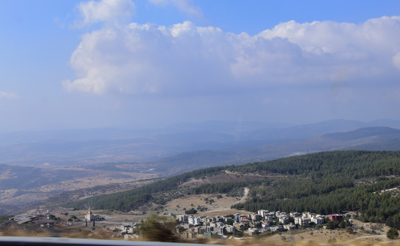
It was a cool sunny morning on the top of the Golan Heights at Kibbutz Kfar Haruv.  We got an early start and ate breakfast in the Kibbutz’s cafeteria.
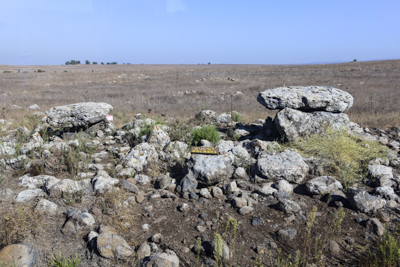
My OAT tour group and I boarded the bus and we drove to Gamla Nature Preserve, which is an Israeli national park.  On the way, we stopped to look at rock formations called dolmens, which are Bronze Age burial mounds made of huge boulders dating from 4000 to 3000 BC.  The Gamla Nature Reserve has a field containing about 700 dolmens.
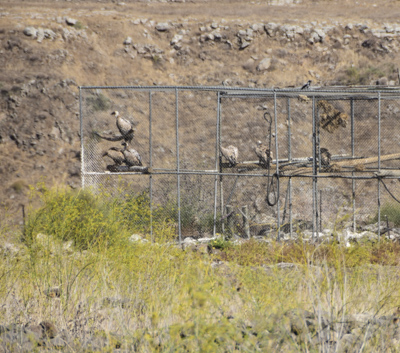
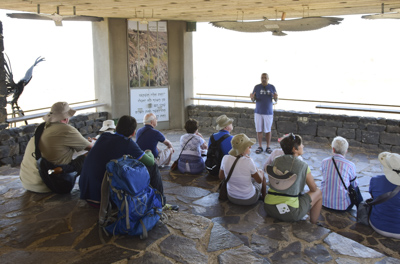
Gamla is famous for its griffon vulture observation point and its efforts to keep the birds of prey from extinction.  The nature preserve is home to the largest nesting colony of raptors in Israel.
There are hiking trails throughout the park as well as ruins of a Christian Byzantine village dating from the 4th – 5th centuries.
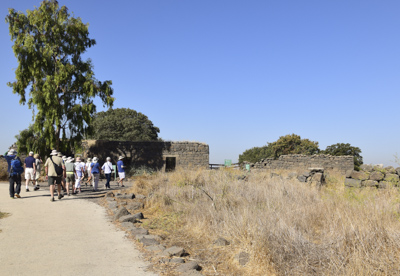
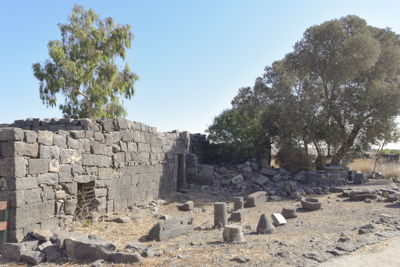
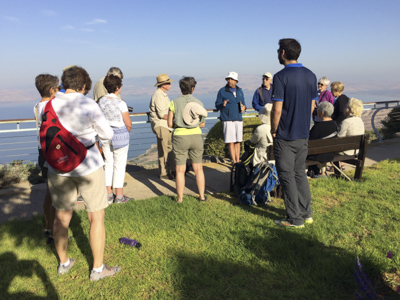
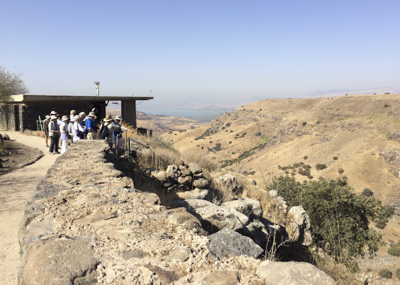
Rafi, our tour leader, led us out to the observation point which looks out over the cliffs of Gamla Stream Canyon and a nesting colony of vultures.
Gamla is also the location of an ancient Jewish city on the Golan Heights about 81 BC.  Archaeological finds confirm that Gamla had been a fortified settlement during the early Bronze Age – 2700 BC.  Gamla was the capital of the Golan district during the Second Temple period and the inhabitants supported themselves through agriculture.

The historian, Josephus, described the shape of the hilltop village, “like a camel.”   There were three major rebellions by the Jews against the Roman empire between 66 – 136 AD.  Gamble became an important stronghold for rebels and because of this, Gamla is a symbol of heroism for the modern state of Israel.
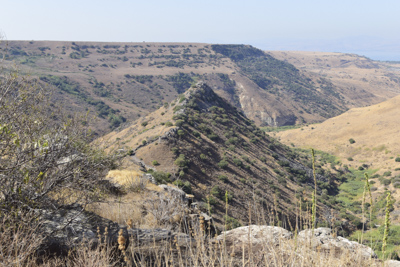
Back on our bus, we continued to drive north toward the Syrian border and stopped at an overlook. There were five young Israeli military men posted at the site. We spoke to them briefly and they said they were newly inducted into the army just two months ago.  All Israeli citizens over the age of 18 have mandatory military duty; men for 3 years and women for 2 years.   They looked very young!
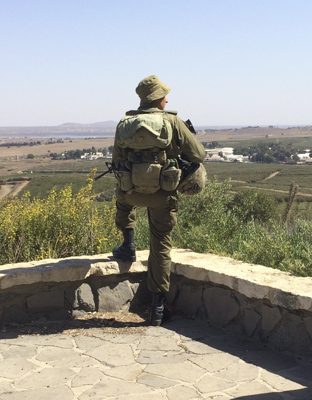
Today the Golan Heights is used as training grounds for the Israeli military as well as an army base.  We passed yellow flags in the ground which mark land mines left over from the 1967 war.  However, there are also large tracts of land which have been developed for vineyards and cattle ranches.
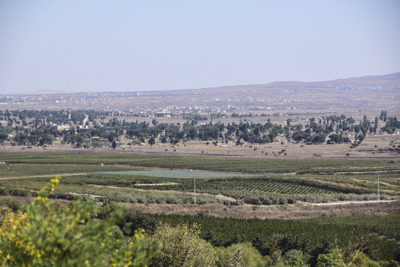
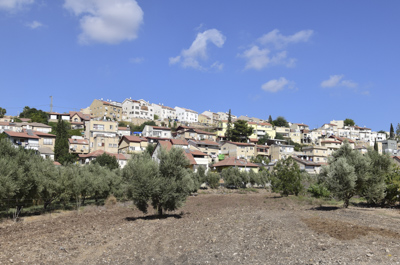
We continued to the Druze village of Majdal Shams which is built on a high hill and located near the Syrian border.

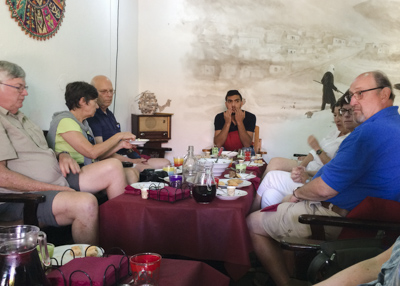
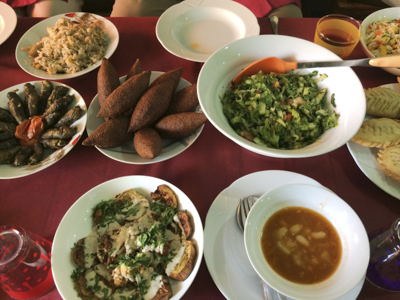
We had a fantastic feast for lunch at a family owned restaurant called Al Yasmeen.  I used the “Here” app on my phone to tell me where we were.

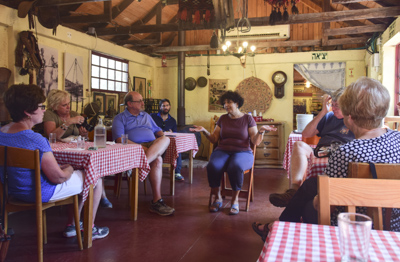
The owner’s 25 year old son, Mashti, explained that the Druze faith is an Arab speaking religion which is separate from the Muslim religion.  They have a distinct theology and also believe in reincarnation. Druze people live primarily in Lebanon, Syria, and Israel.
We stopped at a local supermarket in the village of Majdal Shams before returning to our cabins at the Kibbutz.  We purchased some food to share later tonight for a communal picnic.

On the way back to the Kibbutz, we stopped at a rest stop which had four military tanks of display.  Rafi told us about his military service and we looked at the tanks.

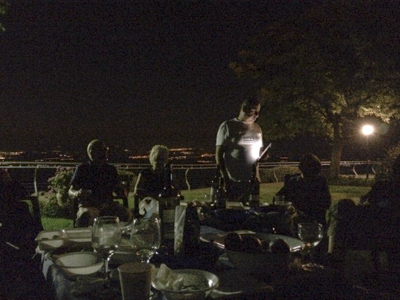
Later in the evening, we had a lovely time on the promenade of the Kibbutz overlooking the valley.  As the sun set, we shared our breakfast leftovers and purchased snacks. It was an excellent way to end a very busy day exploring northern Israel.
 

Capernaum to the Golan Heights

October 6th, 2017

Friday October 6, 2017     23 degrees C and sunny

The OAT group left the Haifa Bay Club Hotel in the morning and we drove to Capernaum, an ancient fishing village on the Sea of Galilee.  This is the town where Jesus is said to have lived for three years and performed some miracles.  A modern Memorial was built in 1990 above the excavated remains of an ancient house and a 5th century Byzantine octagonal church.

Under the Memorial, I saw the remains of a small octagonal building surrounding another structure.  According to legend, this was the house of the apostle Simon Peter.

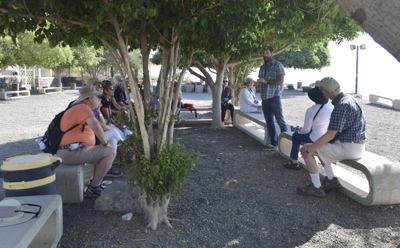
Our group gathered in the shade of some trees and Alon Neeman, our assistant guide, told us the stories of the site and explained the excavations.

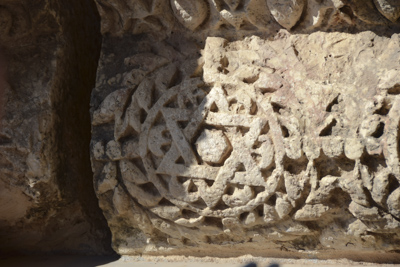
The most astonishing area in Capernaum were the ruins of a 4th century synagogue, which was built on the foundations of a 1st century synagogue.  The ruins include remarkable foundations, colonnades, seats, and walls covered with painted plaster and fine stucco work.

A plaque read: “The late fourth century AD ‘White Synagogue’ built upon the remains of the ‘Synagogue of Jesus.'”  The historical ruins of this building, with inscriptions in Greek and Aramaic, indicate that it is among the oldest synagogues in the world.

Then it was a short drive to the Roman Catholic chapel on the Mount of the Beatitudes.  This is the hill where Jesus is believed to have delivered the Sermon on the Mount.  The exact location is not known, and other nearby hills have been suggested, however this site has been commemorated for more than 1600 years.

The small chapel, which was built in an octagonal shape in 1938, was overflowing with foreign visitors.  The site is run by the Franciscan Sisters who operate a guesthouse on the property for Catholic pilgrims.  As the bus drove down from the chapel, I noticed that the hillside slopes down toward the Sea of Galilee and forms a natural amphitheater.

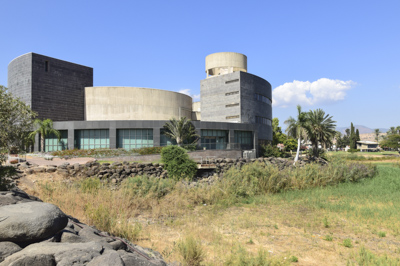
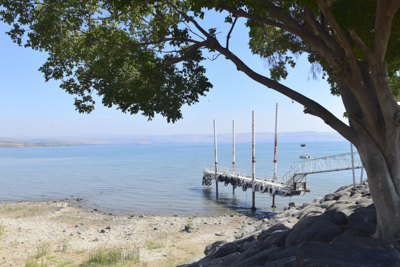
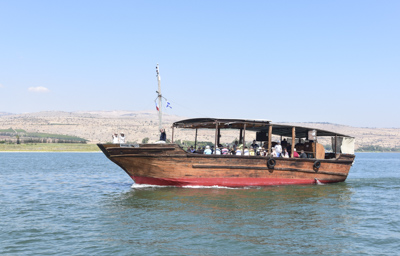
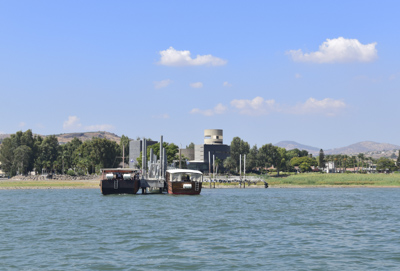
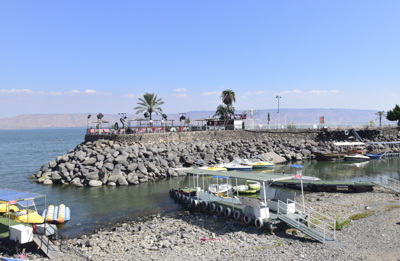
The bus drove to the shore and to the modern Yigal Allon Centre.  We walked through the center, down the dock, and boarded a large wooden boat to sail out on the Sea of Galilee.

The “Sea of Galilee” is actually a freshwater lake, also known in modern Hebrew as Lake Kinneret.  It is 13 miles long, 8 miles wide, and at its maximum depth is 141 feet deep.  The lake supplies about 10% of Israel’s drinking water, but unfortunately due to increased demand, the level of the water has decreased to dangerously low levels.

Lake Kinneret is located in northeastern Israel and is about 700 feet below sea level, making it the lowest freshwater lake on Earth.  The lake is fed partly by underground springs although its main source is the Jordan River.

Riding on the boat was so much fun!

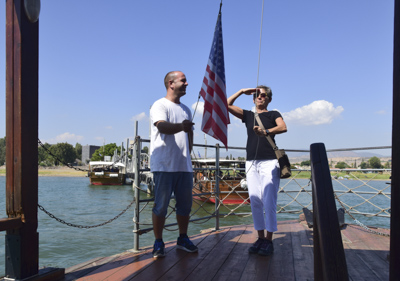
The crew entertained us by raising an American flag, playing a variety of  loud music, giving a fishing lesson, and teaching the group how to dance the Hora on deck.

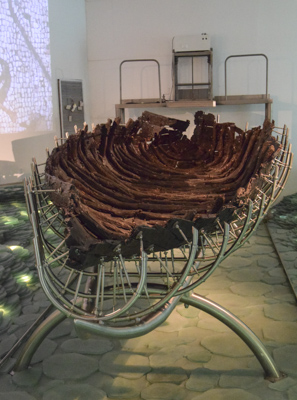
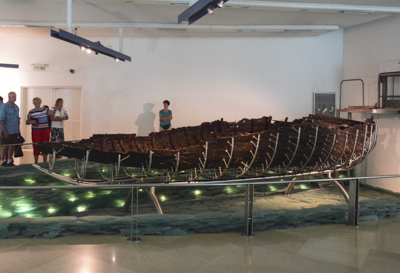
The boat docked and we went into the Yigal Allon Center to see the 2000 year old boat.

The unique 1st century boat was found buried in thick silt of the Sea of Galilee during a drought in 1986 when the water level was exceptionally low.  It was painstakingly removed from the sediment and preserved in the Yigal Allon Center.

It is believed to be the type of boats used for fishing and transportation on the lake approximately 2000 years ago.

Afterwards, we drove through the city of Tiberias on our way to lunch at a shoreside restaurant called Galei Gil.  Tiberias, named in honor of the Roman Emperor Tiberius, is located on the western shore of the Sea of Galilee.

There was a nice boardwalk along the shore which was crowded with families.  We ate a local dish called St. Peter’s Fish at the Galei Gil Restaurant.  This was a whole grilled tilapia served with French fries.

After lunch, we boarded the bus, drove around the northern end of the Sea of Galilee and stopped at the Yardenit Baptismal Site.  This site is located along the Jordan River near Kibbutz Kvutzat Kinneret which owns and manages the site.

It was a lovely location and several religious groups were lined up to immerse themselves in the river while other pilgrims were putting their feet in the cool waters.  The Yardenit Baptismal Site currently averages 400,000 visitors a year.

Another site in Jordan called Al-Maghtas has the earliest religious structures connected with baptisms or religious baths.  UNESCO declared Al-Maghtas (the Hebrew name is Qasr el Yahud) along with Jabal Mar-Elias, (Elijah’s Hill) on the east bank of the Jordan River a world heritage site in 2015.

We continued along the northern side of the Sea of Galilee and drove up the side of the mountain range known as the Golan Heights.  Our destination was the Kibbutz Kfar Haruv seen at the top of the hill in my photo taken from the bus.  It’s the little white building in the center near the top:

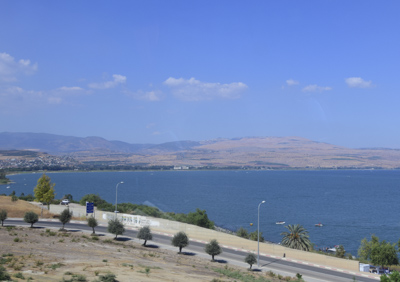
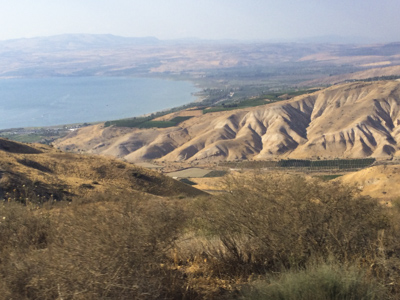
Here are views of the Sea of Galilee from the top of the Golan Heights:

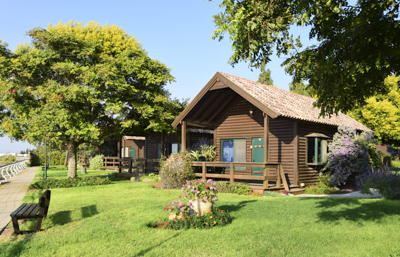
We stopped at Kibbutz Kfar Haruv to spend the night.  The Kibbutz owns and operates the Peace Vista Country Lodge and Suites and rents rustic cabins for family vacations.

We had a pleasant evening and had dinner in the cafeteria where the Kibbutzniks eat. The westward view across the Sea of Galilee to the city of Tiberias was fantastic.


Akko and Rosh HaNikra

October 5th, 2017

Thursday – October 5, 2017

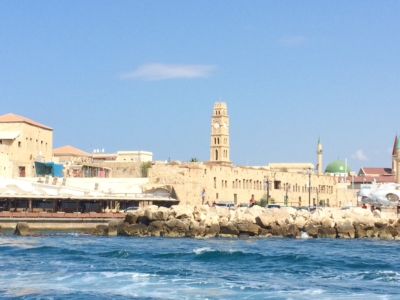
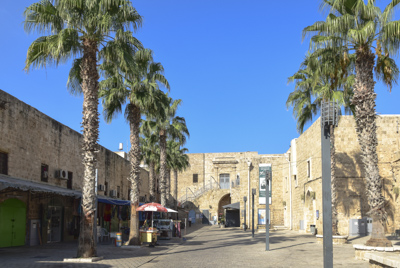
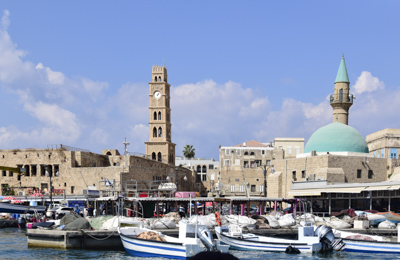
The ancient walled city of Akko, also known as Acre, is a beautiful town with a long and rich history.  Repeatedly conquered and occupied by different civilizations throughout the ages, the Old City of Akko is a UNESCO World Heritage Site.


The historic port city has been inhabited for 4000 years, since the Middle Bronze Age (2,000 BC), making it one of the oldest cities in the world.

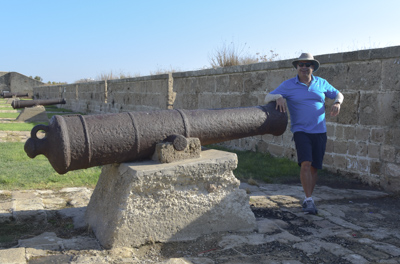
The current wall was rebuilt in the 18th century under Ottoman rule by Zahir al-Umar, the Arab ruler of Galilee.  Then it was fortified against the French in 1780 by his successor, Jazzer Pasha, and Akko became the regional capital of the Ottoman Empire.

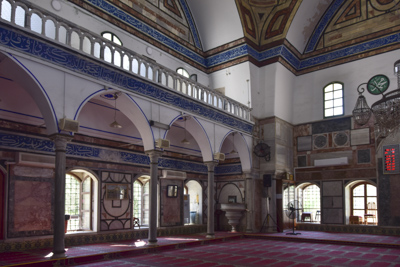
We climbed up onto a section of the wall to look at the view of the city and Rafi explained the history.  Then we walked to El-Jazzar Mosque which was built out of stones cut from the ancient ruins of Caesarea and finished in 1781.  This is the second largest mosque in Israel.
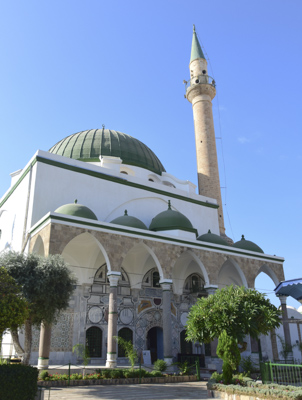
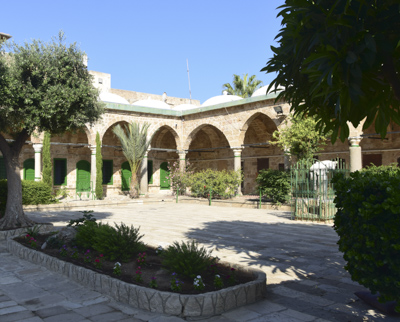
I was glad we visited the mosque because this was the first one we entered on this trip.  I was disappointed that we did not visit any mosques in Jordan.  El-Jazzar Mosque was a lovely peaceful place and the surrounding courtyard reminded me of medieval cloisters.  Ahmad Pasha al Jazzer and his successor, Suleiman Pasha, were buried on the grounds.

After we left the mosque we went to the Akashi Art Museum which was adjacent to the Knights’ Hall in Old Acre.  The museum features rotating exhibits of modern Israeli art in an ancient building dating back to the Ottoman period.

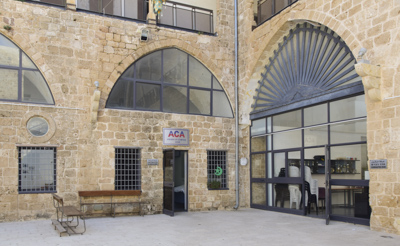
Akko is full of interesting nooks and crannies and is comprised of a complex network of buildings, alleyways, museums, fortresses, courtyards, and knights’ halls.  In another courtyard, we found the American Corner Akko which provides information about the United States to international students to promote better relations.

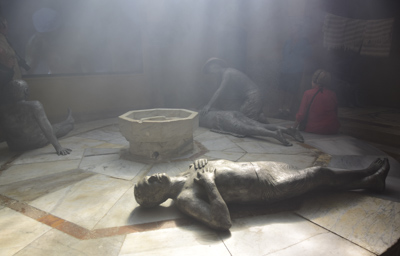
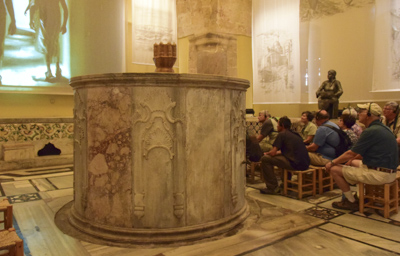
Hamam al-Basha was built in 1795 by Jazzer Pasha.  It had a series of hot rooms and a hexagonal steam room with a marble fountain.  The Turkish bath was part of a transformation of Acre during the Ottoman Period from a small fishing village to a teeming port and major trade center.

Today, the Hamam al-Basha is a living-history museum complete with audio-visual and static displays.  The story of the daily life and historical events during the height of the Ottomans are told in a program called the “Last Bath Attendant.”

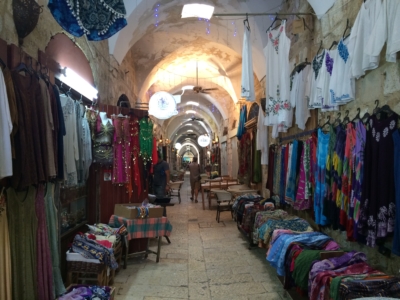
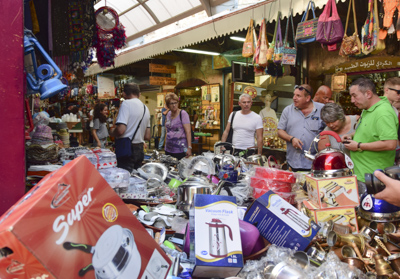
No visit to an acient middle-eastern city is complete without a walk through the “souk” or market:

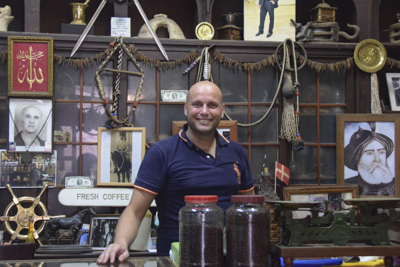
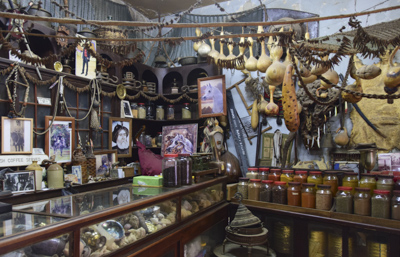
We paused at Kurdi Hamudi’s Spice and Coffee Shop and talked with his son who is a fourth-generation grinder and seller of spices.  He explained the importance of spices during ancient and modern times while we sniffed the aromas emanating from jars of fragrant spices.

The shop walls were visual feast and decorated with gourds, animal skins, fishing nets, ancient spice grinders, stuffed animals, and model ships.  All the spices were prepared by Hamudi himself and are of exceptional quality.

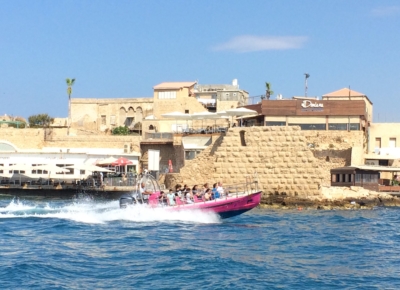
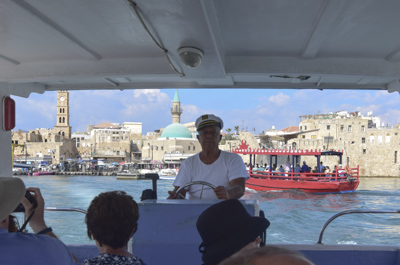
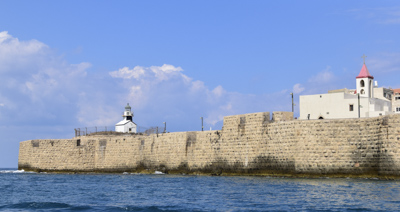
We walked down to the ancient Pisan Port which has countless small fishing boats, dinghies, and yachts.  We boarded one of the bright red tourist boats for a short harbor tour.  Vibrant Middle-Eastern music blared as we rode past the sea walls to a small lighthouse at the end of the marina.

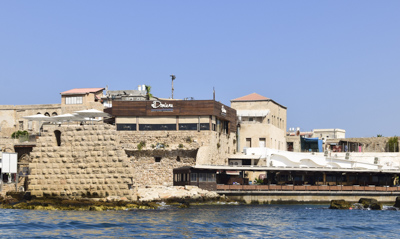
We had a delicious lunch at Doniana Restaurant on the harbor overlooking Akko’s bay. Akko is known for its fresh seafood.

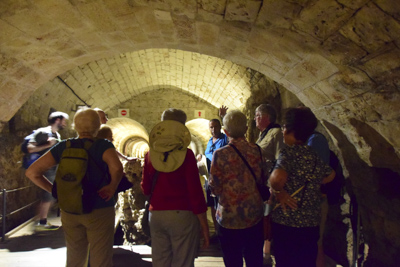
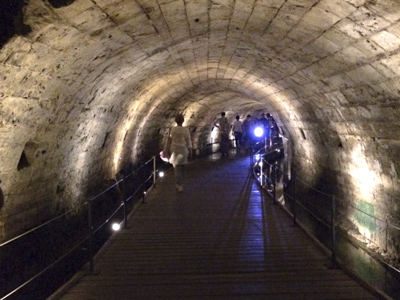
Acre became a center of international trade and was an important city during the Crusades (1100-1390 AD).  Crusaders made Acre their main port in 1104 which gave them access to the Asiatic spice trade that made them prosper.  The Templars were a military-monastic order who aided pilgrims to visit holy sites in Israel.  In 1187, they made their home in Acre and built their quarter in the city with a strong fortress protected by two towers with 28-foot thick walls.
The Templars dug a 350 meter long strategic tunnel which extended from their fortress in the western part of the city to the port.  The underground passageway was discovered in 1994 and opened to tourists five years later.

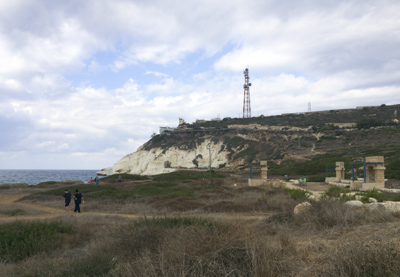
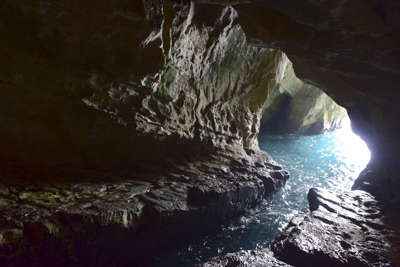
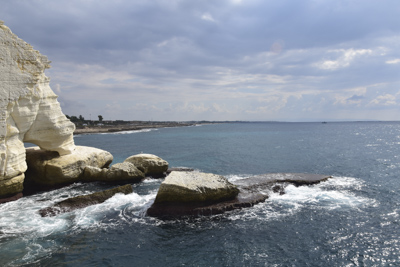
Then we drove along the shore about 15 minutes to the Grotto Caves at Rosh HaNikra which is located very close to the Lebanese border.  An Israeli naval ship was anchored offshore.

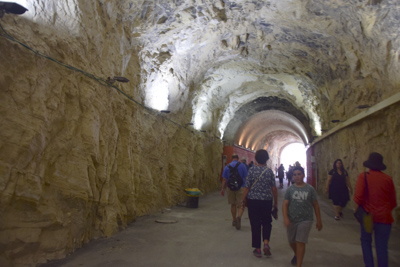
We walked through The Bridge and Railway Tunnel which had been used for trains running along the Cairo-Istanbul line.  Rosh Hanikra was the location where Israeli and Lebanese officials negotiated an armistice agreement in 1949.

A cable car brings tourists down to the natural caves and tunnels which were formed by the constant action of waves on the soft chalk rock.  We entered the grotto and followed a slippery path through the solid rock.

We walked through the cave and saw the waves enter with loud gushing sounds. The path led back out into bright sunshine and a great view of the Mediterranean Sea.

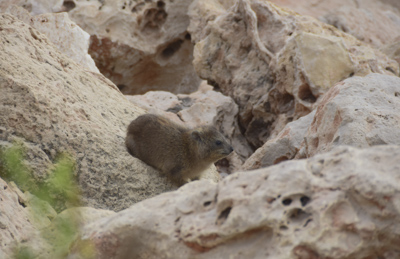
As we walked back to the bus, we saw a colony of hyraxes sunning themselves on the rocks.  I learned that the hyrax looks like a rodent, but it is related to elephants and manatees.

We returned to our lovely hotel and rested before dinner.  We gathered and began to walk down the hill to the old “German Colony” which is now a neighborhood of restaurants, cafes, and boutiques.  On our way through an interesting neighborhood, we passed several sights which Rafi pointed out to us.

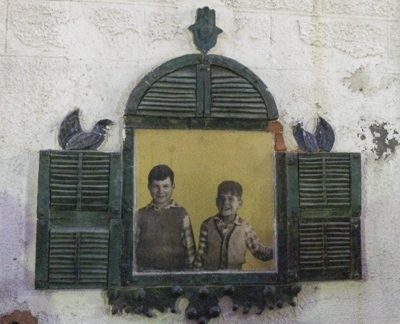
There was interesting public art works and also reminders of a painful chapter in history.  Haifa is one of Israel’s “mixed cities” with a significant population of Palestinians, Christians, and Muslims.  We were walking through a neighborhood which had been mostly Palestinian in 1948.  The families who fled, left signs and photos on their doors to remind passersby that the houses had belonged to Palestinians.

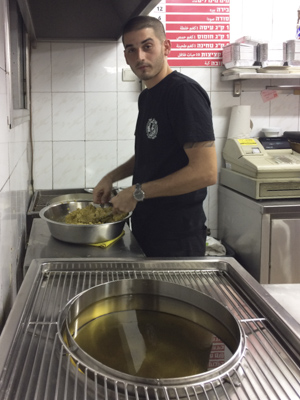
We stopped in at a small shop that made felafel, fried chickpea balls, and Rafi said they were the best in all of Haifa.  The owner gave each of us a fresh sample right out of the cooker. Delicious!

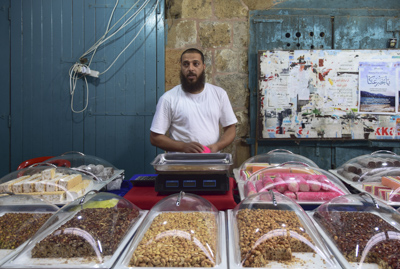
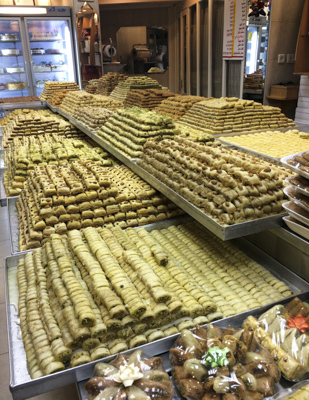
Down the street there was a bakery with the largest assortment of baklava I have every seen in my life!

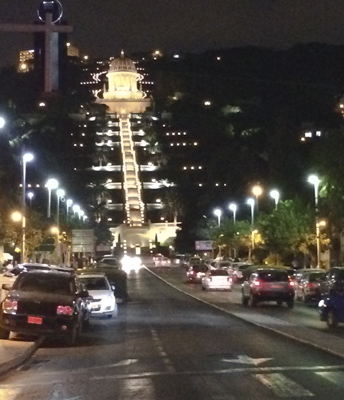
We finally arrived at the foot of the Baha’i Gardens on Ben Gurion Avenue.  The restaurants and cafes were crowded with young people enjoying an evening out.  We went to Fattoush Restaurant and enjoyed a tasty Middle Eastern dinner.  I had a stir-fried dish called Sajiyeh which was amazing!

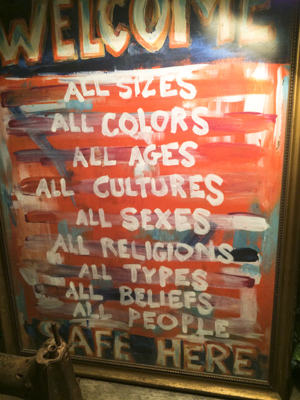
Sign at the door of Fattoush:

It was a long walk back up the hill to the Bay Club Hotel but I had time to think and reflect on another incredible day filled with amazing experiences.

?

Northern Israel: Tsfat to Nazareth

October 4th, 2017

Wednesday – October 4, 2017

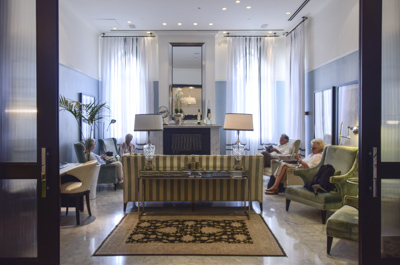
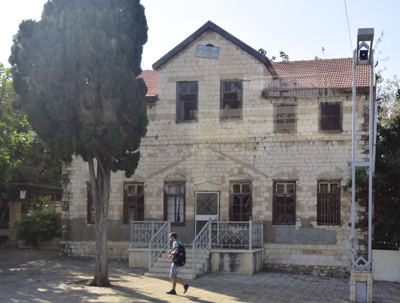
It was overcast and 24 degrees Celsius this morning in the Israeli city of Haifa.  I slept very well and peacefully at the lovely Bay Club Hotel.  It’s a landmark building dating back to 1912.

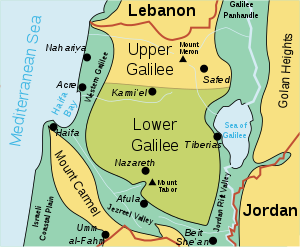
After a tasty breakfast in the sunny enclosed patio, we boarded our tour bus for an hour’s ride northeast to the hill-top city of Safed, or in Hebrew: Tsfat.  There was very little traffic because it was the first day of the holiday of Sukkoth, the “Festival of the Tabernacles,” and businesses and schools were closed.  We drove through the northern part of Israel, near the Lebanese border, between the Sea of Galilee and the Mediterranean Sea. 

With an elevation of almost 3,000 feet above sea level, Safed is the highest city in Israel.  Tsfat is mentioned in the Jerusalem Talmud and is considered one Judaism’s Four Holy Cities, along with Hebron, Jerusalem, and Tiberias.
According to a legend, Safed was founded by a son of Noah after the great flood.  The city has remained a center of Kabbalah and Jewish mysticism since the 16th century.

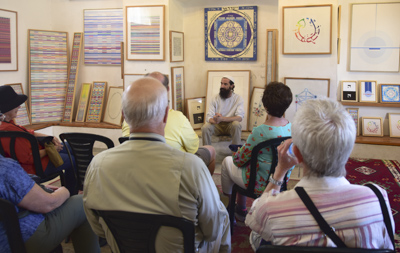
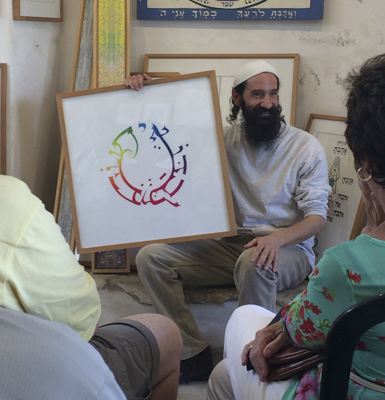
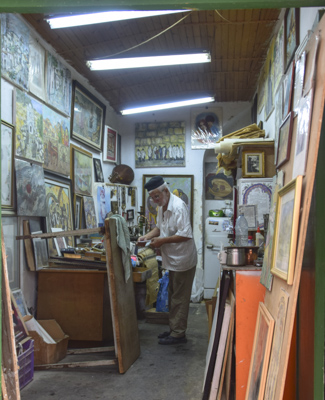
Safed/Tsfat was a pleasant city We entered the Tzfat Gallery of Mystical Art and met the artist, Avraham Loewenthal.  We sat in his showroom and he spoke about the practice of Kabbalah and the influence on his artworks.  Kabbalah is a  school of thought that originated from Judaism.

Kabbalah seeks to define the nature of the universe, human beings, and the purpose of existence.  It also presents methods to understanding and to eventually attain spiritual realization.

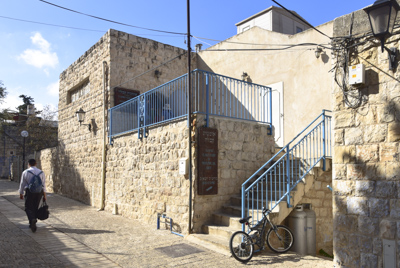
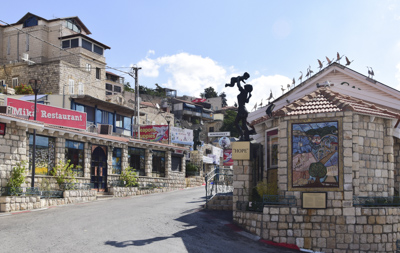
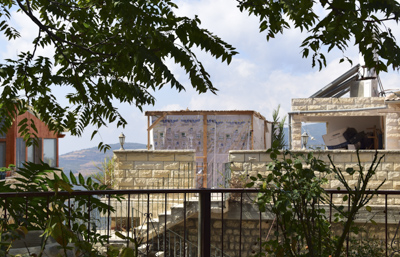
Historically, Kabbalah emerged from earlier forms of Jewish mysticism.  Today, the Safed Rabbi, Isaac Luria is considered the father of contemporary Kabbalah.  Safed was a pleasant city with rectangular stone houses stacked on the side of the hill.  There were many art galleries, restaurants, and cafes for tourists.

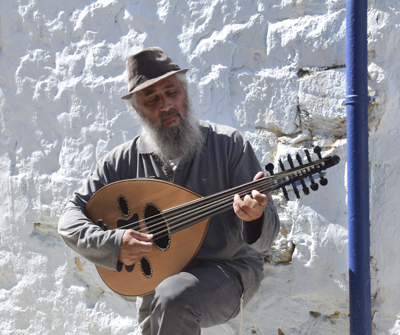
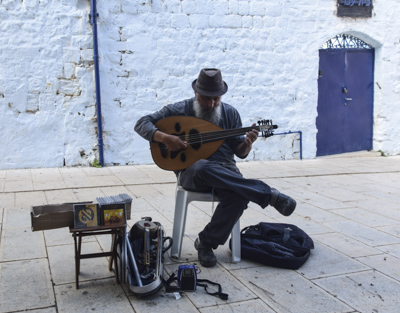
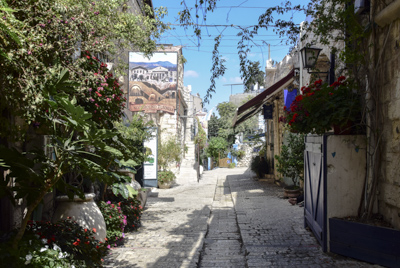
We walked through the quiet streets, passing homes, small synagogues, and galleries.  In a peaceful alleyway, a musician waited for us and played wonderful selections for us.

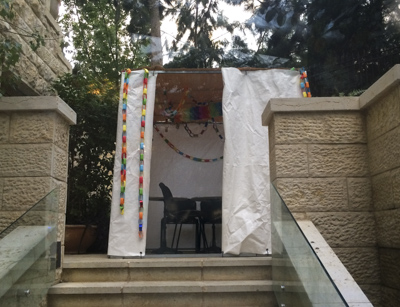
We saw many sukkah as we walked through the city. These are the temporary huts which families build near their homes and use during Sukkoth, the week-long festive holiday.

Some of the narrow alleyways in Tsfat reminded me of the medieval byways in historic French towns.

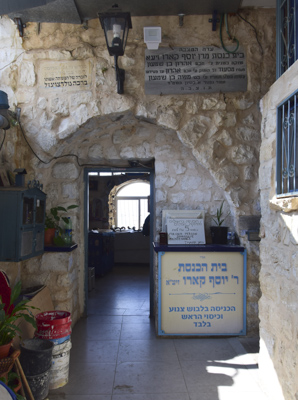
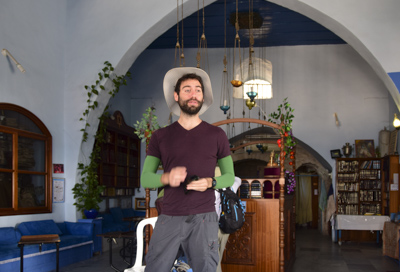
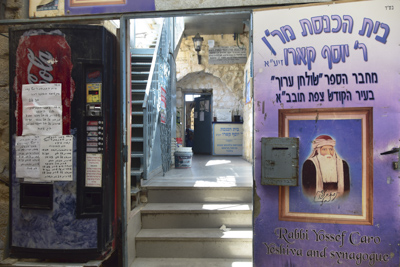
Our group stopped into one of the many tiny synagogues on an unmarked passageway.  Alon Neeman, Rafi’s assistant, answered our questions and explained the history of the synagogue.  The founders of this particular synagogue were Jewish people from Spain.

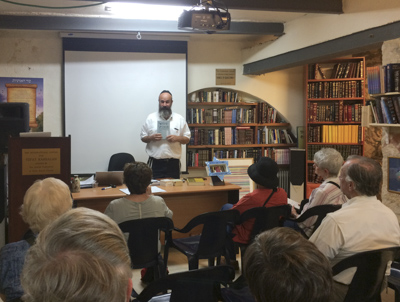
We continued to explore and entered “The International Center for Tzfat Kabbalah.”  The plaque read that the center was “founded by the Jewish Federation of Palm Beach County Florida.”  We saw an introductory film about Kabbalah and a leader provided more information and suggested we purchase some books.

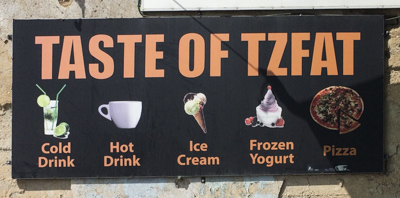
We walked through a passageway filled with shops and galleries on our way back to our bus.  I took some more photos and stopped for a cooling ice-cream.

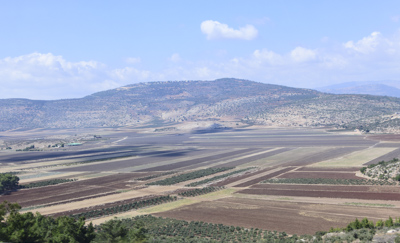
We left Safed/Tzfat as the mid-day sun was warming up.  We drove down the mountainside and looked across the beautiful fertile valley of the Galilee region.

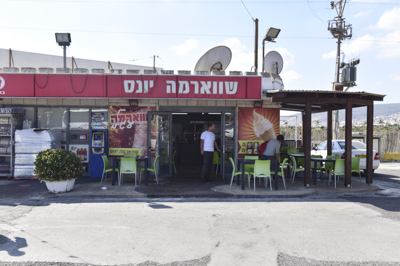
It was time for lunch so Rafi suggested we stop at a gas station road-side restaurant which he knew.  I have no idea about the name of the restaurant as typically many signs in Israel were written only in Hebrew.

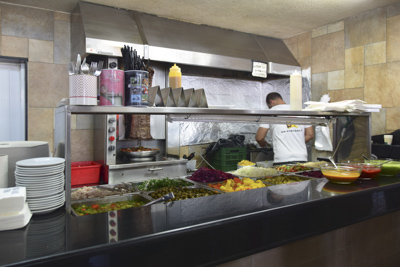
We had a limited choice of kebabs or shawarma – the Middle Eastern sandwich on pita bread.  We chose between chicken or lamb then picked veggies and topped it off with tahini sauce.  Yummy.  Everything was fresh and delicious and we enjoyed an outdoor picnic.

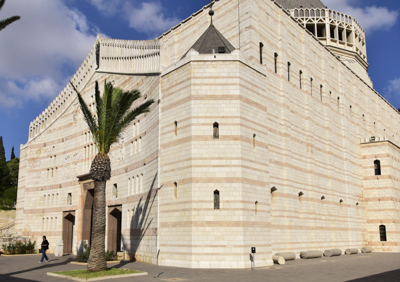
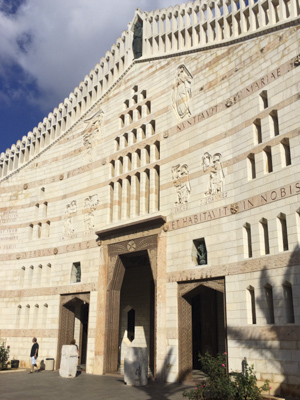
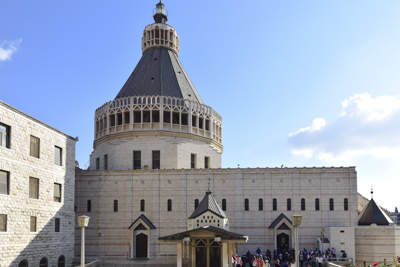
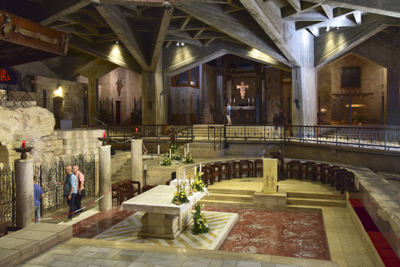
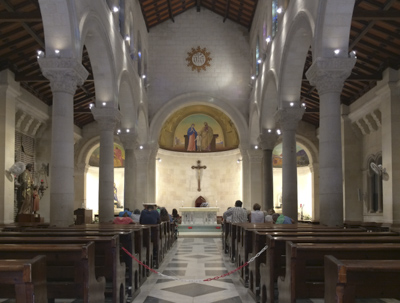
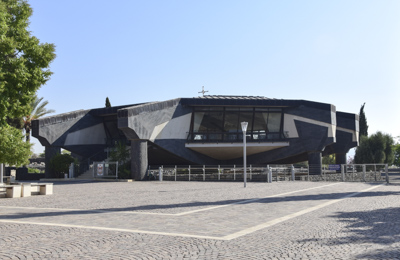
We drove to the city of Nazareth and the bus parked near the Basilica of the Annunciation.  Tradition claims this site was the house of Virgin Mary and the site where the angel Gabriel appeared to her and announce she would bear the Son of God.

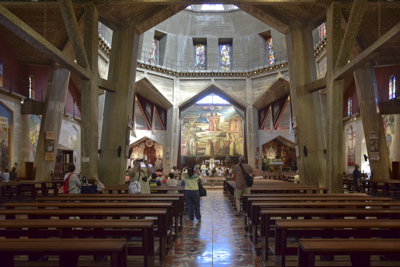
We were surprised to see a modern two-story church which was constructed in 1969.    The new Basilica was designed by the Italian architect Giovanni Muzio and was an unusual design for a church.

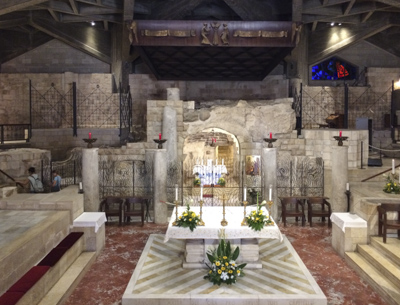
Inside, down central stairs, the lower level of the church contains the Grotto of the Annunciation.

The first shrine was built there in the 4th century and was a simple altar in the cave in which Mary had lived.  A second church was built on this site during the Crusades in 1102.

The main level comprises a large open space with the apse with altar and pews for worshipers.

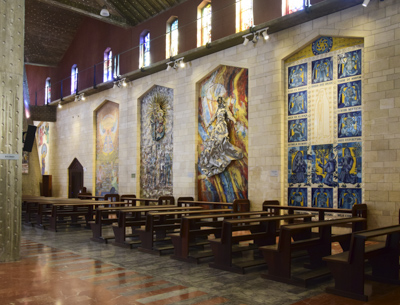
Magnificent large mosaics donated by many foreign countries lined the interior walls of the church.

Near the Basilica of the Annunciation, there was St. Joseph’s Church which was a lovely small Franciscan church.  It was built in 1914 over the remains of much older churches.

We returned to the Haifa Bay Hotel to relax and we noticed they had built a Sukkah hut near the dining room.  Rafi gave us craft-paper and we had fun making paper-chain decorations for the Sukkah.  Our Sukkah looked beautiful!

I had another amazing day full of stimulating experiences and thought-provoking ideas.

Tel Aviv to Haifa, Israel

October 3rd, 2017

Tuesday – October 3, 2017

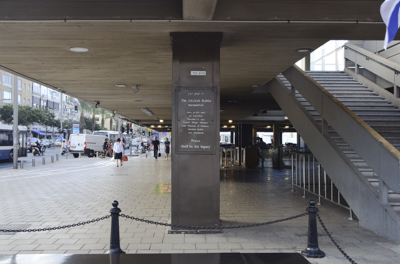
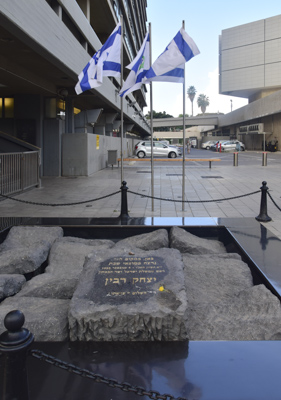
We began the day on a sad note when we visited the tragic site in central Tel Aviv where Yitzhak Rabin was murdered on November 4, 1995.  He was the fifth Prime Minister of Israel and was serving his second term in office.  Rabin supported the Oslo Accords which was beginning the process of a peace treaty based on the “right of the Palestinian people to self-determination.”

Prime Minister Rabin walked down the steps in the photo above, after attending a peace rally and a young right-wing “ultranationalist” shot Rabin and killed him.  It was sad to think that if Yitzhak Rabin had lived, the world might have had a treaty between Israel and Palestine 22 years ago and perhaps peace in the Middle East today.

Yitzhak Rabin said, “We must think differently, look at things in a different way. Peace requires a world of new concepts, new definitions.”

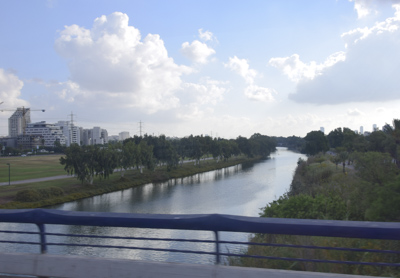
Tel Aviv is the only city in Israel with a river and we drove across the Yarkon River on our way out of town.  Yarqon means “greenish” in Hebrew.  The Arabic name is al-Auja which means “the meandering.”

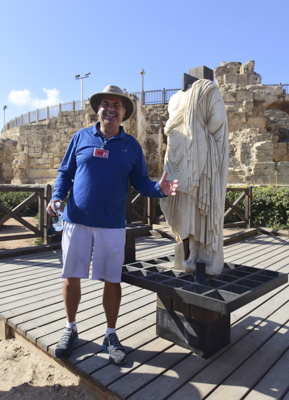
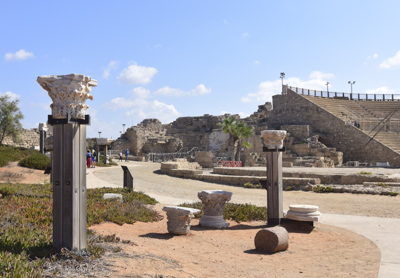
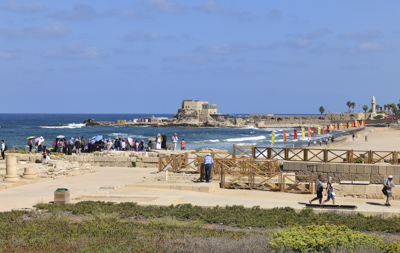
We were on our way north along the Mediterranean coast toward the city of Haifa.  We stopped at the Roman town of Caesarea which had been a Phoenician naval station and was given to Herod the Great in about 30 BC.

Rafa explained the long and complex history of conquests of the Roman port. After Roman rule, Caesarea became the Byzantine capital of the province.  In the 7th century, the city was conquered by the Muslims, followed by the Crusaders.  In the last century Bosnian Ottoman immigrants settled nearby and more recently, a Jewish town was established near the ruins of the old city.

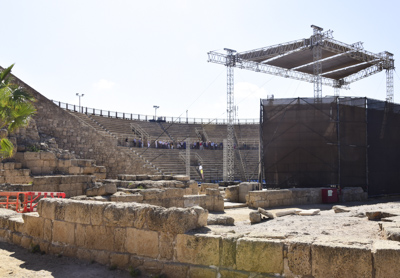
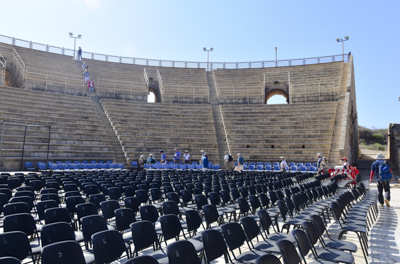
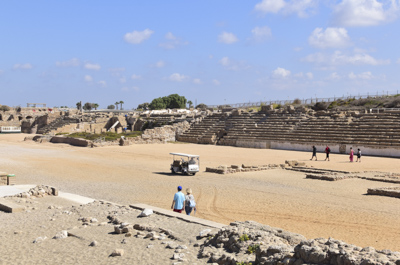
The Roman amphitheater is currently used for concerts:

Today, the ancient port city is a national park, the Caesarea Maritima, and is undergoing restoration and development due to a charitable foundation originally set up by Baron Edmond James de Rothschild.

Today the Rothschild Caesarea Foundation is chaired by Baron Edmond’s great grandson, Baron Benjamin de Rothschild.  Caesarea remains the only locality in Israel managed by a private organization rather than a municipal government.

The original port was built during the first century BC and was the largest artificial harbor built on the open sea.

A hippodrome was located near the harbor which was used for horse and chariot races.

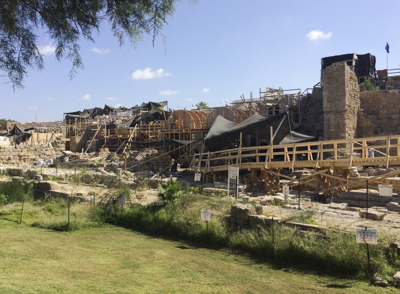
Reconstruction of the Caesarea Harbor Vaults will give future tourists an experience of a magnificent Roman Temple built to honor Caesar Augustus:

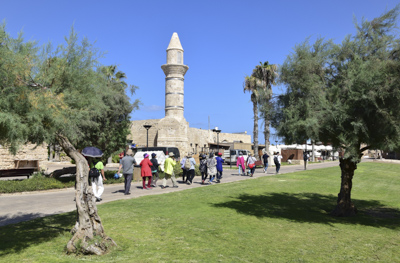
Tourists walking past the 19th century minaret of the Bosnian mosque:

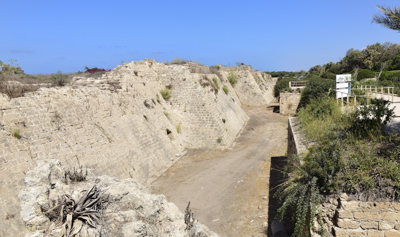
Remnants of the walls and moat built by Louis IX in 1251:

Walking around Caesarea was a stroll through history from Roman to modern times with cultural/historical glimpses in between.

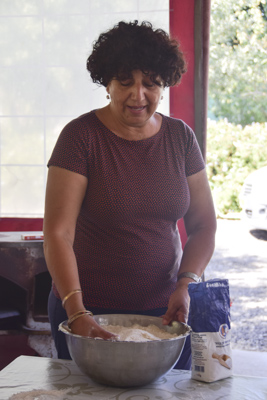
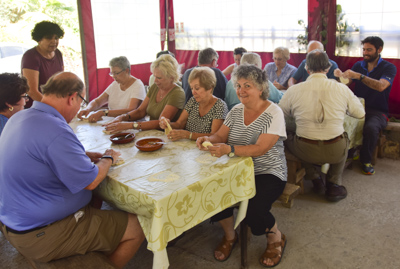
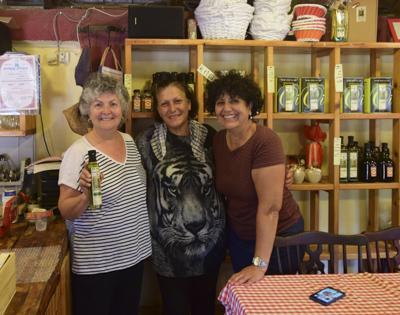
Afterwards, we drove to Yonay Olive Farm and met the owner, Shoshi Yonay.  She immediately took us into a workroom and demonstrated how to make pita bread.

We watched Shoshi mix flour, salt, yeast, and a bit of olive oil together in a bowl.  She gave each of us a lump of dough.  Then we kneeded and shaped our individual pita breads and added Shoshi’s pre-mixed toppings.

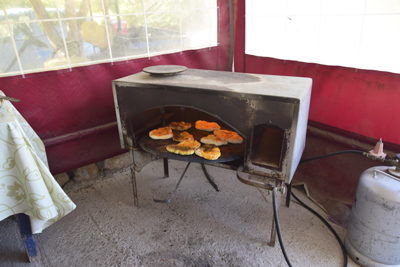
Shoshi put our pitas on the hot tray inside her double-flame oven.  The breads quickly baked and were ready in a few minutes.

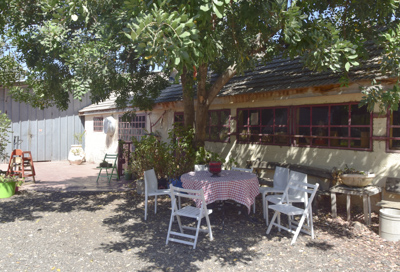
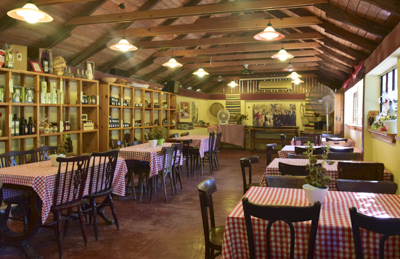
Such a fun activity and we were ready for lunch!  We walked over to Yonay Farm’s dining room and shop.

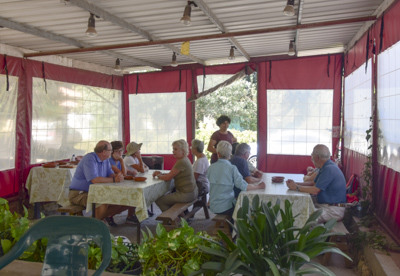
We ate a delicious vegetarian lunch of farm-fresh salads topped with fantastic Yonay Farm’s olive oil dressing and herbs and, of course, our fresh baked pita bread.


Shoshi talked about Kfar Hasidim, the cooperative farming village which her husband, Ehud’s great uncle founded in 1925 when a small group of Polish Jews emigrated from Poland.  Ehud’s mother was the daughter of the rebbi and his father was a mounted ranger who communicated with local Bedouins and wrote two books about their culture.

Ehud lived in the United States for 30 years but returned to Israel to continue the farm with his wife, Shoshi.  Ehud died in August 2012 and Shoshi continues to run the operations of the farm, shop, and restaurant and  she conducts tours for interested tourists.

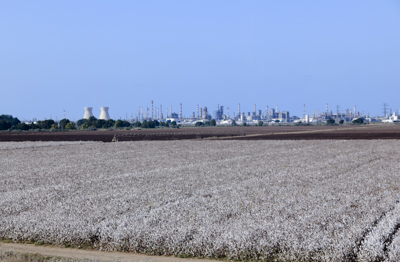
We bid our farewells to Shoshi Yonay and drove to the northern city of Haifa. On the way, we passed large cotton fields and learned that Israeli cotton is among the finest in the world.

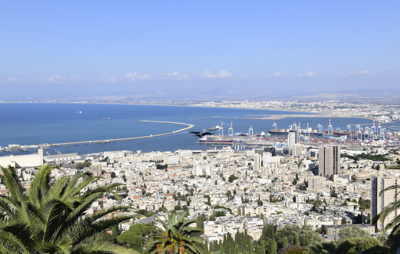
As we drove into the port city of Haifa, we saw the commercial port in the distance and the Israeli Naval Base in the harbor.  We passed several distinct buildings on Ben Gurion Avenue and Rafi explained we were in the “German Colony.”

The “German Colony” is a small area in Haifa which was founded in the late 1860’s by German Templers.  They were a religious Protestant sect which settled in northern Israel in the early 2oth century and developed the neighborhood.  By 1941, most of the Templers were sent to internment camps or deported to Australia.

Today, some of the old Templer buildings have been restored and turned into cafes, boutiques, and restaurants and the colony has become a center of Haifa nightlife .

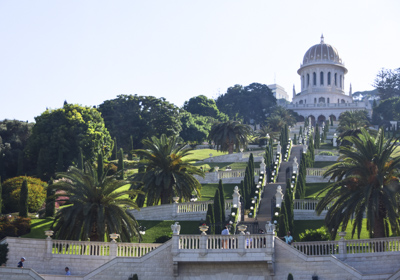
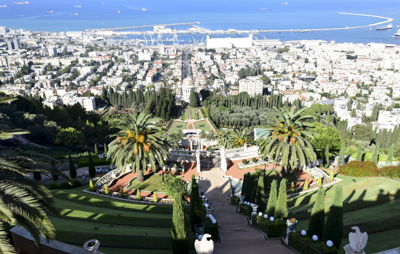
The German Colony is located at the foot of the beautiful Bah’ai Gardens.  Our tour bus drove up to the top of Mount Carmel above the gardens and we admired the view of Haifa’s magnificent harbor.

We looked down on Bah’ai Gardens, which is part of the Bah’ai World Center, a UNESCO World Heritage Site.

The Bah’ai faith was established 200 years ago by a Persian prophet, Bab who wanted to spread his beliefs.  The religion teaches the essential worth of all religions and the unity and equality of all people.  Today, there are seven million followers of the Bah’ai faith in the world, making them the 4th monotheistic religion.

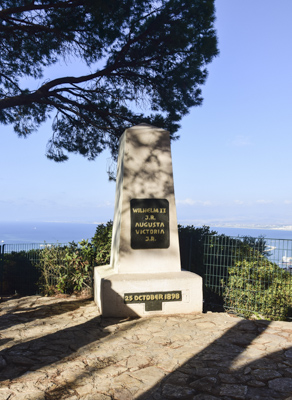
In ancient Canaanite culture, Mount Carmel was considered a sacred place.  In modern times, according to a plaque, two historic events had occurred on the site.  Wilhelm II, Kaiser of Germany, visited the mountain in 1898 and met with Theodor Herzl, then called “the prophet of the Jewish State.”  The other event was the end of 402 years of Turkish rule when the army of British General Allenby captured Haifa in 1918.

We descended Mt. Carmel and our tour bus drove to the lovely Bay Club Hotel.  We checked in and rested……
What a day!!!