Jaffa and Tel Aviv, Israel

October 2nd, 2017

Monday – October 2, 2017

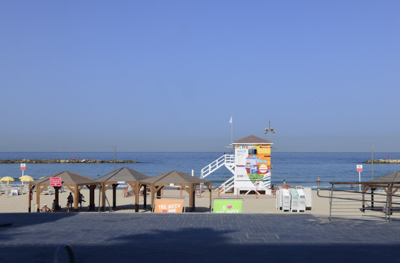
It was sunny and a comfortable 71 degrees this morning.  Our group enjoyed a tasty breakfast at the Cinema Hotel.  Afterwards Rafi Rozanes, our Israeli tour guide, conducted an introductory briefing in the hotel library.  Afterwards, we were off to explore on our first day in Israel.  We passed the beautiful beach in Tel Aviv which is located in the eastern part of the Mediterranean Sea.
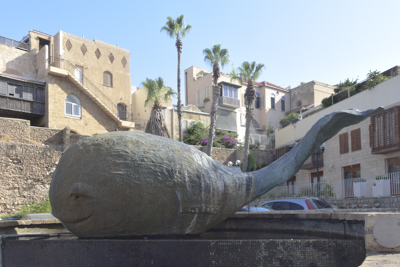
The bus drove us to the ancient port of Jaffa which is the oldest part of Tel Aviv and is a natural harbor which has been in use since the second millennium BC.  Jaffa or Yafo is famous for its association with the biblical stories of Jonah, Soloman, and Saint Peter, so it was fitting for Rafi to relate the story of “Jonah and The Big Fish.”
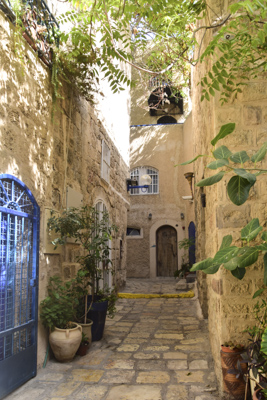
We walked through lovely alleyways of Jaffa’s Old City.  Parts of the city were renovated and have become gentrified so today, Jaffa is a tourist attraction featuring art galleries, theaters, souvenir shops, and restaurants.
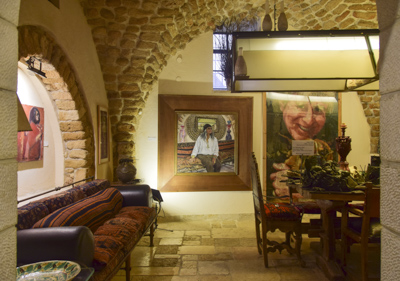
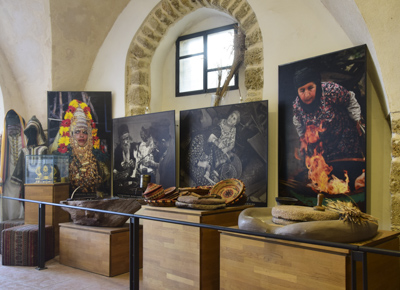
In recent times, the two cities have physically joined together and Jaffa is part of Tel Aviv and has a multi-ethnic population of Arabs, Christians, and Jews.  We stopped at Ilana Goor’s Museum to see her artworks and her incredible house which overlooks the Mediterranean Sea.  The artist was born in 1936 in Tiberius, Israel and still lives in the house.
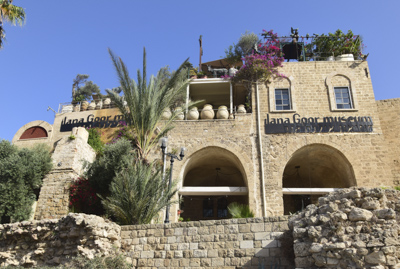
The 18th century house is a fantastic backdrop for the artist to display her own works as well as art works of other contemporary artists.  The Ilana Goor museum has a collection of more than 500 works of art which she amassed during the last 50 years from many parts of the world.
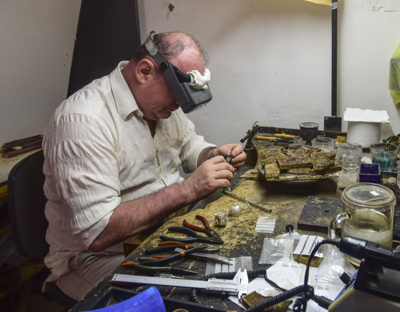
Later,we continued to explore and we stopped at a Yemenite jeweler’s studio near the Goor Museum.  We heard about the 47,000 Yemenite Jews who left Yemen in 1949 during Operation Magic Carpet and settled in Jaffa.
Outside there was an archaeological project which showed the many layers of ruins hidden beneath the earth of Jaffa since Egyptian times.  Rafi explained the ancient history of Jaffa to us.  Beyond was St. Peter’s which is a Franciscan church built between 1888 and 1894.  A previous church had been built in 1654 over the original church which was erected during the 13th century.
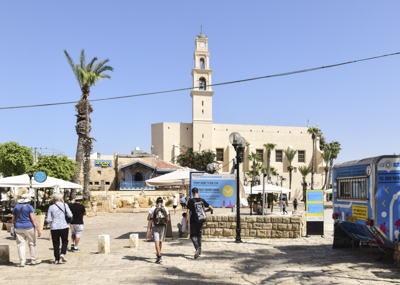
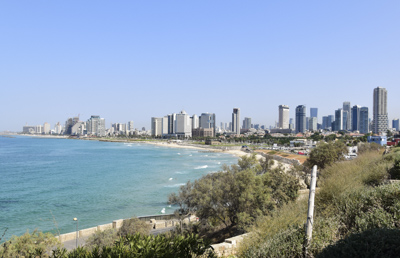
We walked to an overlook and admired the skyline of Tel Aviv in the distance.
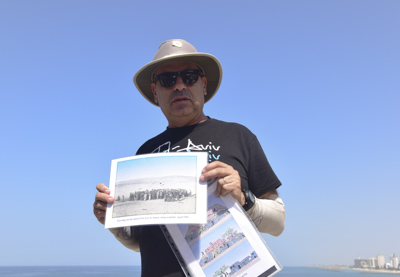
Rafi told us the history of Jaffa and Tel-Aviv and showed a photo of Jewish families who used a lottery system to divide the land among themselves in 1909.
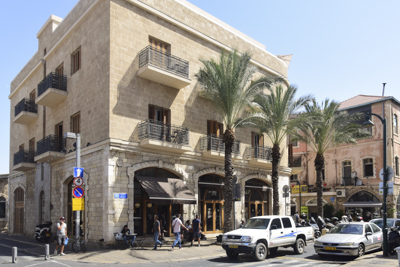
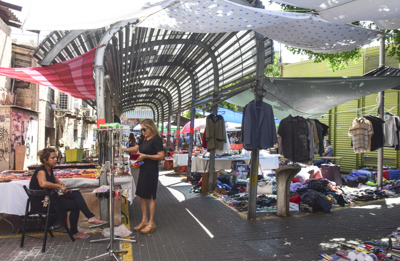
Afterwards, we walked to the old section of Jaffa and explored the markets. This neighborhood was full of shops and stalls selling carpets and used furniture.
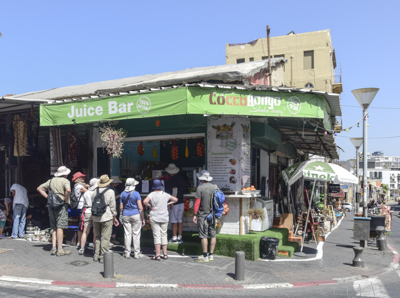
We stopped at a Juice Bar called Cocco Bongo for a cold drink of fresh squeezed pomegranate juice.  The temperature was in the mid 80s and the juice was very refreshing.
We continued to an area that looked like a flea market with used clothing and household items spread on the ground and on makeshift tables.
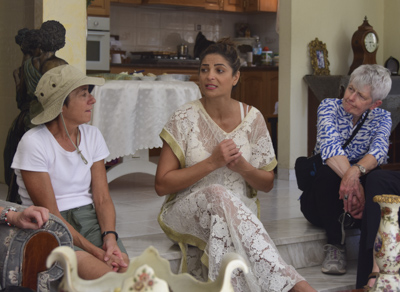
After we walked around for quite a while, we took our bus to the home of a local woman who lives in Jaffa.  She had prepared a light lunch for us.  Her name was Doris and she introduced herself as a Christian, Arab, Israeli because she is a Christian woman whose family is from Lebanon and she lives in Israel.
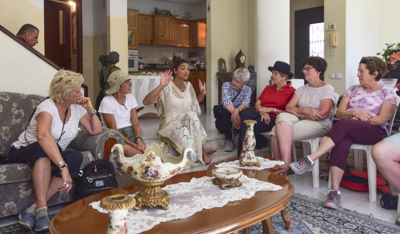
Doris entertained us with stories about her life and experiences living in Israel.  I think we had a peek into what it’s like to live in a multicultural environment in the Middle East.  Doris showed her ‘bomb shelter’ to us  on our way out and we bid our farewells.  All houses in Israel are built with secure bomb shelters.
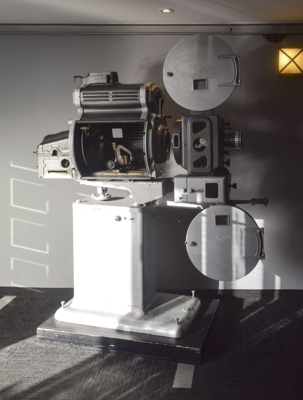
We returned to the Cinema Hotel and I took a few photos of some of the artifacts in the public areas.  The hotel is an authentic Bauhaus building dating back to the 1930s.  The hotel was once one of Tel Aviv’s first movie theaters and has wonderful original theater memorabilia on display.
Crossing the Border: Jordan to Israel

October 1st, 2017

Sunday – October 1, 2017

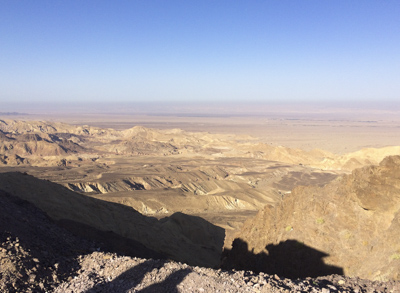
Another early morning and we were on our way to Israel.  It’s about 150 miles from Petra, Jordan to the King Hussein/Allenby Bridge but takes almost four hours travel time across the mountainous desert.

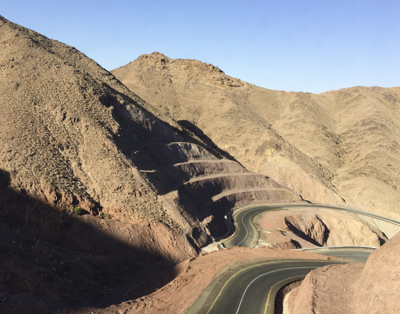
This is the best photo I could take from the bus of three consecutive hair-pin turns on the highway.  We crossed the Jordanian highlands for a couple of hours and finally stopped at a scenic overlook.
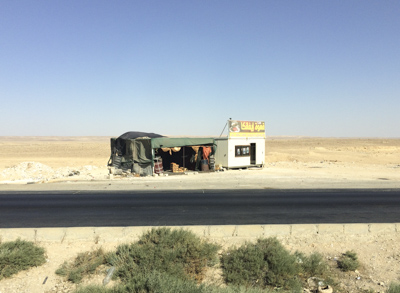
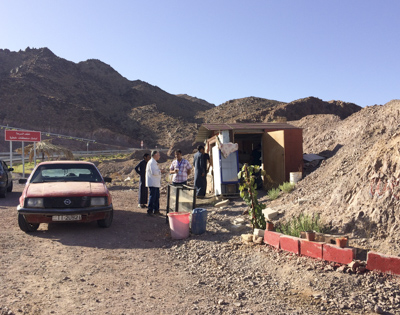
Mohammad bought a cup of coffee and talked with the local Bedouin who set up the makeshift rest stop.  Then we were on our way down the mountains to the flat Jordanian plains and farmlands.

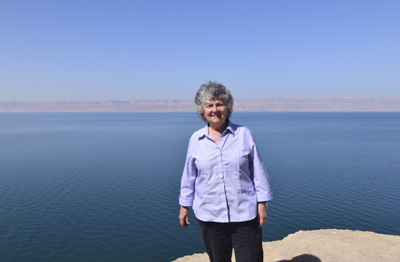
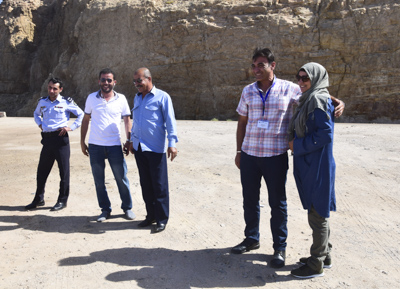
We made another stop along the Dead Sea and looked across to Israel.  Coincidentally, Raynia another tour guide who we had dinner with in Amman, was also there with some friends.

We chatted for a few minutes and then wished her well.  She is the first female tourist guide in Muslim Jordan and will soon lead groups around her country.  There was a lot of truck traffic leading to the border and our bus was stalled and side-lined for about an hour.
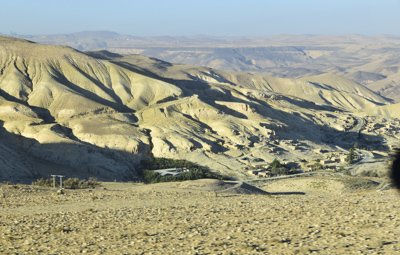
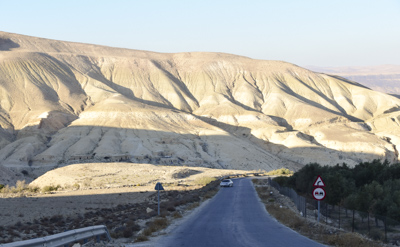
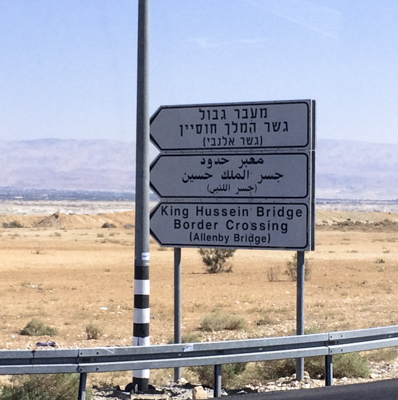
Mohammad took our passports into the office and had them stamped for us.  We said goodbye to him on the Jordanian side and the driver took us across the King Hussein/Allenby Bridge.  Several people in our group were stopped on the Israeli side for a number of reasons for questioning, but it was generally an uneventful border crossing.

We met our Israeli Tour Guide, Rafi Rozanes and an OAT Trainee, Alon Neeman, and our driver, Ahkmed.  We boarded our new coach and we were in sunny Israel.

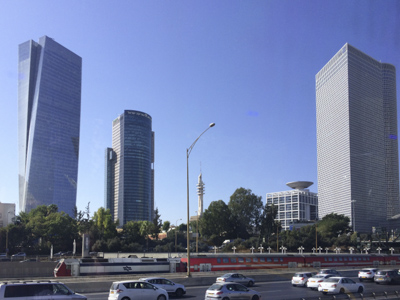
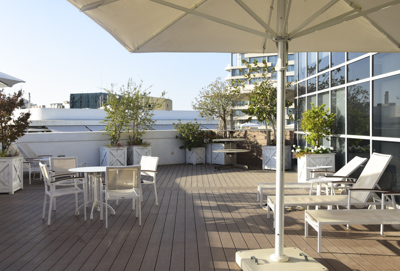
About an hour later, we were driving through the beautiful modern city of Tel Aviv, on our way to the Cinema Hotel.  We checked in and arrived in plenty of time for free snacks at “Happy Hour” on the outdoor terrace of the hotel.

Ahh civilization…….


Petra, Jordan

September 30th, 2017

Saturday – September 30, 2107

The Petra Moon Hotel was a short walk to the famous archaeological site.  We ate an early breakfast and walked down the hill to the Visitors’ Center.

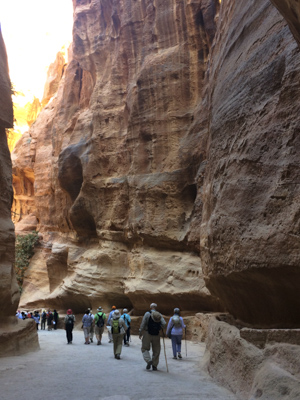
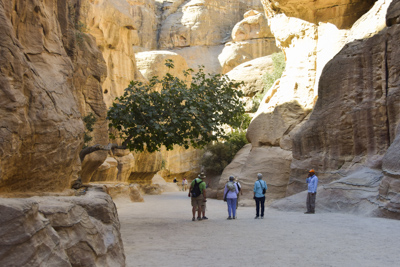
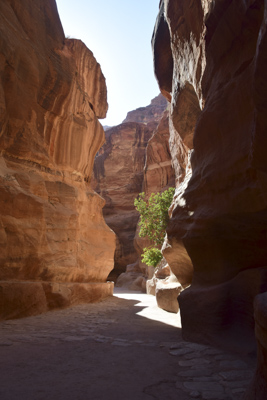
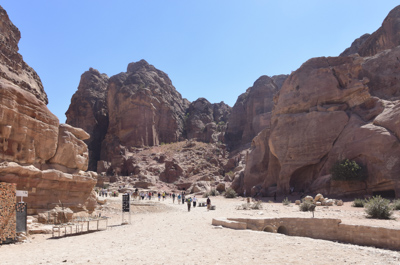
The well worn path led to an area where local Bedouins had horses available for people to ride instead of walking to the Siq.  Al Siq is the narrow gorge that leads to the entrance to the city of Petra and is about a mile long.

Originally known as Raqmu, Petra is perhaps the most spectacular ancient city remaining in the modern world today.  The “Red City” is a UNESCO Heritage Site and one of the New Seven Wonders of the World.  As we entered the Siq, the path narrowed to about 15 feet across.  The walls towered 650 feet above us.

Sometime during the sixth century BC, nomadic Nabataeans settled and made Petra their capital.  The Nabatean Kingdom preserved its independence for centuries.  They created an amazing system of hydraulic engineering in the desert.  Channels were carved out of the rock and earthenware pipes, dams, and cisterns were constructed to collect water and to irrigate farmland.

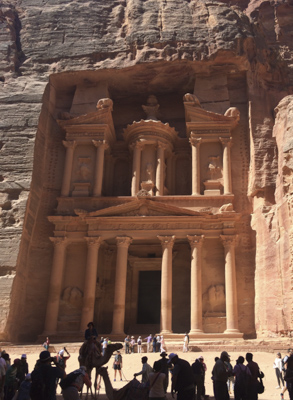
After we followed the winding path for about a mile, the narrow Siq opened to reveal the most impressive monument in Petra: al-Khazneh, (Arabic for “the Treasury”).  It was carved out of solid rock from the side of a mountain and stands over 150 feet high.  Although it served as a royal tomb, the Treasury gets its name from a legend that pirates hid their treasure there.

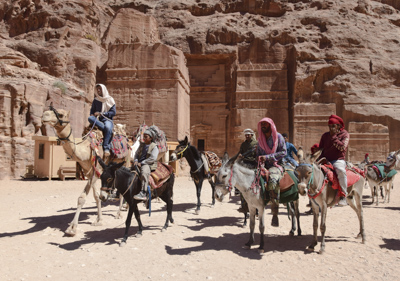
After walking more than two miles to reach The Treasury, we rested and watched the flurry of activity in front of the incredible stone carving.  It was a noisy chaotic mixture of tourists, camels, donkeys, horses, and local Bedouin boys selling postcards and jewelry.

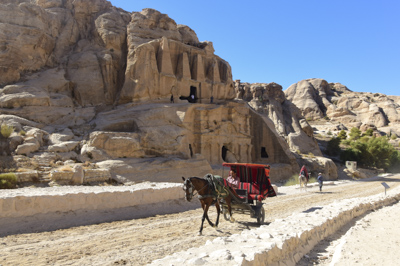
We passed through another short steep gorge to reach the wide heart of the city between towering cliffs.  The steep rock faces were carved out for tombs, markets, temples, baths, and cave dwellings.

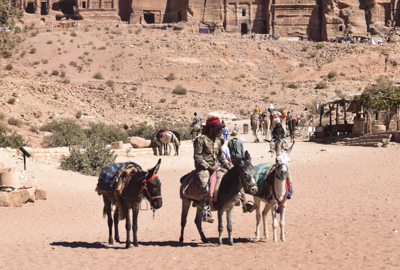
It was a long walk along the main canyon between Petra’s cliffs.  We were entertained by the camel drivers and their relatives selling donkey and horse rides.  The enterprising young Bedouin in the photo below told me his three donkeys were named Ferrari, Lamborghini, and Maserati.

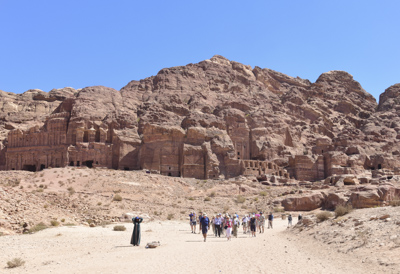
Tourists passing the Royal tombs:

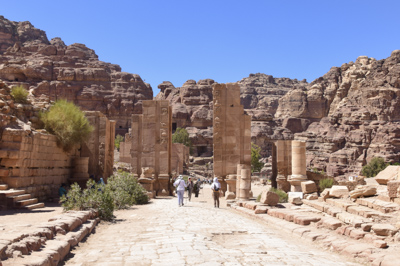
We walked along a narrow thoroughfare called The Colonnade which was built curing Roman times, about 100 AD.  Historians believe it was used for ceremonial purposes.  The ruins of the triple-arch Temenos Gate are at the western end of the Colonnade.

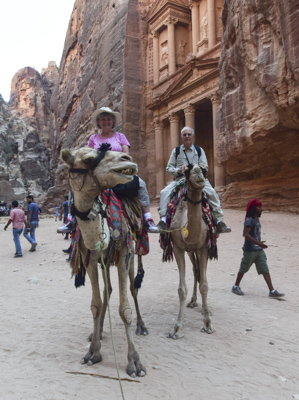
Our reward at the end of a long walk was lunch at the Crowne Plaza restaurant which is the end for point for most tourists.  Some tourists like to continue on the path and climb 850 steps up to the Monastery, but I did not.  After lunch, I began to walk back to the Visitors’ Center but was easily persuaded to take a camel ride back to the Treasury.

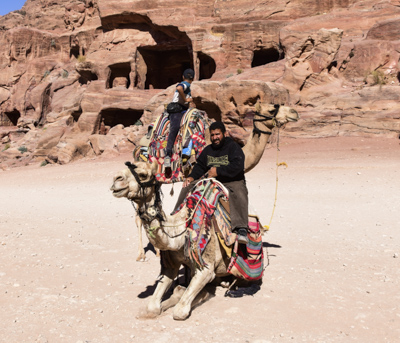
The kind owner with his two camels.  He said they were gentle animals with good memories.

My camel’s name was Zoo Zoo, and it was sooooo much fun to ride!!!!!  The highlight of my trip!!

We walked back through the beautiful Al Siq gorge and the long path to the Visitors’ Center and back to the hotel.  Visiting spectacular Petra was one of the most exciting, breathtaking, and amazing experiences of my life.  Riding Zoo Zoo was a thrilling and fun experience.  I will never forget Petra.


King’s Highway From Amman to Petra, Jordan

September 29th, 2017

Friday – September 29, 2017

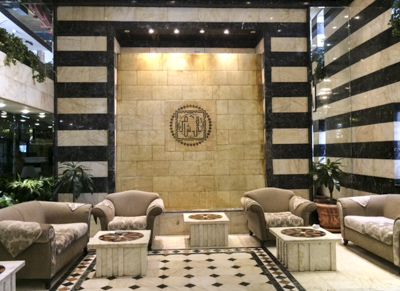
Lobby of the Cham Palace Hotel in Amman, Jordan:

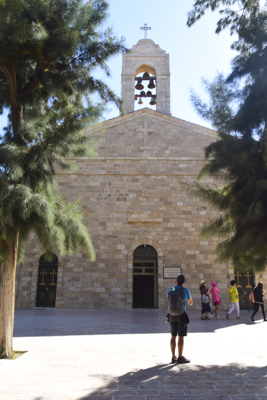
After breakfast we set off on our drive south along the King’s Highway.  The road has been an international trade route for the last 5,000 years.  Our first stop was the ancient city of Madaba, about 30 km from Amman, which is known for its beautiful Byzantine mosaics.

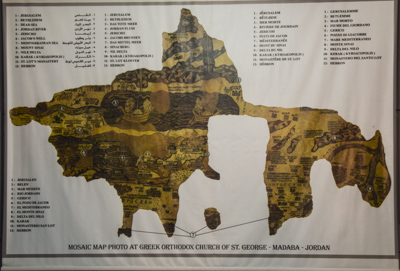
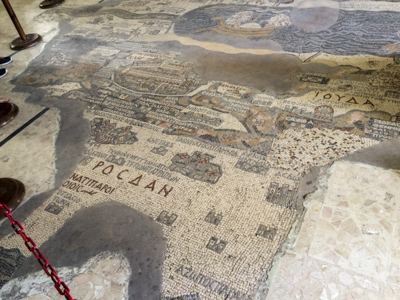
Madaba is known for the 6th century mosaic map of the Holy Land which is located in the Greek Orthodox Church of St. George.  The “Madaba Map” is part of a floor mosaic and is considered to be the “oldest surviving original depiction of the Holy Land.”  The photo below is an artist’s drawing of the map.  Our tour guide, Muhammad, described the ancient symbols to us using this drawing.

The map depicts Jerusalem during the period from 542 to 570 AD.  It was created by unknown artists for the Christian community of Madaba.  Photo of the real map:

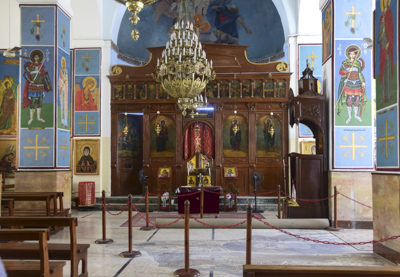
The interior of St. George’s Greek Orthodox Church is below.  The mosaic map is enclosed on the floor within the red chains in front of and to the right of the main altar.

Less than 10 kilometers west of Madaba is Mt. Nebo, known as Pisgah in the bible.  It is purported to be the place where Moses lived out his remaining days and viewed the Promised Land from a distance on top of the mountain.

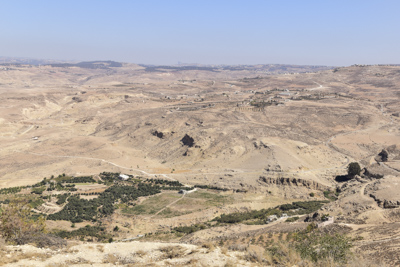
The spectacular view from the summit provides a panorama of the Jordan River Valley, the West Bank city of Jericho, and on clear days, Jerusalem and Bethlehem.

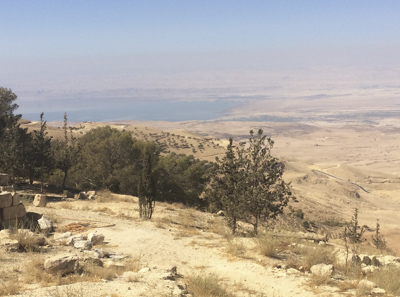
Mount Nebo rises almost 2700 feet above sea level.  Although it was a bit hazy, the Dead Sea was visible from the summit.

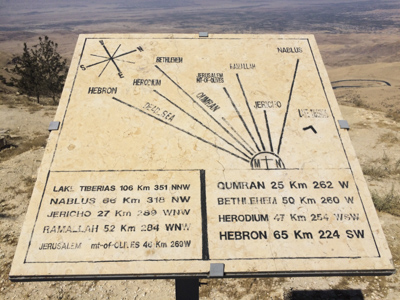
The plaque pictured below shows the distance and approximate locations from Mt. Nebo to many of the sites which my tour group and I will visit during the next few weeks.

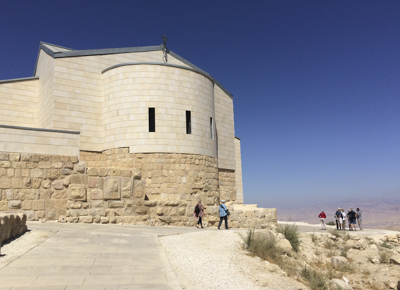
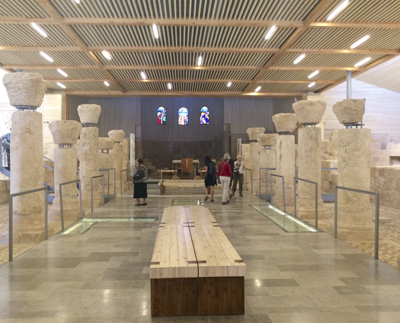
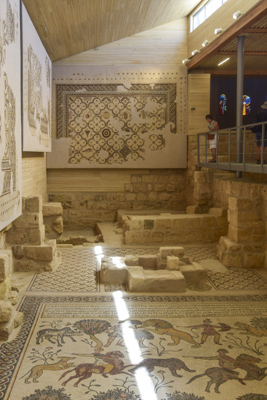
The remains of a late 4th century Byzantine church and monastery were discovered on the Mt. Nebo summit in 1933.  A modern chapel was built to cover and protect the site as well as the ancient mosaics.  The original columns, mosaics, and walls were visible inside the chapel.

The chapel had been closed for renovation since 2007 and was reopened in 2016, so we were lucky to be able to visit this historic place.

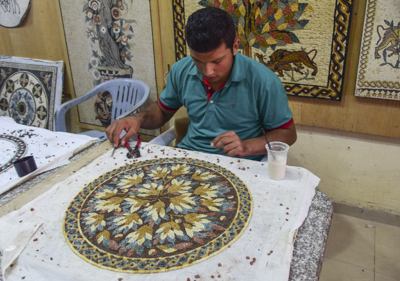
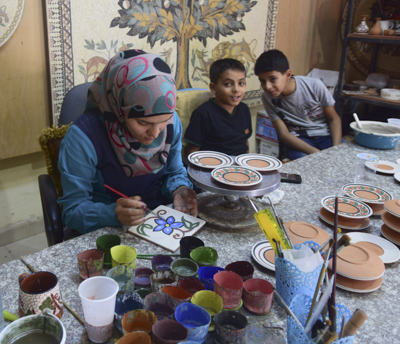
We ate lamb stew, tabouli salad, hummus, and baba ganoush for lunch in a restaurant called the Terrace Souk.  Afterwards Muhammad took us to a mosaic factory located nearby.

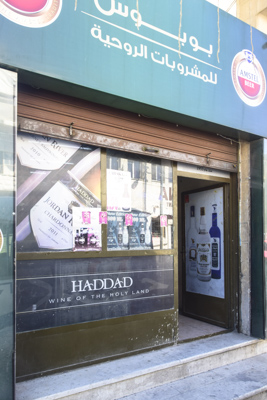
The handmade mosaics were lovely and several group members made purchases.  Our next short stop was a liquor store because a few people asked about buying beer in Jordan.  Stores that sell alcohol in the Muslim country are owned by Christians.

We stopped at a very sketchy looking shop and a few people purchased what they wanted.  We learned it was 3 Jordanian Dinars for a can of beer with 8% alcohol.

We continued south on the King’s Highway through the Mujib Valley.  This long meandering road has been the route of north-south trade and scenes of battles since prehistoric times and is mentioned in the bible.

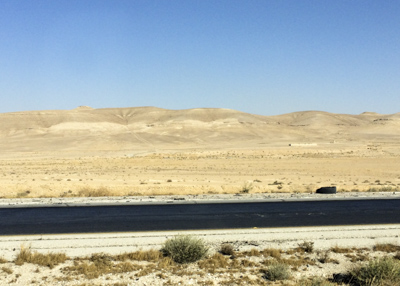
The view out of the bus window reminded me of the drive through the Kyzylkum Desert in Uzbekistan.  This was barren land as far as I could see with low hills of sand and stones.

Occasionally, there was a Bedouin village of shabby tents with enclosures for animals.

There were container trucks on the other side of the highway, driving north from the Jordanian millenniaport city of Aqaba on the Red Sea.  The terrain became more hilly as we continued south and I wondered about the people who live on this rugged land and how they survive.

At four o’clock, we stopped for a break at a rest-stop which looked like a caravanserai.  I paid mental homage to the traders, pilgrims, and Crusaders who passed through this region over the millennia while I enjoyed a refreshing ice-cream.

We drove down steep hills and around hair-pin turns to arrive at the Petra Moon Hotel as darkness settled onto the modern city of Petra.


Jerash & Ajlun, Jordan

September 28th, 2017

Thursday September 28, 2017

A sunny cloudless 61 degrees Fahrenheit in the morning. We boarded our van and drove an hour and a half north of Amman to the city of Jerash, which is located near the Syrian border.  During ancient times it was known as the city of Gerasa and was inhabited from the third millennium BC.

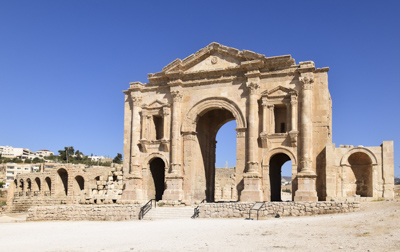
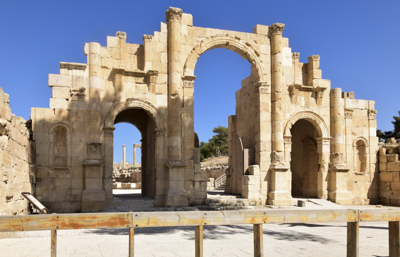
We entered through an arch which was built in 130 AD to honor the Emperor Hadrian who visited Gerasa.

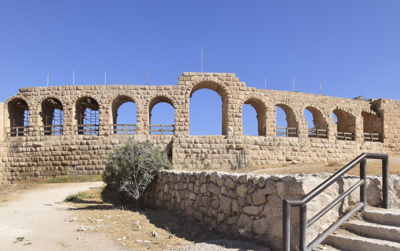
North of the arch is the Hippodrome which is currently under restoration.  A huge building was built during the 3rd century AD and was designed for horse racing and other sports events.

We entered the sprawling open-air museum through the south gate.  Alexander the Great conquered the area in 334 BC and Gerasa became the site of a Macedonian Greek colony.

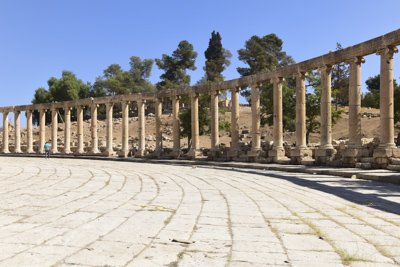
The ancient city was ravished by massive earthquakes and many wars which took place over the years.  The ruins of Gerasa laid buried until 1806 when a German explorer, Jasper Seetzen, began a number of excavations.  During this time, Jerash was inhabited by a small Muslim community.  The Oval Plaza or Forum from the 1st century AD is enclosed by 160 Ionic columns:

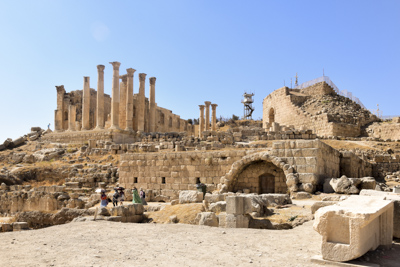
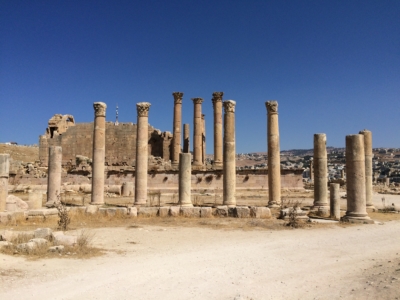
Gerasa is considered to be the most significant and best preserved Greco-Roman city ever discovered.  Excavations and preservation continue today because much of the ancient city still lies under the earth.  Jerash has flourished during the last 100 years and is a popular tourist attraction.  The Temple of Zeus in the photo below was built during the 1st to 2nd century AD.

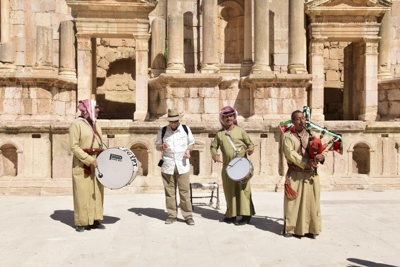
At the Southern Theater which is an amphitheater which seats 3000 people, we were greeted by three musicians dressed in traditional Jordanian military costumes.  They played Scottish tunes for us and led our group in a dance.

The Temple of Artemis was dedicated to honor the patron goddess of the city:

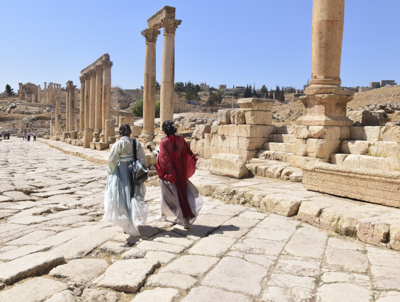
The Cardo, or main thoroughfare, connected the different sections of the city and led me back to the Arch of Hadrian.

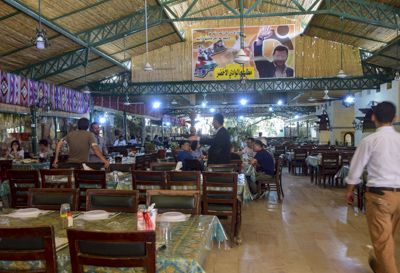
We had a Jordanian lunch at the Green Valley Restaurant.  It was a large and noisy restaurant filled with international tourists and friendly servers.

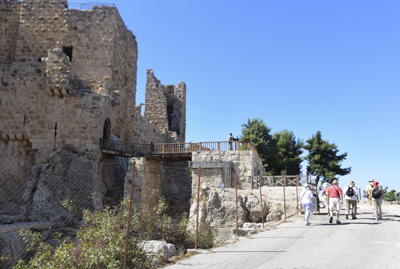
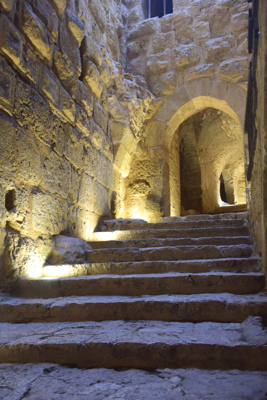
After lunch, we drove through fertile green hills lined with olive groves to the city of Ajlun to climb up to the top of the Ajloun Castle.  This is a 12th century Muslim castle placed on a hilltop in the northwestern part of Jordan.

The fortress was constructed in 1185 AD in order to help the authorities in Damascus control the Bedouin tribes of the region.

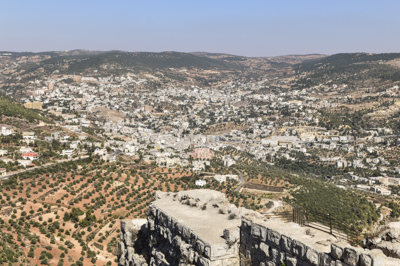
The fortress dominated a wide stretch of the northern Jordan Valley and was one of the very few Muslim fortresses built to protect their realm against the Crusaders.  Here is a view of the modern city of Ajlun from the top of the castle:

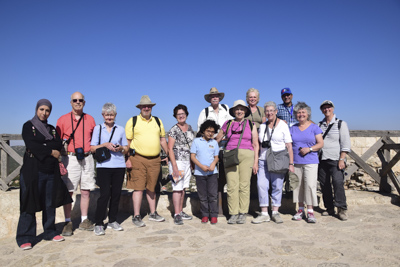
We spoke to a lovely young Jordanian couple who were visiting Ajloun Castle with their young son.  Below is a group photo:

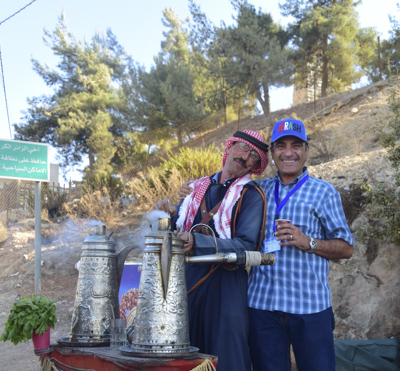
Mohammad ran into one of his cousins who was selling coffee-with-cardamom at the side of the road.  We decided that Muhammad had thousands of cousins scattered all over Jordan.  They posed for a photo:

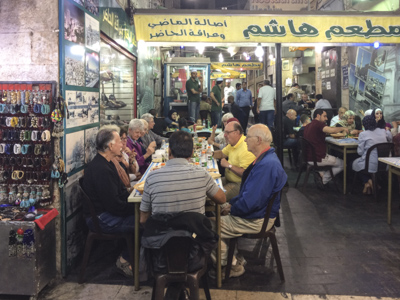
Later, we went to dinner in the old section of Amman. We ate at a local family restaurant called Hasham which was tucked into an alleyway between two buildings.  It was an experience!!

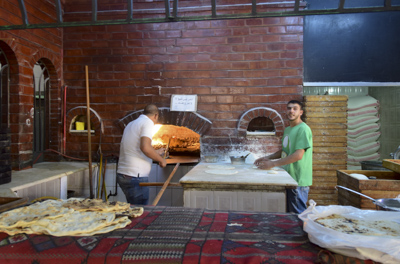
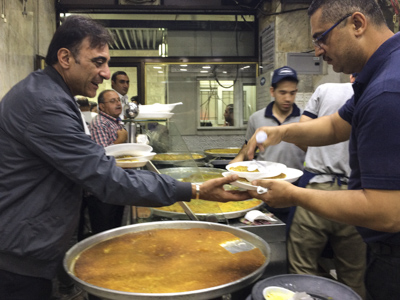
We waited in a long line with local people to buy knafeh (pronounced: ka-nah-feh) a sweet dessert made with stretchy cheese layered with flat cake and topped with pistachios.

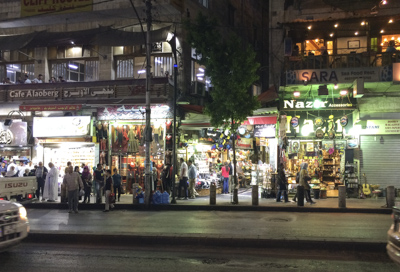
There was a lively crowd of local people shopping, dining, and walking along the main street.