Colonial History

November 8th, 2013

Friday, November 8, 2013

My last entry was written at the beginning of this trip.  Now I’m writing at the end of a very busy week which was filled with history and genealogy lectures at Colonial Williamsburg in Virginia.  While I sat listening and taking notes in seminars, Jeff filled his time exploring the Tidewater region of coastal Virginia.  The lectures and field trips were organized by Road Scholars, which conducts national and international learning adventures for people over 55 years of age.
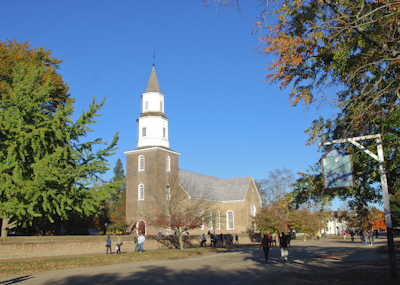
Bruton Parish Church From 1674

For me this was a week of lectures about Colonial history intersperced with several research field trips.  My group of 15 historians and I traveled to the Swem Library on the campus the College of William & Mary, the Library of Virginia in Richmond, and Colonial Williamsburg.
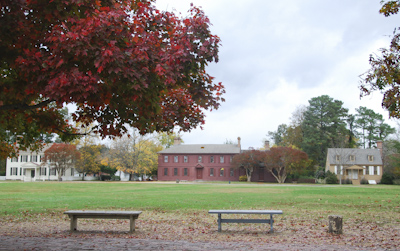
Colonial Williamsburg Houses

I was able to take a few photographs when our group had a tour of Colonial Williamsburg conducted by a professional guide.  Her knowledge of the early Virginia colony was impressive.  She was familiar with every house in the village and told stories about the people and families who lived there.  Her colorful stories were very interesting and amusing.
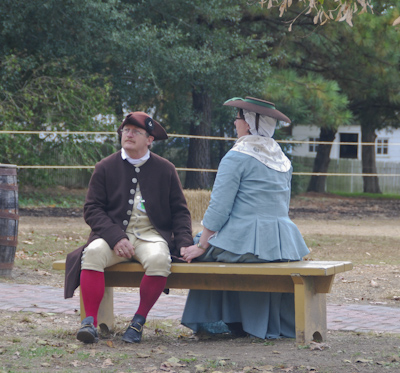
Relaxing on a Fall Afternoon

Colonial Williamsburg is a wonderful place to visit to learn about early American history.  A few miles away are two more historic sites of Jamestown Settlement and Historic Jamestowne.  Jamestown Settlement is a living history site with several recreated villages and a large museum.  Historic Jamestowne, which is part of  the U. S. National Park Service, is the original site of the first Virginia colony of 1607.
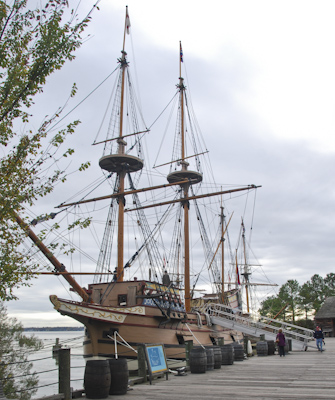
The Susan Constant

One free afternoon, Jeff and I explored Jamestown.  We visited replicas of the first three ships which brought 144 people and supplies to the new Virginia Colony.  The largest ship was the Susan Constant which carried 71 people and cargo on the hazardous four-month trans-Atlantic journey.  The smaller ships, the Godspeed and the Discovery, carried fewer people but additional supplies for the British Colonists.
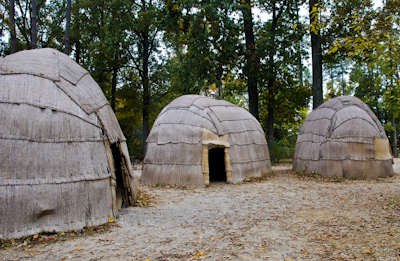
Powhatan Village Homes

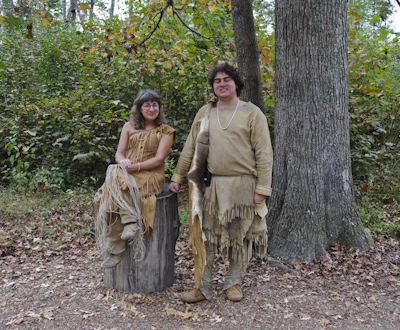
Jamestown Settlement had a replica of a Native American village of the Powhatans.  When I asked the docents about the authenticity of their costumes, the woman said the native people wore much less clothing year-round.  She said they wore little clothing, smeared bear grease on their bodies, and wrapped animal skins around themselves to keep warm in winter.
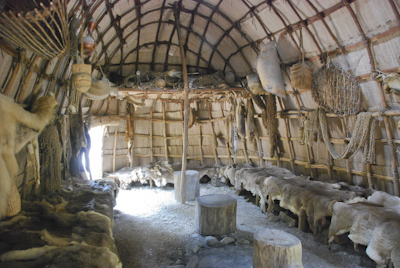
Interior of Native American Houses

Native American Guides

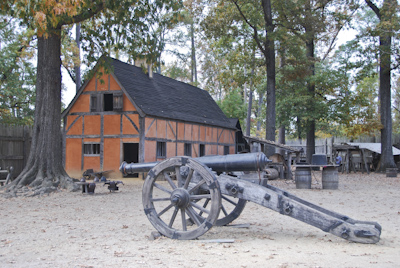
The re-created fort of Jamestown showed buildings and houses from 1610 – 1614.  The village and fort were created from original drawings of the period.  There are excellent websites for more information about all the sites.
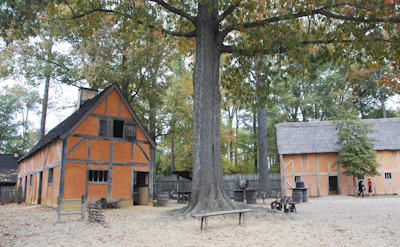
Buildings Within Jamestown Settlement

Artillery at the Fort

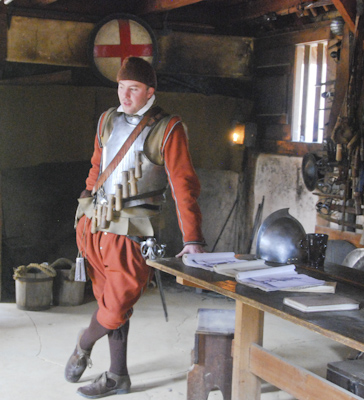
Early British Adventurer

During the rest of the week, while I was learning about chancery records, deeds, and church records, Jeff explored local museums and other historic sites of Yorktown and Richmond.  For me, it was an intense learning experience and I learned a great deal about genealogy and the history of the early Colonists and how they lived.
 

Baltimore Crab Cakes

November 2nd, 2013

Saturday, November 2, 2013

We’re on our way south to a genealogy/history class to learn about the early American colonists who settled in the Tidewater Region of Virginia.  The class is a joint effort of Road Scholars and the College of William & Mary in Williamsburg, Virginia.  I’m excited about the class because I have traced some early ancestors back to Colonial Virginia and I am looking forward to digging up more information about them and learning about the life and times of that period of American history. 

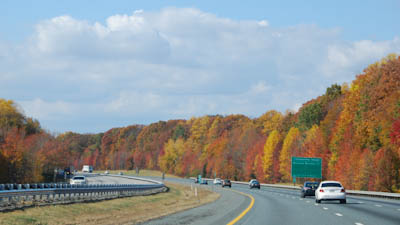
Fall Leaves Along I-95 South

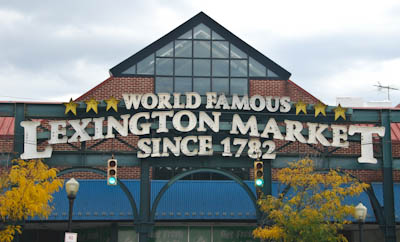
Williamsburg, Virginia is a nine hour car-ride from our house, so we planned to stop about half-way in Baltimore, Maryland.  The city was new to both of us and, with a little research, we discovered “The Best Crab Cakes in Maryland” right in downtown Baltimore at John W. Faidley Seafood in the Lexington Market.  One of my favorite foods in the entire world are Maryland Crab Cakes, and since I am a purist, I only eat crab cakes in Maryland.  Therefore, when in Maryland, I have to eat this delicious treat.

Located in Downtown Baltimore, Maryland

The first crab cakes I ever ate were at a dock-side restaurant in St. Michael’s Maryland many years ago.  As I sat outside at a crude picnic table, a crabbing boat pulled up to the dock and a deckhand offloaded wooden boxes filled with twitching, waving blue-claw crabs.  Two men, dressed in kitchen whites, rushed down the dock from the restaurant and hauled the wooden crates up to the kitchen.  Now, those were fresh crabs!

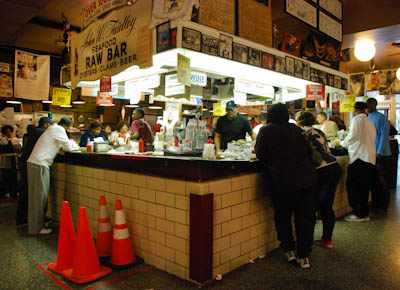
Oyster Bar at Faidley Seafood

Patrons at the restaurant ordered ‘lump-meat’ crab cakes or whole steamed crabs.  Over a couple of days in St. Michael’s, I tried both preparations.  A dozen whole steamed crabs were dumped onto butcher paper which had been rolled out across my wooden table.  Eaters received nutcrackers and narrow picking tools and a bucket for shells.  It was a crude, messy, hands-on meal, but fun.  Of course, the Maryland Crab Cakes were heavenly.  They were prepared with huge lumps of succulent crabmeat, perfectly seasoned, and lightly fried.  Maryland Crab Cakes immediately became the gold standard for all crab cakes in my future.
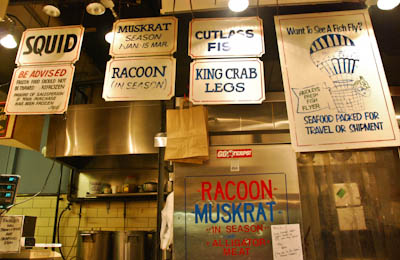
Variety of Offerings at Faidley Seafood & Game

This afternoon, we found ‘The World Famous Lexington Market’ in downtown Baltimore.  As we circled the market looking for a place to park our car, we saw a sign for Faidley Seafood.  We entered Faidley’s from the street and were pleasantly surprised to see the place busy with patrons on a Saturday afternoon.  There was an oyster bar in the center and the rest of the large space was filled with tall stand-up communal tables.  Patrons order from a menu on the wall and slide their trays along to the cashier.  Under the menus, the current owner was forming crab cakes from a freshly prepared secret-ingredient mixture.  See her photo below.
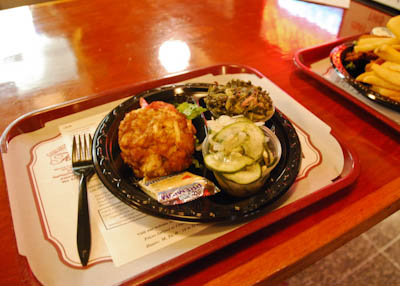
My Crab Cake with Greens & Cucumber Salad

So, how did my Crab Cake taste?  Delicious.  It was a baseball size ‘cake’ of sweet juicy large lumps of crab loosely held together by a lightly spiced mixture.  It was incomparable and very good.  The spices didn’t overpower the crabmeat and there was no bread holding it together.  It was the pure taste of crabmeat.

Chef/Owner of Faidley Seafood

After our lunch, we walked around Lexington Market to explore.  We saw many food stalls, meat markets, bakeries, and produce sellers.  The market was a bee-hive of activity, filled with Baltimore locals enjoying a pleasant fall afternoon with their families.  Afterwards, we retrieved our car from the parking lot and drove around the city.

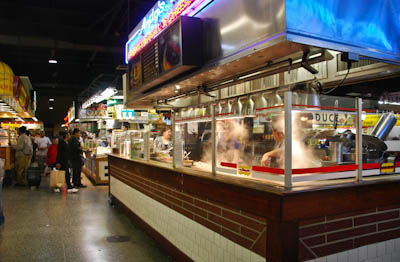
Another Food Stall at the Lexington Market

It was a good beginning to our historical adventure in Colonial America.  Baltimore has a lot to offer tourists, in addition to crab cakes.  We plan to return soon to visit: the Edgar Allen Poe  House and Gravesite, the 1854 USS Constellation, a US Coast Guard ship built in 1935, the Lightship Chesapeake, and, of course, the Baltimore Museum of Art.


A Little Bit of Santa Fe, New Mexico

September 22nd, 2013

Sunday, September 22, 2013

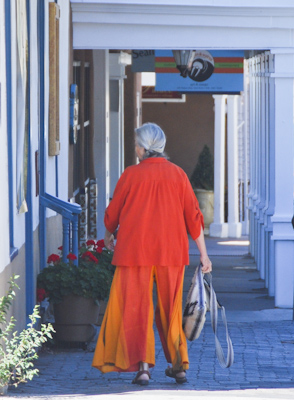
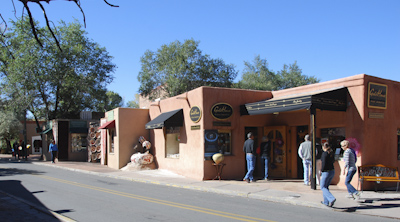
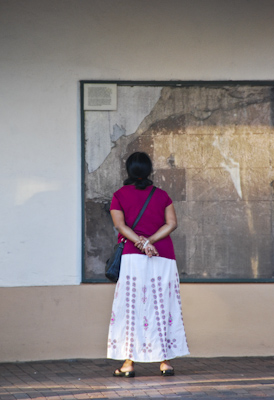
Santa Fe was a lovely city, with shops selling silver jewelry, clay pots, colorful clothing, paintings, and sculpture.  The sky was a deep blue and cloudless.  The sun was warm but the air was cool enough to require a light jacket.  Unfortunately, we weren’t able to stay in Santa Fe long enough to savor the full flavor of the region, but we were able to enjoy a small taste of the Adobe Southwest culture.  Below are a few photos which I took during our brief stay in Santa Fe.

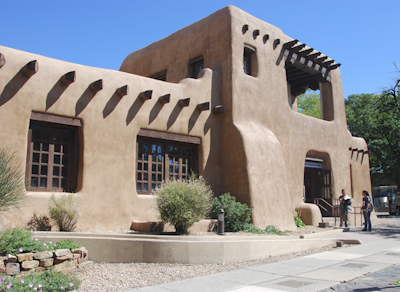
The New Mexico Museum of Art

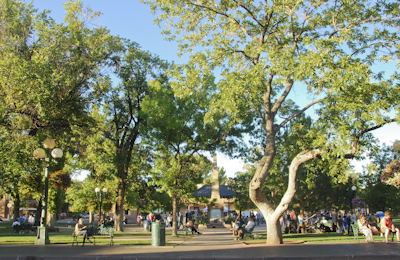
The Plaza

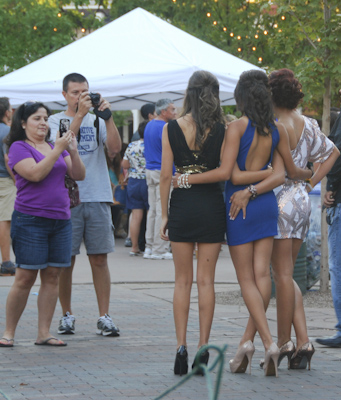
Fun in The Plaza

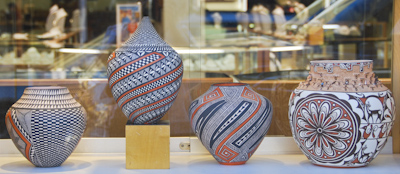
Clay Pots for Sale

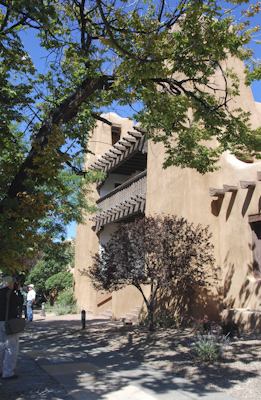
Pueblo Architecture

Window Shopping

Side Street Shoppers

Good Spicy Tacos at The Shed

Street Scene

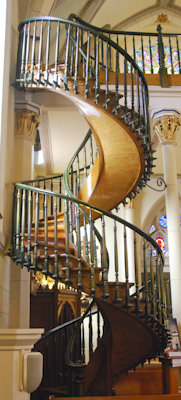
The Loretto Stairway

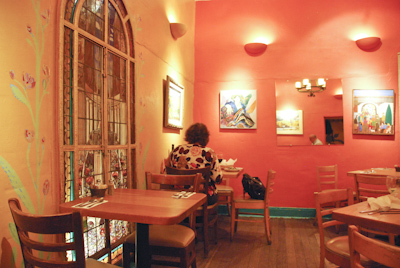
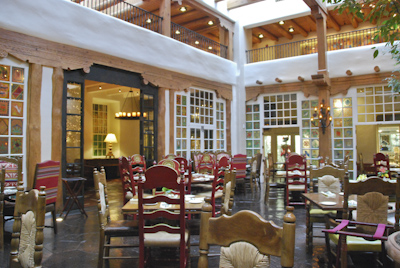
Dining Room at La Fonda

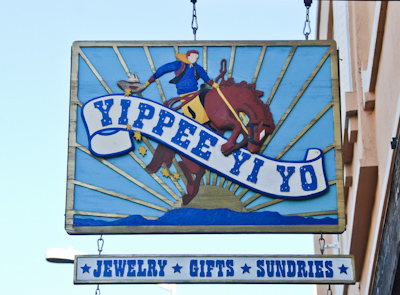
Shop Sign

Durango to Santa Fe, New Mexico

September 21st, 2013

Saturday, September 21, 2013

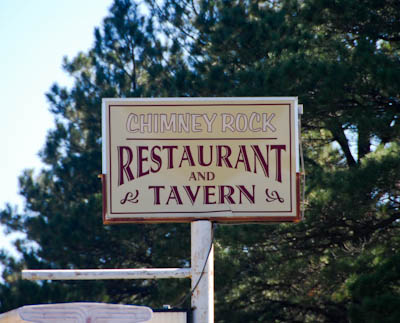
We had a long driving day ahead of us to go from Durango, Colorado to Santa Fe, New Mexico.  We drove along Route 160 East and stopped for a moment at The Chimney Rock Restaurant & Tavern.  Inside there were pool and fooze-ball tables along with checkered tablecloth-covered dining tables.  The proprietor was a feisty woman who had put Einstein posters in the ladies room because she told me “liked Einstein.”  She called it the Wisdom Room and said she had an obscene name for the men’s room.  Country music played loudly while a large-screen TV simultaneously broadcast the news on CNN.

A Great Place to Visit

On the Road

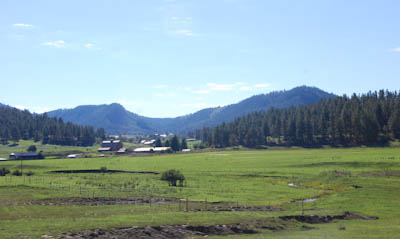
Along the Route

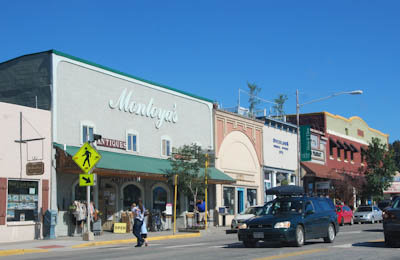
Pagosa Springs, Colorado

Cruising Along

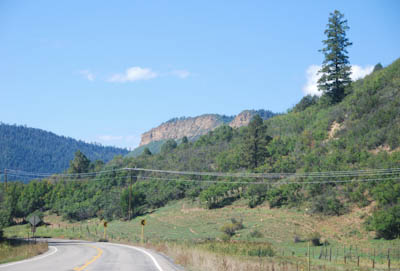
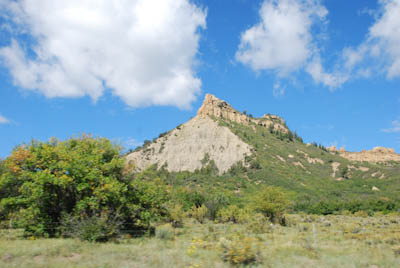
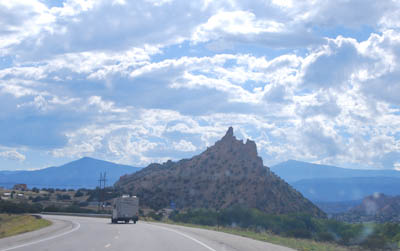
Interesting Rock Formation

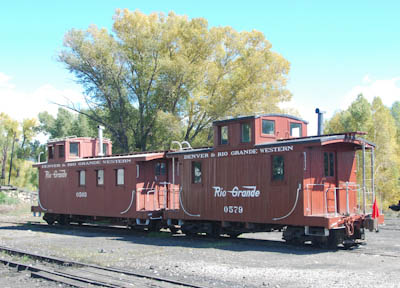
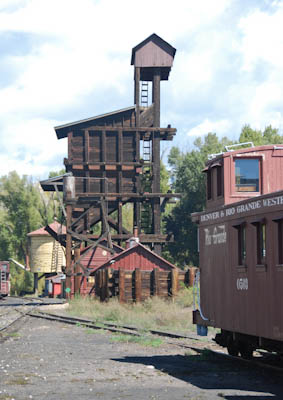
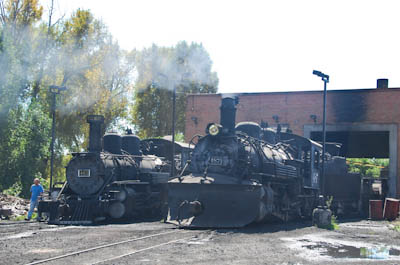
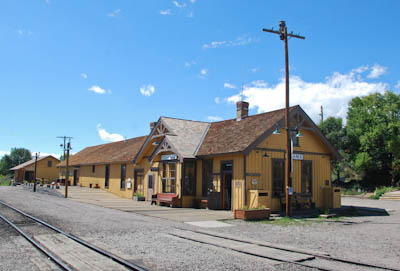
We planned to stop in Chama, New Mexico to see the Cumbres & Toltec Scenic Railroad.  It was listed on the National Register of Historic Places and offered daily historic steam train rides.  After stopping at the modern Chama Visitor’s Center we drove to the Railroad Station to take pictures.

Cabooses

Coal Storage & Loading Chute

Two Historic Engines

The Chama Train Station

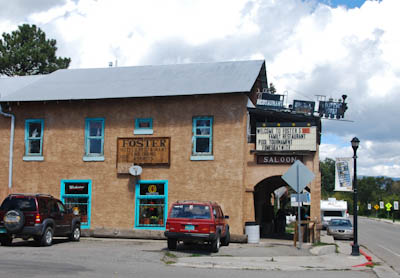
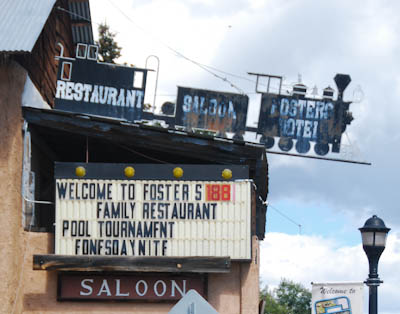
After we walked around and photographed the trains at the historic railroad station, we drove up to the Main Street for lunch.  We found Foster’s Restaurant & Hotel and had an interesting lunch.  I should have asked about the ‘pool tournament’.

Foster Restaurant & Hotel

Foster’s Signs

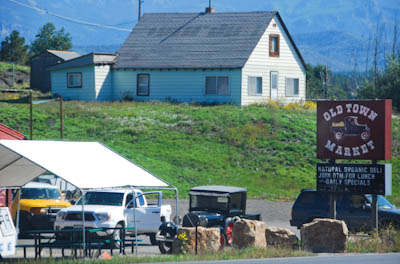
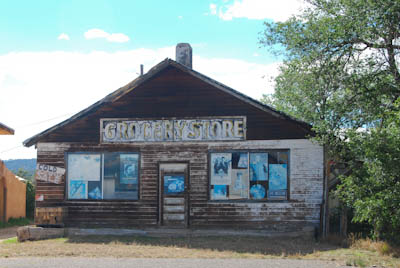
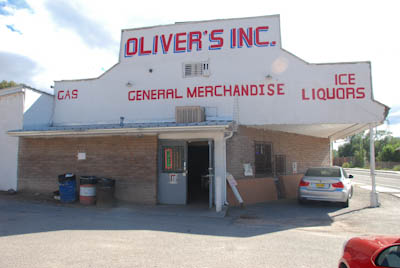
About twenty miles out of Tres Piedras, we noticed that we had only a quarter tank of gas left in our rental car.  According to the dot on the map, Tres Piedras was the largest town in the area, so we continued.  Imagine our surprise when we arrived in Tres Piedras to discover that it was an intersection.  Yes, a crossroads.  To the right was a commercial seed and feed establishment.  The road ahead continued as a very long straight line leading into the desert.  A few small buildings dotted the landscape reaching to the far horizon.  On our left was a closed, long abandoned gas station.  We turned left, hoping to find a new replacement.  The grocery store in the photo below was near the gas station.

Grocery Store in Tres Piedras, New Mexico

We noticed a small restaurant on the opposite side of the road with a sign offering groceries and beer.  There were a couple of young men out front with their heads under the hood of their pick-up truck.  We parked and I went inside to inquire about the closest gas station.  The bleached-blond woman glared at me and stated, “Thirty miles to the right; thirty miles to the left; fifty miles down the road and thirty miles where ya came from.  Take your pick.”  I thanked her and we continued on our thirty mile journey to Ojo Caliente, swearing to check the gas gauge every morning.

Gas Station in Ojo Caliente

The green trees and mountains of Colorado and northern New Mexico gave way to sparse shrubs and dryer landscapes.  I turned on the radio and found a local station on a National Public Radio channel which was playing Native American music.  Imagine driving into Santa Fe, New Mexico listening to the steady beating of a singular drum and the coarse chanting of a Hopi Medicine Man singing an ancient Native American chant.  That was our entry to Santa Fe.

Approaching Santa Fe, NM

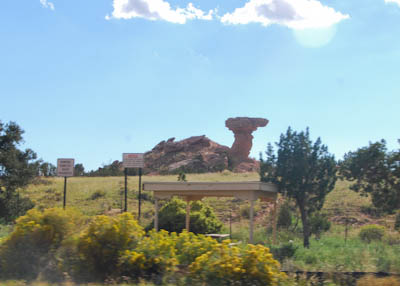
Camel Rock

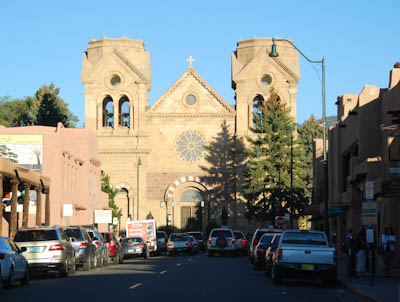
Downtown Santa Fe, New Mexico

Durango-Silverton Railroad

September 20th, 2013

Friday, September 20, 2013

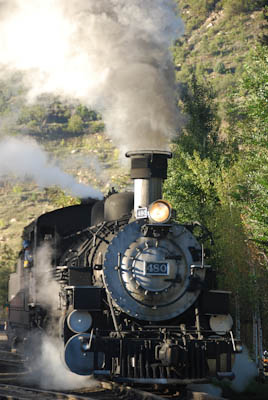
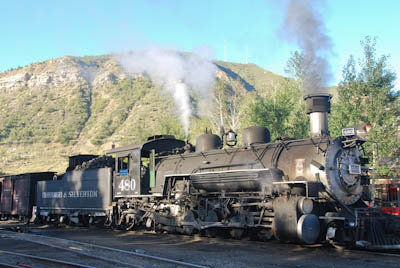
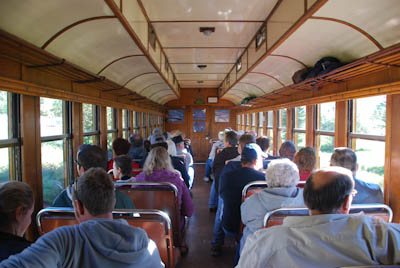
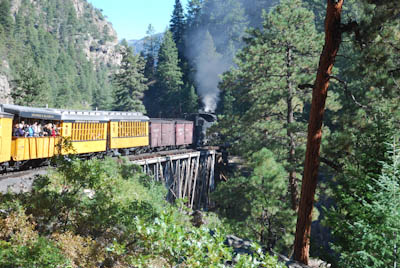
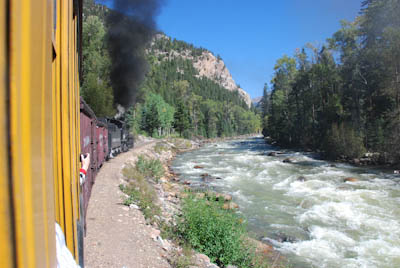
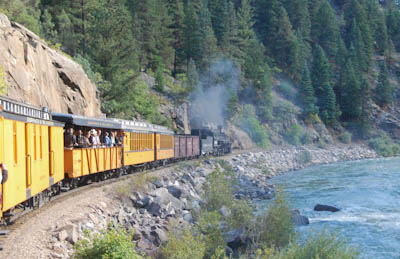
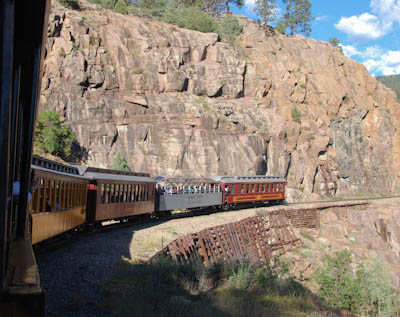
We set the alarm for 6:30 this morning to arrive at the train station in time to ride on the Durango & Silverton Narrow Gauge Railroad.  It was a three and a half hour trip each way with a couple of hours to spend in Silverton, Colorado for lunch.  Our train departed at 8:45 AM and was scheduled to return at 6:00 PM.  

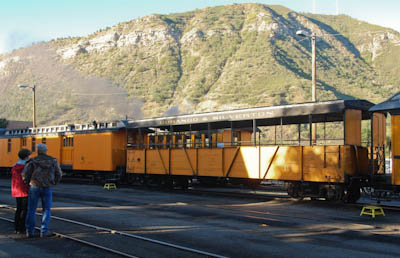
Durango Railroad Station

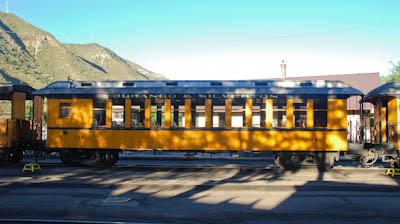
Passenger Car

Outdoor Passenger Car

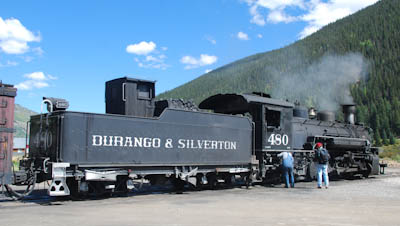
The Engine

The Engine and its Tender

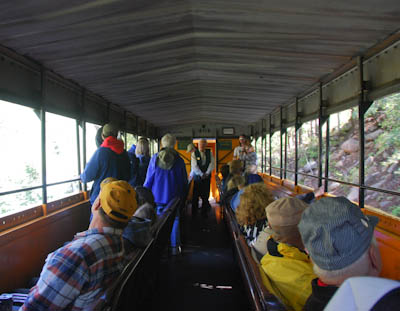
Interior of Passenger Car

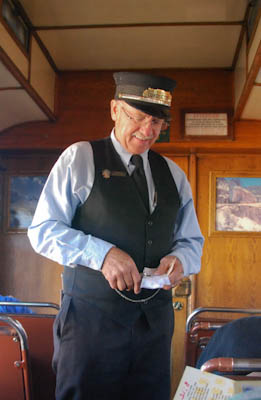
Conductor

Cross Over the Bridge

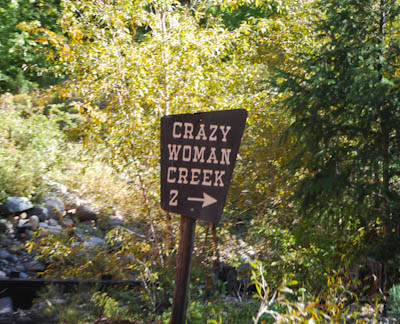
Sign Along the Route

Interior of an Outdoor Car

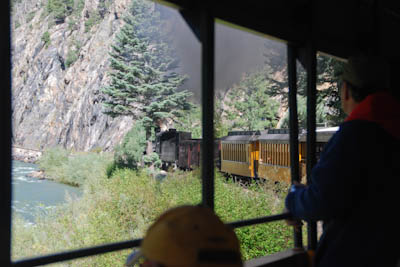
Around a Curve

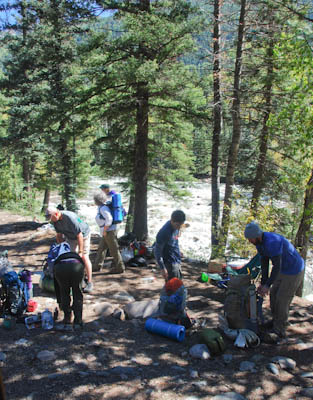
Dropping Off Wilderness Hikers

Almost to Silverton

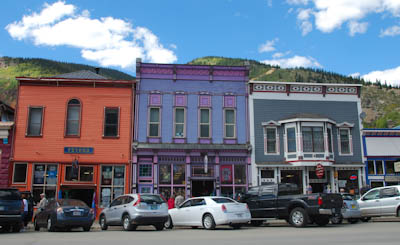
Silverton, Colorado

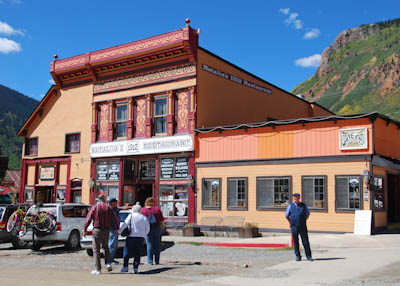
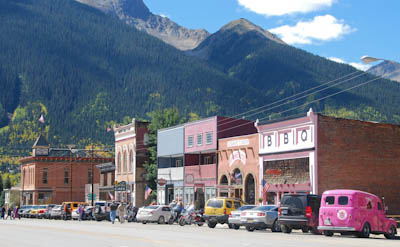
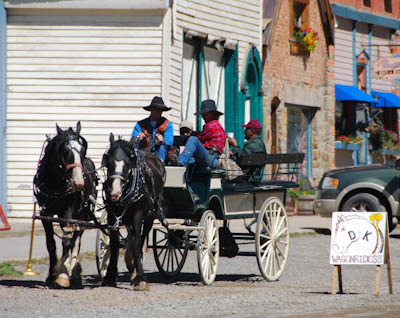
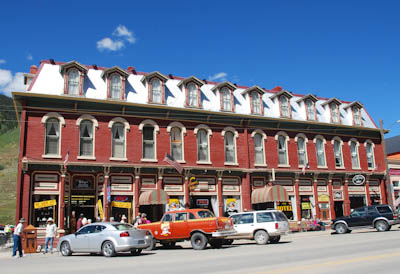
Silverton, elevation 9,308 feet, was an old mining town nestled among the peaks of several mountains.  Today, with a population of about 500 people, it totally subsists on tourism mainly from the Durango/Silverton Narrow Gauge Railroad. It was a colorful town and well worth a visit.

Another Street in Silverton, Colorado

Wagon Rides

The Grand Hotel

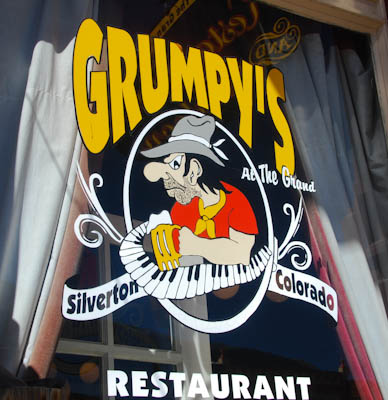
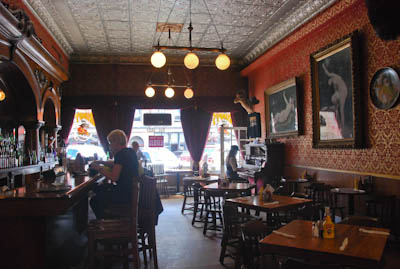
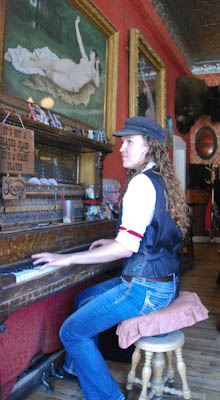
Lunch At Grumpy’s

Interior of Grumpy’s

Lacey

Commercial Street

Back on the Train

Heading Back to Durango

Rear Passenger Cars

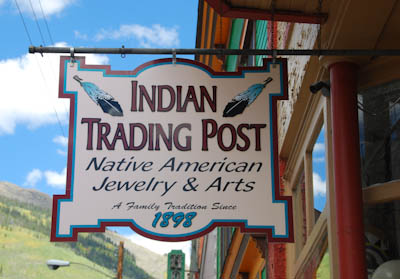
Commercial Sign in Silverton

We arrived back in Durango about 6:00 o’clock.  It had been a full day.  We were tired and a bit sooty, but happy for the experience of riding on the historical Durango-Silverton Narrow Gauge Railroad.