Art, Poetry, and a Drop of Honey

July 28th, 2013

Sunday – July 28, 2013
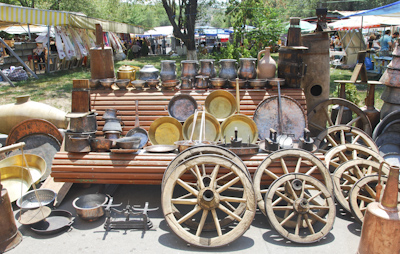
Goods For Sale

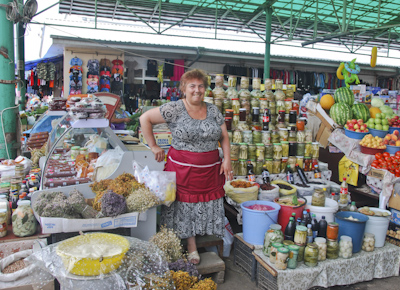
Francoise left Yerevan and flew home to France very early this morning.  After I had breakfast at the hotel, I walked to the Vernissage outdoor market at the end of the street.
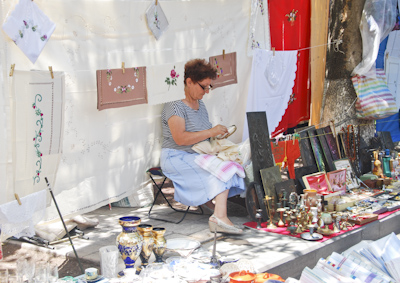
Craftsperson

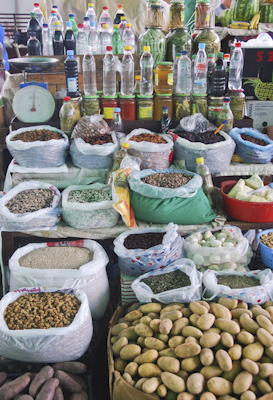
The Vernissage continues the old trading tradition of the ancient Silk Road which passed through Armenia for thousands of years.  I had just two days left and I wanted to get some last minute souvenirs to take home.
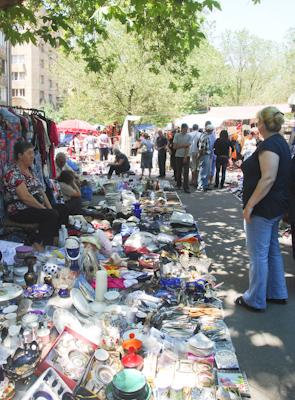
Vernissage Vendors

Afterwards, I went to the Republic Square to find a taxi to the Sergey Parajanov Museum.  The taxi driver didn’t know the location of the museum so he asked several other drivers.  None of them knew where the museum was located.  I took my map of Yerevan out of my bag and showed it to the taxi driver and pointed to the museum on the map.  He studied it for a few minutes and nodded his head and indicated to me to get into his taxi.  The Parajanov Museum was located on a small dead-end street in a row of old residences along the top of the Hasdan Gorge.
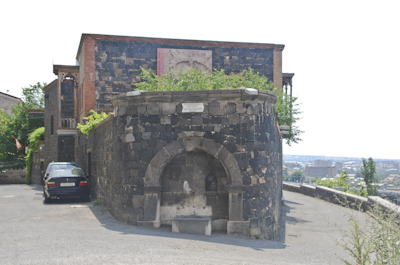
Parajanov Museum Overlooking the Hasdan Gorge

Sergei Parajanov (1924-1990) was a Soviet Armenian film director and artist.  He invented his own cinematic style and maintained creative control over his films, despite the “socialist realism” dictated by the communist government at the time. He was imprisoned twice and persecuted by the Soviet regime.
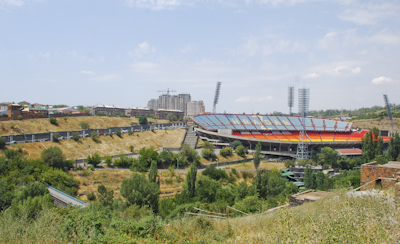
Looking Into the Gorge & the Hasdan Stadium
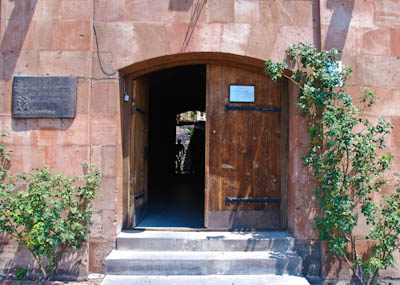
Entrance to the Parajanov Museum

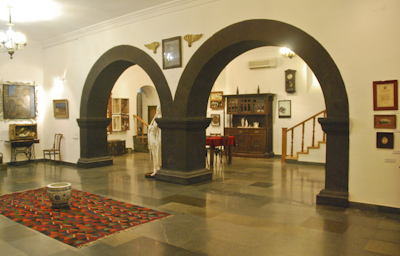
The Main Room of the Museum

According to the guide, Parajanov never lived in the house.  Parajanov moved to Yerevan and chose the location of the museum in 1988.  A group of loyal friends and admirers opened the museum after Parajanov’s death in 1990.
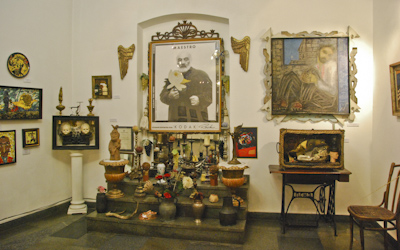
Homage to Parajanov

Sergei Parajanov’s best known films are: “Shadows of Forgotten Ancestors”, “The Color of Pomegranates” and “The Legend of Suram Fortress.”  Although his films achieved international acclaim, they were banned in the Soviet Union and Parajanov was blacklisted from Soviet cinema.
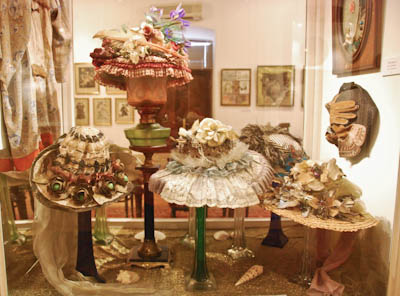
Decorated Hats

The guide stated that Parajanov loved beautiful things.  He redecorated hats with a variety of objects and presented the hats to his female friends.
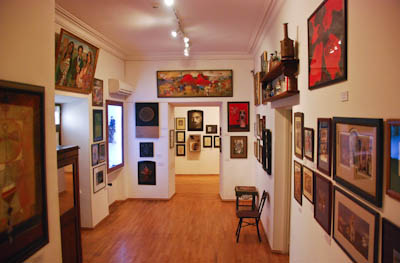
Additional Display Rooms

The museum is brimming with thousands of art objects which Parajanov created.  His collection includes films, installations, collages, assemblages, drawings, dolls, hats, paintings, screenplays, librettos, and costumes.  The works of art demonstrate Parajanov’s amazing creativity.
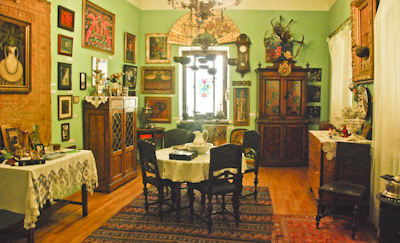
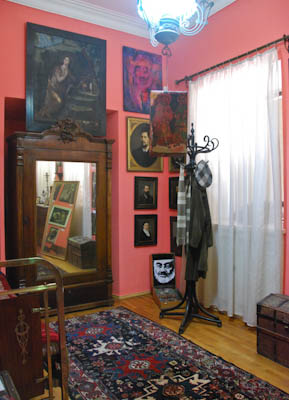
Parajanov Memorabilia

A Bedroom

I left the Parajanov Museum and found another taxi to take me to the Tumanyan Museum.  Hovhannes Tumanyan (1869-1923) was an Armenian poet and writer who is considered to be “the greatest of all the Armenian poets, a patriarch of new Armenian poetry.”  One of Tumanyan’s famous poems was titled, “A Drop of Honey.”
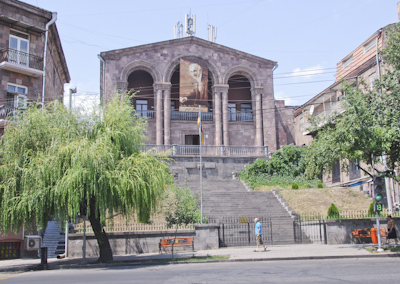
Museum of Hovhannes Tumanyan

The museum has a large collection of manuscripts, letters, books, photographs, drawings, translations, and memorabilia collected during Tumanyan’s lifetime.  He wrote poetry, novels, articles for journals, librettos, and fairy tales.  One of the women in the hotel told me that Toumanyan was her favorite author. When she was  young, she visited his museum several times a year to see his original manuscripts.
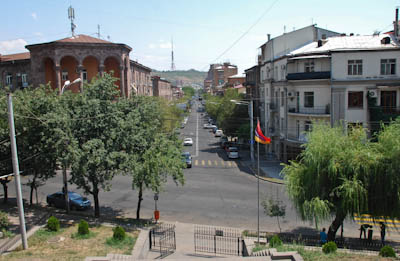
View Down Toumanyan Street

After seeing the exhibits in the museum, I walked down Toumanyan Street toward the center of Yerevan.  The traffic was light and families were out shopping or eating at the many local restaurants which lined the street.
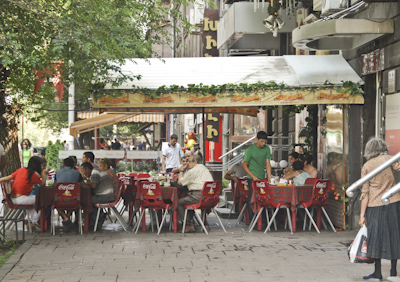
Mer Tagh Outdoor Cafe

Eventually, I decided to stop and had a very late lunch at Mer Tagh.  I had a very good ‘lachmajoun’ which is referred to as Armenian pizza.  This is a thin-crust pizza with chopped meat, tomato sauce and spices.  Yum!  It was fun to sit outdoors and watch the weekend shoppers and tourists pass by.  
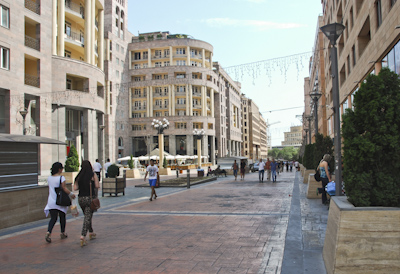
Walking Down North Way

Illuminated Manuscripts & Modern Art

July 27th, 2013

Saturday – July 27, 2013
Spoiler alert: if you don’t care for ancient books and manuscripts or modern art, skip to another page.

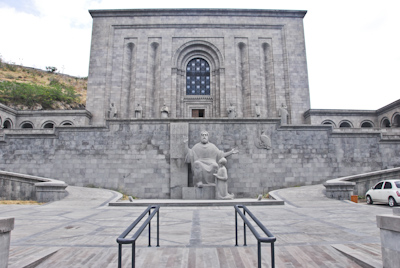
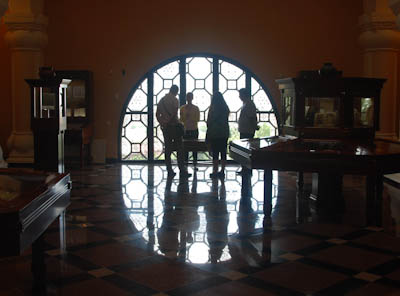
I had a wonderful day today!  I took a city taxi to the edge of the city to the Mesrop Mashtots Institute of Ancient Manuscripts, commonly called The Matenadaran.  The magnificent building houses the world’s largest collection of ancient Armenian manuscripts.  One of the guide books stated that the stone building is dug into a hill and can withstand a nuclear attack.  I’m not sure about that information, but the museum appeared to be a very solid and impressive building.
The Matenadaran

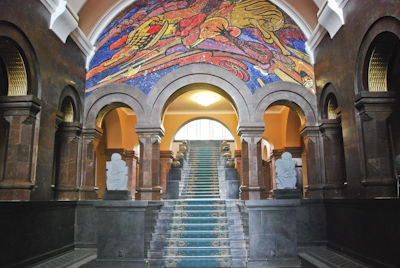
Lobby of the Matenadaran

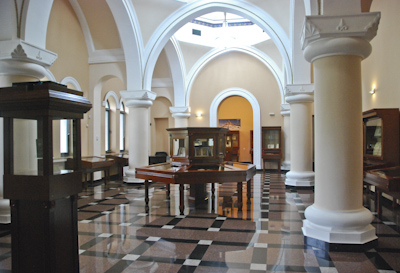
The Main Manuscript Room

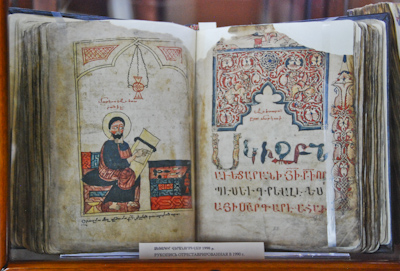
Illuminated Manuscript

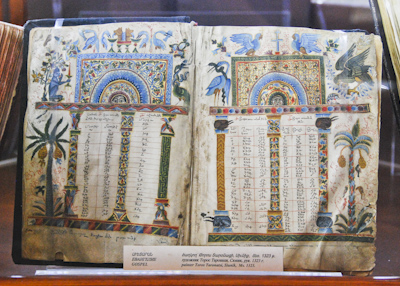
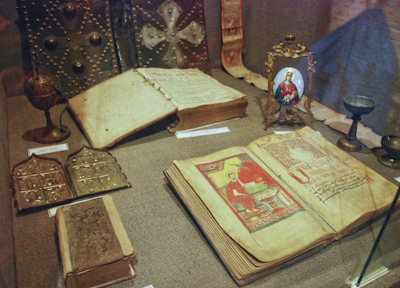
The collection at the Matenadaran includes more than 17,000 manuscripts.  The oldest parchment book is the Gospel of Lazarus written in 887.  There are older  fragments of manuscripts dating from the 5th to 8th centuries.  It is an amazing collection.

Manuscript

Another Manuscript Room

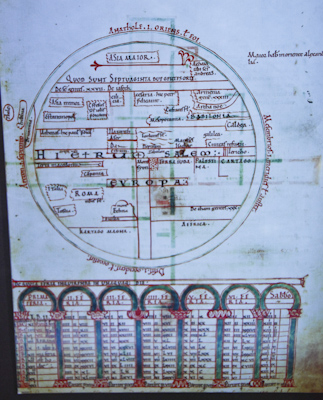
Map of the World – 1110 A.D.

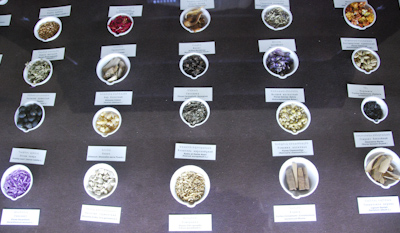
Plants Used to Make Ink

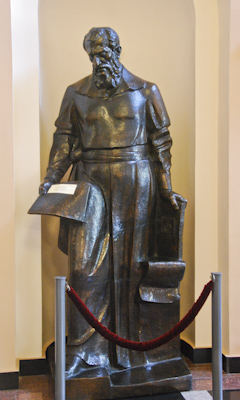
Hacob Meghapart – “The Sinner”

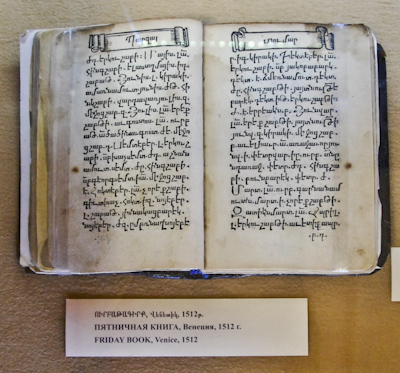
The first book printed in the Armenian language was The Friday Book in 1512.  It was printed in Venice, Italy by Hacob Meghapart some years after Gutenberg invented the printing press.  Hacob Maghapart was a monk who called himself  “the Sinner” because, at that time, it was believed that the words in books came from God and were transmitted through a religious scribe.  Therefore, printing was a sin because the words were placed on the pages by a machine.

Friday Book – Venice 1512

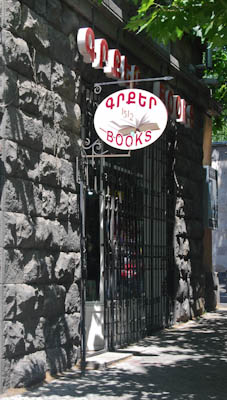
I spent more than three hours in the Matenadaran because the collection of ancient manuscripts was so vast and  impressive.  Afterwards, I walked down the broad tree-lined Mashtots Avenue.  I passed a small book store and noticed English language books in the window.

Little Old Book Store

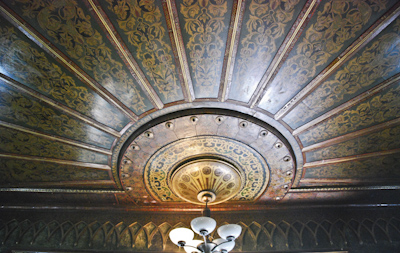
I entered the store and was surprised to find impressive paintings on the ceiling.  After a little bargaining, I purchased an overpriced paperback book and some post cards.

Ceiling in the Book Store

On the corner, I found another branch of the Russian Tashir Pizza chain.  Since it was almost three o’clock, I stopped in for a late lunch.  The waitress was surly and unfriendly, but a young man at the next table, who spoke English, helped me and ordered in Russian.  When I thanked him in Armenian, he asked if he could join me.  He was an Armenian/Russian university student from Omsk, Siberia who came to Yerevan “to practice English.”  He said he was staying in a local youth hostel where all the international students speak English.  When he heard me speak English, he was eager to practice with a real English-speaking person.  I had company for lunch, learned a little about Omsk, and admired his youthful enthusiasm.

Tashir Fast Food

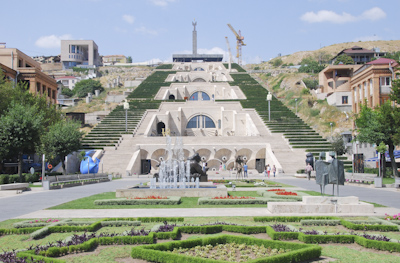
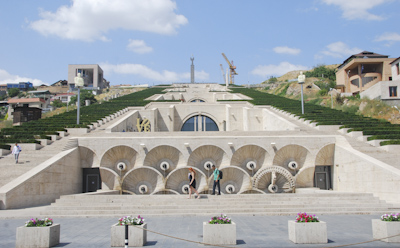
After lunch, I walked along Isahakyan Street toward The Cascade.  Anahit and Karin brought us here on my first day in Yerevan, but the museum was closed.  I returned today to visit the Cafesjian Center for the Arts.  This is a magnificent multi-level gallery of modern art with a fabulous sculpture garden on the first level.

Foot of The Cascade

Cafesjian Center for the Arts

There are indoor and outdoor spaces for exhibiting the amazing world-class private collection of Gerard Cafesjian.  The museum climbs five levels up the side of a hill.  There is an indoor escalator, as well as indoor and outdoor stairs to view the art works.  The structure is simply called “The Cascade.”

Decorative Fountain

Modern Art in the Cascade

Looking Out

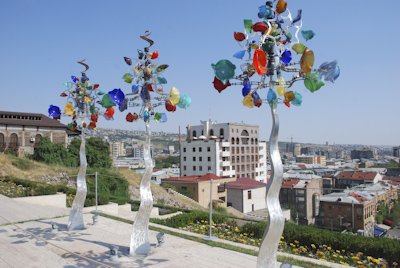
Photography was prohibited in the galleries so I have no photos of the objects on display indoors.  My favorites were: in the first floor gallery there was an exhibit of glassworks created by Dale Chihuly and in another upper level space there were the works of the Czech couple, Libensky and Brychtova.

Modern Art

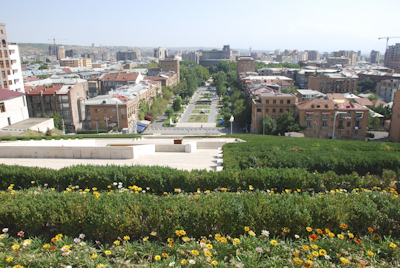
Sculpture Garden Below

The Cascade

Good Gelato

The lovely tree-lined street in front of The Cascade is lined with cafes and restaurants.  I needed a short rest, so I stopped in one for a bottle of cold water and a dish of Italian gelato.  It was very tasty!

Street Sign

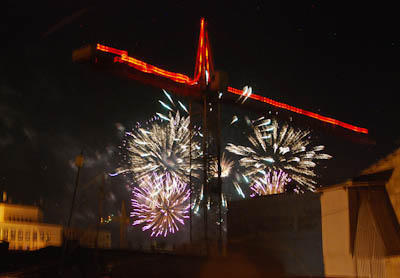
Fireworks From My Hotel Window

Erubuni: Old and New

July 26th, 2013

Friday – July 26, 2013

It was another hot sunny day in Yerevan.  The daytime temperatures this week ranged between 38 to 42 degrees Celsius.  Only mad-dogs and tourists were out during the heat of the day.  Throughout the city there are cheap efficient official and unofficial taxis.  To go from one corner of Yerevan to another, the typical fare is between 700 to 1000 Drams which is about $1.70 to $2.44 per ride.  Before getting into a taxi, a tourist tells the driver the destination and asks the price in order to prevent surprises at the destination.  In my brief taxi experiences, all the drivers were honest and helpful.  

King Argishti I of Urartu

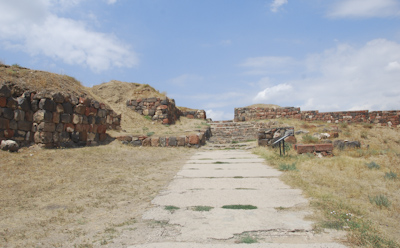
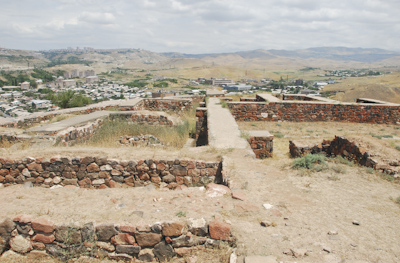
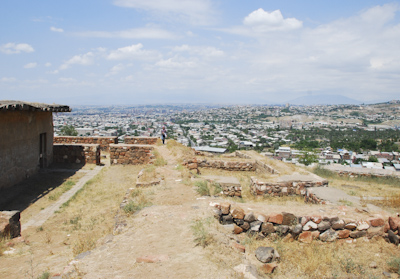
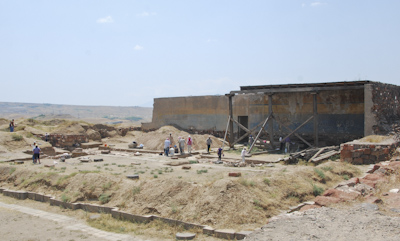
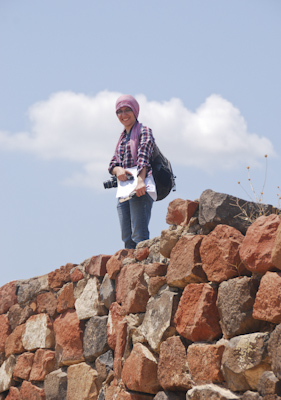
This morning we took a taxi to the Erebuni Fortress and Museum which is located on the outskirts of Yerevan.  Erebuni was founded by the Urartian King Argishti I in 782 B.C.  It was one of several fortresses built along the northern Urartian border to serve as a military stronghold and became an important political and cultural center of the kingdom.  The name Yerevan is derived from Erebuni.

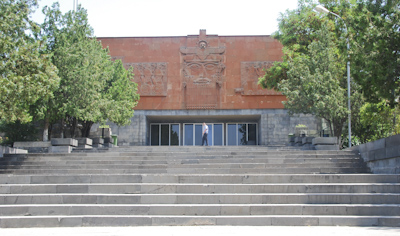
Entrance to the Erubuni Fortress Museum

The fortress was built on the top of a high hill known as “Arin Berd” and was surrounded by 30 – 40 foot stone walls.  King Argishti constructed a grand palace, a royal assembly hall, a temple, living quarters, dormitories, and storerooms.  Successive Urartian kings made Erebuni their place of residence during their military campaigns against northern invaders.

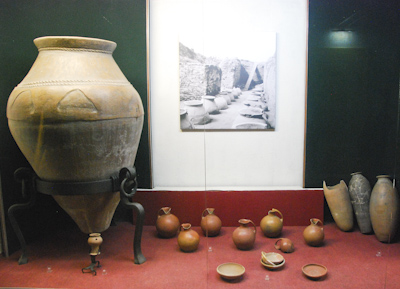
Urartu Artifacts

Excavations of the fortress began in 1952 by an international team and continue today.  The museum houses many Urartian artifacts which were uncovered during excavations, including ceramic jars, bracelets, beads, drinking vessels, helmets, silver coins, and arrows.  Stones with carved cuneiform inscriptions were also found at the site.

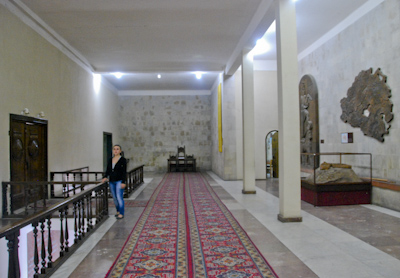
Interior of the Erubuni Fortress Museum

Artifacts From the Excavations

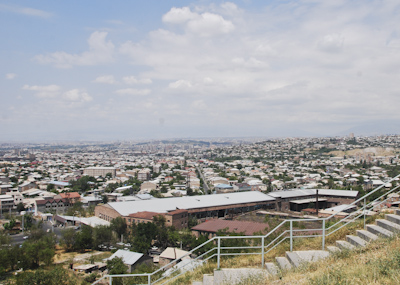
View of Yerevan From the Fortress

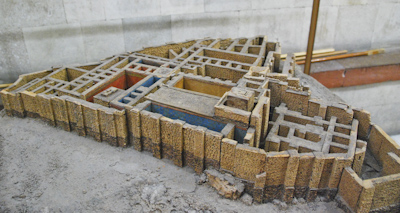
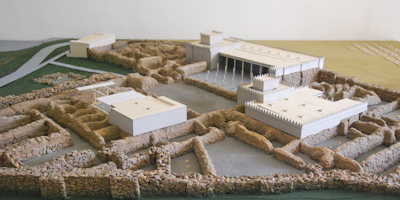
Diorama of Erubuni Fortress

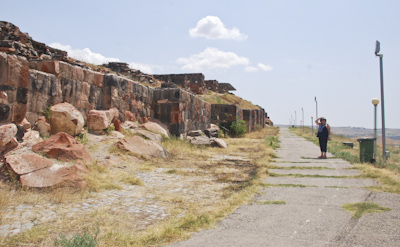
Walking Around The Fortress Wall

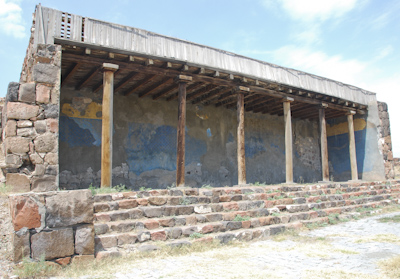
Greeting Hall

Walls were decorated with colorful frescoes depicting human figures, gods, geometric and floral designs.

Continuing Up Into the Fortress

Foundation Stones

Another View Over Yerevan

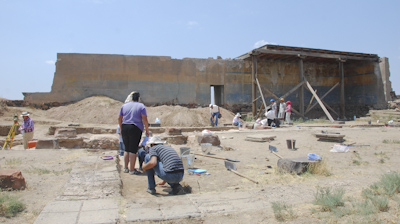
Archeological Site

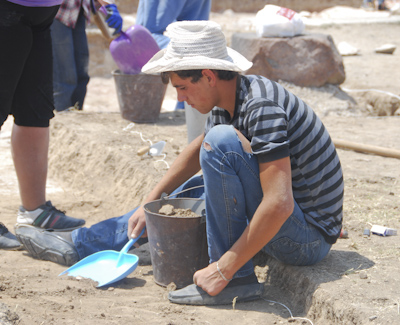
Archeologists at Work

Diorama of Current Archeological Plans

Iranian Graduate Student

Painstaking Archeological Work

It was very hot on the top of the Erubuni hill.  The archeologists took a lunch break and Francoise and I descended to street level.  We found a taxi parked across the street and negotiated a fare to take us back to the center of Yerevan.

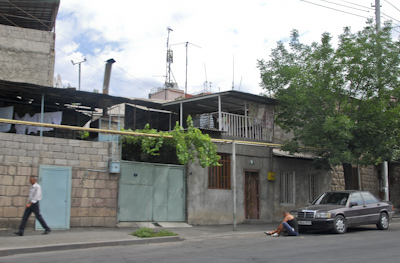
Typical Houses Outside Central Yerevan

A Natural ‘Gas Station’

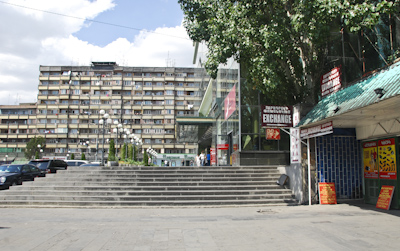
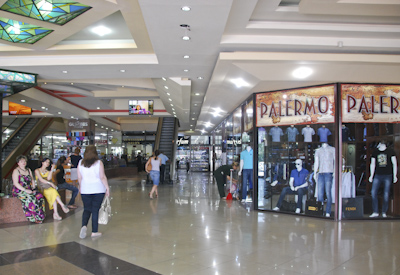
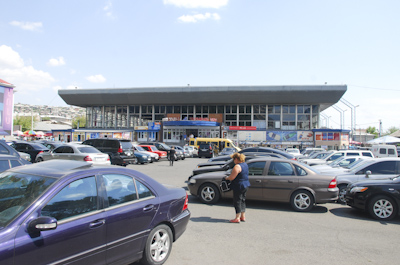
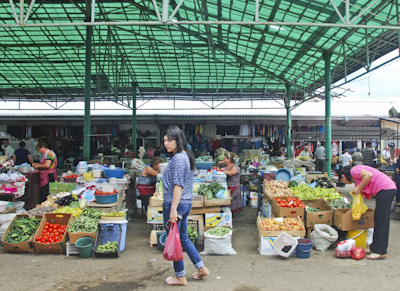
Francoise wanted to find an outdoor market so we settled on The Tashir Market to shop and have lunch.  There are several covered outdoor markets throughout Yerevan.  The taxi driver dropped us off between the modern glass enclosed shopping center and the market.  I asked about a nearby restaurant and was directed to the third floor of the glass building.

Steps Leading to the Modern Tashir Shopping Center

Inside the Tashir Shopping Center

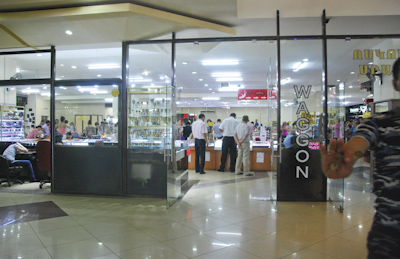
Jewelry Center Toward the Back

There was a brightly lit large room at the back of the first floor of the shopping mall.  We walked in and discovered many rows of small tables with people selling all varieties of expensive jewelry.  There were mainly gold pieces with sparkling gemstones, primarily diamonds.  There is a guard’s hand in the photo above.  He tried to stop me from taking the picture, but wasn’t quick enough.

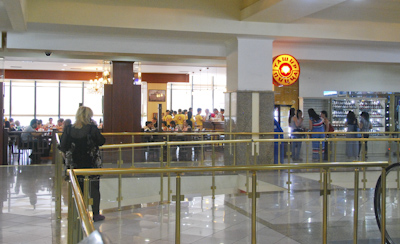
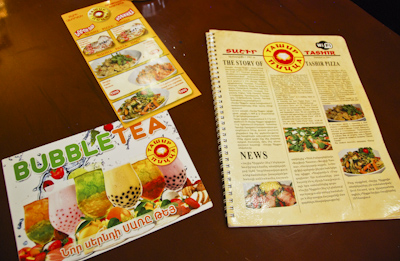
Tashir ‘Fast Food’ Restaurant

We found a Tashir Pizza chain restaurant on the third floor.  Francoise had a fresh pasta salad and I had roasted vegetables.  We also had two bottles of spring water and coffee for about $8.00 total.

Pictorial Menus

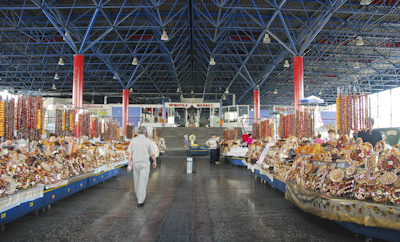
More Traditional Market

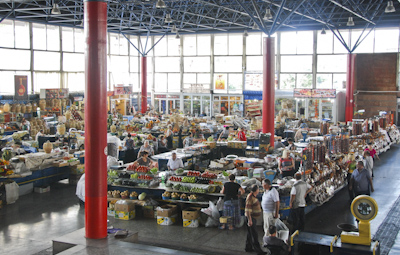
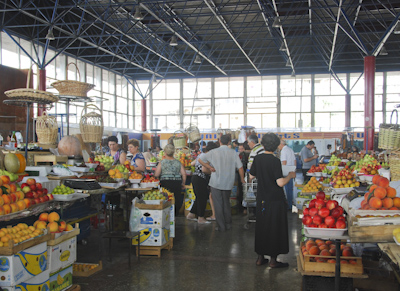
Inside the Market

Another View

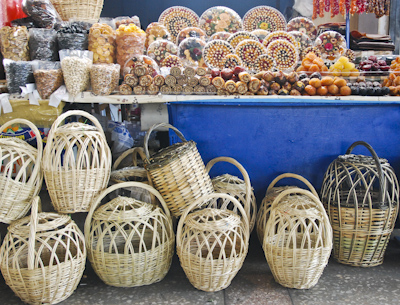
Dried Fruits and Nuts

Who Needs Bags When You Have Baskets?

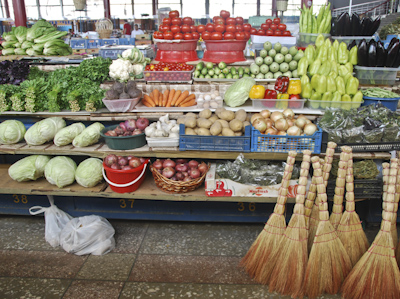
Fruit Stalls

Brooms

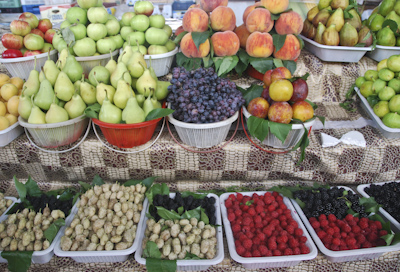
Mulberries, Raspberries, Figs, Grapes, etc.

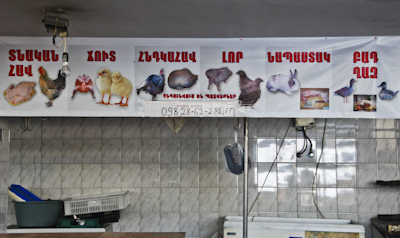
Pictures in the Meat Market

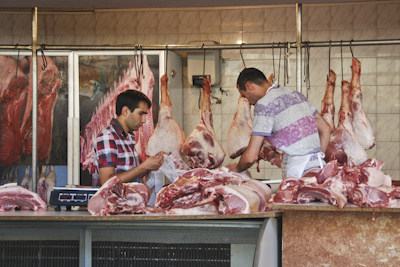
Lamb & Beef Section

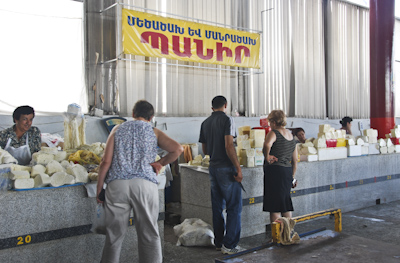
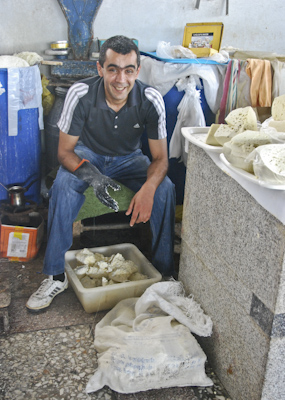
Cheese Section

Hand-Mixing Cheeses

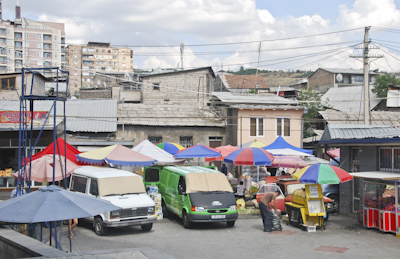
Behind the Market

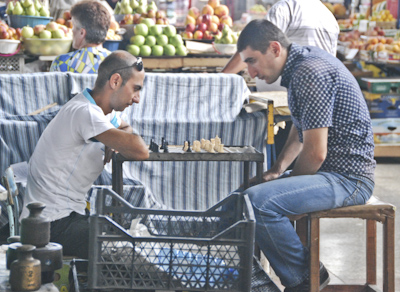
Serious Chess Game

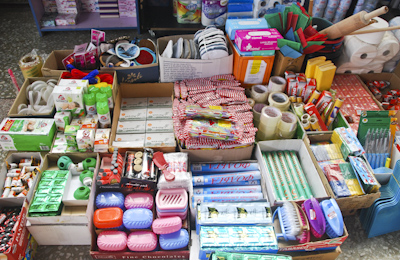
Russian Household Goods

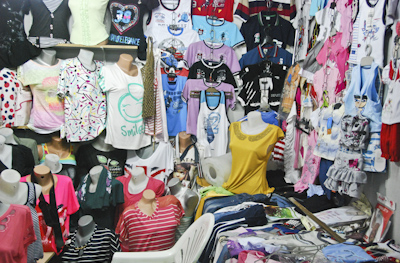
Clothing

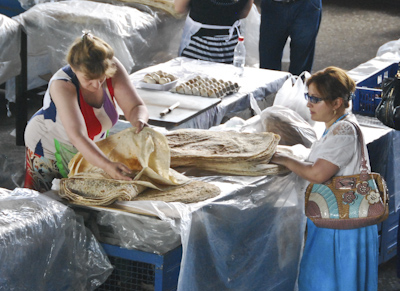
Lavash Lady

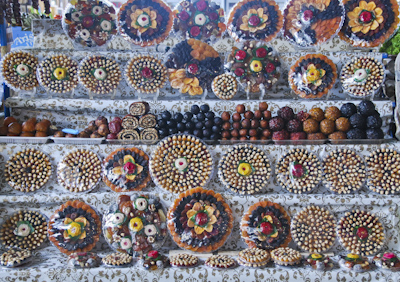
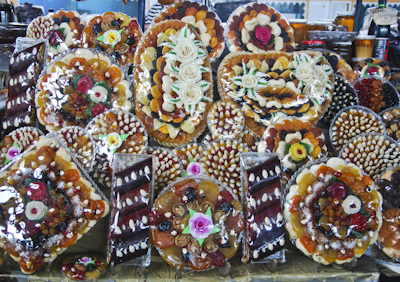
Dried Fruit Arrangements

Riding on the Wings of Tatev

July 25th, 2013

Thursday – July 25, 2013

I slept well and awoke early for our return trip to Yerevan.  It was to be another 12 hour day in the bus with several scenic/historic stops along the way.  Breakfast at the hotel was essentially home-baked bread, cheese, yogurt, a boiled egg, and coffee.

View From the Top

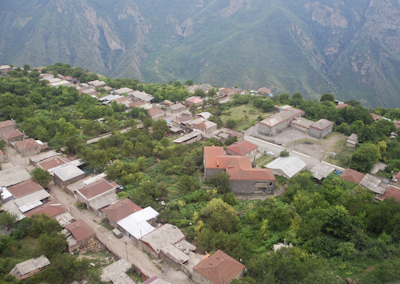
Village on the Edge

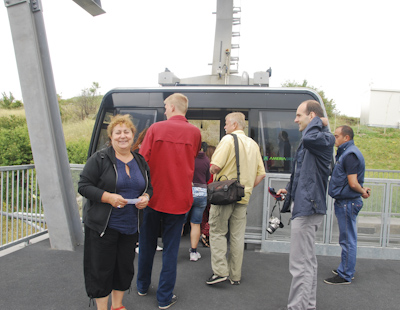
Boarding the Wings of Tatev

Roof of the Village

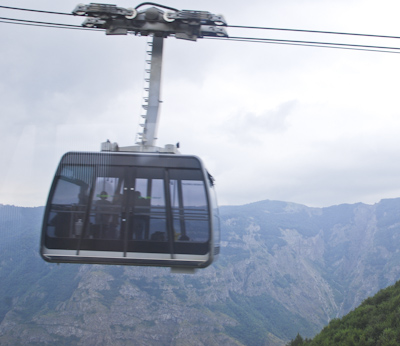
Returning Cable Car

View of Tatev From the Air

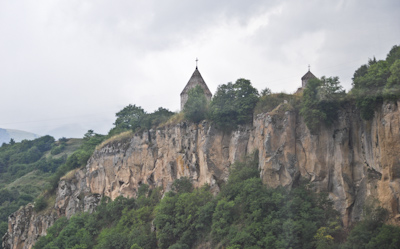
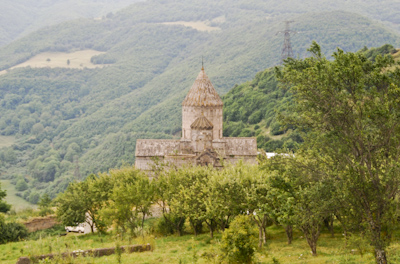
Tatev Monastery

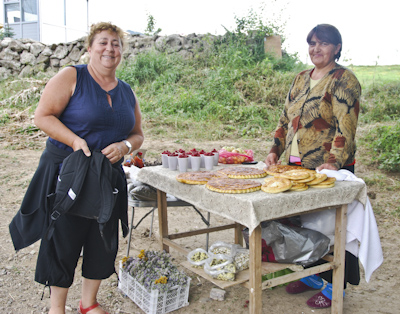
Buying Raspberries

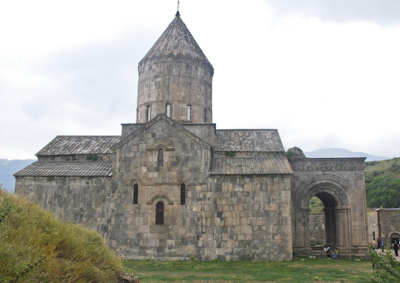
Main Church

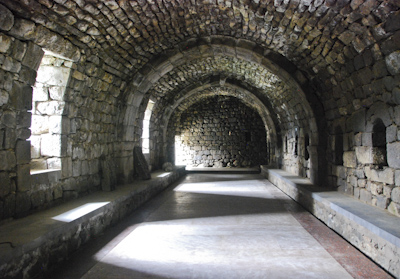
Storage Room

Another View of the Fortified Monastery

Part of the Wall

Reflections

Waiting

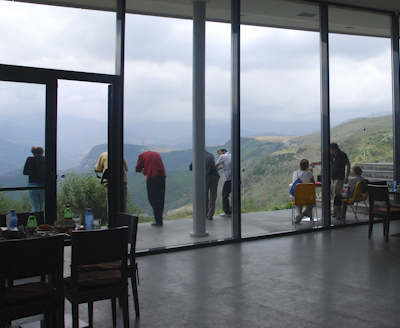
Lunch in the Mountains

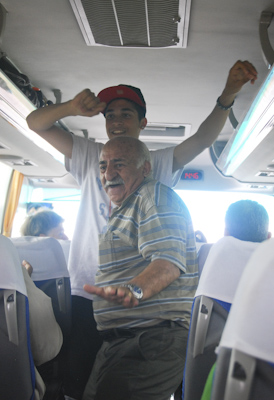
Dancing in the Bus

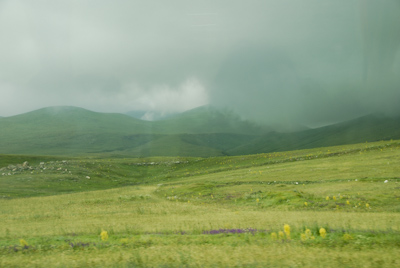
Storm Over the Mountains

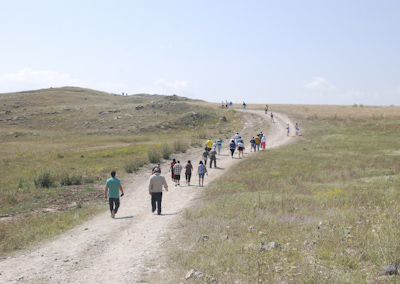
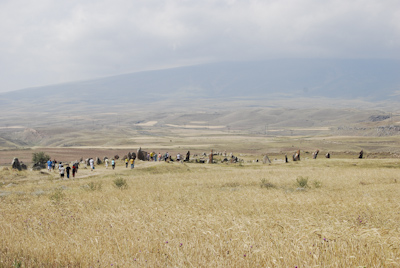
Trail to Karahundj

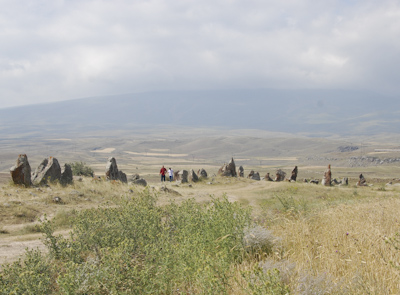
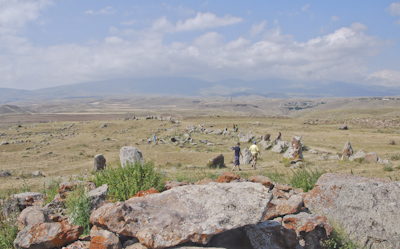
Vast Area of Karahundj

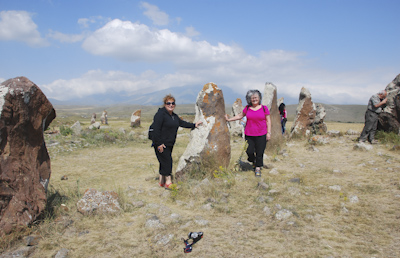
Zorats Karer aka Karahundj

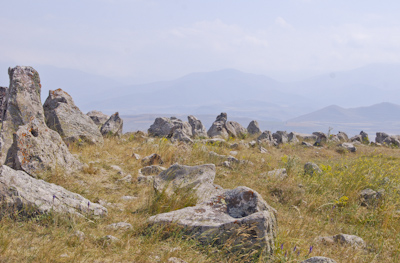
Ancient Rocks

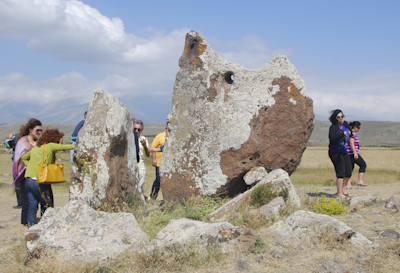
Rock Formations

Posing with the Rocks

More Rocks

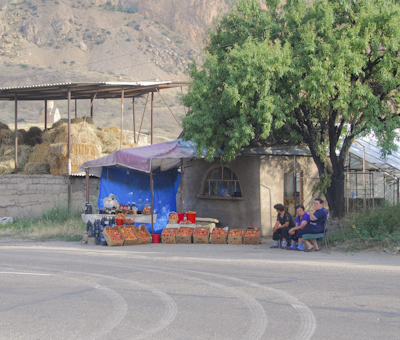
Selling Tomatos

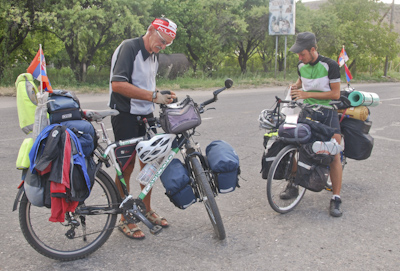
Bicyclists

Armenian Countryside

Stepanakert and the Mountainous Region

July 24th, 2013

Wednesday – July 24, 2013

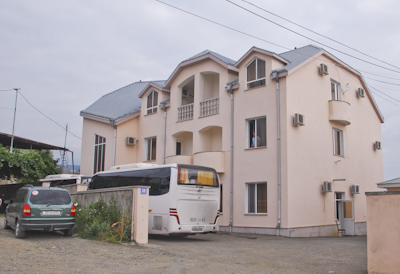
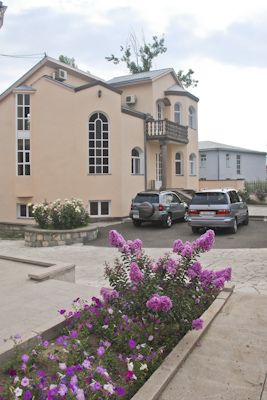
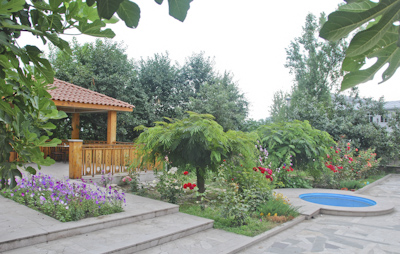
I slept well in the Heghnar Hotel and the group rallied early for breakfast in the main dining room. The hotel was comprised of three buildings with a lovely garden overlooking a green valley.  Unfortunately, the day was overcast and humid but cooler than Yerevan. 

Main Building of the Heghnar Hotel

3rd Building of the Heghnar Hotel

Garden With Fig Trees & Flowers

Other Side of the Hotel Wall

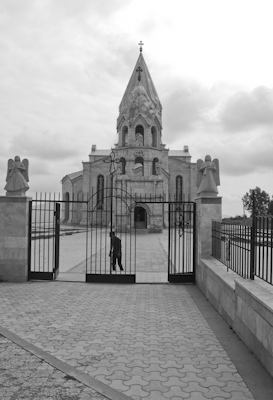
New Church in Shoushi

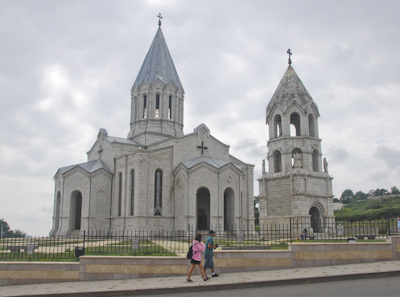
Ghazanchetsots Cathedral & Bell Tower

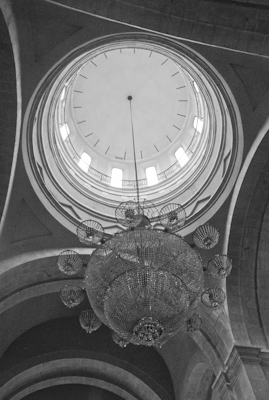
Chandelier 

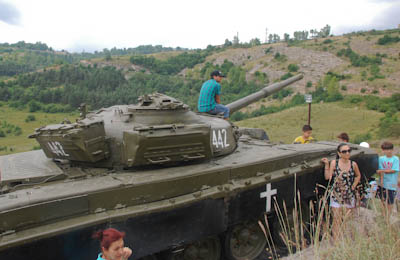
Tourists With Tank

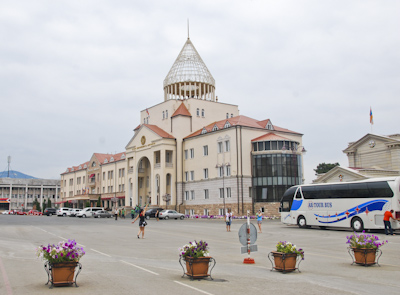
Parliament Building in Stepanakert

 Our Tour Guide, Alla

The Singing Fountain in the Central Park in Stepanakert

Francoise With the Home Boys

We Visited the Museum

Guided Tour in English

Historic Artifacts of Karabagh

Tradesmen Playing Tavlou in the Street

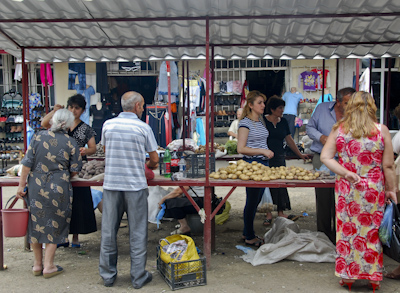
The Covered Market in Stepanakert

Smiling Seller in the Market

Potatoes, Dried Beans & Spirits

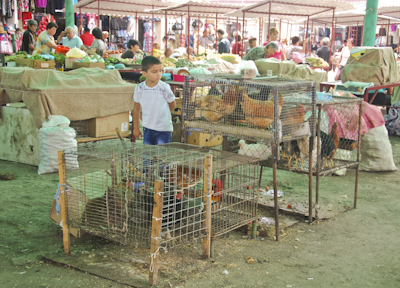
Livestock in the Market

Fresh Fruits & Vegetables

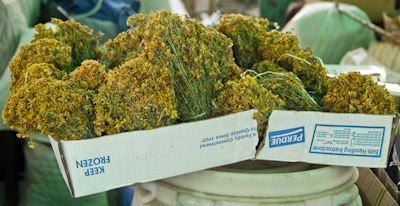
Herbs

Potatoes

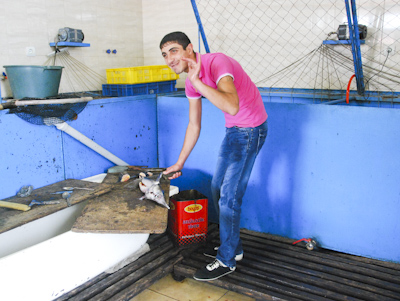
Young Fish Monger

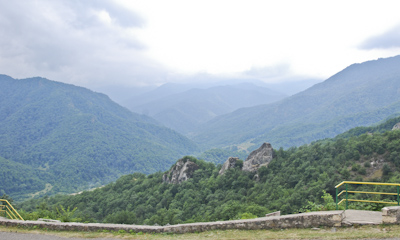
On the Road

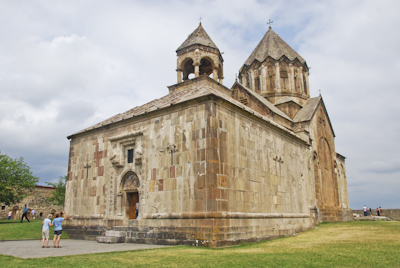
Gandzasar

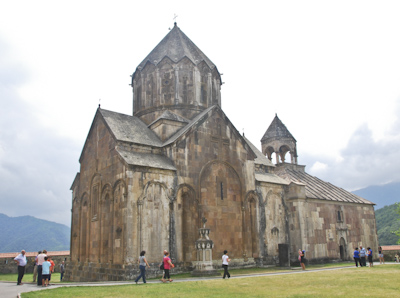
Opposite View of Gandzasar

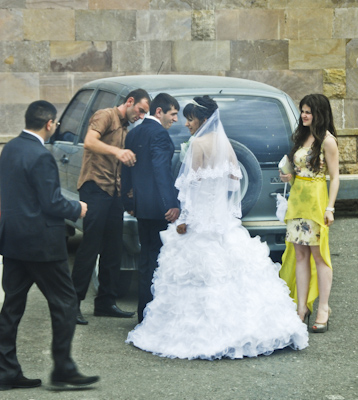
A Wedding at Gandzasar

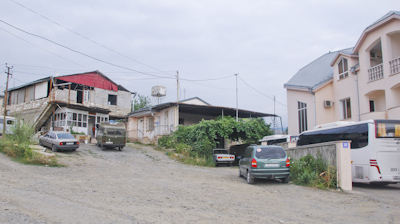
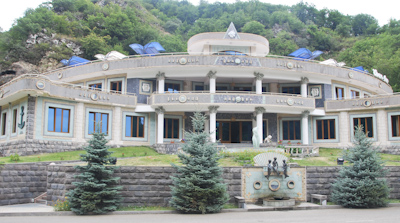
Hotel on the Road

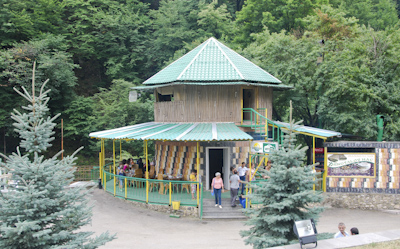
Lunch al Fresco

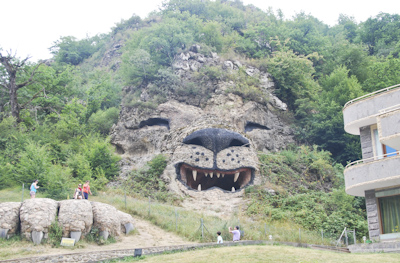
Roaring Lion Behind the Hotel

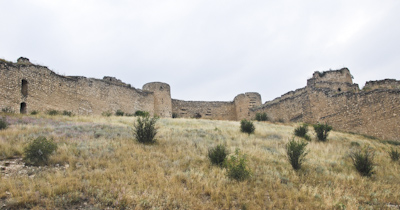
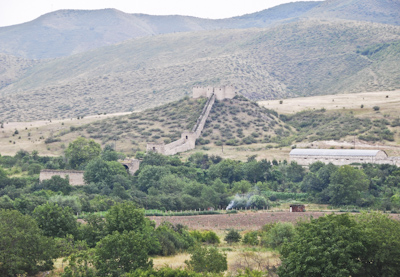
Ruins of an 18th Century Fortress near Askeran

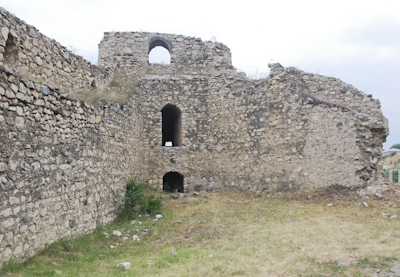
Another Section of the Ruins

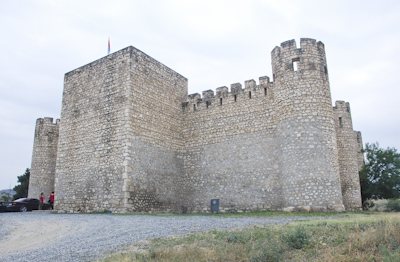
Askeran Fortress

Tigranakert of Artsakh

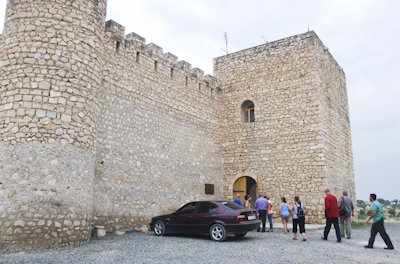
Entrance to Tigranakert

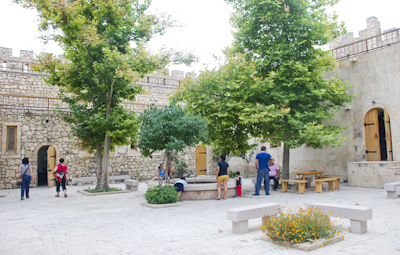
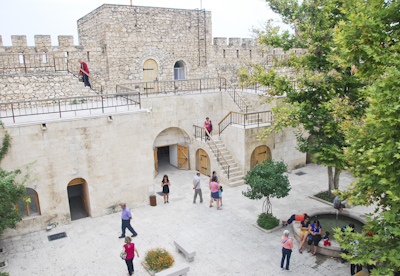
Interior Courtyard

Looking Down

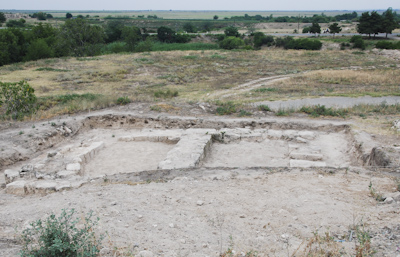
Archeological Site

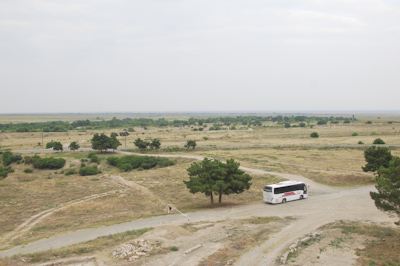
Looking Out From Tigranakert

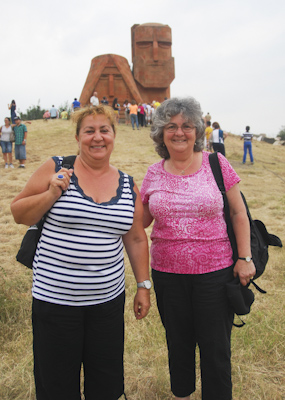
Me & Francoise in Front of Monument