Rare Books & Wild Things: Philly 1

April 18th, 2012

Wednesday, April 18, 2012

Our adventure this week was an over-night in Philadelphia, PA.  A while ago, I read about a special exhibit of Van Gogh paintings at the Philadelphia Museum of Art this winter called Van Gogh Up Close and thought it would be fun to see the exhibit and visit the ‘City of Brotherly Love’. The first time I went to “Philly” was with two young sons eager to learn about the early history of our country.  It must have been in the late 1970s.  At that time, we explored the historic district and expressed disappointment that “The Bell” was so small and left outside in the elements. Today the historic district has expanded and modernized and the Liberty Bell has its own indoor museum.  We didn’t plan to visit any of the historical tourist sights during this trip.
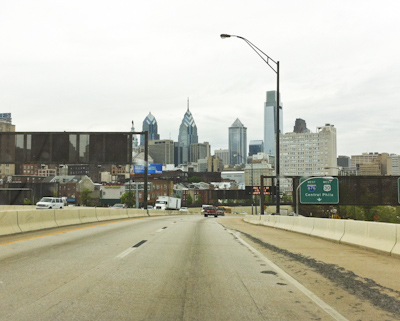
Highway Into Philadelphia

We left for Philadelphia this morning and had a pleasant three hour drive mostly on the Garden State Parkway.  As we approached the city, we saw the tall skyline of new modern-glass and steel buildings.  We had booked a room at the Sofitel because it was well located in the downtown center of the city.  We checked in and, after a bit of a rest, we went out to explore the immediate neighborhood around the hotel.  The section was called Rittenhouse because of a lovely park on the other side of Walnut Street. It was a beautiful sunny afternoon and spring flowers were in full scented bloom. The trees had bright celery-green spring leaves and the birds in the park were happily chirping.
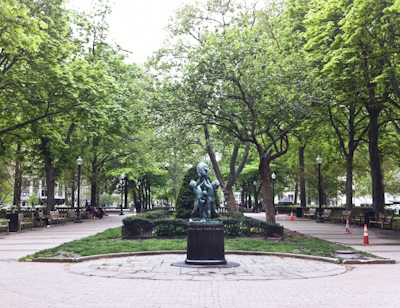
Rittenhouse Square

It was good to stretch our legs after a long car ride and we walked along Walnut Street admiring the diversity of architectural styles. In the middle of the traffic grid is the huge Philadelphia City Hall which was built about 1900. It is literally a traffic-stopping structure designed in Second French Empire style and built on the former site of a colonial public square. The architectural style is similar to the ornate Opera Garnier and the Louvre Palace wings in Paris. An interesting bit of trivia is that this City Hall building is currently the second tallest masonry building in the world.  This means that it is supported by granite and brick rather than steel.
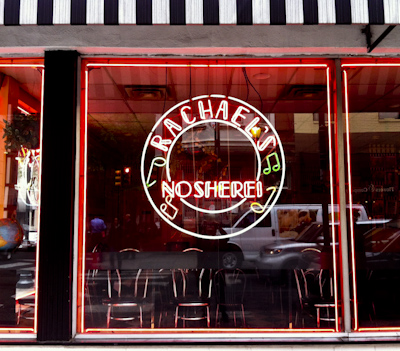
Local Eatery

As we walked along Walnut Street, we passed neoclassical designed buildings complete with ornate columns, as well as high Victorian architecture with gingerbread metal trim.  Add to the mix a little Art Deco, a sprinkling of Beaux Arts, and several modern glass skyscrapers.  We explored the narrow tree-lined streets near Rittenhouse Square to discover that many of the buildings were traditional brownstones and red-brick Federalist style townhouses of the early 1800s. Downtown Philadelphia seemed like an architectural stroll through time and history.
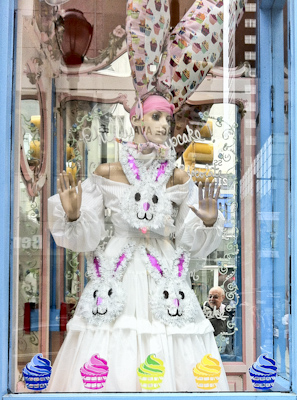
Shoppe Window

After a break at Capogiro Gelato Artisans, we walked to the Rosenbach Museum & Library at 2008-2010 Delancey Place.  The Rosenbach brothers bought one of the 19th Century townhouses to keep their collections of rare books, manuscripts, and antiques. Dr. Abraham Rosenbach, who was a scholar and the preeminent rare book dealer of his day, helped to create some of the most famous libraries in the U.S. for his wealthy clients. A sample of those libraries are: the Morgan Library in NYC, the Widener Library at Harvard University, the Huntington Library in Los Angeles, CA., and the Folger Shakespeare Library in Washing, DC. Older brother, Philip Rosenbach was an antiques dealer and collector. The house at 2010 Delancey Place is furnished with Philip’s treasures and shows how the brothers lived from 1926-1952 among the 18th century antiques with names such as Hepplewhite and Chippendale.
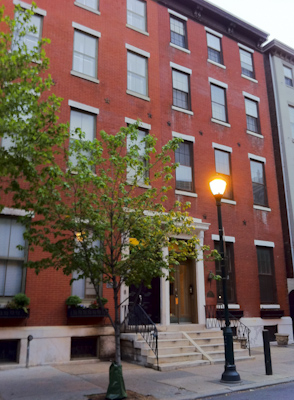
Typical Neighborhood

Visitors are limited to explore only part of the first floor and two rooms on the second floor unescorted.  A one hour tour of both houses is included in the admission fee of $10 adults/$8 seniors and is the only way to see the private rooms and libraries. After we paid our admission fee, we were greeted by a volunteer docent, Susan Sklaroff. We were the only guests this afternoon and as a result, we had a private tour of the houses. We were led through security-locked doors and into a reception room. Susan proceeded to tell us about the history of the Rosenbach family, the houses, their relationships, their collections, libraries, and how the family history was woven into the tapestry of Philadelphia history.  These were amazing multi-faceted stories and histories which made visiting this museum such a special experience.
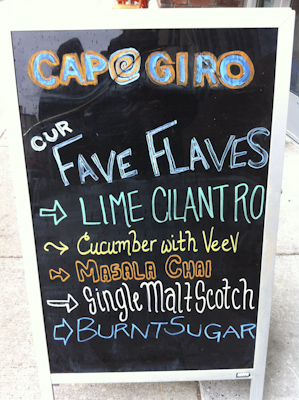
Special Gelato Flavors

After we passed a Samuel Yellin iron gate in the entry hall, we entered the parlor.  This was an elegant sitting room with a beautiful Philadelphia highboy near the window and Gratz family portraits on the walls. Susan told us about the Gratz family and their role in early colonial Philadelphia history. The patriarch of the family, Michael Gratz, helped to build the first Synagogue in Philadelphia in 1782.  One of his daughters, Rebecca Gratz, founded the Philadelphia Orphan Asylum in 1815 and started a Hebrew Sunday-school run only by women in 1819.  Our tour guide, Susan Sklaroff, became so interested in the history of Rebecca Gratz that Susan writes a blog about Rebecca.  It is:  http://rebeccagratz.blogspot.com

In brief, the Rosenbach brothers lived very well and my description of the house and beautiful collections could not do justice to the elegant furnishings.  The museum’s website and wikipedia only give you a peek at the incredible facilities.  There was beautiful English silver, part of a miniature portrait collection, paintings, porcelain, stature, and glass.  The upstairs rooms house part of Dr. Rosenbach’s library.  It was written that there are 130,00 books and manuscripts in the collection.  Susan said that most of the rare books are stored within the building’s specially made “stacks”.  The Rosenbach Museum & Library website lists many of the rare books, letters, and papers.  We saw: Lewis Caroll’s own copy of Alice in Wonderland, Robert Burns’ letters, part of the Charles Dickens collection, James Joyce’s handwritten manuscript of Ulysses, Benjamin Franklin’s first Poor Richard’s Almanac, manuscripts by Shelley, Keats, Oscar Wilde, Conan Doyle, Joseph Conrad, Walter Scott, Wordsworth, and Bram Stoker’s handwritten notes for Dracula, etc., etc., etc…..
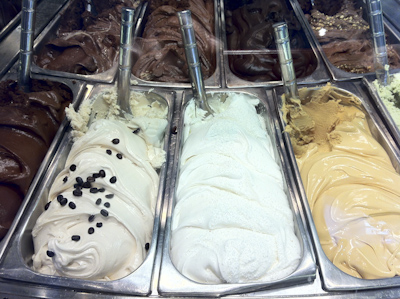
Moka? or  Coconut?  or  Burnt Sugar?

There is also a recreation of Marianne Moore’s Greenwich Village NY living room on the top floor.  Moore’s complete library is part of the Rosenbach collection, which includes books by Ezra Pound, T.S. Eliot, Elizabeth Bishop.  Finally, the author and illustrator, Maurice Sendak, who is the author of Where the Wild Things Are, chose the Rosenback Museum to be the repository for his works in 1968. 10,000 works of art, illustrations, drawings, manuscripts, and books by Sendak are housed in the Rosenbach Museum.  These are on display in continually rotating exhibits of Sendak’s works. During this visit, two rooms were devoted to Maurice Sendak’s illustrations for the 2003 publication of Brundibar. What an amazing jewel of a museum!  I look forward to visiting again when we return to Philadelphia.
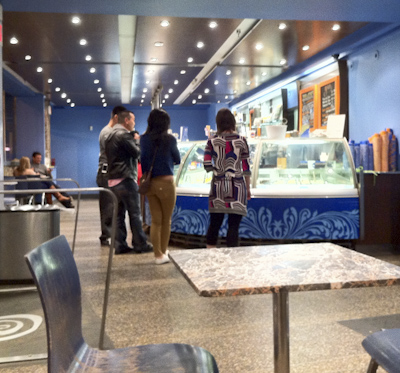
Waiting For Gelato

After so much culture and exposure to so many jaw-dropping books, we worked up an appetite.  Jeff consulted his Zagat app and found a small Italian restaurant close by. Viola was just a few blocks away from the museum on a pretty little street off Walnut Street.  Up a few steps; pleasant small room; attentive young Italian waiters; limited menu; BYOB.  Add to the list: a delicious southern Italian dinner! Jeff had veal and I had a fantastic chicken dish with mushrooms, potatoes, and sugar-snap peas.  It was a perfect end to a good day!

(note: iPhone photos)
Family Emergency

April 11th, 2012

Wednesday, April 11, 2012

I just returned from a very stressful two-weeks in Florida.  It all began with conversations with my brother in March.  Bob said he had “floaters” and “black spots” in his left eye.  A week later he reported that his vision in that eye was slowly diminishing, as if a dark curtain was being drawn across the eye.  He could see half of objects in his visual field, but the rest was dark.  He decided to go to a local optometrist to get some answers.  Bob reported back that the doctor said he had “a torn or detached retina” and it was vital to get emergency treatment ASAP.  With that information, Bob called his eye doctor in New York for advice, and Dr. Katz recommended the Bascom Palmer Eye Institute in Miami.

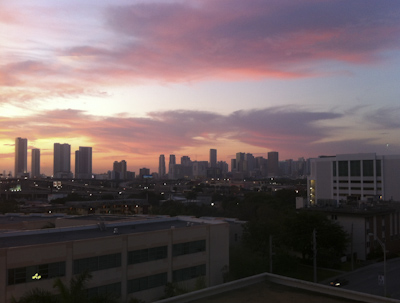
Sunrise Over Miami

Meanwhile, I searched for any and all information I could find on the Internet pertaining to detached retinas. Yes, I discovered, it was a “Medical Emergency“.  The advice on the internet from the Mayo Clinic and a variety of other medical sites was to go to a retina specialist immediately in order to prevent further damage and permanent blindness.  My brother’s other problem was that he is the sole caretaker for his wife, who has end-stage renal failure and must have dialysis treatments three-times a week. Bob also takes care of our 87 year old mother.  They had been living in Florida for the winter in my mother’s condo in Delray Beach.  Bob does all the shopping, cooking, entertainment, and driving for them.  As soon as I received Bob’s permission to help him, I prepared to fly down. As I packed my suitcase, Jeff booked my flight and hotel and secured a rental car at West Palm Beach Airport.  I took the last JetBlue flight out of Westchester Airport on Tuesday, March 27th.

Bob and Joan met me at my hotel in Delray Beach about 10:00 PM and we immediately drove to Miami. The Bascom Palmer Eye Institute is nothing short of “Amazing”! It has 24-hour emergency care and treatment just for eye problems. The institute is affiliated with the University of Miami Medical School and Health System and is part of the huge campus of the Jackson Medical Complex. It was rated the #1 Eye Hospital in the U. S. for 8 years, according to The US News and World Report ranking of best hospitals in the country.  After a thorough examination of Bob’s eyes, the doctor on-call made an appointment for Bob to meet with the surgeon in the retina unit.  Bascom Palmer has sub-specialities which has different units for specific eye-related problems: retina, cornea, macula, etc. The surgeon who was recommended to Bob was Dr. Thomas Shane who is a Chief of Residency and an Instructor of Ophthalmology at the medical school and an expert in Retinal Detachments.  Who knew???!!!

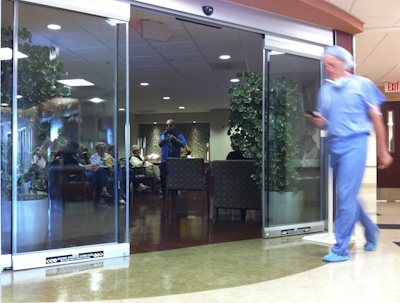
A Doctor in Scrubs Walking Past the Waiting Room

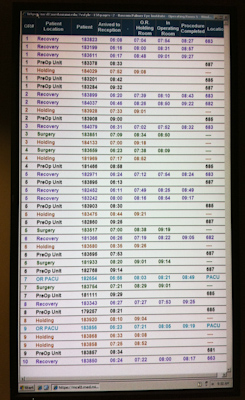
We returned to the institute on Friday and Dr. Shane examined Bob’s eyes and explained the reattachment procedure. Bob was given an appointment for surgery on Monday morning, April 2nd at 7:00 AM. It’s a 50 mile drive from Delray Beach and we drove through Miami rush-hour traffic on Route 95 to check in. The entire procedure ran like a well-orchestrated concert. Ten surgical rooms were being used on this day.  Everything went very well: from the warm greeting of the reception desk personnel to the computer monitor which tracked Bob’s progress pre-op through post-op, to Dr. Shane’s warm handshake and expression of a successful surgery.  For Bob’s part, he was an excellent patient and he was very brave.  Bascom Palmer gets very high ratings from us for patient and family care and attention.

Surgical Schedule

The surgical procedure was done on an out-patient basis without general anesthesia.  The surgery entails repairing the torn retina with a laser and then replacing the vitreous fluid with a “bubble of gas”.  Bob emerged from the surgery wing with a large patch over his eye and he was a little groggy.  He had to keep his head down, “face parallel to the floor” for a week and Dr. Shane wanted Bob to return the next day for a follow-up exam.  I drove Bob back to the condo to rest for the night and then picked him up early the next morning.

Dr. Shane explained the surgery to us and reassured us that he was pleased that it went very well.  Bob was instructed to return for another visit in a week to monitor the healing progress. Bob rested all week, faithfully applied the eye-drops, and kept his head down.  It was a rough stress-filled week.  The following Tuesday, April 24th, we returned to see Dr. Shane again.  He told us that everything was going along as expected and the reattachment of the retina was progressing very well.  The best news for Bob was that he didn’t have to hold his head in the down position any more!  We all breathed a hugh sigh of relief, laughed, and thanked Dr. Shane with heartfelt gratitude.

The prognosis for Bob’s vision looks good.  There is still very little vision in Bob’s left eye, but he reports that he can see the top of the gas bubble and is beginning to see shapes.  As the gas bubble is shrinking, Bob’s vision is expected to improve according to Dr. Shane.  The lesson we learned from this experience is that if someone sees “black spots” or “black dots” or anything else unusual in either eye, RUN (don’t walk!) to the nearest opthamologist ASAP.  A detached retina is a Medical Emergency and the alternative is blindness.

I guess I can’t go anywhere without taking pictures!  Here are some more photos that I took with my iPhone:

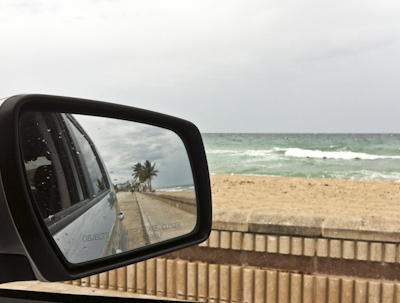
The Atlantic Ocean

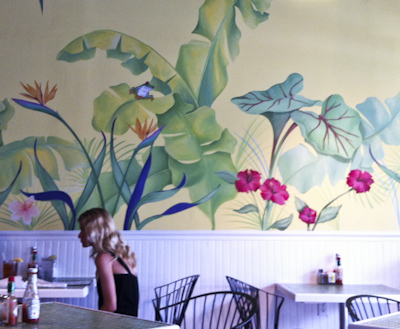
Breakfast in the Tropics

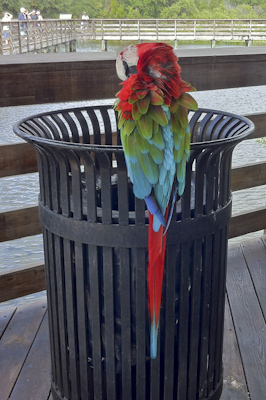
“Poof” the Macaw

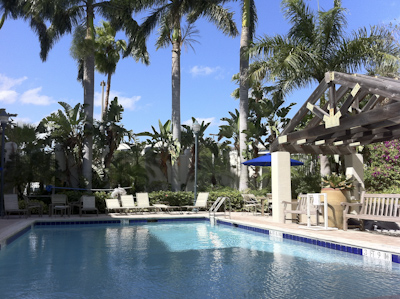
Pool at the Hotel

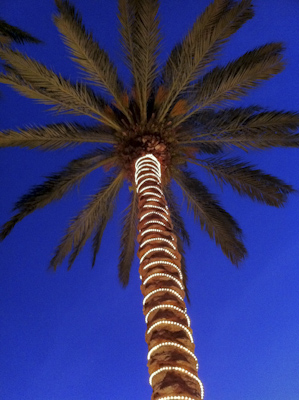
Lighted Palm at Night

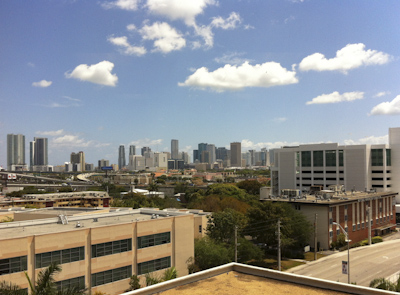
View of Miami From Bascom Palmer Eye Institute


The Ides of March?

March 15th, 2012

Thursday, March 15, 2012

Beware?  I think not.  Yesterday, on a beautiful warm spring-like day, we drove north to Port Jervis, New York to take care of some family matters.  We chose to drive along the slower non-highway roads of Route 6 and Route 17.  We crossed the Hudson River via the Bear Mountain Bridge and drove through scenic Harriman State Park.  The weather has been so warm and lovely this winter that although it feels like spring, the leafless trees reminded us that it’s still winter.

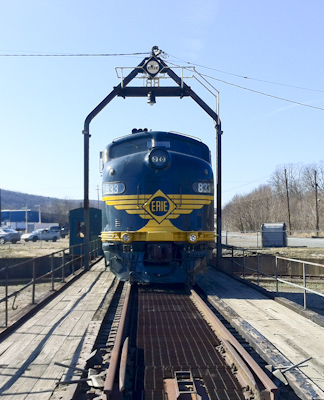
Engine of the Erie Railway

The sky was a bright cloudless blue and the temperature was tickling 70 degrees, as we drove through former farmlands.  Port Jervis is a tired small city which looks like it had seen better days in the not-too distant past.  It is located in a valley along the Delaware River across the Pennsylvania border.  A small bridge connects the two states.

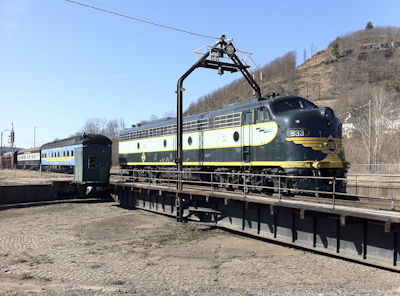
Largest Working Railroad Turntable

Port Jervis was actually a “port” on the Delaware and Hudson Canal when the waterway opened in 1828 to transport coal from northeastern Pennsylvania to New York and New England.  The city grew and continued to prosper when new railroad lines were opened from 1835 through the middle of the 1900s. Port Jervis was known as a “railroad town”.  All the famous eastern railroads, The New York & Erie Railroad, the Ontario & Western Railway, and The Erie-Lackawanna, made stops at the Port Jervis railroad station.

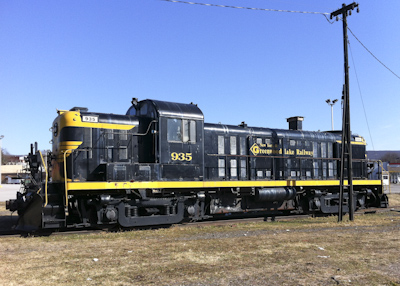
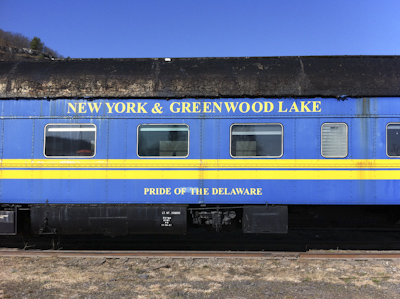
The New York & Greenwood Lake Railway

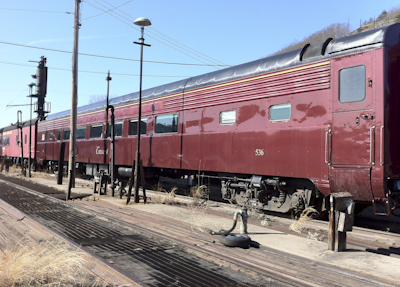
Before we left Port Jervis, we drove through several side streets to admire the old Victorian houses.  Then we followed the brown signs to the “Railroad Turntable”.  This was the “largest working electric turntable in the United States”.  According to a sign, the original roundhouse burned down many years ago.  I took a few photos with my cell phone and we walked along the old railroad tracks to get a closer look at the railroad cars.  They seemed to be in the process of restoration and we talked about what riding the rails must have been like a hundred years ago.

The Dining Car

A commuter train into New York City is all that’s left of the railroad legacy of Port Jervis.  The city seems to be weathering the current recession and very slowly adapting to the 21st Century.  Life is all about “change”: physical, emotional, financial, practical, developmental, and geographic changes.  I suppose cities, like people, have to change in order to be viable. How we adjust to the innumerable changes during our lives is determined by our ability to adapt and our personal resiliency.  Our feelings of success and happiness are direct outcomes of our ability to adjust to changes.

Passenger Car

The Ides of March?  Named after the Roman God, Mars, March is a time for change.  It marks the end of winter and the beginning of a new season and more changes.  Are we ready?  Beware….

A Tropical Japanese Garden

March 1st, 2012

Thursday, March 1, 2012

I enjoyed a brisk walk along Ocean Boulevard early this morning.  It was a bright sunny day and a cool breeze was blowing off the Atlantic Ocean.  I walked from Atlantic Avenue north to George Bush Blvd and back.  It had to be two or three miles.

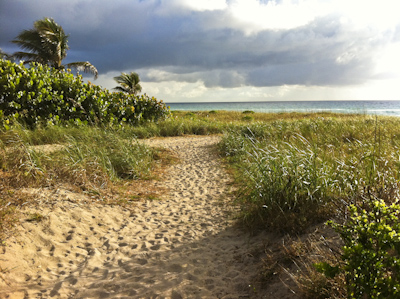
Path to the Atlantic Ocean

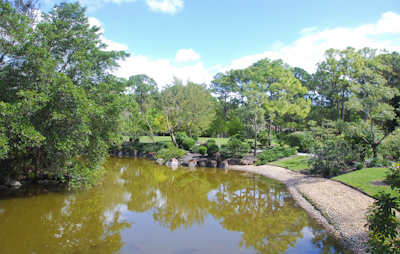
After a light breakfast and a shower, I drove to the Morikami Museum & Japanese Gardens in western Delray Beach.  The gardens are very well maintained and provide wonderful photographic opportunities due to the variety of seasonal flowering plants and bushes.  It’s always a surprise to see which plants or trees are in bloom.

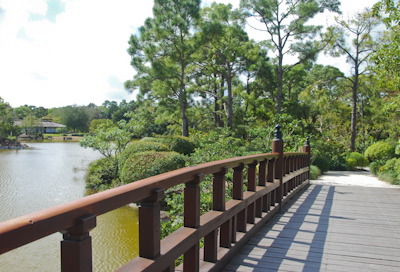
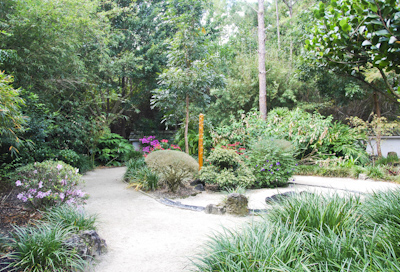
Beginning of the Garden Path

Since it was still early and not yet too hot, I started my visit in the garden. In Florida, like summer in New York, it’s better to do outdoor activities in the morning or evening rather than in the heat of mid-day. Visitors follow a path around the lake to view the plants and trees.

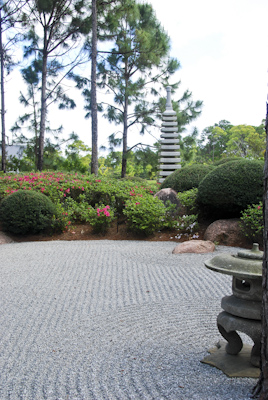
Edo Period Garden

The selection of plants at Morikami is based on Japanese gardens from different historical time periods.  The sign said they were not replicas of gardens, but “inspired” by six famous historical gardens which date from the 9th century through the 20th century.  Each garden is different and have their own personalities.  The total effect is beautiful. The visitor walks along the path from one beautiful garden to another.

Paradise Garden

About half way around the lake is a small island, Yamato, upon which is the Japanese style building which was the original museum.  There are two permanent exhibits there now which demonstrate the Japanese lifestyle to school groups.

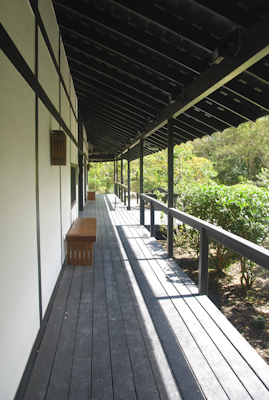
Shaded Porch

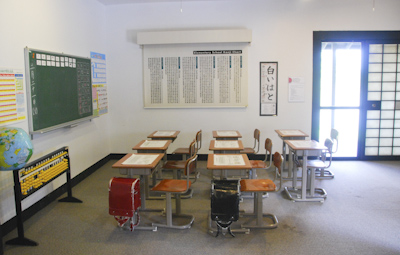
Japanese Classroom

The building is a traditional Japanese house with several rooms decorated to look like a Japanese classroom, a bedroom with tatamis,  and a kitchen.  There were several school groups there when I arrived.

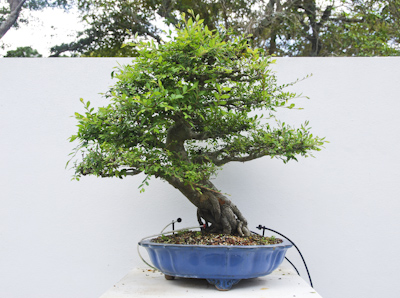
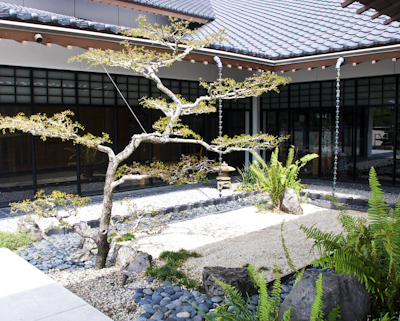
One of the Bonsai Trees on Display

It takes about an hour to walk around the entire lake, depending on how many stops you make and for how long.  There are many lovely places to stop and relax and contemplate Nature.

A Lovely View

Visitors can sit on the carefully placed benches and appreciate the beauty of a Japanese garden.  At the end of the path just near the museum building is a series of beautiful waterfalls with a couple of benches.

The Morikami Museum

The museum has grown and developed into an institution of Japanese cultural education.  The exhibit this season features 75 prints from a private collection of “sosaku hanga” or creative prints.  These are modern experimental contemporary woodblock prints from the 1950’s to the present.

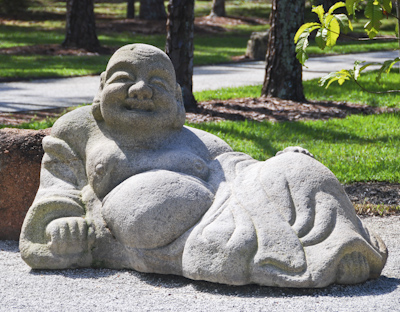
Happy Buddha – What a Life!

The Morikami is a wonderful place to visit!  The gardens are always fresh and ever-changing and the museum has interesting exhibits.  There are always exciting special events on select weekends and the Museum Store stocks interesting and unusual souvenirs.  Check out the Morikami website for more info.

Birthdays & ‘Gators

February 29th, 2012

Wednesday, February 29,2012

I made a short hop to Florida this week to celebrate my brother’s 64th birthday.  Yes, we sang the Beatles’ famous song, When I’m Sixty-Four, and we had a celebration dinner at The Melting Pot in Boca Raton on Sunday.  We tried to plan some fun activities during the week to keep ourselves amused and to explore parts of Florida which we had never seen before.

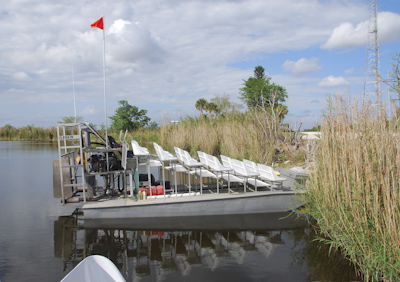
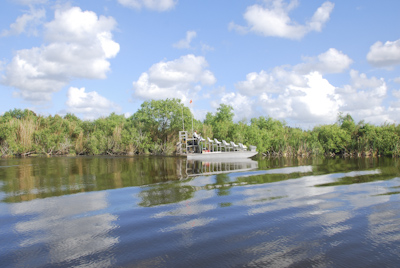
Loxahatchee Airboat

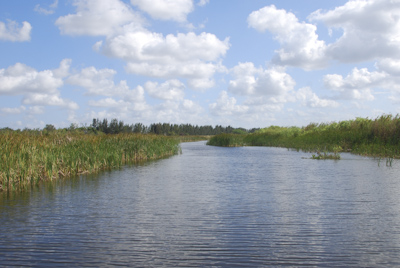
One of those activities was to take an airboat ride in this section of the Everglades. We had a really great time exploring this swampy area of the Arthur Marshall Loxahatchee National Wildlife Refuge west of Boca.  I was really surprised about how much FUN it was to ride on the airboat through the Everglades.  The three of us had the boat all to ourselves because it was the last ride of the day and there weren’t many tourists during the middle of the week.

The Loxahatchee Wildlife Refuge

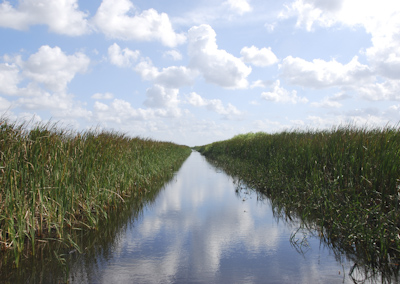
The guide/driver helped us board the boat and handed us huge ear-phones to protect our hearing from the very loud engine noise.  The boats are built with “stadium” seating so that everyone can look out.  The boat backed out slowly away from the beach and started to go along the watery path through the tall cat-tail grass.  It was an amazing experience!  It was so beautiful and relaxing, despite the engine noise.

A Narrow Portion of the Waterway

I felt like I was in a television documentary riding through the tropical wilderness.  I just needed a baritone narrator to describe the flora and fauna. F. Murray Abraham’s voice would be good for the narration.

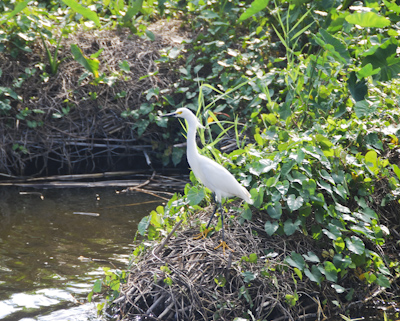
A Snowy Egret

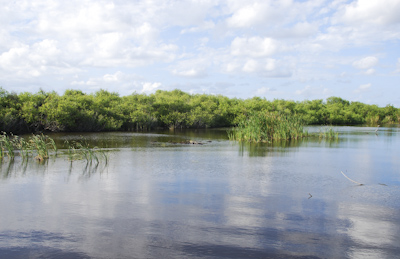
The water was calm and reflected the clouds in the sky.  As we went slowly along the watery pathway, egrets and herons took flight.  We passed other aquatic birds who were fishing for their dinners on long stilt-like legs.  It was one of those “it’s glorious to be alive!” experiences.

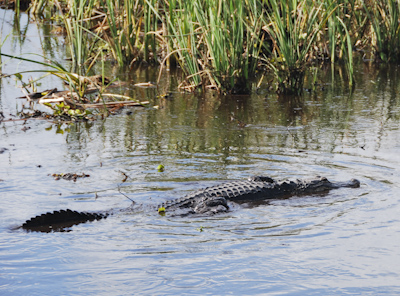
Swimming Alligator

The driver slowed the boat down and we drifted closer to the edge of the sawgrass.  He shut off the engine to tell us about the variety of wildlife around us.  He described the birds and informed us of their species. He gave us all kinds of historical information and statistics about the Everglades.  We asked a few questions about the Everglades and current conservation measures.  Then the driver said, “Lets look for some ‘gators”.  He revved up the engine and off we went to find ‘gators.

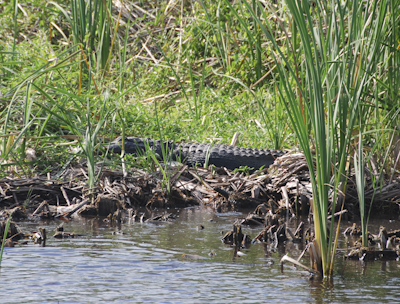
A Big ‘Gator in the Sun

A few smaller ones were swimming in the water close to the grasses.  Then the driver began to point out the larger ones sunning themselves on mudbanks or hidden in the grass.  What fun!  Now it was a “find the hidden ‘gator game”!  Believe me, they’re hard to find!  Their greenish-brown reptilian skin blends perfectly into the brown & green mud and grass.  They were hard to distinguish even after the guide pointed them out.

Watery Reflections

I was sad when the hour-long trip ended, but the sun was low on the horizon and the guide mentioned lots of mosquitos at twilight.  He said that there were an average of five mosquitos per square inch.  That’s a lot of mosquito bites!

Loxahatchie Airboat

Before we left, we drove past the small beach that was littered with brown vultures.  Then we drove to the head of a walking path into the Refuge.  There were flocks of small chirping birds in a variety of colors.  This is an amazing place and teaming with a wide variety of wildlife.  Highly recommended!

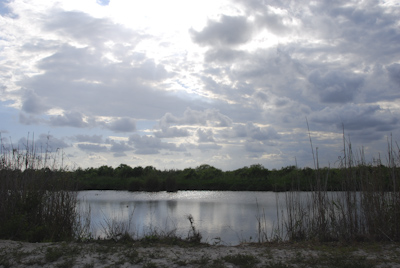
Setting Sun Over the Everglades

I can’t wait to return to Florida to explore more of the beautiful and amazing Everglades!