On Our Way to Paris!

October 25th, 2011

Tuesday – October 25, 2011

The day finally arrived. We talked about it. We researched flights, hotels, restaurants. We planned. We made reservations. Today we’re going to Paris!! The time crawled slowly until three o’clock when the car service was supposed to drive us to JFK. Jim, the driver and owner of the company, pulled up in a brand new elegant Mercedes and he chatted through all the NYC traffic until we reached the airport.

We were picked up early to give ample time to get through, what Jeff calls, “security theater”. It took an hour and a half to wait in multiple lines, show our passports to five different security officers along the check-in path, and drop off our suitcases at a pile in the middle of the terminal. We thought we’d never see them again!

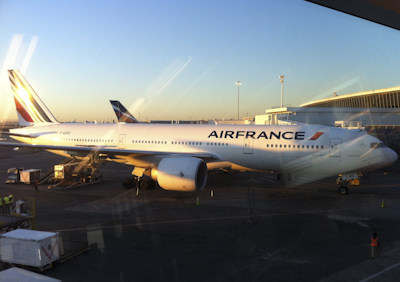
The final obstacle was an X-Ray machine in which we had to stand shoe-less with our legs apart and our hands in the air in a “hold-up” position. We found our gate and waited a short while to board. Our first clue regarding the airplane was the large number of blue-suited airline personnel who marched enmasse to the gate. When I joked about the French army was leaving our country, Jeff said that there were too many people to work on our plane, that they must be going home from flights which ended in New York.

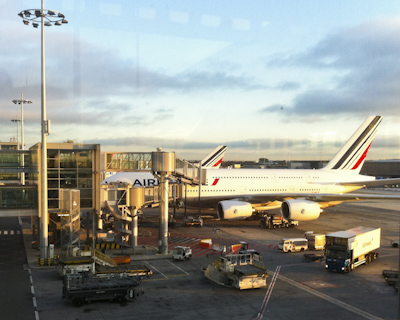
An Air France Jet at JFK

A few minutes later, several Air France airport workers hauled out three large stands with mounted signs and then placed crowd-control barriers in front of the boarding area.

I went over to read the signs. “Holy Moly,” I said to myself when I saw the diagrams of the seating plans of the plane. There were TWO floors of seats on the plane! The plans looked like seating on a multi-tiered ferry boat. It turned out that the plane was one of Air France’s brand new Airbus A380s. I overheard someone say that there were 500 passengers aboard. Then I remembered reading in the NY Times recently that the planes had problems when they were delivered to Air France and required additional work to insure safety. I was getting a little nervous……

Double-Decker Seat Plan

According to Wikipedia, the Airbus A380 is a “double-deck, wide body four engine “Superjumbo” jet and is the largest passenger airliner in the world. It has 5,145 square feet of floor space and has seating for 525 people when configured for three-class seating OR up to 853 people in an all economy class configuration.

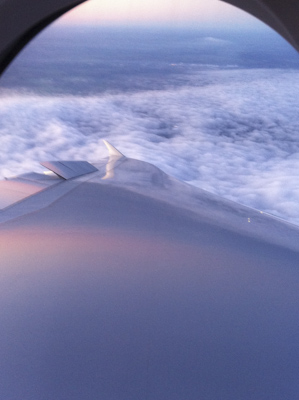
Sun Light Reflected on the Giant Wing

The plane was huge!! Our small section had ten seats across in 12 rows. Our seats overlooked one of the giant silver bat-shaped wings. Two of the best features of the Airbus were the reduced noise level in the cabin and the lack of G-force on take-off. When the plane took off it was quiet and comfortable and we couldn’t detect the increasing speed.

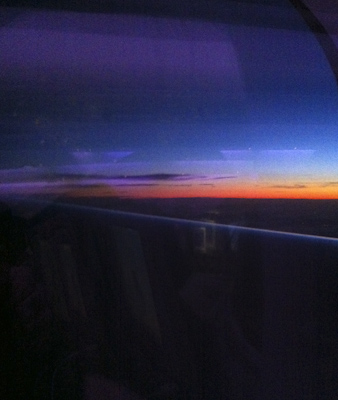
The Setting Sun

When we were in the air, the pilot invited everyone to walk around but, but as curious as I was, I didn’t get a chance. The worst feature of the plane was the very uncomfortable seat. As soon as we sat down we both said our seats were very hard. We agreed that a hard rigid seat is not recommended for a long distance overnight flight.

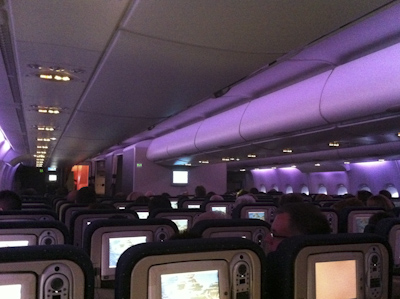
Purple Interior Lights Cast an Eerie Glow

End of travel saga: we made it to modern Charles de Gaulle Airport on time at 8:15 A.M. Paris time. We were exhausted from lack of sleep and achy from sitting on the hard seats for seven hours, but we were very happy to be in Paris.

The Airbus A380 on Land

A Very Biltmore Day

April 29th, 2011

Friday – April 29, 2011

Two important events occurred today: Prince William married Kate Middleton in London, England and we visited The Biltmore Estate in the city of Asheville, North Carolina.  It might have been raining in London, but in Asheville the weather was perfect!  It was a bright sunny day with a brilliant cloudless-blue sky.  The temperature in the morning was 55 degrees.  The mountain air was crisp and clear.
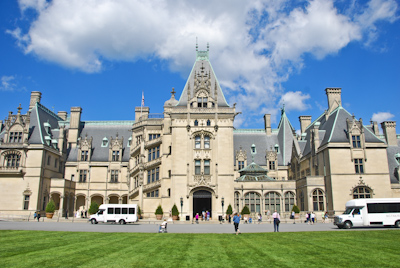
The Biltmore House

The Biltmore House is the largest home in the United States with 250 rooms.  It was built between 1889 and 1895 by George Washington Vanderbilt and modelled after several French Chateaus in the Loire Valley.  He was the youngest son of William Henry Vanderbilt and the grandson of Cornelius Vanderbilt, who had generated great wealth by building railroads and shipping companies.
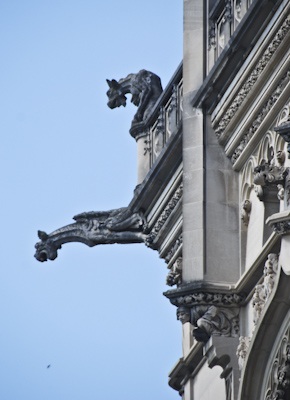
Architectural Details

As the story goes, George traveled to Asheville with his mother in the 1880s and fell in love with the beautiful mountainous region.  Asheville was renowned during Victorian times for its health spas and Mrs. Vanderbilt, who was elderly, wanted to “take the waters” for her arthritis.
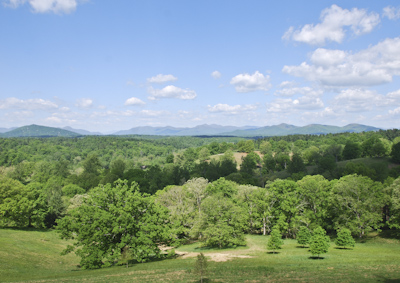
Biltmore Estates

George bought thousands of acres of land very cheaply and hired Richard Morris Hunt to design the house and Frederick Law Olmsted to create the landscape and gardens.  The house is still privately owned and operated as a business by George’s descendents.  The estate today covers 8,000 acres and has become an international tourist destination.  Daily tickets to the house and grounds cost $54.00 each for adults.  We had bought our tickets at the hotel the day before and they were good for two-days admission to the estate.
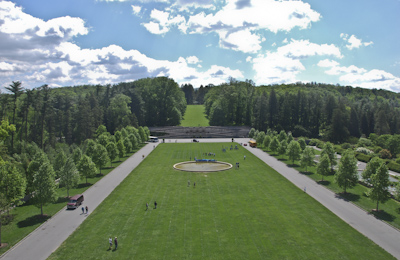
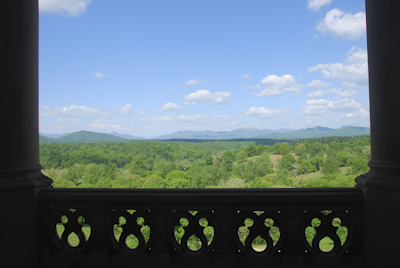
View of the Estates from the Balcony

We arrived at the Biltmore Estate by 10:00 o’clock and drove through the beautiful landscaped grounds for many miles.  We followed a long string of cars before we were directed to Parking Lot C and then walked to the small station to wait for the shuttle from the parking lot to the house.  The bus filled up quickly and we rode for more scenic miles to the mansion.  The driver told the riders about the history of the house and family and then explained the general rules of the Biltmore.
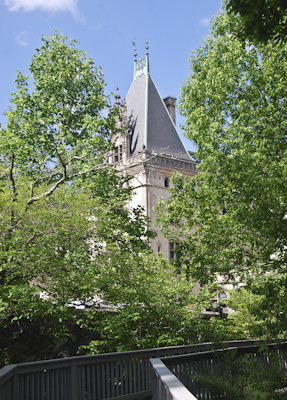
The first view of the house is very impressive!  The mansion is huge and really looks like one of the French castles along the French Loire Valley.  The shuttle bus left us off right in front of the main entrance to the house.  Jeff saw a sign somewhere with a list of guided tours and, because we’re both interested in architecture, he thought it would be fun to take the Architect’s Tour.  We bought additional tickets at $17.00 each and, after taking a few exterior photos, walked up the stairs and into the magnificent entrance of the house.
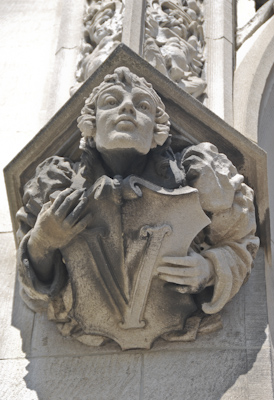
Fresh flowers in huge vases greet visitors in the vestibule.  At the top of the interior stairs is the large inner hall.  The first room that the visitor sees to the right is the Winter Garden.  It is a three-story glass and wood domed atrium filled with beautiful tropical plants and trees.  Lovely iron Art-Deco lanterns hang down from the ceiling.  The light was exquisite.  Our camera shutter-fingers were itching, but there was NO photography in the house.
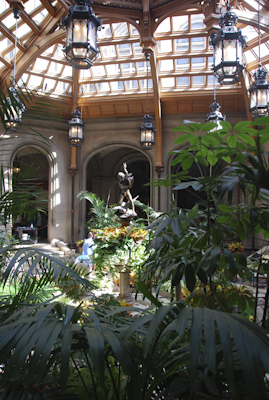
The Winter Garden

The “Architects Tour” started at 11:00 and was conducted by one of Biltmore’s professional guides, Garrett LaBoda.  After he gave everyone a tag, we followed him out to the front of the building where Garrett talked about the design of the exterior.  He told us the history and showed us the hidden acorns and leaves in the masonry.
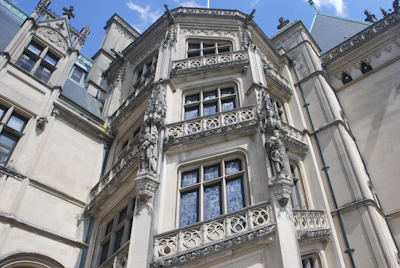
Exterior of the Main Staircase

Next we entered a side door and Garrett led the small group of about a dozen people up the magnificent main marble staircase to the fifth floor.  A family elevator had been installed near the stairs, but this is only used by handicapped people today.  We climbed up to a section near the roof of the house which is not open to the general public.  There was a huge model of the house in the middle of the room and prints of the French Chateaus and English Castles on the walls.  The next room was George Vanderbilt’s office and later his wife’s art studio which was at the top of the front tower of the house.  We were also able to see a small narrow attic space which gave us a glimpse at the construction of the building.  Unlike the medieval French Chateaus which were built of stone blocks, Biltmore was constructed of iron and bricks with a facade of cement to look like stone blocks.
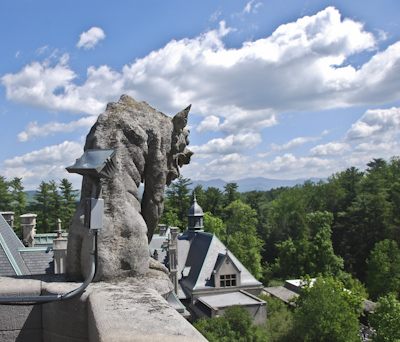
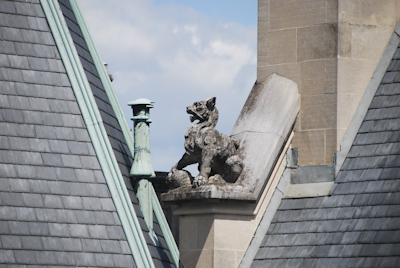
Gargoyle Near the Roof

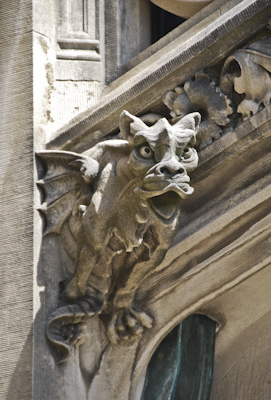
A small door led out to a narrow balcony which encircled the top of the tower room.  We all walked out on it and looked around.  We were able to take photographs here.  There were a couple of charming gargoyles which decorated the corners of the balcony.
Another Roof View

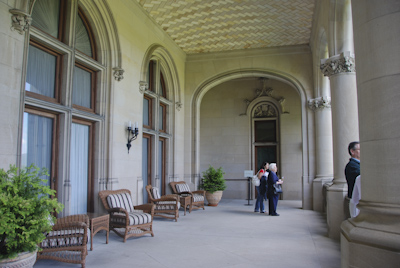
We followed Garrett across the studio to the roof of a dome which supported the magnificent five-story iron chandelier which hung down through the main staircase.  We enjoyed another wonderful bird’s eye view of the grounds and gardens.  We also went out onto a large porch toward the back of the house.  In each of these locations, Garrett pointed out architectural details of interest and told many interesting stories about the Vanderbilts.  It was an engaging tour and the hour passed quickly.
View of the Mountains From a Balcony

Afterwards, we walked to the former stables of the estate which had been converted to restaurants and gift shops.  We sat for a while and enjoyed Southern sweet tea before continuing our self-guided tour of the mansion.  We have found that it helps to take sitting breaks when we’re sight-seeing so we don’t get burned out before the end of the day.  I guess that’s one of the disadvantages to our age.
The Rear Balcony

With the official Biltmore self-guided tour pamphlet in hand, we began our tour of the house.  Unfortunately, photography is strictly forbidden so I have no photos of the interior.  Over many years, we have seen many large mansions which belonged to wealthy robber-barrons of American history, including Newport’s “summer cottages” and William Randolph Hearst’s house in California.  A couple of weeks ago we visited Flagler’s mansion in Palm Beach Florida.  Biltmore ranks high on this list of impressive “homes” with huge marble ballrooms and dining rooms decorated with Flemish tapestries and exotic wood and marble.  It was noted that George Washington Vanderbilt’s library contained 23,000 books and had Napoleon’s chess set on display.  The cozy family bedroom suites were decorated in antiques and rich fabrics.  There was heavy red brocade in George’s bedroom with hidden closets.  Edith’s bedroom was decorated in an eye-opening bright yellow and purple satin, which were supposed to be her favorite colors.
Architectural Detail

Probably the most interesting were the “downstairs” rooms.  This is where the servants lived and worked to support the “upstairs” owners.  We saw bedrooms, kitchens, pantries, storage rooms, laundry rooms, and rooms to store dishes and silverware.  Downstairs was also the location of an exercise room, changing rooms for guests, and the indoor heated swimming pool.  Many rooms in the house were on display and visitors followed a path through the open rooms.  The self-guided pamphlet gave adequate explanations of the highlights of what we were seeing.
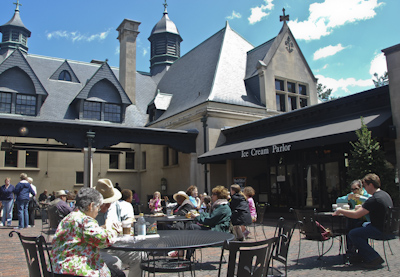
Former Stables of the Biltmore Estates

Afterwards, we left the house and debated how tired we were and whether we wanted to see the grounds today or save it for tomorrow.  We took the shuttle back to the car and drove to Antler Village on the estate grounds.  This was a small grouping of buildings which included restrooms, a pub & restaurant, winery with tours, dairy for ice cream, and The Legacy Building.  The Inn at Biltmore looks down on the village and shuttle buses transport Inn guests anywhere on the estate.  There is a fountain and a gazebo in the center of the village where a couple of young people were playing music.  We walked around the village and stopped at the dairy to sit and have an ice cream break.
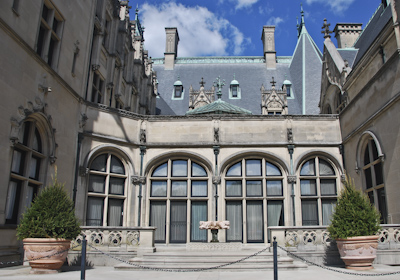
Exterior Courtyard

Our architectural tour guide had enthusiastically recommended a stop at the Legacy Building.  When we entered, the woman at the door said that a “talk” had just begun in the auditorium.  The professional tour guides gave free talks about the Vanderbilts, Biltmore history, and their experiences working there and answered visitor’s questions.  The woman giving the talk was very enthusiastic about Biltmore.  She talked about the history and told anecdotes of the family and the Saint Bernard dog, Cedric.  We learned that Antler Village was built less that a year ago.  Outside the auditorium, there was a display of Vanderbilt family possessions and photos of the current descendants who own and operate the Biltmore Estates.
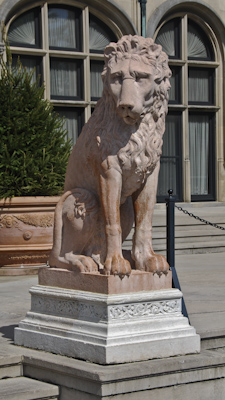
Guarding the Palace

A sister of the CEO manufactures and sells reproductions from the house.  We definitely had the feeling that the entire estate is one very large business enterprise.  It was amazing that the people of the city of Asheville also support and buy into the positive caring message of the current owners.  Perhaps the quantity of tourists who come to Asheville to see Biltmore help the economy of the city.  Also, yearly passes cost about $100. which gives people unlimited access to the estate.  Besides the house, the hotel, and Antler Village, there are hiking trails, horse stables, picnic tables, and 8,000 acres of beautiful land to explore for local residents.
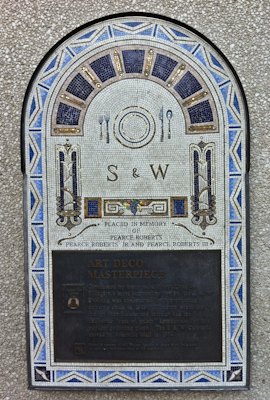
Mosaic Plaque

We had spent the entire day at Biltmore.  We were getting tired, so at about 4:30 we drove back to our hotel to rest before dinner.  In the early evening we drove into downtown Asheville.  The city is in the process of celebrating its Art Deco architectural history by restoring many of the buildings in the downtown.  It was Friday night and we had a bit of difficulty finding parking.  As we got out of the car, we could hear drumming.
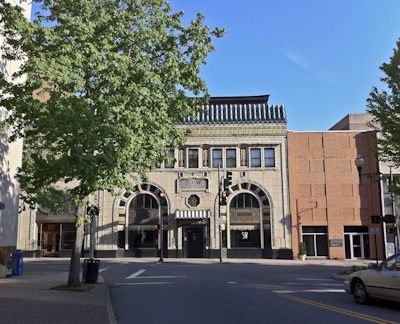
Across Patton Avenue

There is a small triangular-shaped park, called Pritchard Park at the intersection of College Street and Patton Avenue and it was full of people.  A large group of men and women were drumming in unison and others were dancing barefoot in the center.  Some people were twirling hoola-hoops and a few were kicking around a hacky-sack.  It was a flash-back to the ’60s!  It was easy to move to the loud drumming.  We learned later that this was the Friday evening drum circle, a weekly event.
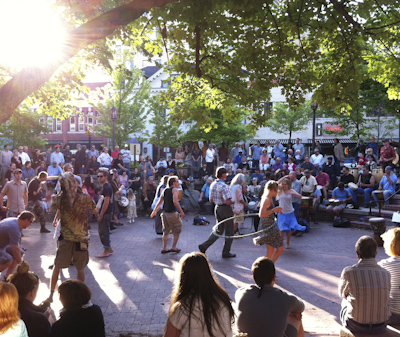
Pritchard Park

Our goal was a popular restaurant called Tupelo Honey Cafe across the street from the park.  Michael, the desk clerk at the hotel, had recommended Tupelo because it serves fresh seasonal food and gets much of its produce and meat from local farms.  We had to wait 40 minutes for a table because there were so many people.  We waited outside and watched the parade of interesting passersby and listened to the drum beats.  When we finally got a table, the menu was wonderful with lots of fresh veggie dishes and innovative combinations.  I ordered “three sides” of mashed root vegetables, fried tofu, and benne Brussels sprouts.  They were delicious!!
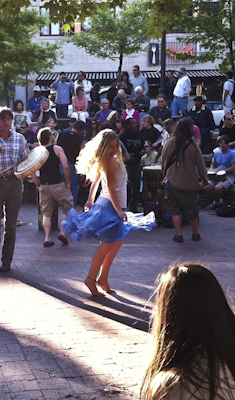
Dancer in the Park

It was dark when we finished dinner.  It was a pleasant crisp clear evening.  The drumming was louder and the dancing area was packed with gyrating bodies.  We walked back to the car.  Asheville is a “happening place”!  We didn’t see much of it so we have a good excuse to return someday.  We missed the River Arts District near the FrenchBroad River, where artists’ studios and performance spaces are housed in old warehouses.  We didn’t visit the Victorian home of the American author, Thomas Wolfe.  We did see the Main Street area of innovative shops selling everything from clothes to housewares to handmade crafts.  There is much to see and do in Asheville and I will return, someday soon.
Cornelia, GA to Asheville, NC

April 28th, 2011

Thursday, April 28, 2011

Thank goodness, I feel 100% today!  Yesterday’s tornadoes had turned into violent thunderstorms which raged all night long.  Flashes of lightening seeped around the dark window shades and into the room.  By morning, the sun was shining brightly and the sky was a cloudless blue.
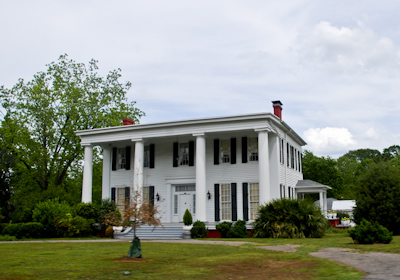
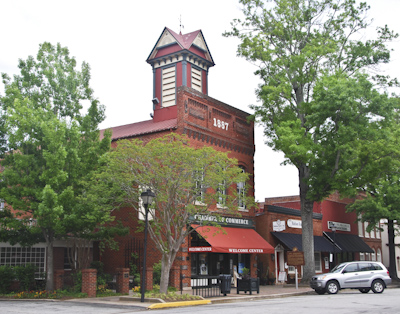
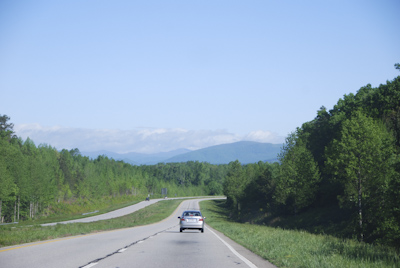
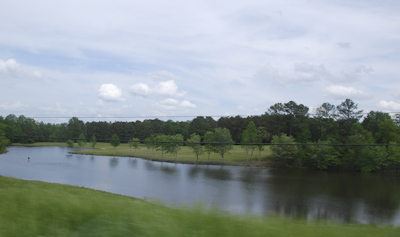
Driving North Toward the Blue Ridge Mountains
When we checked out, the woman behind the desk told us about all the local damage from yesterday’s tornadoes.  She rattled off the names of local towns but unfortunately, we didn’t know where they were.  At that time, she had heard that people had died in the four-state region and there had been extensive damage to homes and businesses.

Later we learned that 357 people died in the path of the worst tornadoes ever recorded in the south.  The most devastating twister in Alabama was one mile wide with high winds which tore off roofs of buildings, carried trucks hundreds of feet, and demolished all the houses in its path.  We left feeling grateful that  we stayed in Cornelia for an extra day.  We drove north on Route 441, passing countless fast-food restaurants and said good bye to Cornelia, Georgia.

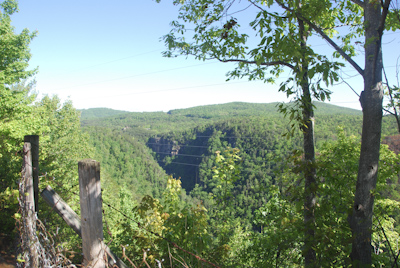
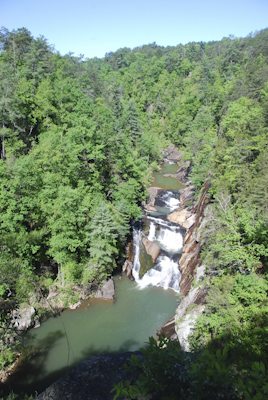
Tallulah Gorge

About 30 minutes north we found Tallulah Gorge State Park.  This is the famous 1000 foot gorge which also highlights Tallulah Falls.  I had read that the falls are sometimes “turned off” during the week, so we were fortunate that they were falling today.  One section of the river, whose name I forgot, was damned and turned into a hydro-electric plant some years ago.

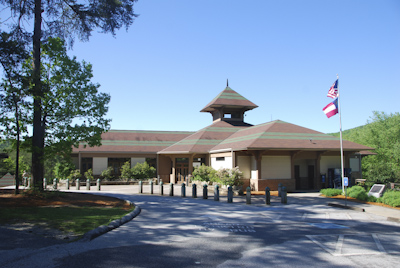
Tallulah Gorge Interpretive Center

We entered the State Park and paid a $5.00 day-use fee.  Then we drove to the Interpretive Center which was a huge beautifully designed building with a three-story core which led to the trails.  Tallulah Gorge is also famous as the place where the circus high-wire performer, Karl Wallenda, strung a wire and walked across the 1000 foot gorge in 1970.  The Great Wallenda was 65 years old and this was his way to celebrate his 50th anniversary on the high-wire.  We walked out to the scenic overlooks recommended by the park’s ranger.

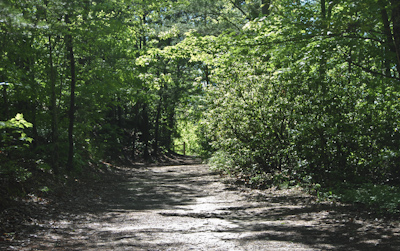
Trail to the Edge of the Gorge

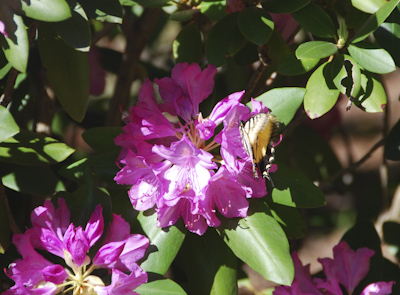
It was a beautiful cool morning, 68 degrees and sunny.  It was nice to take a walk in the cool woods with the purple rhododendrons blooming!  We walked to two of the overlooks and took photos of the river falling over the boulders below in the deep gorge.

One of Five Tallulah Falls

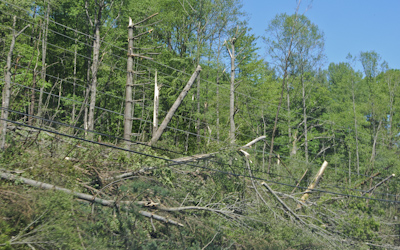
A short distance up the road there is a small town called Mountain City.  As we approached the city, the traffic on Route 441 came to a complete stop.  On both sides of the road we could see uprooted trees and downed posts and signs.  Large and small branches littered the ground everywhere.

Tornado Damage

The tops of trees were snapped off and thrown all about.  A small wooden house was tilting to one side.  The roofs of several buildings were lying mangled next to its building.  This was one of the places where a tornado had hit!  As we drove by, we saw the local authorities cleaning up the mess.  It was an unbelievable sight!  We were very grateful that we stayed in Cornelia for an extra day!!

Rhododendron

We continued north passing through several small villages, and crossed the border into North Carolina.  The road was hilly and we could see the mountains in the distance.  The road has only two lanes and it is named the Great Smoky Mountains Expressway.  Eventually we entered the Cherokee Indian Reservation and passed through the town of Qualla.

The Great Smoky Mountains

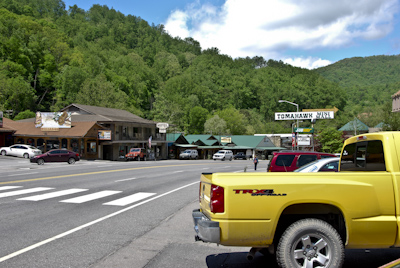
A few minutes later we drove into the town of Cherokee.  It was a lively place with rows of bright tourist shops on both sides of the street.  Jeff stopped on the tourist street and I went into a shop to  buy a “Life Is Good” magnetic disc for the back of my car.

Cherokee, North Carolina

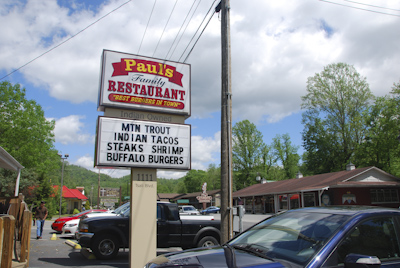
It was past noon so we looked for a place for lunch.  We found Paul’s Family Restaurant on Tsali Blvd. which had a big sign which read: Indian Owned – Mountain Trout – Indian Tacos – Buffalo Burgers.  The atmosphere was better than the food, but it was a fun experience.

Outside Paul’s Family Restaurant

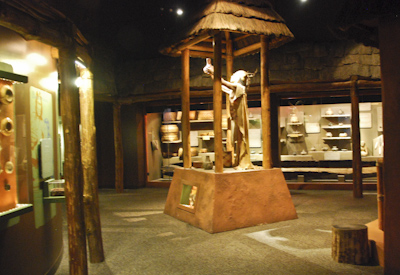
After lunch, we went to the Museum of the Cherokee Indian.  After a five minute video which told the legend of how the Cherokee People got fire, we walked through the museum.  It had interesting artefacts and displays of the history of the Indians in the South Eastern part of the U.S. in chronological order.  Ancient tools and artefacts were displayed with good explanations of their use.  In several dioramas the models of people looked very real.

Wax Figures and Native American Artifacts

Near the end of the display was the account of the Trail of Tears.  Although the American government declared it illegal to take the Indian’s land, the settlers in this area forced the Cherokees to move to the Oklahoma Territory.  Whole villages of men, women, and children were uprooted and made to walk west.  Of course, many of them became ill and died of starvation and disease along the way.   It is a very tragic event in the history of the United States.

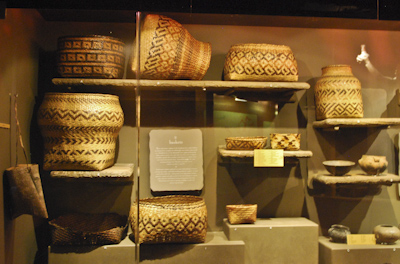
Cherokee Baskets

Afterwards, we crossed the street and went to the Qualla Craft Shop which sold handmade objects crafted by a variety of talented Indian artists.  We admired the beautiful baskets, jewellery, and pottery but unfortunately, didn’t buy anything because of the high prices.

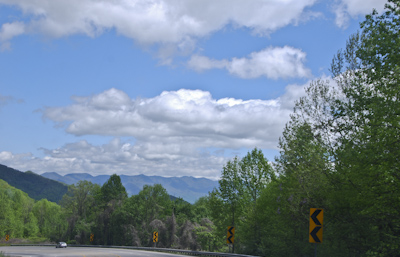
Going to The Blue Ridge Mountains

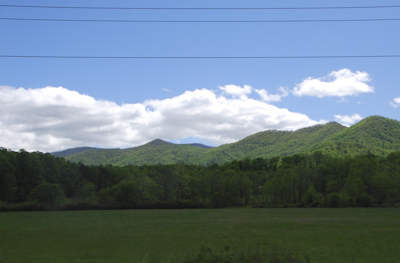
We left Cherokee on Route 19, called Soco Road, and drove east through Maggie Valley.  The Blue Ridge Mountains grew bigger and closer.  We climbed up and down the mountains with the road.  At one point I glanced at the thermometer on the dashboard: 58 degrees!  Near the top of the mountain the trees were in early bloom and had less green leaves as they had in the warmer valleys.  The flowers weren’t even in bloom yet.

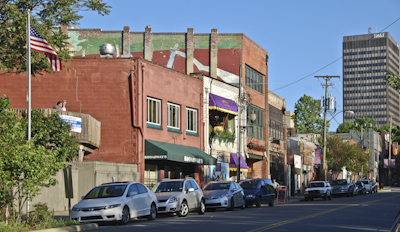
Lexington Street, Asheville

Finally we reached Asheville, North Carolina.  We didn’t have a hotel reservation, but it was only 5:00 o’clock.  We pulled over into a parking lot to check our iPhones.  We finally decided on one of the three Hampton Inns near the Biltmore Estates.  We checked in and had a long conversation with the desk clerk, Michael, who gave us good recommendations for restaurants and activities in Asheville. We have stayed at so many Hamptons now that they feel like a home away from home.

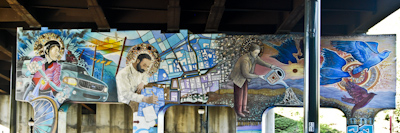
Paintings on Bridge Supports

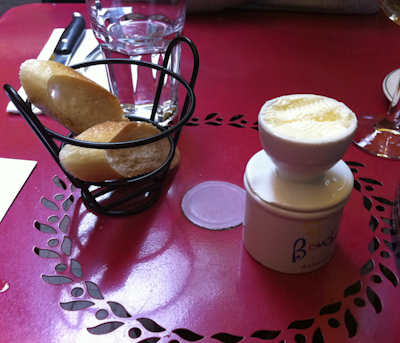
We took one of Michael’s recommendations and drove into the city to Bouchon French Bistro on North Lexington Avenue.  It was a lively place with lots of people and wonderful scents of herbs and good food.  We each had a glass of good French wine while the owner worked the tables.  He is from Lyon, France and his restaurant is very well respected in Asheville.  I had Barramundi with seasonal veggies and wild rice.  Jeff had steak au poivre with pommes frites.  For dessert, we shared a fabulous chocolate mousse with creme fresh.  Everything was very delicious!  What a treat so far from home!!

French Bread in Bouchon

Michael said that Asheville has had a resurgence of culture and the city supports the arts and artists. The city has restored its Art Deco architecture and it is the 5th “foodie” city in the country.  Asheville seems like a happening place.  We’re looking forward to exploring the city tomorrow.

A Slower Day

April 27th, 2011

Wednesday, April 27, 2011

I woke up early this morning and didn’t feel well.  I was very dizzy, nauseous, and head achy.  I stayed in bed and slept.  To make things worse, the weather channel on television talked about severe tornadoes heading in this direction toward northern Georgia!  Jeff went down to the desk and reserved the room for another day.  I slept until noon.

Spring Flowers

When I woke up, I felt a lot better.  I took a nice hot shower and we went out.  Jeff drove us to the nearby town of Helen for lunch.  Helen is a very unusual place.  In the early 1800s gold had been discovered in the region causing the “Great Georgia Gold Rush.”  The prospectors left  Helen after gold was discovered in California.

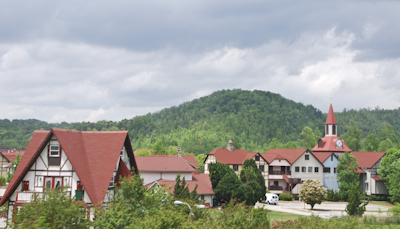
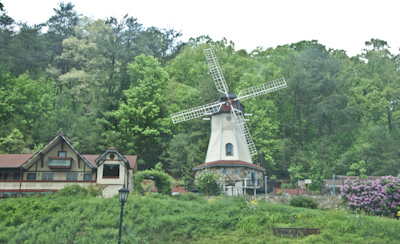
Helen, Georgia

During the early 1900s lumber was the commodity and several sawmills successfully operated for a period of time.  Eventually the city of Helen fell into rapid decline and light manufacturing businesses moved to other locations.  In 1968 two local businessmen talked the townspeople into transforming their town into a Bavarian village.  Business owners and local carpenters added gingerbread trim and shutters, and painted German murals on the faces of the buildings.  They added Alpine towers to the roofs and made cobblestone alleyways.

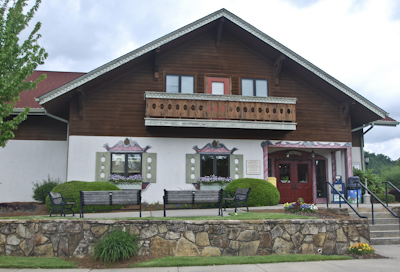
Tourist Information Office

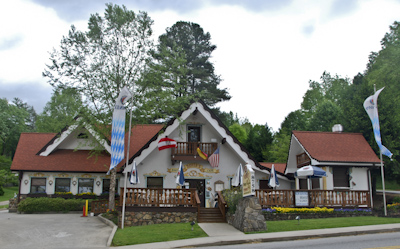
Today Helen is a tourist destination in the mountains of northern Georgia!  It was a short 30 minute drive from Cornelia to Helen.  We arrived with low expectations, but were pleasantly surprised by most of the buildings.  Many were charming and, though a bit over the top, the decorations reminded us houses in the Switzerland.  Most of the names of the streets in Helen have German names, for example: Edelweisstrasse.  We stopped at Hofer’s Bakery – Konditorei – Cafe on North Main Street.  The double pitched roof and brown porch railings could have been anywhere in the Alps.

Hofer’s Bakery – Konditorei – Cafe

The entrance led to the bakery which had luscious looking pastries in the display case.  We smiled at the Sacher torts, Apfelkuechle, strudels, and bread puddings.  We sat down in the pleasant dining room and perused the menu.  Among the Bauern Fruhstuck was Pregel & Lox, Bavarian Cold Cuts, and Eggs & Grits.  Jeff ordered bratwurst & sauerkraut with gravy laden mashed potatoes.  Since my stomach wasn’t a hundred percent yet, I had a cup of chicken noodle soup and half a ham & Swiss cheese on rye sandwich.  For added atmosphere, there was a group of people sitting near our table who were speaking German!

More Shops in Helen

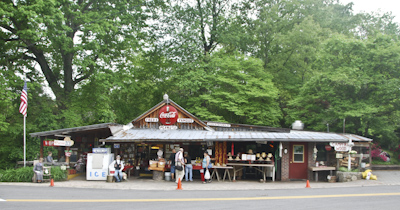
After lunch we drove around the town for a little while, but the shops didn’t interest us so we didn’t stop.  Jeff had read about Fred’s Famous Peanuts on Tripadvisor so we drove up the road to find it.  Fred’s was a small shack along the roadside, just off Route 356, on the way to Unicoi State Park.

Fred’s Famous Peanuts

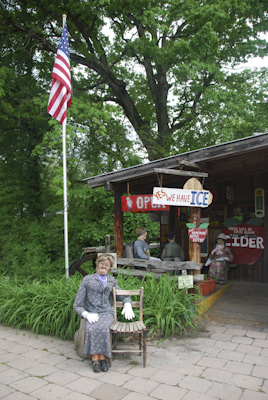
We took photos and sampled boiled and fried peanuts and tasted peach cider.  Jeff also decided that he had to have a tee shirt from Fred’s Famous Peanuts.  By the time we left, it was starting to rain.  Huge gray clouds had been moving by all afternoon.  This was part of the string of storms and tornadoes which were menacing other parts of the south and mid-west today.

Fred’s Roadside Stand

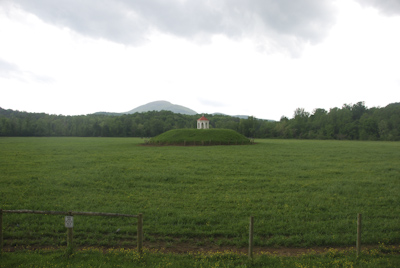
We returned to the car and drove south again.  At the junction of Highways 17 and 75 was the Nacoochee Indian Mound.  This was a large grass covered mound of earth with a round wooden cupola on top.  It is a sacred ancient Indian ceremonial site.  The mound was located in the center of a Cherokee village and an eternal flame burned on top.   There was a legend attached to the mound, but in actuality it marks former Cherokee land.

Ancient Nacoochee Indian Mound

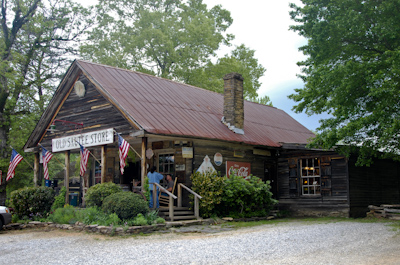
Down the road a little bit is the tiny village of Sautee.  There were several old brown wooden buildings in a cluster.  We parked near the general store and wished that the two cars parked directly outside would move so we could photograph the building. Two men were playing checkers on the porch.

The Old Sautee Store

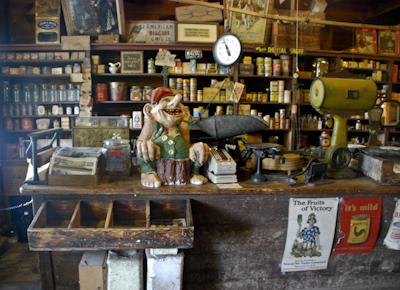
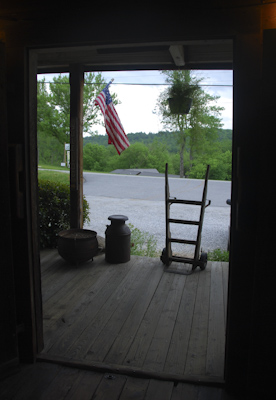
Inside the entrance door there were two wooden Indians and a small wood-burning stove.  On one side there was an automatic roller “piano” which operated by a little vacuum cleaner on the floor.  On the left side was a long counter with a smiling troll statue and other curiosities. The shelves along the walls were filled with old antiques of all kinds.  There was so much to look at!

The Front Room of the General Store

We had fun looking at all the old stuff and took lots of photographs, but we were tired and were ready to return to our hotel in Cornelia.  This part of Georgia is unlike any other part of the state.  It is very different from “Coastal Georgia” which we saw a few weeks ago in the beginning of this Road Trip. This region is referred to as The Northeast Mountains of Georgia and is actually the foothills of the Appalachian Mountains.

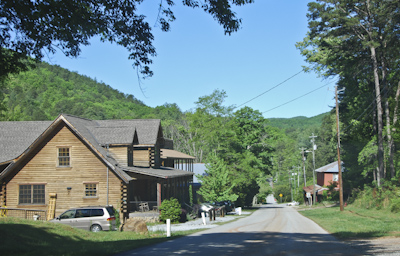
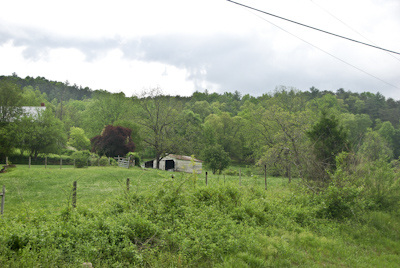
This western part of Georgia is really very beautiful!  The terrain is hilly and the narrow roads twist and turn.  The dramatic clouds and threatening skies added to rough-hewn spirit of the place.  The houses are modest cabins and the lifestyle of the people is self-sufficiency with a strong pioneering spirit.

Northwest Georgia

After a little bit of a rest at the hotel, we went to a small local place in Cornelia for dinner.  When we were almost finished, two Southern “gentleman” walked into the restaurant.  One was an older ordinary looking fellow.  The other, a man perhaps in his mid forties, wore full camouflage pants and shirt, high leather construction boots, and sported a round Mohawk-like hair-do on the top of his head.  As he sauntered through the door, I noticed that around his waist there was a black belt with holster and a rather large hand-gun sticking out of the holster.  The first thought that rattled through my brain was, “Is that legal?!”  Then I quietly whispered to Jeff to check out the gun!  The man’s cell phone rang and he walked back outside.  We quickly finished our suppers and left.  I was reminded of the bumper sticker I saw earlier: “I’ll Keep My Gun and My Money and My Freedom – You Can Keep the Change.” Thank goodness we have gun control in New York!

Driving North Through Georgia

April 26th, 2011

Tuesday, April 26, 2011

I woke up in Valdosta, Georgia this morning.  It was a cloudy, overcast, gray day.  The temperature was in the high 70s and the air felt humid.  We packed up the car and easily drove to Route 41.  We wanted to continue our trip north on the slower road, instead of the 70 mile per hour Route 75.

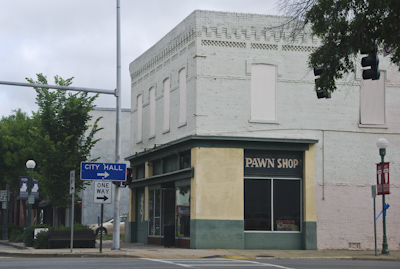
Corner Pawn Shop in Valdosta, Georgia

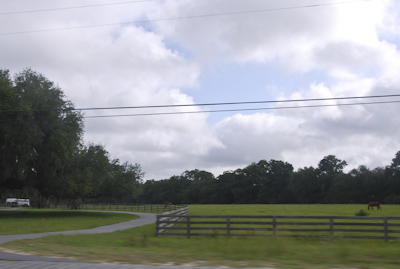
We drove through Valdosta.  It was not a prosperous city and there seemed to be no tourism.  This part of Georgia looks a lot like northern Florida.  The land is very flat and the earth looks sandy.  There are many palm trees interspersed with southern long-needle pine trees.

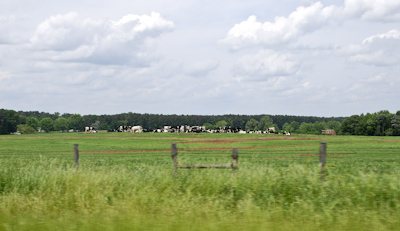
Southwestern Georgia

We continued through the tiny towns of Hahira, Adel, Tifton, Inaha, and Cordele, and many, many more.  All the towns are now a blur of buildings and cars.  At some point, we decided to make up time and got on Route 75.  There is “cruise control” on my car and once it is set, the drive was pretty easy because there wasn’t much traffic.

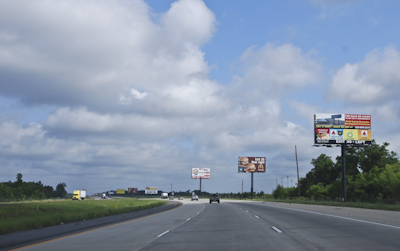
Thousands of Billboards on Route 75

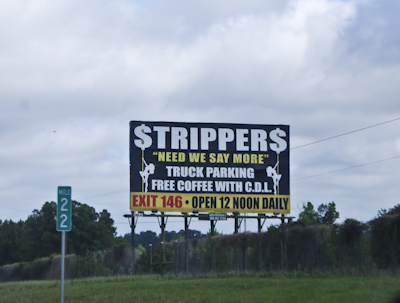
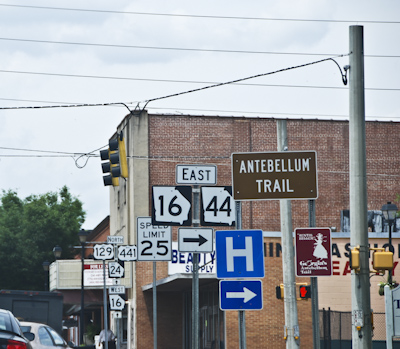
Somewhere around “middle Georgia”, the terrain changed.  There were more green trees and tall green grass and no palm trees.  The architecture of the houses looked more like upstate New York.  We passed by large fields and farmland.  We saw roadside stands selling Vidalia onions and strawberries.  Thousands of ugly commercial billboards along the highway kept our brains occupied on Route 75 as we drove for several hours.  They should be outlawed for ruining the beauty of Nature!!

All Kinds of Advertisements

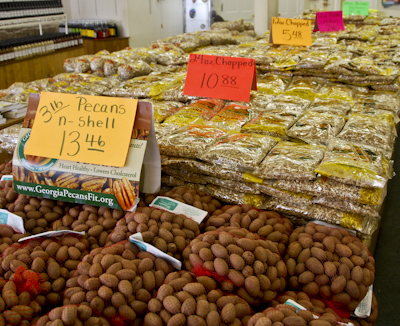
The draw of advertisements finally enticed us to stop at the “Magnolia Plantation” for fresh roasted pecans.  The outside of the building was mock-columned mansion and the inside was a large commercial space.  After our purchases of peanut brittle and pecan halves, we resumed the drive on the highway.

Magnolia Plantation Pecans

We finally reached Macon, Georgia and drove through the city.  The part of the city which we drove through looked like a poor community with many pawn shops, empty stores, and foreclosure signs.  Two of the attractions in the city are the Harriet Tubman Museum & Information Center and the Music Hall of Fame.  Macon is supposed to have the largest historic district in the state of Georgia.  We didn’t stop to see it.

After Macon, we picked up Route 129 northbound.  We stopped in the town of Gray long enough for Jeff to go into a local Krystal fast-food restaurant for a small hamburger.  He had read about the company and wanted to try one.  It looked gross to me!

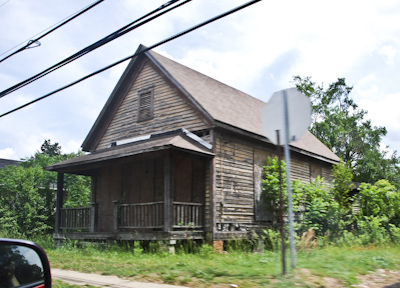
Abandoned House on the Side of the Road

Athens was our next goal, and on the way we drove through the towns of Eatonton and Madison.  Eatonton was the birthplace of Alice Walker, the author who wrote The Color Purple.  The town is also the birthplace of author and journalist, Joel Chandler Harris who wrote The Uncle Remus Stories.  There is a statue of Brer Rabbit – born and bred in the briar patch – in a park in the town.

We made a wrong turn in Madison, which gave us an opportunity to explore the historic town a bit.  It had interesting architecture and looked somewhat prosperous.  According to Wikipedia, most of Madison’s one hundred Antebellum houses have been restored, which earned the town the title of “The Prettiest Small Town in America.

Antebellum House in Madison, GA

The story is that Sherman spared the town because it was too beautiful to burn during his March to the Sea.  Historians say that the reason the town was spared was because a pro-Union Senator lived there.  The Senator attended West Point with General Sherman’s brother.  So, political causes won out over aesthetics.  We saw lovely antebellum houses which lined both sides of the road north of Madison.

Main Street Madison, Georgia

We finally reached Athens, Georgia and paid mental homage to our former President Jimmy Carter and his brother, Billy.  We drove on the perimeter road and bypassed the city entirely.  North of Athens, we found Route 441 North and drove toward the mountains. The terrain became more hilly and the road had more twists and turns.

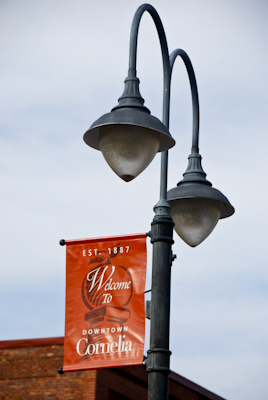
About an hour later, we arrived in the town of Cornelia.  Believe it or not, there is a Hampton Inn in town!  We had a bit of trouble finding the hotel because it was partially hidden behind another hotel, but we finally spotted a sign.  In a town of about 3800 people, Cornelia had four hotels and many fast-food restaurants.  We wondered who came here and why.

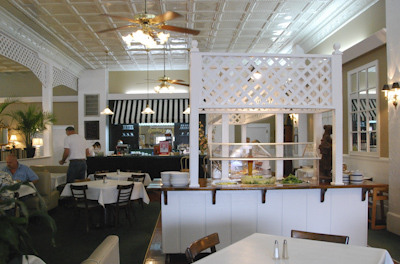
We found Gusben’s Restaurant on Main Street and enjoyed a good dinner from their fresh salad bar.  This was our third long driving day and I was tired.

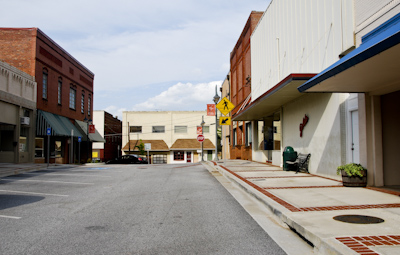
Main Street in Cornelia, Georgia

We made good time and covered a vast amount of land from Key West Florida to the foot of the Blue Ridge Mountains.  I am really ready for a “down day”.

The Salad Bar in Gusben’s Restaurant