Trunyan Village

August 22nd, 2015

Saturday August 22, 2015

Here is a view from my hotel window of a rice field this morning:IMG_6102
Along the road to a remote village in the mountainous interior of Bali our tour leader, Jumena, saw flags flying and asked the bus driver to stop. Jumena said the people were preparing for a “mass cremation ceremony.” He got off the bus to ask permission to bring tourists into the compound to see the preparations.

IMG_6167

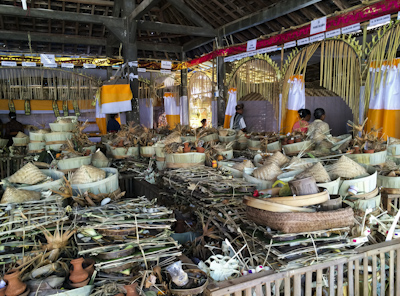
Villagers bury dead relatives for a period of time then exhume the bodies and cremate all the bodies in a mass ceremony. This one was for forty-two people who had died during the last two years.  Cremations are very expensive so mass ceremonies are more practical because the costs are shared among villagers. Family members, friends, and neighbors gather to make preparations.
IMG_6137

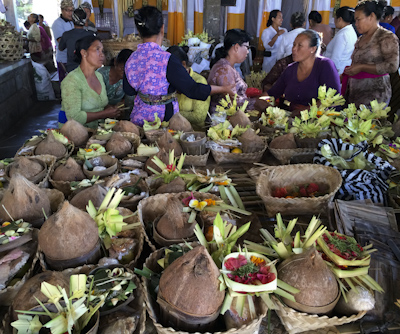
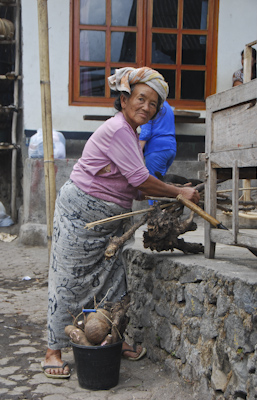
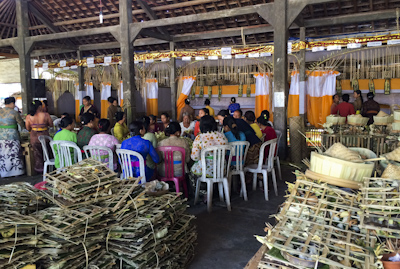
We walked into the compound and looked into a large open-air covered area. More than fifty women were gathered in separate groups making ornaments or preparing offerings or weaving small palm baskets. Woven palm cubicles lined two walls with the names of the deceased. Inside were empty mats and offerings of food and flowers.
IMG_6138

IMG_6143

IMG_6164

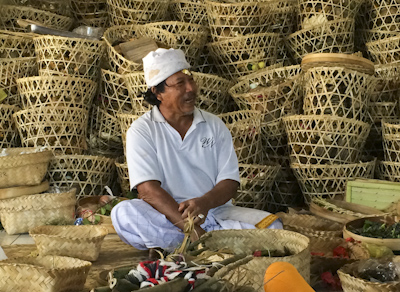
Several men were together in a separate area along with the Hindu priest of the village.
IMG_6163

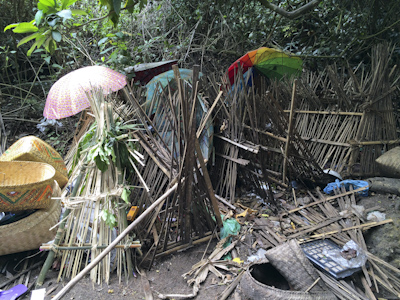
Outside, men were building scaffolding and other wooden objects. Then we crossed the road to see more men building gigantic ‘coffins’ which were built in the shape of horses and bulls and would be burned during the ceremony. What an incredible experience to see the preparations!

IMG_6175

IMG_6184

IMG_6200

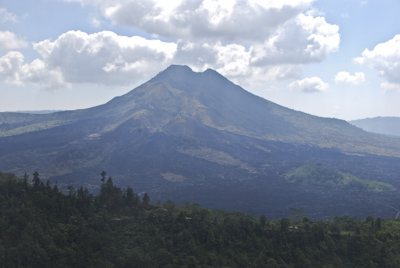
Afterwards, we continued into the mountainous regions of northern Bali. The small village of Trunyan is squeezed between Lake Batur and the steep sides of the crater rim of the volcano known as Mount Batur. The village is only accessible by boat.
DSC_1869

The drive took almost two hours along mountainous twisting roads to reach the Kintamani region near the active volcano. We continued to the lake and boarded narrow steel boats which took us across to isolated Trunyan Village.

DSC_1874
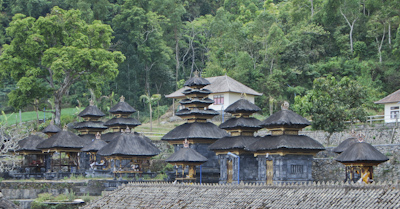
The villagers are descendants of the original Balinese people who predate the arrival of Hinduism in the 16th century. Approximately 250 people live in the tiny village.
DSC_1911

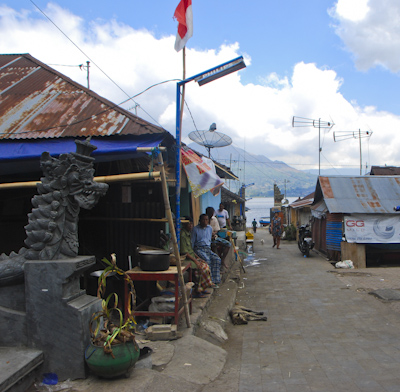
The villagers generally don’t welcome outsiders, however, with prior arrangements access is possible since visitors provide their only source of income. We were shown around by one of the village leaders. The people we passed were friendly and greeted our group. An older woman even invited me to have tea with her.
DSC_1905

DSC_1916

DSC_1921

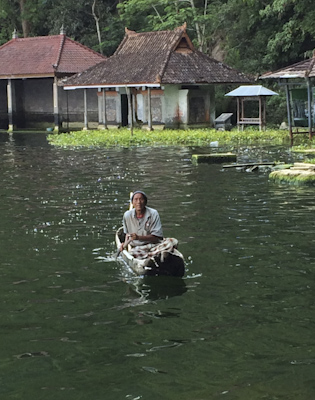
After we walked around the village, we boarded the boats again and rode a short distance from the village to their unusual cemetery. Trunyan villagers do not bury or cremate their dead. Instead they lay the bodies in bamboo cages under the taru menyan tree. The tree is a type of sandlewood and the bodies do not produce a bad smell because of the perfumed scents of the huge tree growing nearby.
IMG_6259

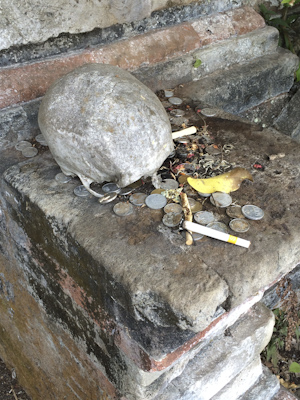
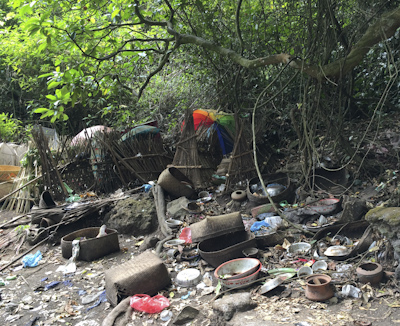
The site wasn’t gruesome. A dozen cages were in a row under the tree and family offerings littered the ground. The offerings included everything needed in the afterlife: clothes, dishes, soap, food, water, utensils, coins, personal effects, etc.
IMG_6262

IMG_6269

IMG_6277

We left the Trunyan villagers’ cemetery and drove back toward a tourist area of restaurants and shops. We were restored by a Chinese/Balinese buffet luncheon in a restaurant high on a hill overlooking Mount Batur.
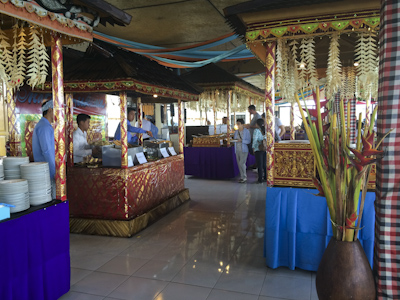
IMG_6298

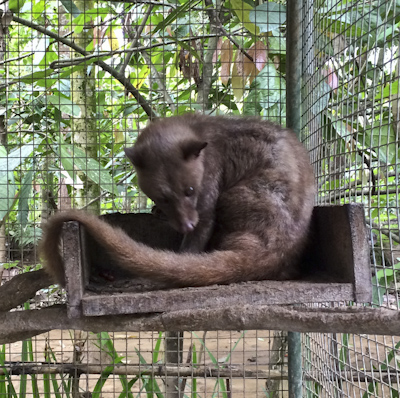
After lunch, we were driven to a specialized coffee plantation where Balinese Luwak Coffee is produced. Arabica coffee plants are grown on the mountainous slopes of this region. Luwak Coffee is produced from the partially digested and defecated coffee cherries by the Asian palm civet, a small mammal which resembles the otter or mongoose. Arabica coffee cherries are pictured below:
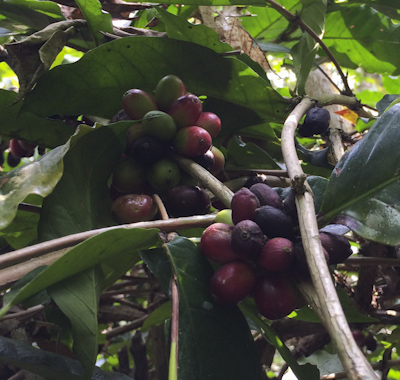
IMG_6305

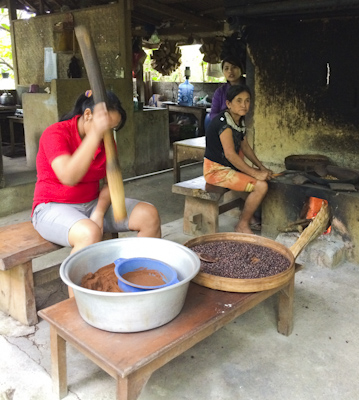
The woman in the photo below was roasting coffee beans as the young woman in the foreground was pounding coffee beans to a coarse consistency. Luwak is made by adding a teaspoon of it to boiling water, similar to ‘instant coffee’.
IMG_6320

The plantation claimed that their civets were wild but kept several in large cages for tourists to see what they looked like. They offered us small cups of Luwak and other teas and flavored coffees. I have to admit I tried it but prefer other types.
IMG_6343

It was another long twisting road back to Ubud and I watched the small villages, tropical forests, and rice fields pass by outside my coach window like the scenery in a movie.

IMG_6354

IMG_6368

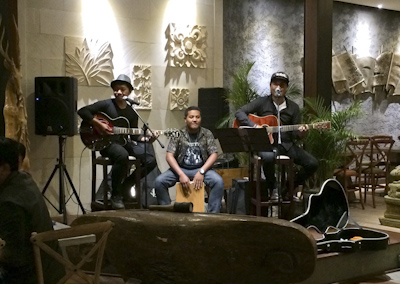
Later in the evening, I went down to the restaurant in the lobby of the hotel to have a taste of home: gelato. A trio of young musicians were playing modern Indonesian music. They were quite good, so I listened for a while and enjoyed my tasty cool gelato and then went to bed. It had been a long but interesting day!
IMG_6393

Java to Ubud, Bali

August 21st, 2015

Friday August 21, 2015

Today was a travel day from Yogyakarta, Java to Denpassar, Bali. We flew from the small overcrowded airport in Yogyakarta to a big bright modern cream-colored-marble airport in Bali. We were in tourist heaven!

IMG_5929

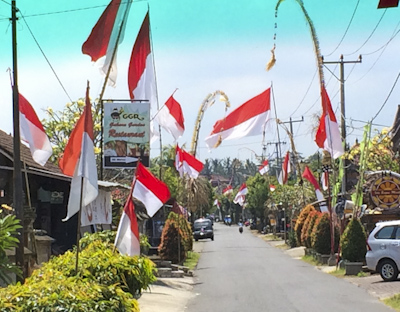
Patriotic flags were flying and the streets were still decorated for Indonesian Independence Day.

IMG_5976

IMG_5941
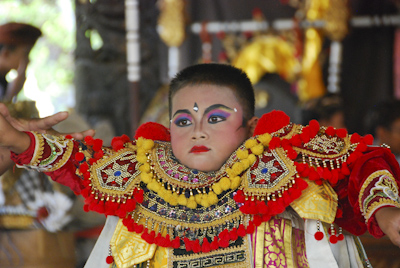
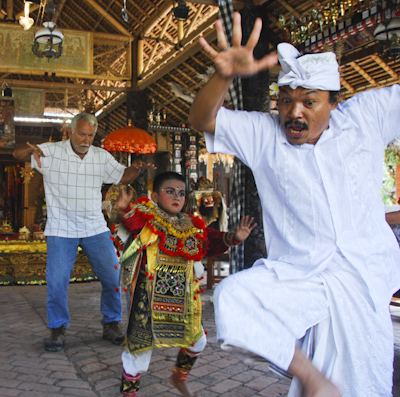
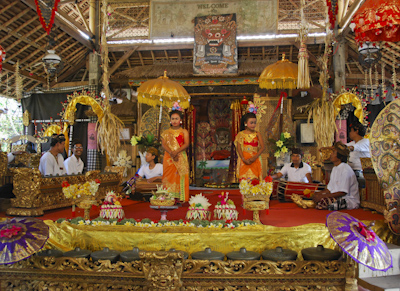
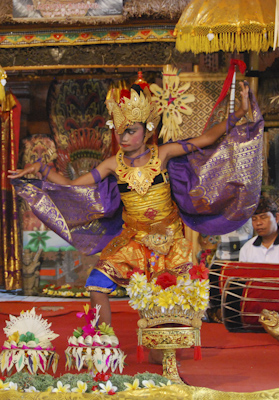
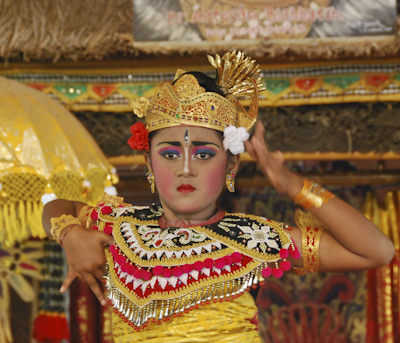
We stopped at the Sudi Dance School which teaches traditional Balinese dances to children ages six through thirteen.  The director of the school, explained facial, hand, and body gestures and related the history and legends of the dances.

DSC_1712

DSC_1720

DSC_1721

DSC_1728

The stage was brightly decorated and a full ensemble of Gamelan instruments played Balinese music during several short performances.  The director of the school also explained how particular instruments express moods and augment specific dances.

DSC_1743

DSC_1753
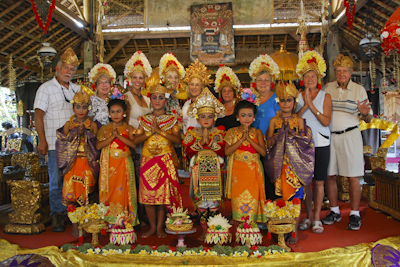
The visitors posed with the dancers at the end of the performance. It was a wonderful visual and auditory learning experience!

DSC_1755

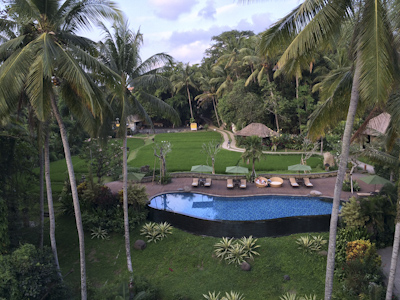
Then we drove to the interior of Bali to the tourist city of Ubud and checked into the modern Plataran Ubud Resort & Spa, located between the main street and a rice field:

The Lobby:IMG_6098

View from the back of the hotel:
IMG_6094

Ubud was a real surprise. It suspended all my illusions of Bali. Instead of a lush tropical paradise, Ubud was a sprawling town full of vehicles, vendors, wall-to-wall shops, western restaurants, money changers, and tourists. My first impression of Bali is there seems to be a stark contrast between contemporary commercialism and traditional, historic values and culture.

Borobudur Temple & Farewell to Java

August 20th, 2015

Thursday 20 August 2015

IMG_5855

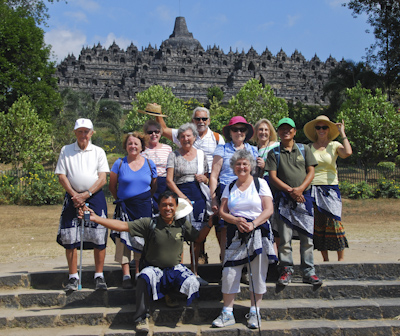
Today was our day to visit the 9th century Borobudur Temple, the largest buddhist temple in the world, which UNESCO calls “one of the greatest Buddhist monuments in the world.”

DSC_1462

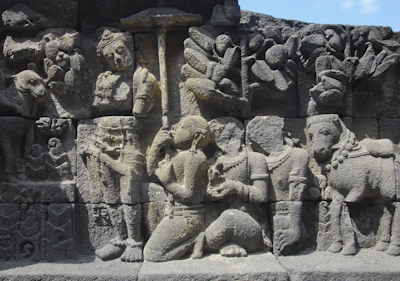
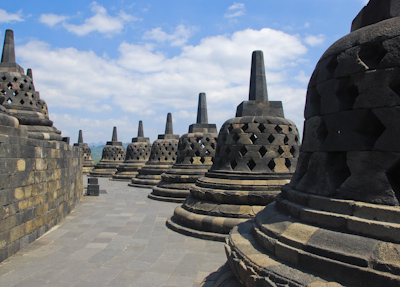
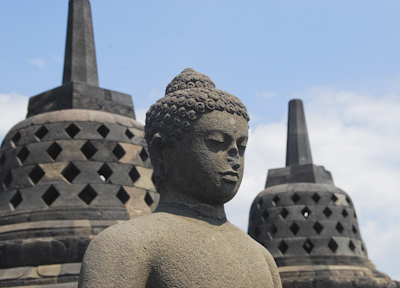
The monument consists of nine stacked platforms topped by a central dome.  Borobudur is decorated with 2,672 relief panels and 504 statues of Buddha.  I climbed up to the top level, the realm of Nirvana, to walk among the  72 bell-shaped stupas each with a statue of Buddha inside.

DSC_1467

DSC_1479

DSC_1538

DSC_1526

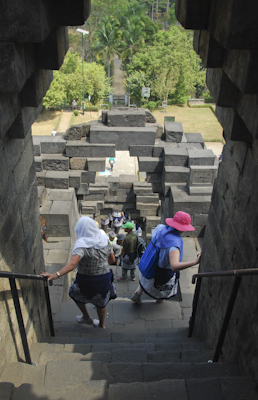
There were beautiful views of the green tropical plains and Javanese mountains surrounding Borobudur Temple. After spending time at the top, it was a steep descent back to ground level.

DSC_1548

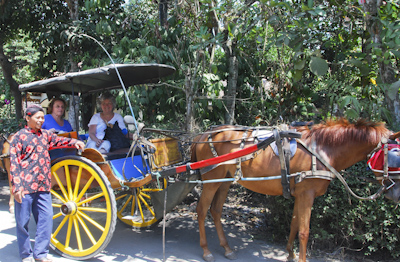
The group walked to a station and we boarded small horse-drawn carriages for a ride through a local village to visit several ‘cottage industry’ businesses.

DSC_1576

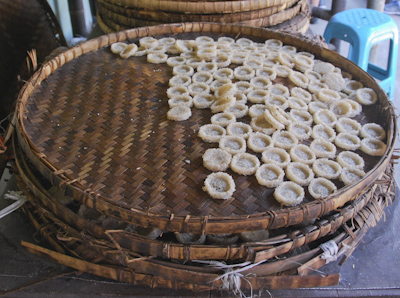
The first place we stopped was a rice cakes business owned by an older woman who employed several local women and family members. The entire operation took place in her tiny facility and she sold the packaged cakes to a retailer in Jakarta.

DSC_1587

DSC_1615

DSC_1582

DSC_1623

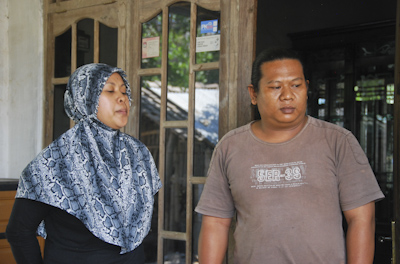
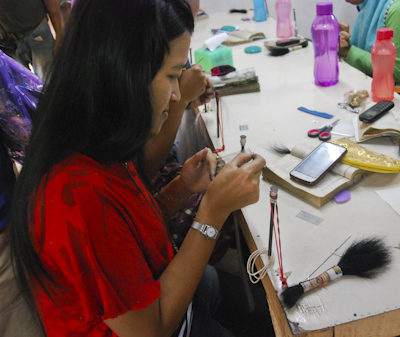
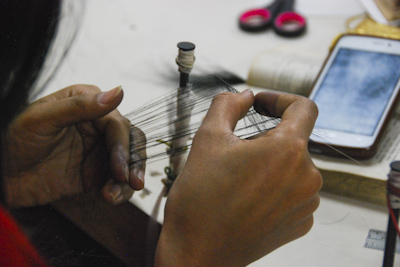
The second home industry we visited was an artificial eyelash business. The proprietor and his wife were present as we watched several young women knot human hair on tiny threads.

DSC_1649

DSC_1655

DSC_1657

We went to the Sekar Kedhaton Restaurant for lunch and afterwards visited their shop and silversmiths.

DSC_1672

DSC_1674

We returned to the lovely modern Santika Premiere Hotel to rest up for our ‘Farewell to Java’ dinner. Later we walked to the Dowa Honje Mangkubumi Restaurant.  Crossing streets in Java are a real challenge because there are few traffic lights and the traffic does not stop for pedestrians.

IMG_5905

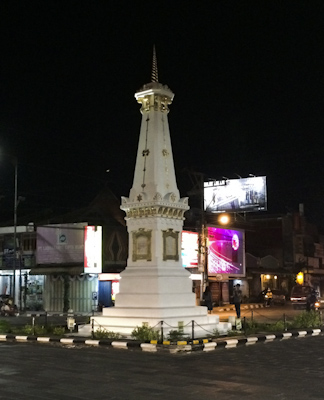
Near the major intersection of the hotel, we passed the Tugu Yogyakarta monument and saw it brightly illuminated against a dark night. The stark white obelisk was built in 1755 by the Sultan I as a symbol of unity between the people and the authorities in their fight against invaders. The monument was rebuilt in 1889 after the original was destroyed in an earthquake. People believe that a visit to Yogyakarta is not complete without a stop at the monument.  We bid our fond farewells to our excellent local tour leader, Josh, and then prepared for our morning flight to Bali tomorrow.  Thank you, Josh!

IMG_5893


Volcano, Veterans, & Ramayana

August 19th, 2015

Wednesday August 19, 2015

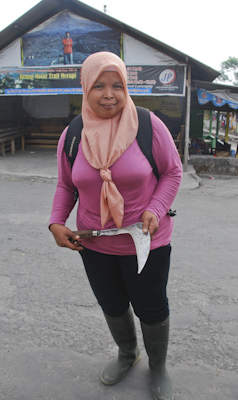
We had a 6:30 wake-up call to prepare for our hike to a village below the active stratovolcano, Mount Merapi, literally Fire Mountain in Javanese. It is the most active volcano in Indonesia and has erupted regularly since 1548.  The bus parked among the “lava jeeps” which give tours up the mountain and we met our local guide who was a sturdy young woman with a sharp machete. DSC_1306

Near the jeep and motor-bike rentals, there was a covered station of a group of women who provided motor-bike rides for hire to go up Merapi.

DSC_1315

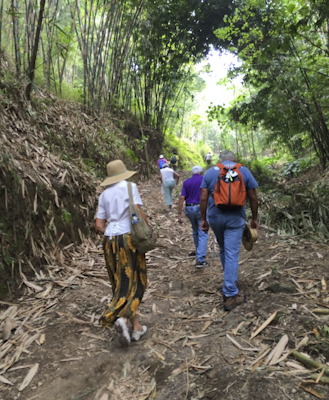
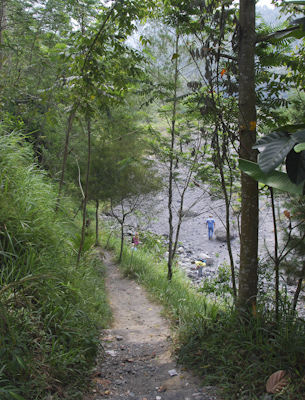
We hiked up the path to a village which had been devastated during the last major eruption in 2010.

IMG_5644

Along the trail, we passed several women carrying huge bundles of grass on their backs. We were told they were farmers who hiked up to the high grounds to cut grasses then bring them down to their cattle in farms below the mountain.

DSC_1317

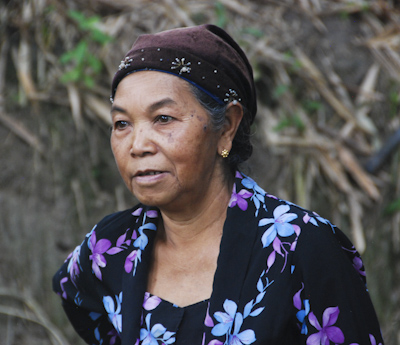
After a while, we came upon a small farm with some chickens and animals. The house belonged to a charming 74 year old woman who lived alone on the mountainside. We were invited into her home and Josh translated for us.  She had been forced to evacuate during the devastating 2010 eruption of Merapi, but chose to return to her family home. She supported herself by making, bagging, and selling charcoal to a supplier in the city.

IMG_5648

DSC_1372

We went out to see the woman’s charcoal pit and learned how she cuts trees, hauls them to the pit, and burns them to make charcoal.

IMG_5684

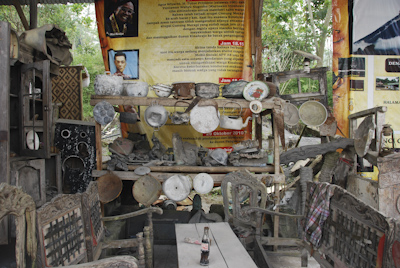
We continued hiking up to a clearing where there was a snack bar, souvenir stand, and a small museum dedicated to the memory of Mbah Maridjan, Grandfather Maridjan, who was the spiritual guardian of Mount Merapi. Born in a village on the side of the mountain, like his father before him, he was appointed as spiritual guardian by the Sultan of Yogyakarta in 1982.

DSC_1391

Local people believe the Mbah Maridjan has the power to speak to the spirits of the sacred mountain. In 2010, after he led ceremonies to appease the spirits, he refused to evacuate and died during the eruption. Below is a photo of the path leading down to the large lava flow area:

DSC_1398

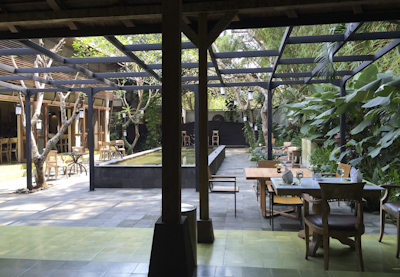
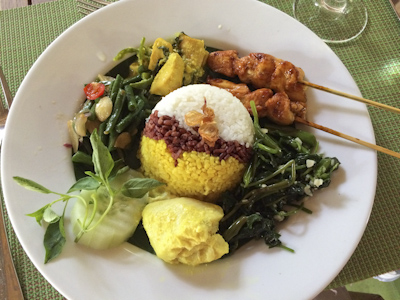
After walking almost four miles, we returned to our bus and rode to a very pleasant restaurant for an outdoor luncheon. I enjoyed the white, yellow, and black rice with satay and bean salad.

IMG_5708

IMG_5709

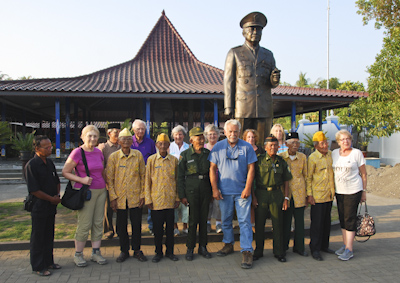
Afterwards, we went to the former home of the second president of Indonesia, General Soeharto, to meet with several Indonesian veterans who spoke about their experiences during the war for independence against Holland in 1946 to 1949.  There was a modern informative museum and a veteran’s center.

IMG_5717

IMG_5732

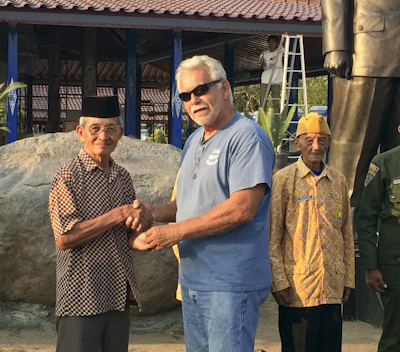
Jess, one of the members of our group, brought and presented American military coins to each of the Indonesian veterans.

IMG_5743

DSC_1439
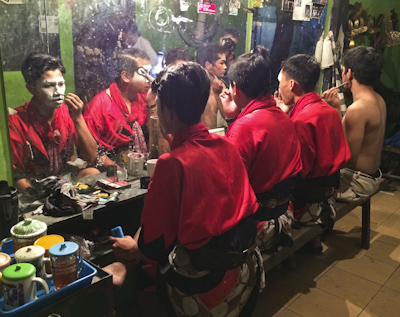
In the evening we went to a colorful dance performance of Ramayana at the folk arts theater. This is the epic story of Prince Rama and his wife Sita. Before the performance, we went backstage to see the dancers prepare for their roles.

IMG_5769

IMG_5800

IMG_5819

IMG_5825

Ancient Hindu Temples

August 18th, 2015

Tuesday – August 18, 2015

The Muslim call to worship woke me up at 4:30 AM. I tried to fall back to sleep but was excited to start the day so I went down to breakfast about six o’clock. The buffet was incredible! There were at least fifty international choices offering omlettes, croissants, Chinese noodles, fried rice, puddings, congee, fish, several chicken dishes, many vegetable choices, and a huge variety of desserts.

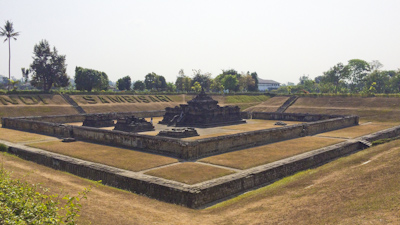
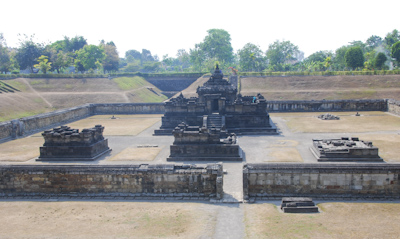
At about eight o’clock, our small group boarded the bus and we drove to Candi Sambisari. ‘Candy’ is the Indonesian word for temple.  Although the Hindu temple was constructed in the ninth century, it had remained hidden under layers of rock and sand from the eruption of Mount Merapi in 1906 and was rediscovered in 1966 by a farmer.IMG_5477

DSC_1070

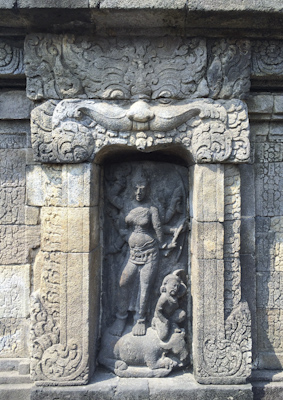
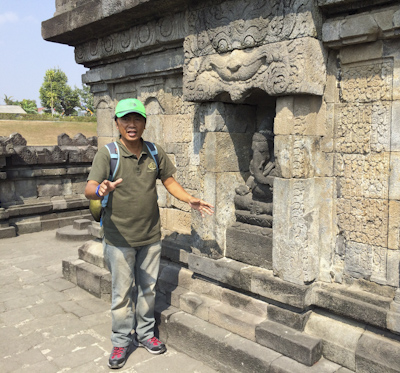
Sambisari Temple was located below ground level so we walked down stairs to the site and Josh explained the meaning of the figures and statues.IMG_5482

IMG_5486

Josh explained the story of Ganesh who is one of the best known and most worshipped deities in the Hindu religion. He is revered as the remover of obstacles, the patron of arts and science, and the god of intellect and wisdom.

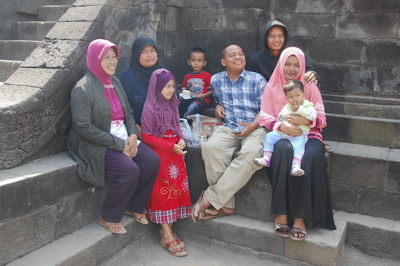
The Muslim family below said they often visited Candi Sambisari to picnic and enjoy the peace of the sacred site.DSC_1099

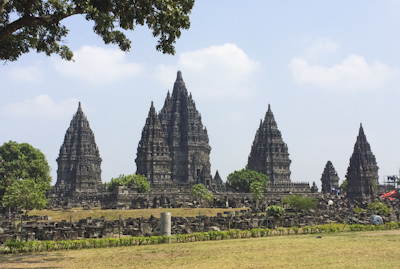
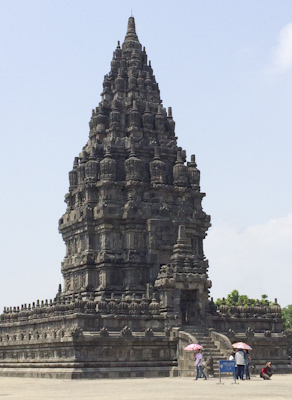
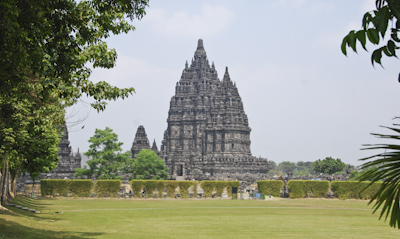
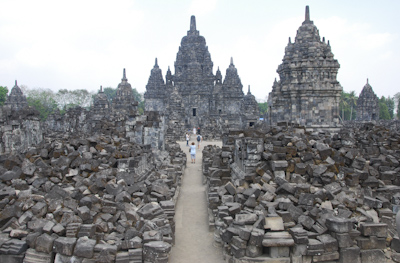
Afterwards, we drove to see the magnificent ninth century Prambanan Temple complex which is a UNESCO World Heritage Site. The Hindu temple was dedicated to the expression of God as the Creator (Brahma), the Preserver (Vishnu), and the Destroyer (Shiva).

IMG_5495

DSC_1123

IMG_5504

DSC_1195

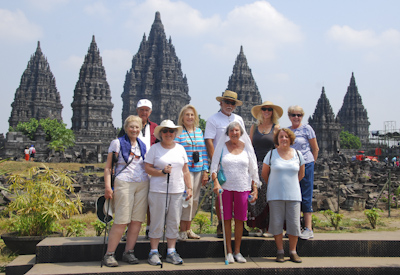
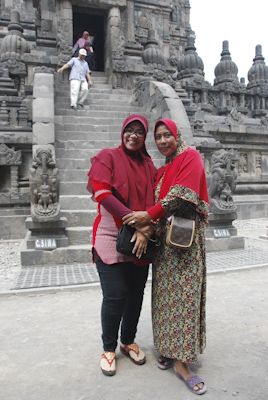
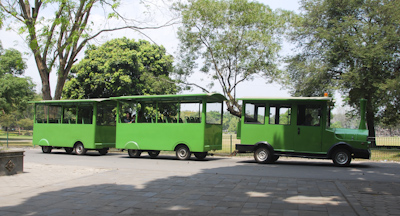
The women in the photo above asked me to take a photograph with them. Afterwards, I asked them to pose for me. The tour group walked to a mini-train stop and we rode around the complex. The temples were significantly damaged during an earthquake in 2006. There were originally 240 temples in the complex.

DSC_1215

DSC_1216

DSC_1232

DSC_1252

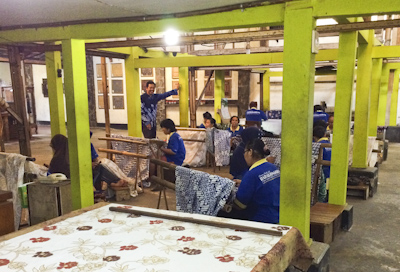
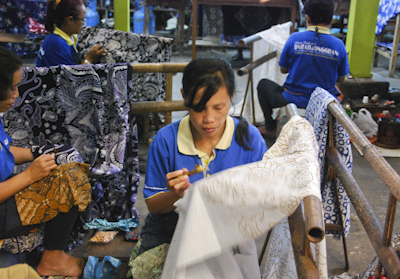
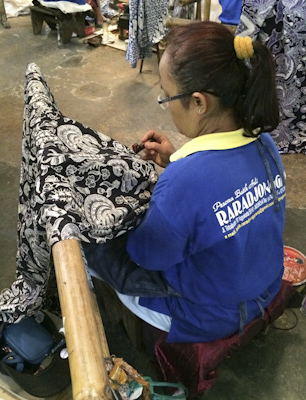
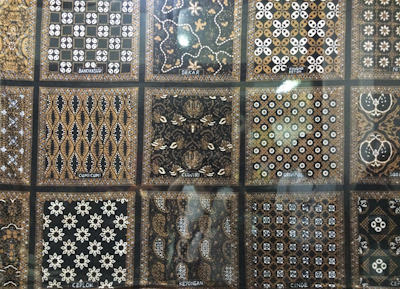
On the way back to the hotel, we stopped at a ‘batik factory’. This is a technique of wax-resist dyeing. Wax is applied to a cloth, then the cloth is soaked in one color. The wax prevents the dye from coloring that area. The wax is removed with boiling water and the process is repeated if multiple colors are desired.

IMG_5579

DSC_1284

IMG_5555


Indonesian batik made on the island of Java is famous for its diverse cultural patterns and is the most developed in terms of pattern, technique, and quality of workmanship. UNESCO designated Indonesian batik as a Masterpiece of Oral and Intangible Heritage of Humanity in 2009.

IMG_5539

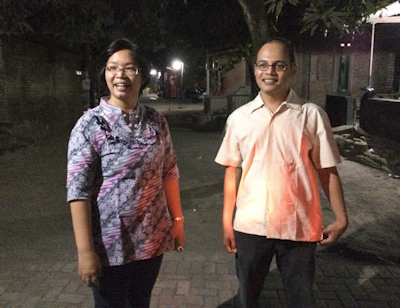
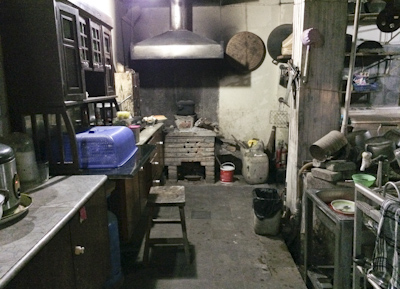
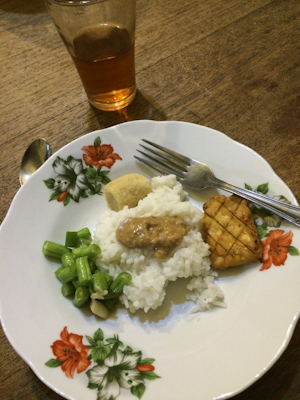
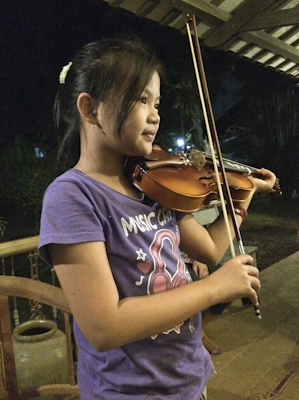
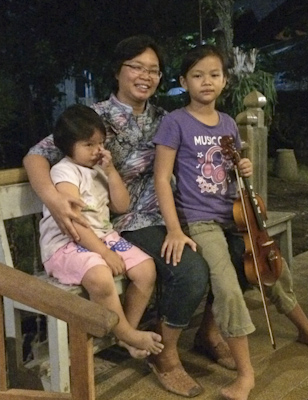
In the evening, our group divided and five of us has the opportunity to visit a local family for a “home-hosted dinner.”  My group went to Hexa and Wawa’s house where we had a lovely time. The extended family included two daughters, a niece, Hexa’s brother, and a nanny. The 12 room house was built in 1920 and four generations of Hexa’s family had lived there. Hexa’s mother had been a midwife and had her birthing room in the house. Their older daughter played Ode to Joy on her violin to entertain us. They were charming hosts and we had a lovely evening. IMG_5584

IMG_5590

IMG_5594

IMG_5607

IMG_5611

IMG_5612