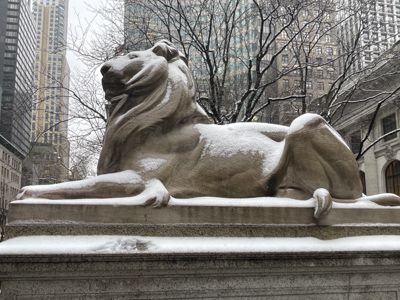
It had snowed in “The City” leaving a light dusting on surfaces for a brief time. I took the train to Manhattan to have lunch with my son, Chris, at one of my favorite restaurants.
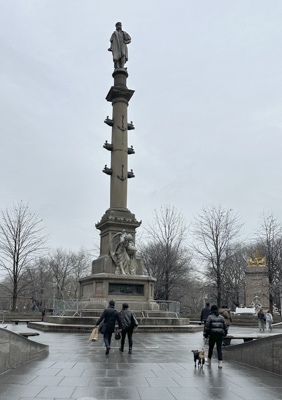
The Columbus Monument
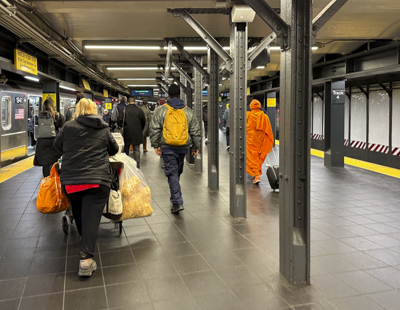
Recently, the NYC Subways have earned a reputation for being “dangerous.” I’ve traveled the subways for my entire life and they were never warm & cozy places, but always very interesting….
42nd Street Shuttle
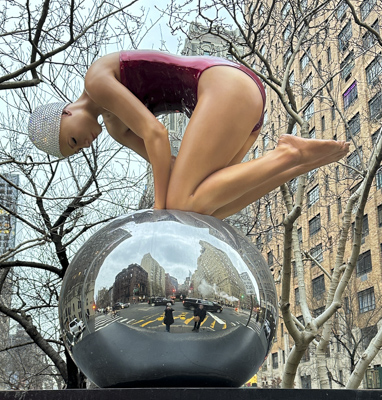
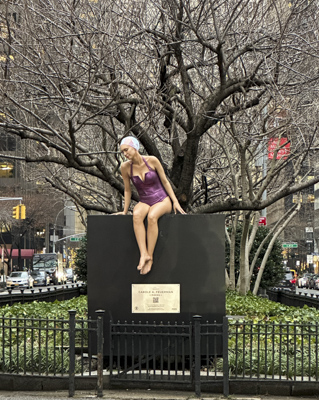
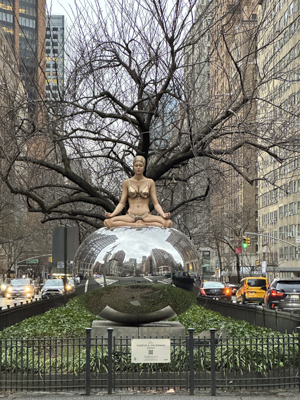
When Chris and I arrived at 38th Street, I was surprised to see a public art display on every corner along Park Avenue. Carole A. Feuerman’s lifelike statues graced each cross street.
Quan
What a treat on a chilly winter’s day in Murray Hill! Hyper-realistic sculptures warmed the day!
Pisces
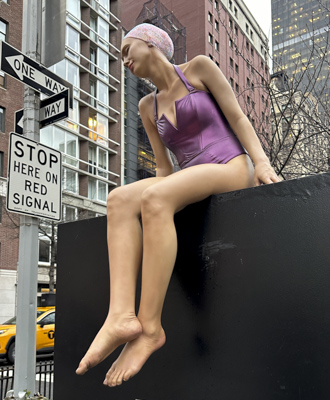
Pisces Up Close
The statues were incredible! They looked like real flesh ‘n’ blood people who were going to move in the next second!
Justice
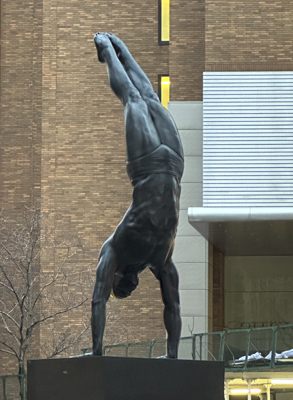
The grande finale on 34th Street was Carole Feuerman’s Golden Mean. The statue is a 1,500 pound bronze of a male diver. Feuerman described her sculpture as “An icon for achieving the impossible, for the struggle of survival and strength, and the resilience of the human spirit.” Wonderful…..
In early January 2024, I visited the Bruce Museum in Greenwich, Connecticut with my wonderful adventurous niece, Jenn. It had been many decades since I went to “The Bruce.”
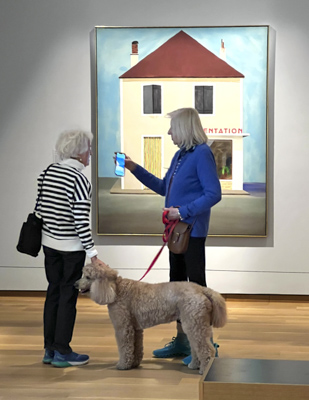
Scene at the David Hockney Exhibit
As a frequent museum-visiter, I was surprised to see a dog in the museum. It was a “first” for me!
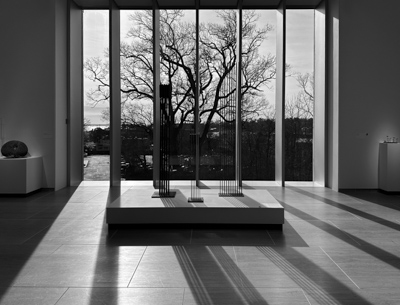
Looking Out Across Long Island Sound
The Bruce Museum has grown from a small private gallery to a beautiful impressive modern museum.
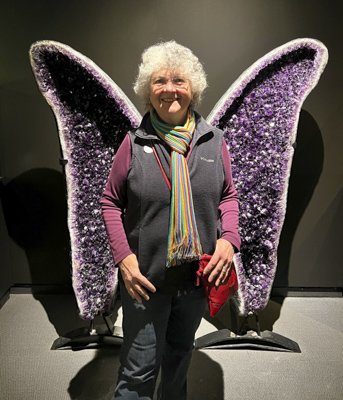
Taking Wings to Fly….
There was an excellent Rock and Mineral Collection, as well as modern and contemporary art exhibits.
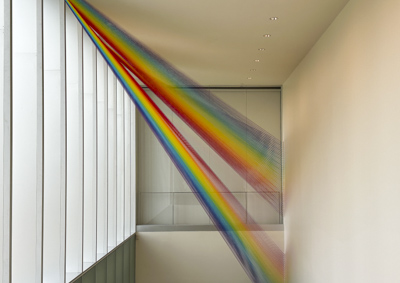
On the Stairwell
A permanent exhibit about the natural resources and environment of the Connecticut coastal area was created for local schools. It was well done and very interesting. We had a fun time!
Monday, October 9th was a school holiday: Indigenous People’s/Columbus Day – Jeff and I joined my son and granddaughter to find a tasty apple cider to promote in his restaurant. We live in the Hudson River Valley and the region is well known for its apple orchards.
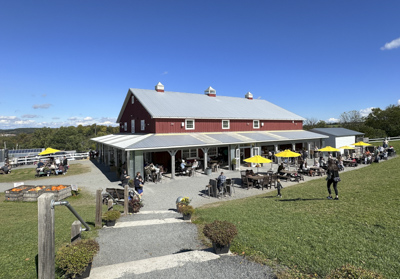
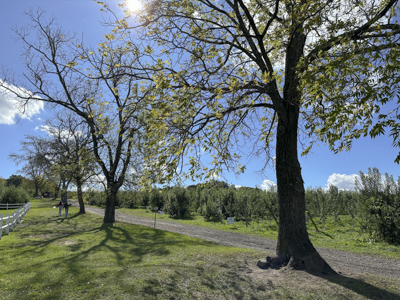
Pennings Farm in Warwick, NY had a lovely hillside location surrounded by acres of fruit trees. It was a family-friendly establishment with pick-your-own apples and pumpkins. Two food trucks were parked outside the cidery and there were picnic tables and places for families to relax and eat outdoors.
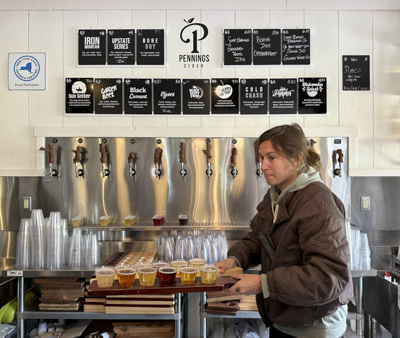
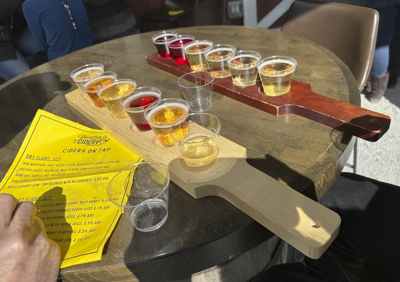
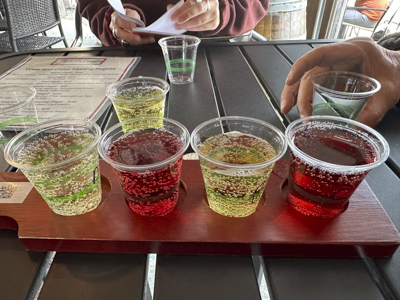
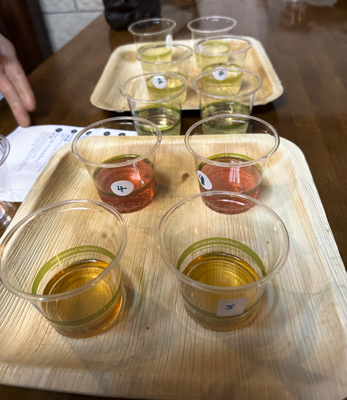
People were lined up to purchase individual glasses, cans, or “Flights” of cider for tasting. A Flight was a selection of six small glasses of sweet or dry ciders for tasting. We obtained extra glasses to share all the varieties.
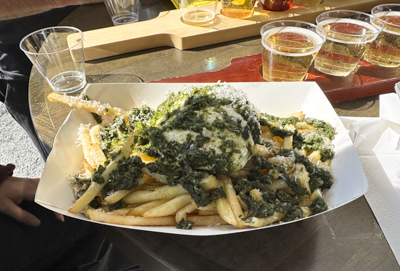
We ordered one Flight each of sweet and dry cider so we could try all flavors Jennings Farm had to offer. At $23 per Flight, we decided that Jennings Farm had a good thing going. We were curious about the Burrata Cheese Fries with Pesto at $18, so we also shared one of those. ($17 for a large pretzel!)
The consensus was that there was very little to distinguish the varieties of cider despite the interesting names, for example: ginger and beet juice. The tasters found the ciders “boring” with no apple taste.
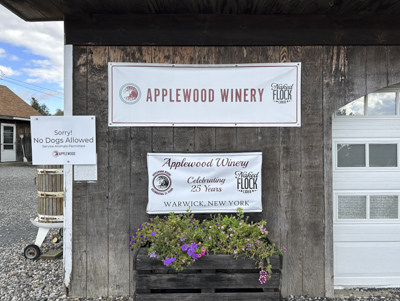
We left Pennings Orchard and drove along the back country roads of Orange County to our next destination: Applewood Winery and Cidery. This was a much smaller operation and we were told that the apple orchard nearby was a separate business.
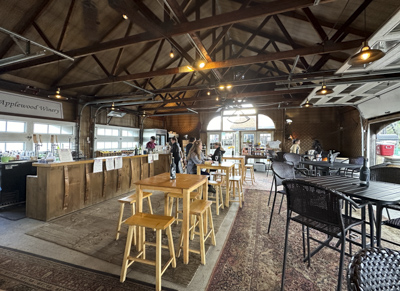
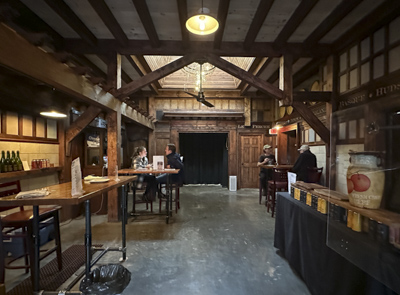
There was some outdoor seating which was filled with a group of seniors who were bussed from somewhere for a day’s outing. The indoor space was a converted garage set up with rows of tables.
The menu featured Flights of regional red and white wines and the people at the tables around us were sampling those. Ciders were listed at the bottom of the menu – a Flight of 4 glasses for $12.
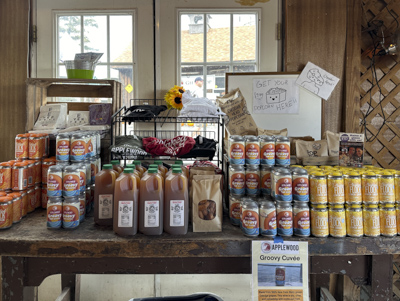
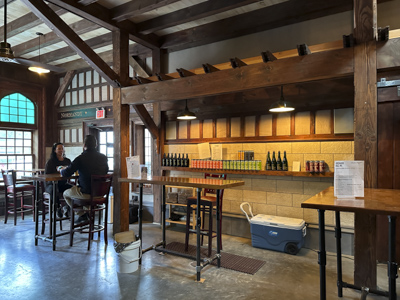
Cans of the house brand of hard apple cider, Naked Flock, were available on a table near the door. Those also boasted names such as “lemon ginger” and “pumpkin spice.” But No pure “apple.”
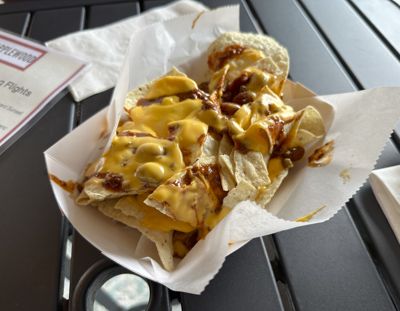
The consensus was that all the ciders tasted like wine, with appropriate names like Rosé, but none of them tasted like apples of any variety. However, we enjoyed a very tasty chili-cheese nacho boat for $9.
We moved on to our next orchard near Goshen, NY. I was the ‘designated driver’ and I throughly enjoyed seeing the beautiful rolling hills and fertile farmlands of this region of New York State. I had forgotten how gorgeous our State is, especially at this time of year with the colorful leaves and beautiful trees.
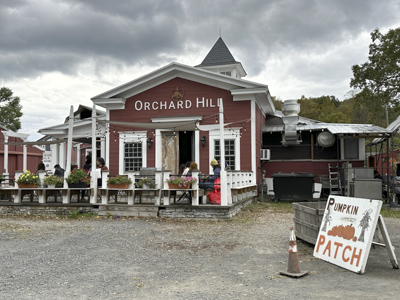
Orchard Hill Cider Mill and Tap Room seemed promising for an “Apple” cider. Their website referenced European cider and stated that their cider was built on the legacy of the famous Soons Orchard. I remember driving ‘upstate’ during the 1960s and stopping at Soons Orchard for apples and cider!
The seating area was dark, cozy, quiet, and inviting. The tasting room felt “adults only” and none of the families with young kids who had come to pick apples & pumpkins and were noisily running around outside, dared to invade the tranquility here. We ordered two Flights of 5 samples to share – $12 each.
The tasters all agreed that these ciders had more distinctive flavors and were the best of all the samples today. We briefly met the cider creator, a cheerful young man. A worker explained the different varieties to us and recommended two additional ciders. We purchased a couple of cans to take home.
We had a wonderful fun day driving around Orange County in the Hudson River Valley and enjoyed the beautiful fall countryside. We visited three very different apple orchard/cider mills. We learned that the makers of hard cider are trying to make their products taste more like wine, probably to satisfy today’s youthful palates.
We hope cider-makers will return to a cider that tastes like apples perhaps similar to the wonderful French ciders of Brittany and Normandy. Our search for really good New York apple-tasting apple cider will continue. However like life in general: “It’s the journey, not the destination that matters.”
October 5th, 2023 . Posted in Gibraltar, Italy, Portugal, Spain | Comments Off on Iberian Adventure: Fall 2023
September 15 – October 1, 2023
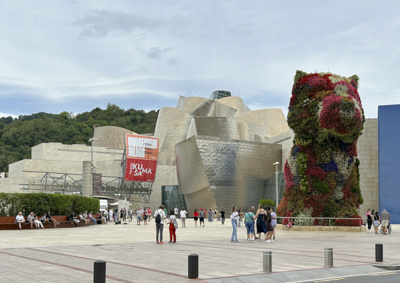
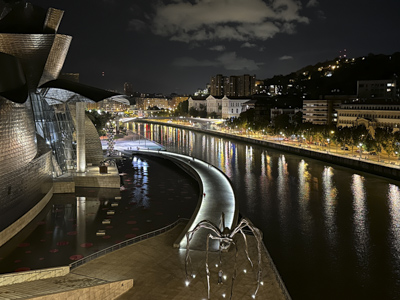
Bilbao Guggenheim Museum with Jeff Koon’s “Puppy”
As Hurricane Lee barreled northward along the Atlantic coast, we packed for a trip to Spain. The storm hovered a few hundred miles off the tip of Long Island, as we drove to JFK. The plane left a little late and the pilot announced it would be a “bumpy ride” due to turbulence. After a short stop-over in Paris, we arrived in Bilbao Spain at noon on Saturday, Sept. 16.
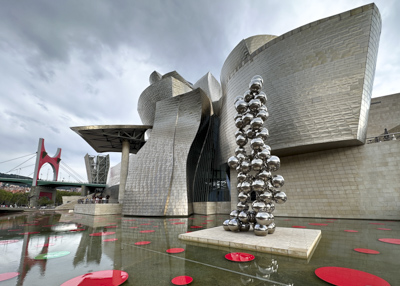
We were in Bilbao for a long weekend to adjust to European time and explore the city before boarding a cruise ship to go around the Iberian peninsula. We stayed at the Gran Hotel Domine, located across the street from the fabulous Guggenheim Bilbao Museum designed by Frank Gehry.
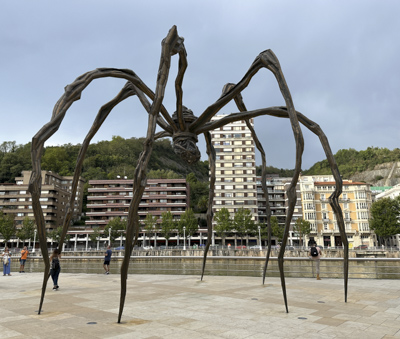
Louise Bourgeois Sculpture along the Rio Nervión
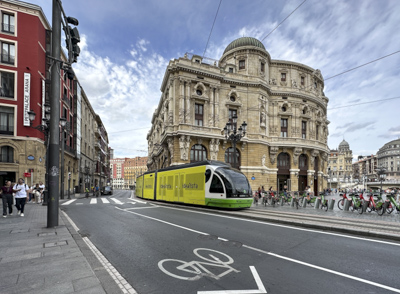
Bilboa is a wonderful city. Important sights are within walking distance and public transportation is modern, convenient, and cheap. On Sunday, we walked to Casco Viejo – old town – along the main shopping street, the Gran via don Diego Lopez de Haro.
Teatro Arriaga and a Modern Tram
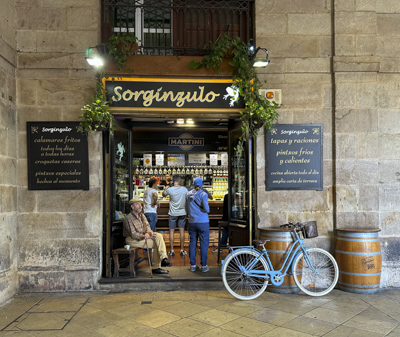
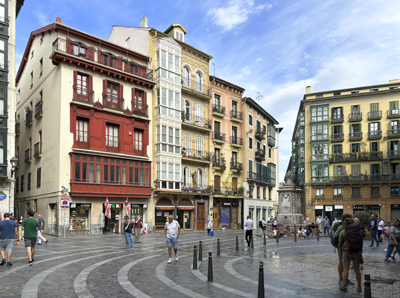
El Casco Viejo was the cleanest and nicest Old Town we ever visited. Plaça Nueva was lined with inviting tavernas selling a variety of pintxos.
Taverna Sorginzulo in Plaça Nueva
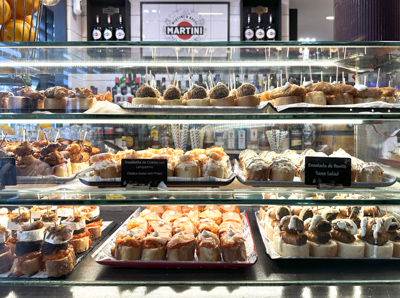
Pintxos (“pin-chos”) are tasty snacks served in tavernas throughout the Basque region of Spain. They usually include a variety of ingredients held in place with a toothpick on a piece of rustic bread.
Assortment of Pintxos
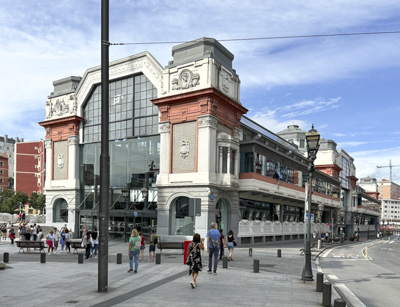
The streets were empty of people and cars, so it was a pleasure to walk around. We stopped by the famous Mercado Ribera which is supposed to be the biggest indoor market in Europe.
Mercado Ribera
The impressive 14th century Catedral de Santiago de Bilbao was built among the narrow streets of el Casco Viejo.
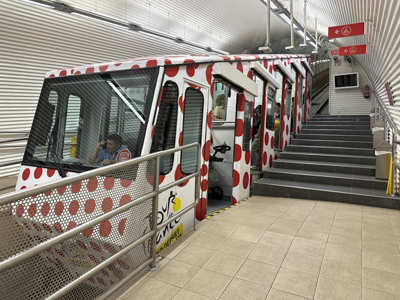
On Monday, we went to the Artxando funicular station and rode up to the highest point in Bilbao for the view. The funicular was decorated in large polka-dots to coincide with the Kusama exhibit at the Guggenheim Museum.
Artxando Funicular
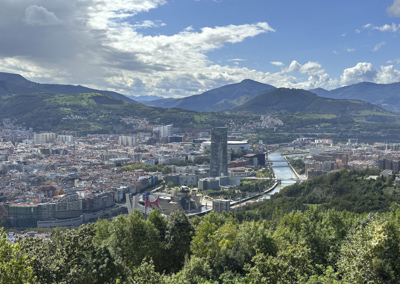
Bilbao straddles the Nervión River and is surrounded by beautiful green hills.
Beautiful Bilbao, Spain
We really liked Bilbao. It’s a wonderful walkable city with many cultural sights, excellent restaurants, friendly people, good public transportation, and delicious pintxos!
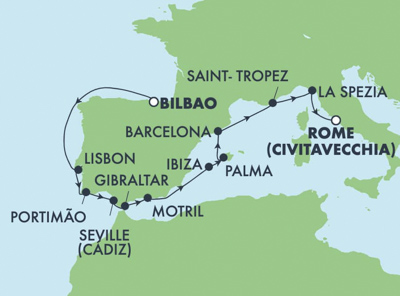
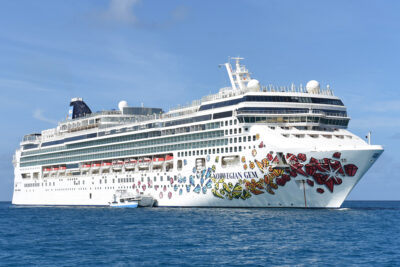
Tuesday September 19: We checked out of the hotel and took a taxi to the commercial cruise port in the city of Getxo (“Get-sho”) about 30 minutes from Bilbao. We were booked on the Norwegian Gem for a 12-day cruise around the Iberian Peninsula.
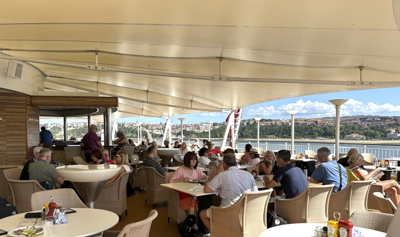
We arrived about noon, checked in at the dock, and boarded the ship. We had lunch outdoors on the aft deck and had plenty of time to explore the Gem. We settled into our stateroom and met our steward, Chandra.
Outdoor Dining on the Aft-deck
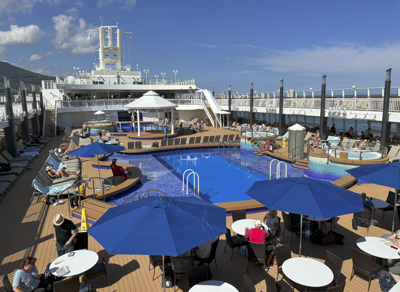
Pool Deck
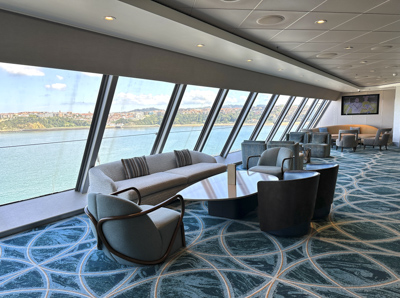
The 13th Deck Lounge in the Bow
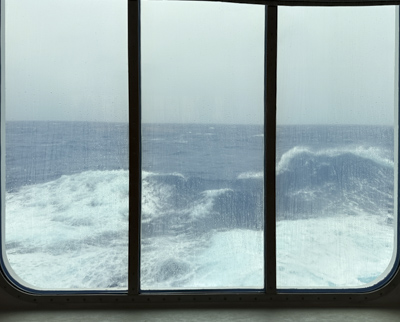
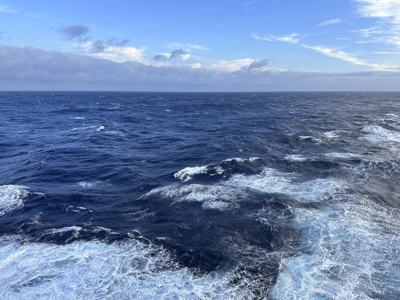
In the evening, the ship left the protected harbor of Getxo and entered the rough open waters the Atlantic Ocean. A coastal storm was brewing and it was windy and rainy all night. The Gem pitched and rolled with the wind and waves.
Our next day out was a “Sea Day” as the ship cruised south to Lisbon. The crew set up “barf bags” in public areas. Luckily, Jeff and I were okay and we enjoyed empty dining rooms for dinner and breakfast.
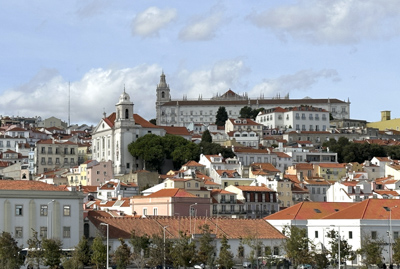
Thursday, September 21: Lisbon Portugal – The Atlantic storm subsided and the winds were calm as we approached Lisbon. The city was built on the hills above the Tagus River where it meets the Atlantic Ocean and the view of Lisbon is impressive.
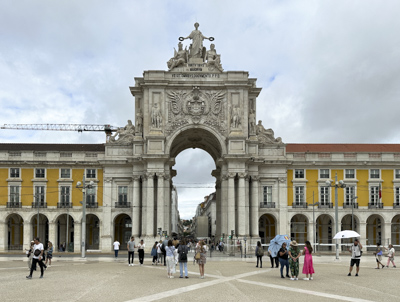
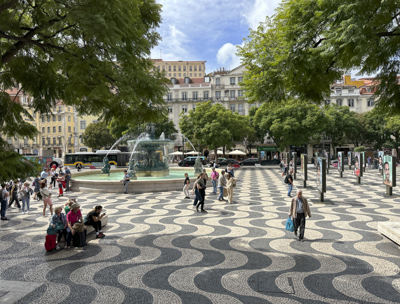
We disembarked and walked along the waterfront to the magnificent Plaça do Comércio which is lined with cheerful yellow 18th century buildings.
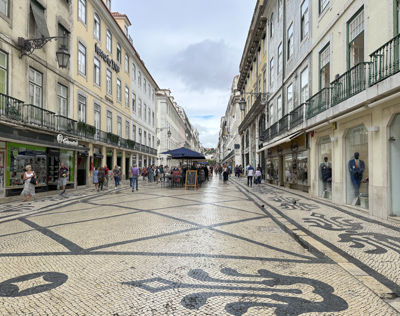
The Arco Triunfal da Rua Augusta leads to the center of the Baixa neighborhood, the main shopping area. I loved the elaborate black and white patterns and variety of the cobblestone designs on pedestrian pathways. (They reminded me of Rio de Janiero)
Inspired by Roman mosaics, Portuguese cobblestones are one of the symbols of Lisbon. They were first created in 1498, and today the Mestres Calceteiros, (cobblestone masters) are known worldwide.
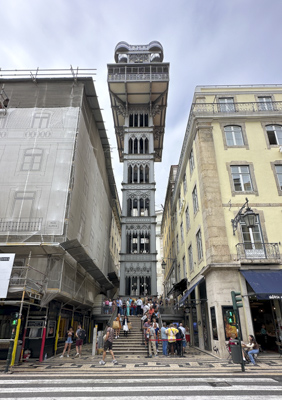
The city of Lisbon is very hilly and one solution to climbing the steep hills was the Elevator de Santa Justa. It was opened in 1899 to transport people from the Baixa up to the Barrio Alto district. We didn’t take the elevator because the line of tourists was very very long and we didn’t want to spend time waiting.
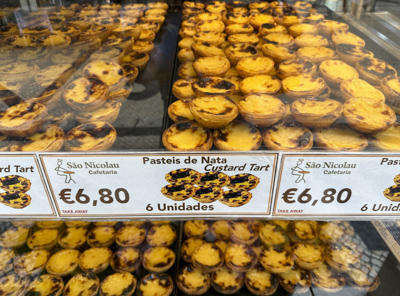
Pasteis de Nata is the iconic Lisbon pastry. The secret recipe of the creamy custard tart dates back to the 16th century when they were made by nuns in local convents. The Pasteis de Nata that we sampled were delicious: creamy and not too sweet. Really good with coffee!
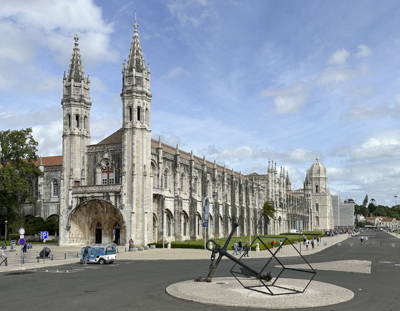
Since we had only a few hours in the city, we decided to take a Hop-on-Hop-Off bus in order to see as much as possible in a short amount of time. We passed by the 16th century Jerónimos Monastery in the Belem neighborhood.
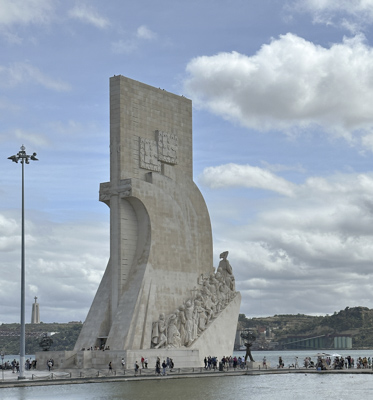
We also drove by the Padrao dos Descobrimentos (Monument to the Discoveries) which was originally built in 1940 and reconstructed in 1960 to commemorate the 500th anniversary of the death of Henry the Navigator and to honor Portuguese explorers.
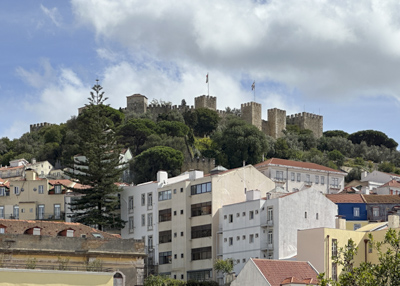
The 11th century Moorish Castelo de São Jorge crowns the top of the hill of the Alfama district. This is the oldest neighborhood in Lisbon with “cobbled lanes and alleys and steep grueling inclines.” The Alfama is also where Fado music originated.
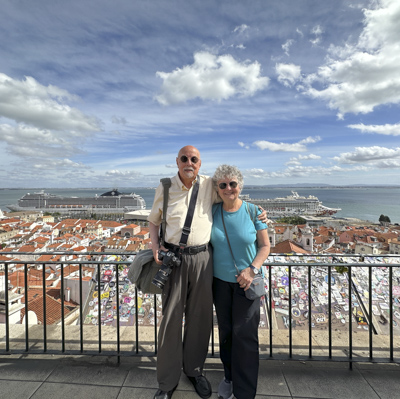
We took a taxi half way up the Alfama hill to the Miradouro de Santa Luzia which is a beautiful scenic overlook with fabulous views of Lisbon and the Tagus River.
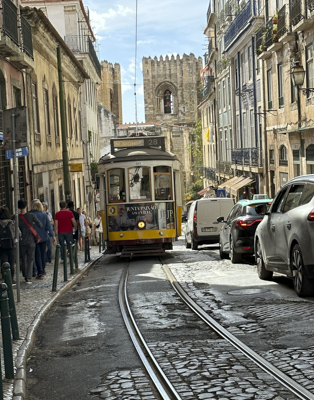
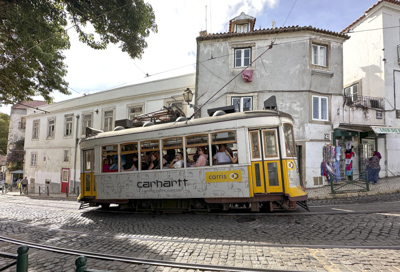
No trip to Lisbon would be complete without mention of the famous historic #28 Tram:
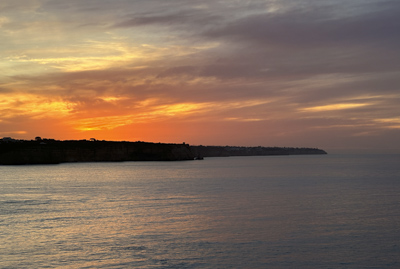
Friday September 22 – Portimao Portugal We were awakened by the grating voice of the cruise director at 7:15AM. She announced our early arrival at our next port-of-call: Portimao.
Sunrise Over Portimao, Portugal
Since we didn’t have any specific plans, we had a leisurely breakfast on the aft deck before exploring. Portimao was billed as a gateway to the famous Algarve region of Portugal, but the town looked seedy and rundown.
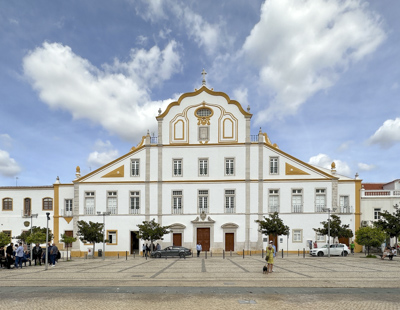
Colégio Dos Jesuitas Portimão – Jesuit College
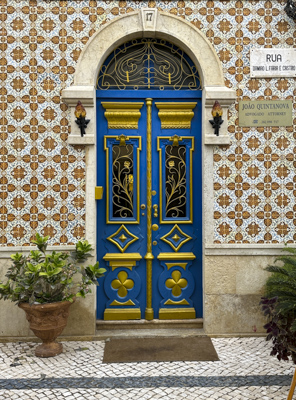
Beautiful Commercial Doorway
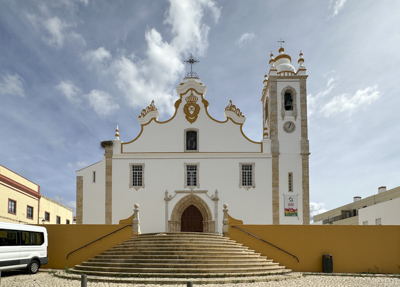
15th Century Nossa Senhora da Conceição
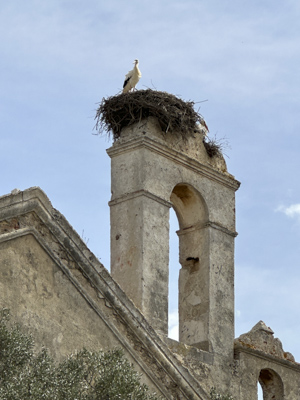
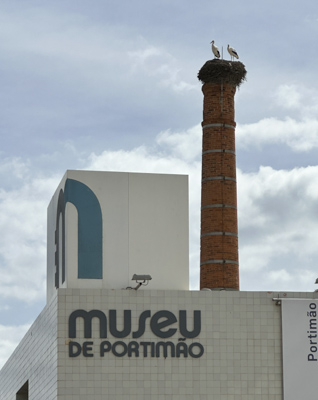
It was interesting to see huge White Stork’s nests on all the highest structures along the harbor. The birds are white with black wingtips and bright orange beaks and legs. They are about three feet tall with wingspans of six feet.
Saturday September 23 – Cádiz Spain It was a beautiful warm sunny day to explore the ancient port city of Cádiz in the Andalucia region of southern Spain.
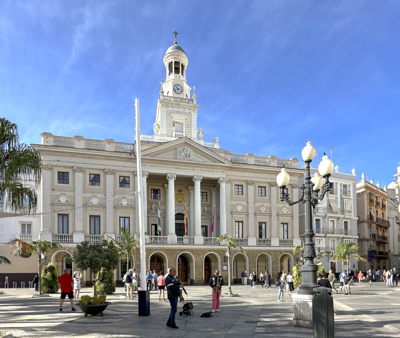
Cádiz City Hall on Plaça de San Juan de Dios
Located on a narrow strip of land, Cádiz is one of the oldest continuously inhabited cities in Western Europe. It was founded by the Phoenicians before the 7th century BC.
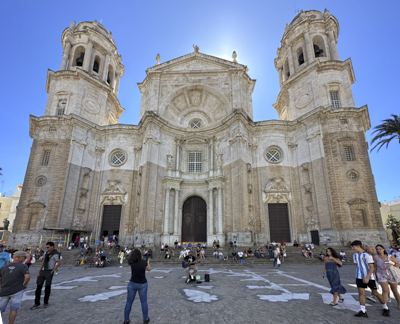
Catedral de Cádiz
The city seemed alive with many people and there was a festive atmosphere everywhere. The plazas were lined with cafés full of families enjoying a sunny Saturday. In the photo above, people sat on the cathedral steps to listen to an impromptu street musician play lively Spanish tunes.
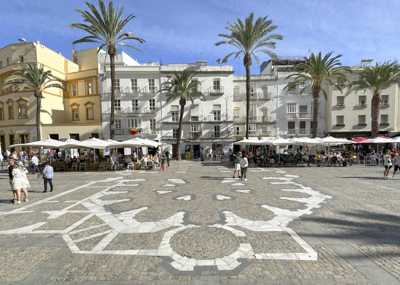
Plaça de la Catedral
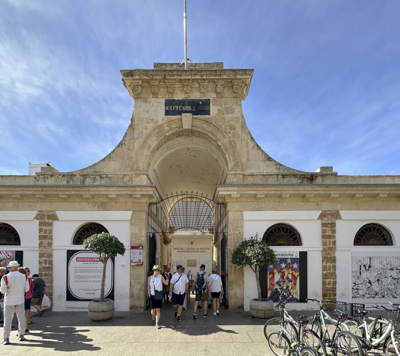
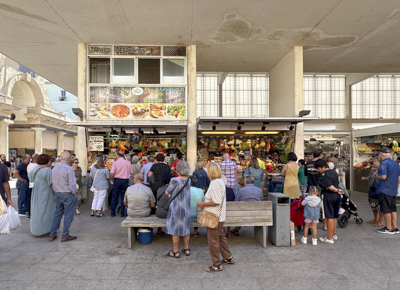
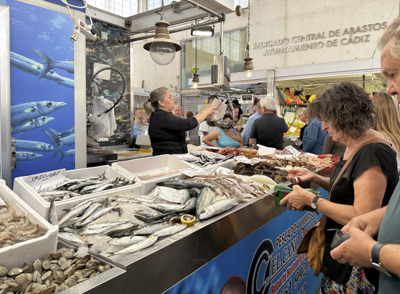
The Central Market of Cádiz is supposedly the oldest covered market in Spain. The interior has Doric columns on all four sides, making it look like a Roman temple, although it was originally built in 1838.
Mercado Central de Abastos de Cádiz
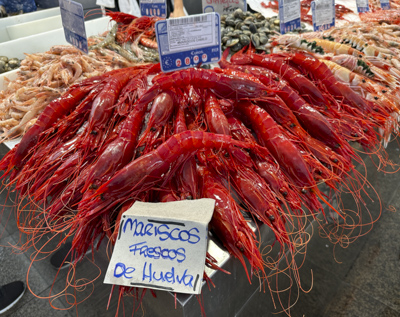
There were many local people shopping at the market which was well stocked with local vegetables, fruits, Spanish cheeses, fresh fish and seafood, and bread.
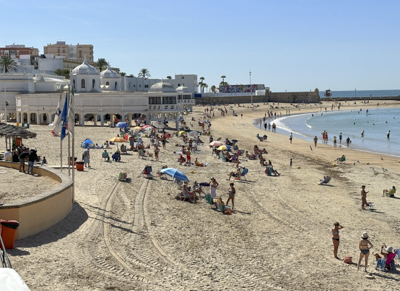
Cádiz was built on a long narrow peninsula surrounded by water, so it’s hard to get lost. The main narrow streets of the Old Town led to a lovely beach at the end of Cádiz.
Playa de la Caleta
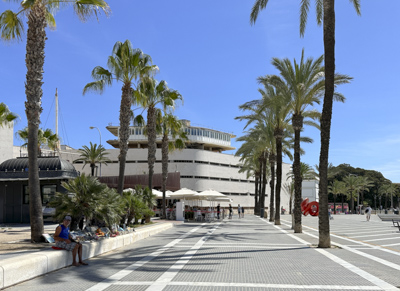
Quilla Restaurante, Cafe y Terraza
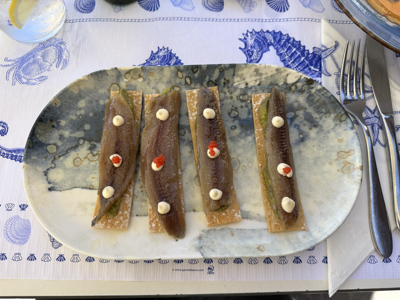
We enjoyed a light lunch of smoked sardines over guacamole and an Andalusian soup called Salmorejo, also with sardines. Quilla Restaurante is located on a wide boulevard overlooking the beach.
Smoked Sardines
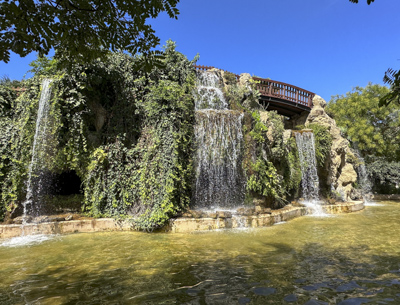
This part of Cádiz is also home to the University of Cádiz, as well as several beautiful botanical gardens and parks.
Parque Genovés
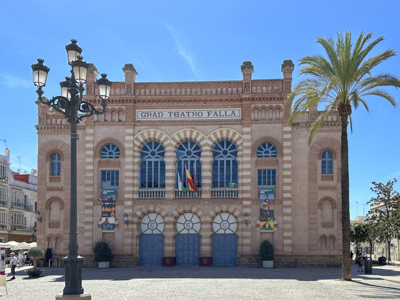
The Gran Teatro Falla was completed in 1905 and named for the Andalusian Spanish composer, Manuel de Falla, who is considered to be Spain’s greatest composer of the 20th century.
Gran Teatro Falla
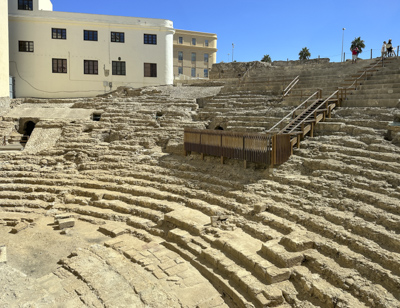
A Roman theater was discovered in 1980 under several old warehouses which were destroyed by fire. The theater was constructed in the 1st century BC and is the second largest Roman theater in the world.
Teatro Romano de Cádiz
Sunday September 25 – Gibraltar: I was looking forward to visiting Gibraltar because I didn’t know what to expect and I thought I would never see the famous “Rock.” Gibraltar is a peninsula which is attached to Spain, however it is a British Overseas Territory.
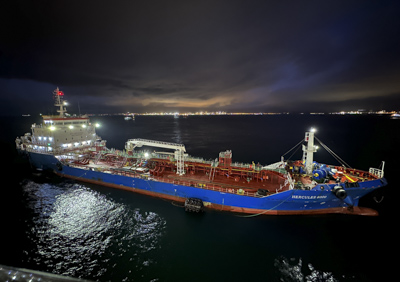
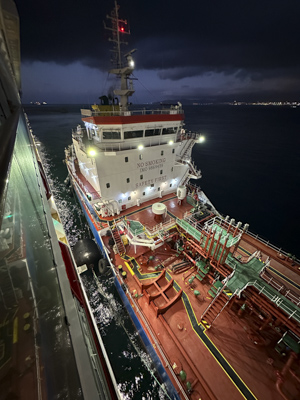
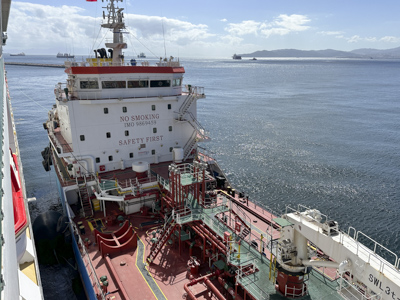
We were awakened before dawn by the loud sound of the engines of an oil tanker right outside our balcony. The Hercules 8000 was moving sideways very slowly toward the starboard side of our ship. As it moved closer, I finally figured out that it was going to re-fuel the Norwegian Gem.
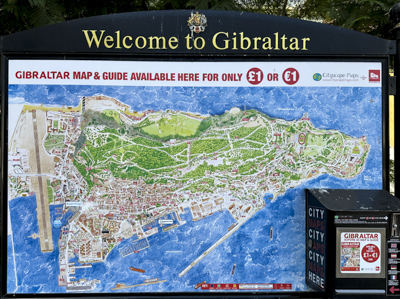
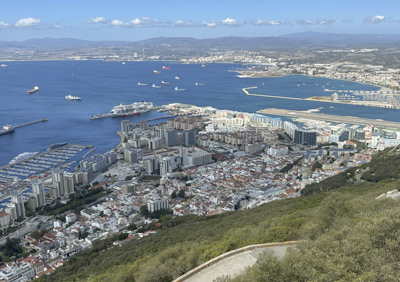
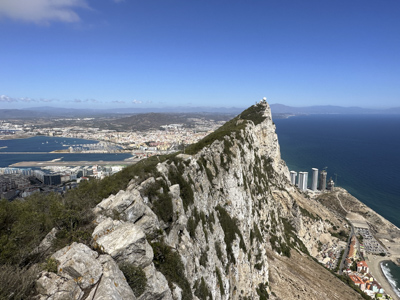
Gibraltar is essentially a small city at the foot of a huge mountain, known as The Rock of Gibraltar and popularized by the American insurance company, Prudential. The airport, on the left side of the map below, is the border between Spain and the British Territory.
We took a taxi from the ship to Grand Casemates Square, which was a short walk to Main Street which leads directly to the Cablecar Station to get up to the Top of the Rock.
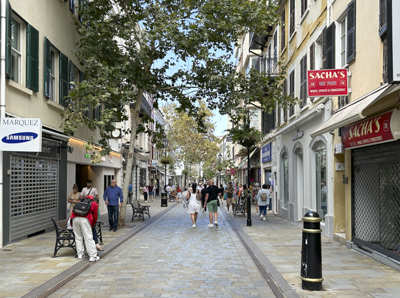
Main Street is the primary pedestrian shopping street lined with stores and restaurants but, luckily for us, most of the shops were closed because it was Sunday.
We waited in line for almost an hour to board the cable car to go 1,398 feet to the top. It was a fun ride with gorgeous views of the surrounding seas.
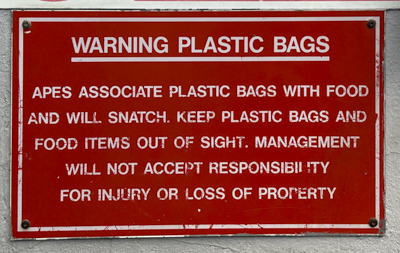
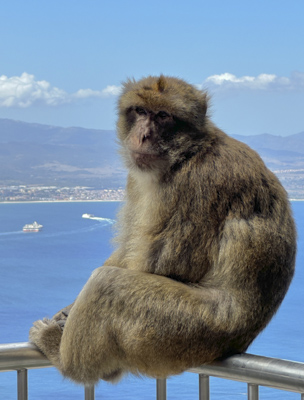
There were warnings everywhere about the Barbary macaques that live on the upper rock. They are about the size of a small child and kinda cute. The “apes” watch the tourists and look for food to snatch.
The view from the top is spectacular, especially on a bright sunny day. After we explored and took lots of monkey pictures, we sat by a windowed café to have smoothies and enjoyed the view.
We opted not to walk down from the top, so we missed the caves and other tourist sights along the way. We rode the cable car back down to Main Street.
When we returned to the ship, the Hercules 8000 had finished refueling the Gem, untied the lines, and was slowly moving away. I guess when you’re a huge cruise ship, the gas station comes to you!
Monday, September 25: Motril – Granada, Spain: Motril is a port city on the Mediterranean Sea located about 40 miles from Granada. We had pre-arranged an excursion bus take us to visit Granada on our own. Since we had limited time, we decided not to visit Alhambra on this trip.
Granada is an ancient city located in the foothills of the Sierra Nevada Mountains in the Andalusia region of Spain. After the bus drove through hilly farmland, I was surprised by all the modern buildings, apartments, and international chain stores in and around the city.
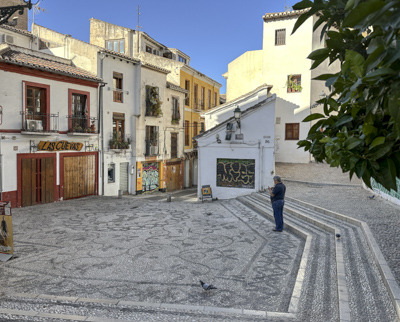
The bus left us off near the cathedral and we used the GPS on our phones to find our way around. Our goal was to explore the historic El Albaicín district of Granada.
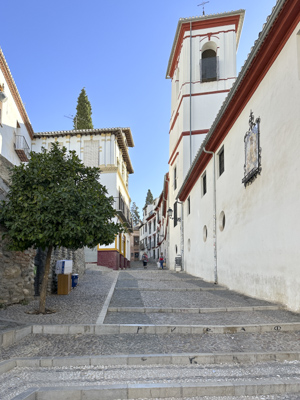
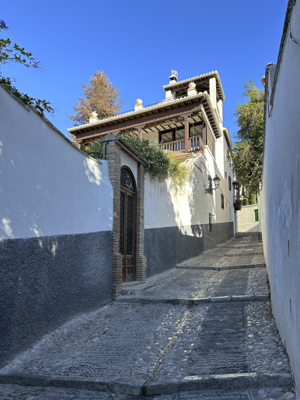
Built on a steep hill, the Moorish district has retained its medieval street plan from the 13th to 15th centuries. It was declared a UNESCO World Heritage Site.
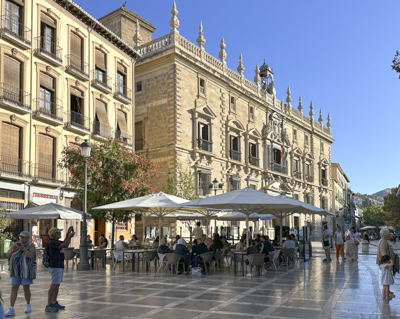
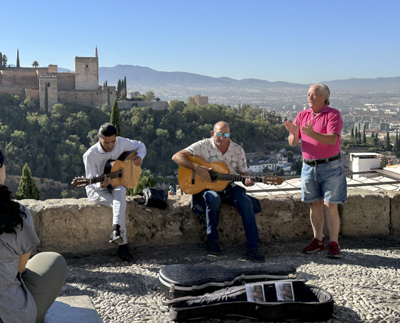
We climbed up steps and followed steep cobblestone alleyways to the top of the Albaicín hill to the Mirador de San Nicolas. The plaza of St. Nicolas church has a beautiful overlook with stunning views of the city of Granada and Alhambra palace across the valley.
A pair of Spanish guitarists were playing tunes for the tourists in the plaza. They were excellent musicians and the popular songs were appreciated by Spanish tourists who clapped and sang along.
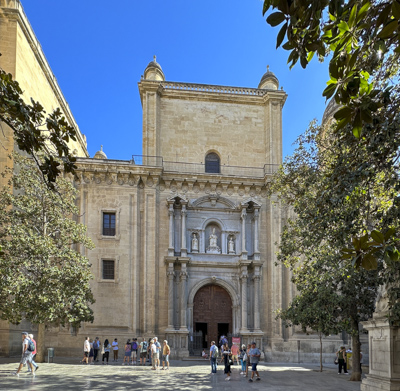
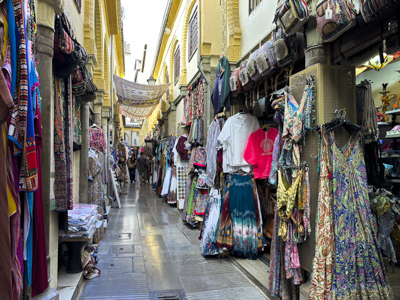
We took a taxi back down the hill to the 16th century cathedral which was built on top of the city’s main mosque in the old Muslim Medina. Next to the cathedral is the Alcaicería or Arab Market.
The Alcaicería opened in the 15th century but was destroyed by fire in the 19th century and then completely rebuilt. Today, it is filled with many small shops selling tourist souvenirs.
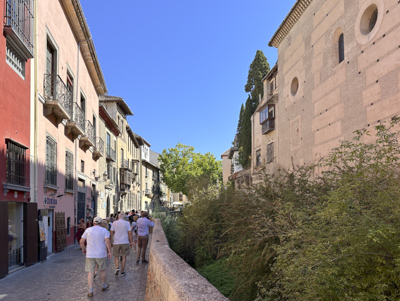
I wanted to see the Hammam Al Ándalus or traditional Arab baths so we followed the narrow street that runs along the Darro River.
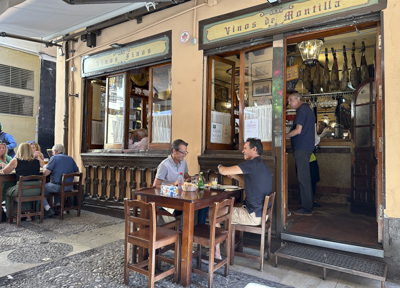
Later, we decided to stop for lunch at an interesting restaurant called Bodegas Castañeda and shared a table with a couple from The Netherlands who drove to Granada for the weekend.
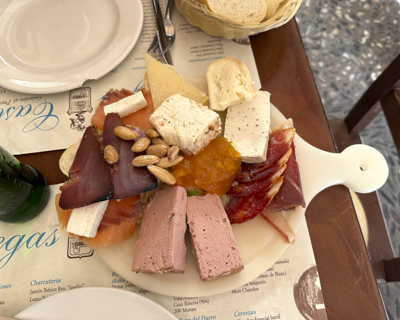
We ordered a Tabla Castañeda Fría so Jeff and I shared a delicious assortment Spanish meats and cheeses. The bus back to Motril drove through the beautiful countryside of southern Spain.
Tuesday September 26: Ibiza, Spain: The ship arrived in Ibiza Town at 10am, so we had time for breakfast outdoors on the aft deck. The weather was perfect: low 70s with a soft breeze off the sea.
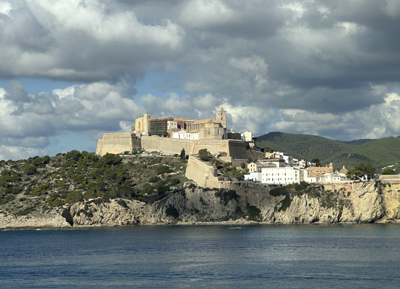
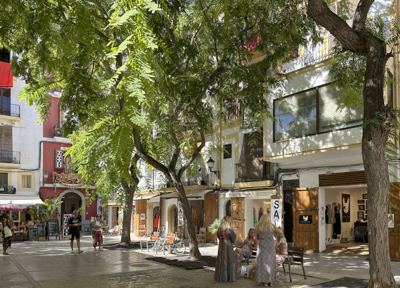
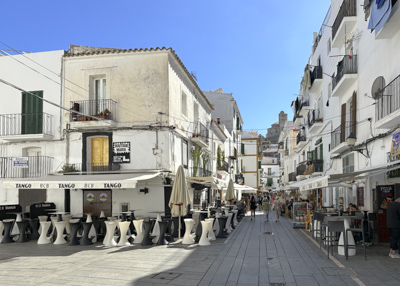
The Old Town and Cathedral
The fortified Dalt Vila (upper town) and the Catedral de Nuestra Señora de las Nieves are perched on a small mountain overlooking the harbor of Ibiza Town. Most people walk up the mountain from Ibiza Town, but we took a taxi from the ship up to the top of the fortifications and walked down.
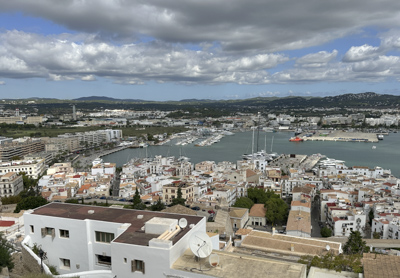
The Harbor and Ibiza Town
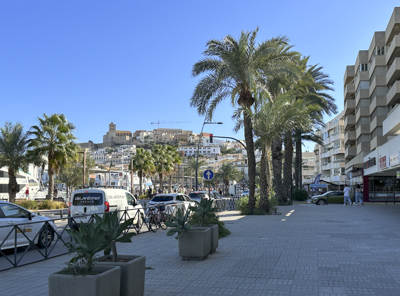
The 360 degree view of the harbor and the Mediterranean Sea was spectacular. The old town was built on the side of the mountain below the fortifications. The newer city of Ibiza Town is at sea level and runs along the U-shaped harbor.
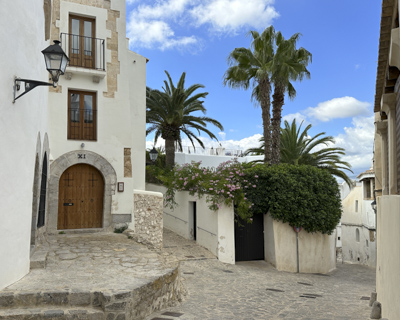
Stone Path Leading Down Through Dalt Vila
The island of Ibiza is famous for its nightlife and has a reputation as the “Party Capital of the World.” We visited during the day, so the island was very quiet. We saw posters outside a few clubs which were selling tickets to music venues and showing prices and availability.
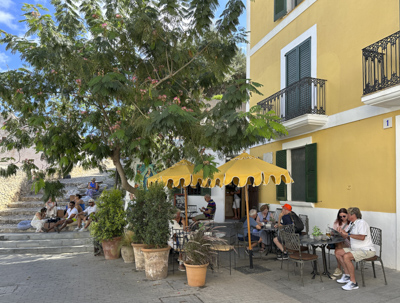
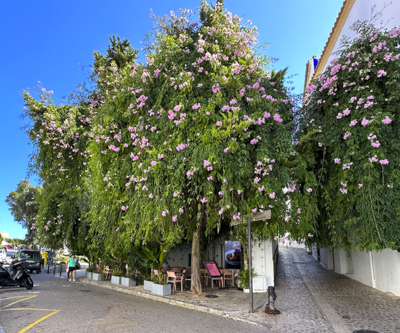
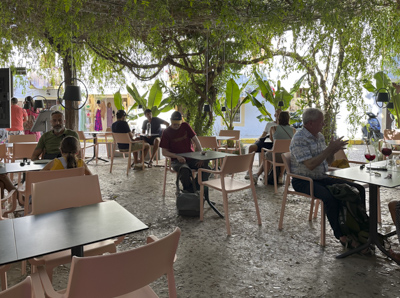
We stopped for lunch at a restaurant called Cevitxef for ceviche – marinated fresh fish. The restaurant had tables in the shade of the flowering trees in the photo below:
The ceviche was very fresh and delicious.
Ibiza is the third largest of the Balearic islands, after Majorca and Menorca. The Phoenicians settled in Ibiza in 654BC. It’s a beautiful island and the town is wonderful fun.
The Renaissance walls in the old town were awarded UNESCO World Heritage status in 1999.
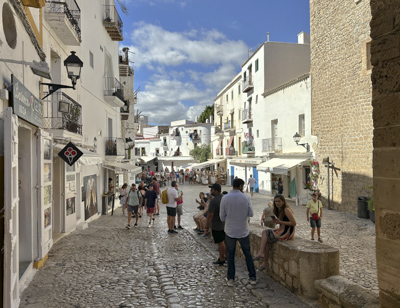
Ibiza Town has modern buildings, many stores, restaurants, and traffic on its narrow back streets.
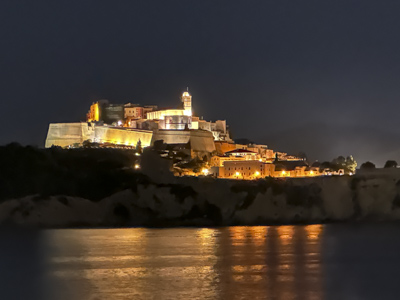
The ship left Ibiza harbor after dark, so I took a photo of Dalt Vila lighted at night:
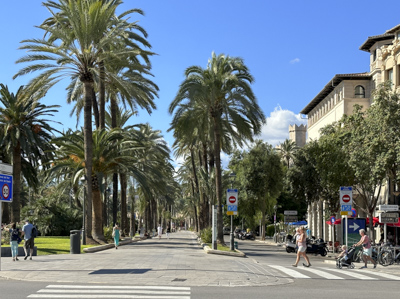
Wednesday September 27: Palma, Mallorca Spain We visited Palma last year and wanted to see a different part of the beautiful island of Mallorca, so we took a train to the town of Sóller.
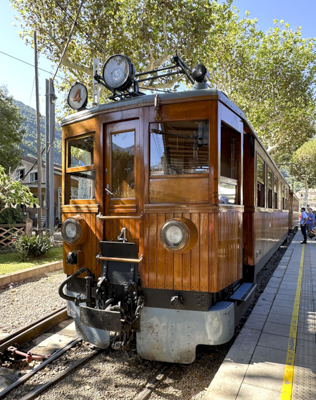
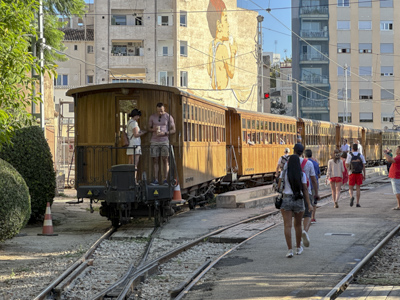
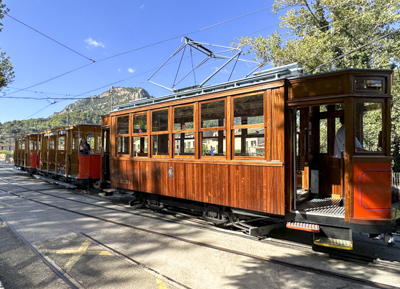
Called the Ferrocarril de Sóller, the wooden trains were built in 1912 and lovingly restored to their original lacquered beauty. The train station is located in downtown Palma.
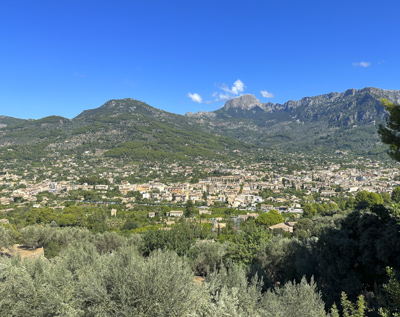
The hour-long journey takes passengers through the agricultural and mountainous interior of the island.
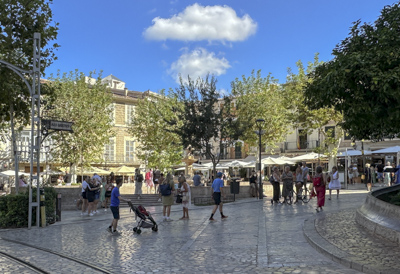
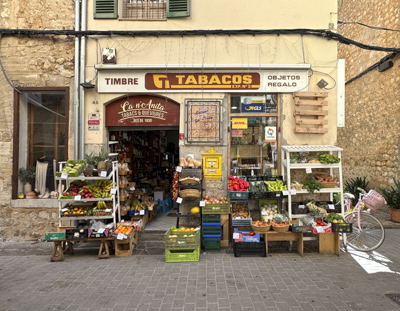
The city of Sóller boasts of growing the best oranges in the world. The train stopped in the city-center near the town square. Some passengers took a tram to the Port of Sóller, a short distance away.
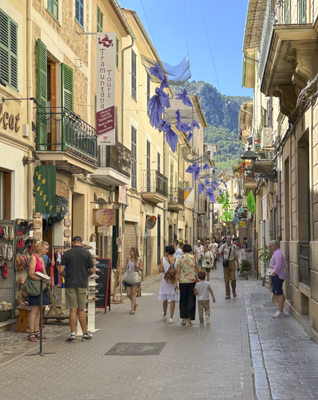
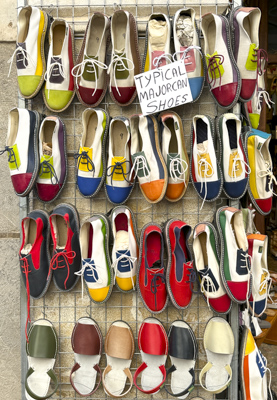
The church of Sant Bartomeu and the town hall overlook the Plaça Constitució which is surrounded by cafés and restaurants. We walked up a festive-looking street full of interesting shops:
We returned to Palma, the capital city of Mallorca, sometimes spelled Majorca.
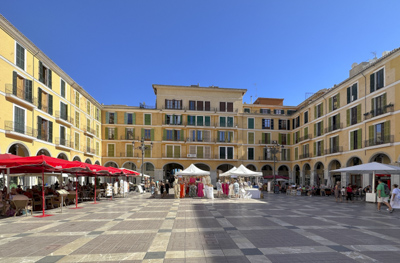
Plaça Major
There were many tourists in Mallorca enjoying the shops, cafés, and public squares.
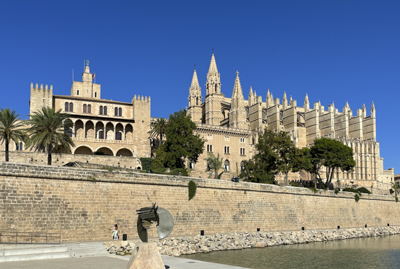
The Royal Palace of la Almudaina and the Catedral-Basílica de Santa María de Mallorca:
We found a taxi to take us back to the ship.
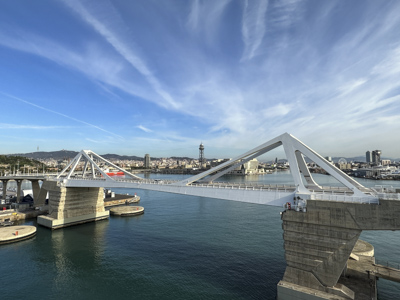
Thursday September 28 Barcelona, Spain: It was wonderful to be back in Barcelona again – fabulous city – one of my favorite cities in the world.
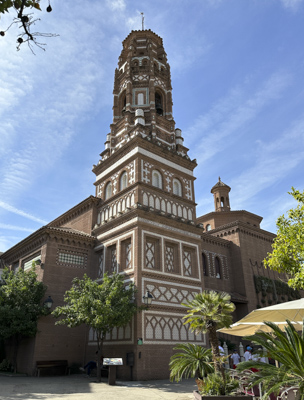
Since we had only a few hours to spend, we wanted to see something new, so we took a taxi up Montjuïc hill to El Poblé Espanyol. This is an open-air architectural museum and crafts center.
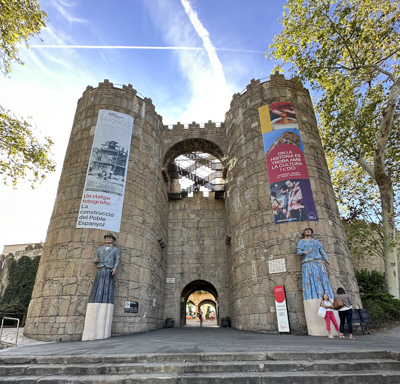
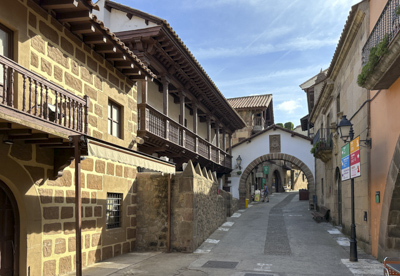
The medieval gate is the entrance to the “Spanish Town.” El Poblé Espanyol was built in 1929 to highlight regional architecture. The museum consists of 117 full-scale buildings reproduced from different regions of Spain.
The buildings showcased the wide variety of architectural styles and regional culture across the country.
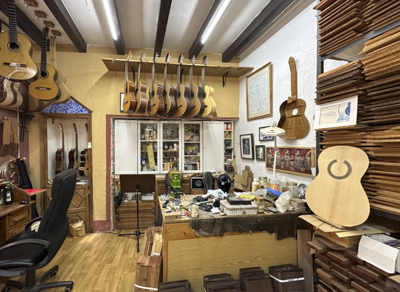
On the ground level shops were installed to provide workspace for artisans to demonstrate their skills and to help provide them with an income by selling their products.
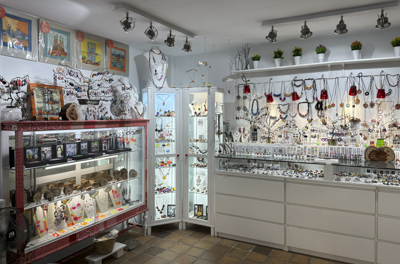
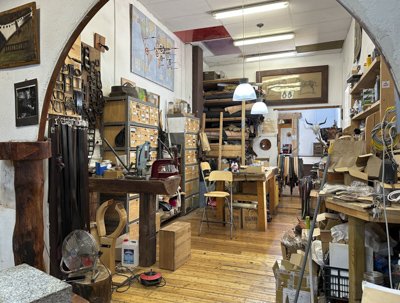
Among the professional artisans were: basket making, handmade jewelry, engraving and printmaking, sculpture, dressmaking, leather, stained glass, paper-mache sculptor, weaving, embroidery, and a lutherie – or guitar making workshop.
Handmade Jewelry
Leather Workshop
In the photo above is a beautiful brick tower from the central Aragón region of Spain.
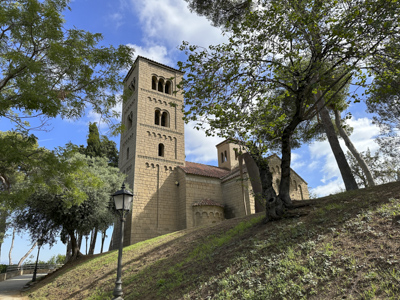
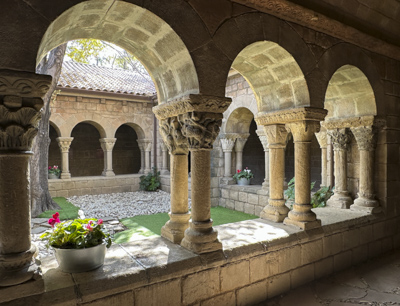
Overlooking Barcelona, was the Romanesque Monastery of Sant Miguel with a bell tower and lovely cloister representing the architecture of Catalunya and the Mediterranean region of Spain.
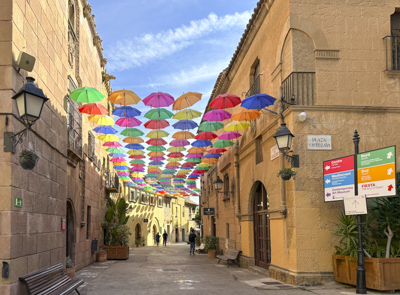
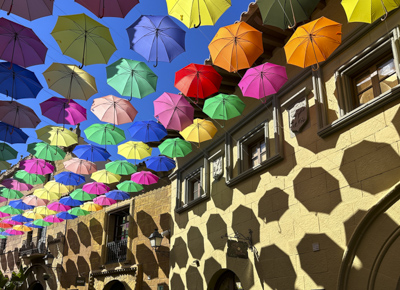
Colorful umbrellas lined the main entrance to Poblé Espanyol:
The ship left Barcelona relatively early to cruise across the magnificent Mediterranean Sea and arrive in the French city of Saint-Tropez.
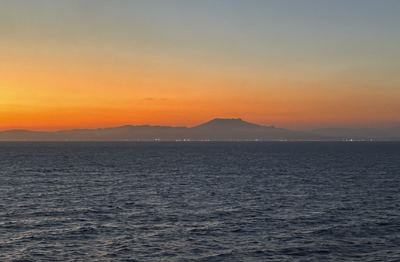
Friday September 29 – Saint-Tropez, France: The Norwegian Gem arrived in the Gulf of St-Tropez and dropped anchor in the gorgeous blue water of the Mediterranean. We rode in a tender into town.
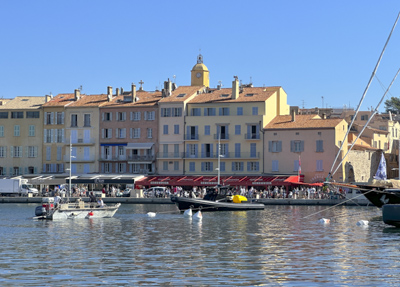
Saint-Tropez Harbor
Saint-Tropez is a coastal town on the French Riviera that became famous due to Brigitte Bardot movies and the international “jet set” of the 1960s.
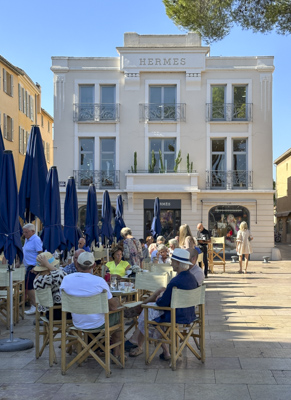
Morning Café Before Shopping
Today, the port has more luxury yachts than fishing boats and the Vieux Port (Old Town) is full of international designer boutiques and haute couture shops.
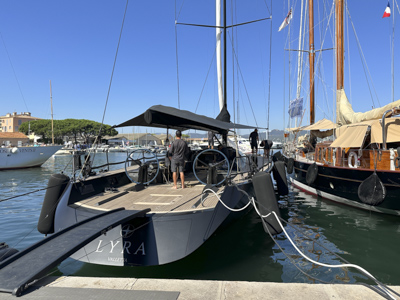
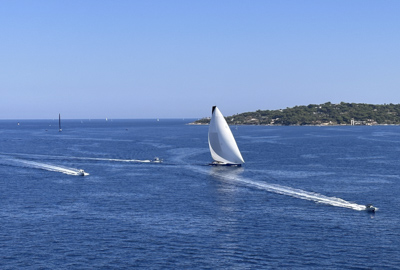
Racing Yacht Lyra
By chance, we arrived on the first day of their annual Les Voiles de Saint-Tropez – a sailing regatta for Maxi, Modern, and Classic yachts from around the world. They expected 250 yachts this year.
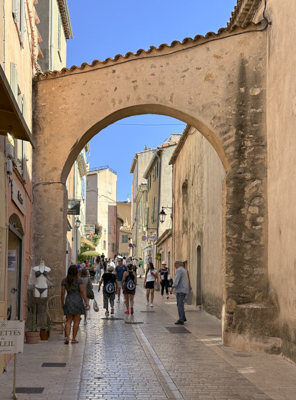
Back Street in St. Tropez
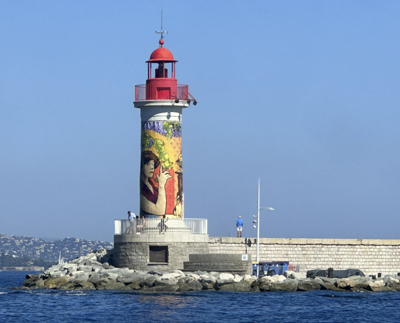
Harbor Lighthouse
After we walked around the town for a couple of hours, we took the tender back to the ship. We found comfortable chairs on deck and watched the regatta yachts sail around offshore.
Pre-Race Trial
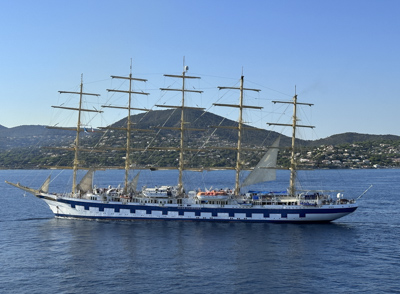
The Sea Cloud
Saturday September 30 – La Spezia, Italy: The Norwegian Gem left St. Tropez and traveled south to the commercial port city of La Spezia, Italy. We had signed up for boat trip to take us to see the Cinque Terra villages from the sea.
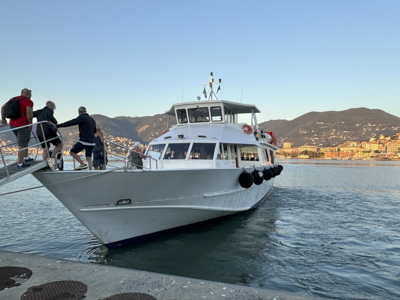
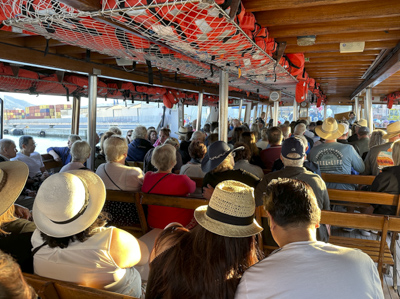
Tourist Boat
Cruising the Gulf of Genoa
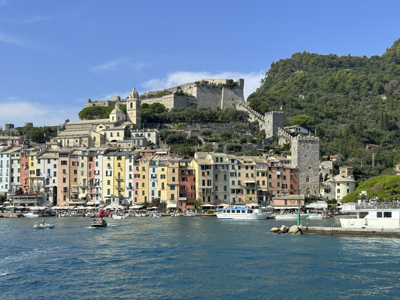
With about 200 other cruise-ship passengers, we motored along the shore to a lovely Italian town called Porto Venere.
Porto Venere, Italy
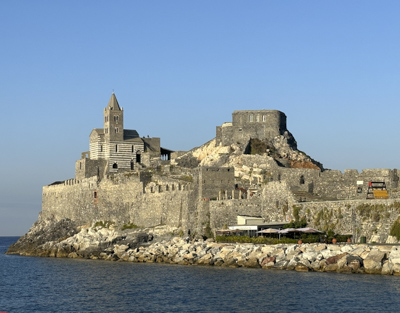
The boat rounded the peninsula on which stands la Chiesa di San Pietro. The church was consecrated in 1198 and restored in 1935.
Chiesa di San Pietro in Portovenere
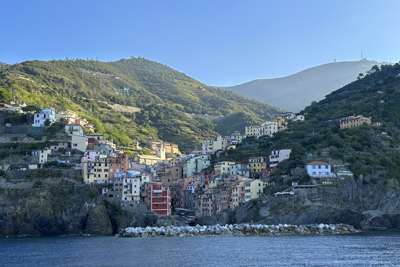
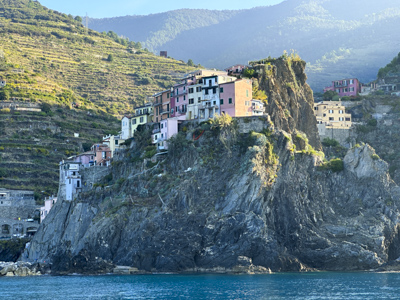
We passed several small towns built on the steep hills along the shore. We could not imagine how the houses had been built on sheer vertical cliffs. The towns looked lovely and the views were incredible.
Riomaggiore, Italy
Monterosso al Mare, Italy
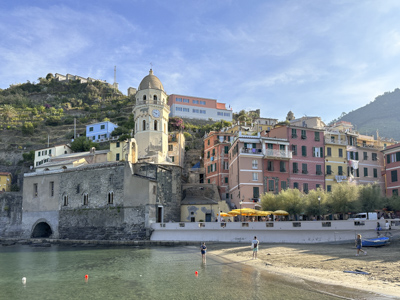
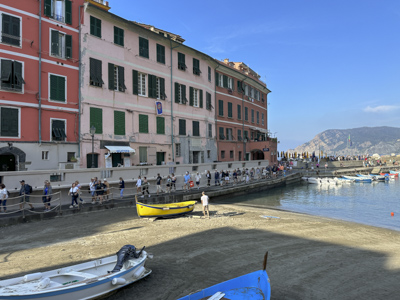
Our tourist boat pulled into the tiny harbor of Vernazza and we went ashore to see the little town.
Chiesa San Margherita in Vernazza, Italy
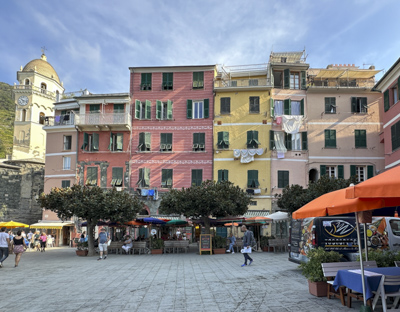
Square in Vernazza
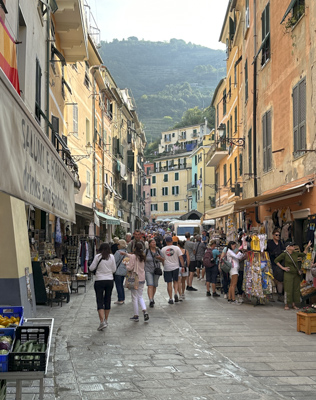
We had always wanted to see the five tiny towns known as Cinque Terre, so we were excited to visit at least one of them. There was just one narrow street leading up hill from the shore, under railroad tracks, and essentially ending at small houses and a vineyard.
The Main (and only street) in Vernazza
Vernazza was incredibly overcrowded with tourists and we could not image what Vernazza and the other Cinque Terre towns must be like during the summer tourist-season.
Sunday October 1 – Port of Civitavecchia: The ship arrived early at the dock in the city of Civitavecchia which is the port for Rome, Italy. Our plan was to fly directly home on the day we arrived.
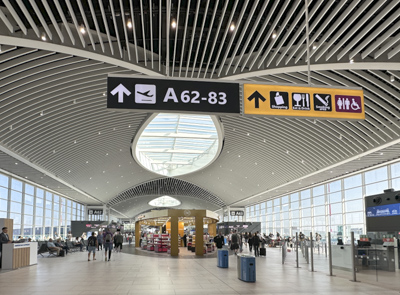
Rome’s Leonardo da Vinci – Fiumicino Airport
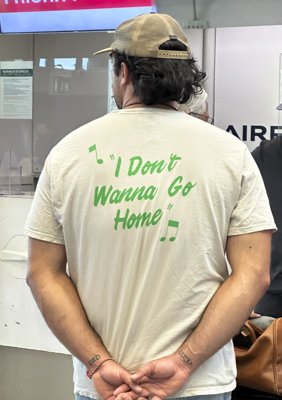
A bus drove us from the ship to Rome’s beautiful modern airport in about an hour. As we were waiting on a security line, I saw the man in the photo below. I thought his shirt expressed my feelings exactly…
July 20th, 2023 . Posted in Family, France | Comments Off on French Connection 2: Marseille
Saturday, June 3 – June 20, 2023
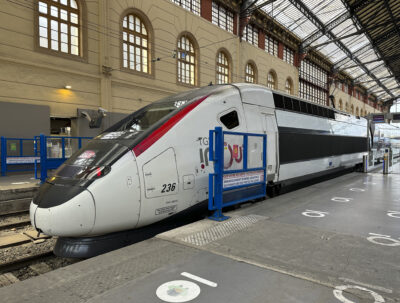
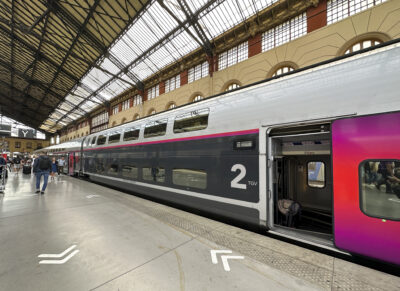
The French TGV – High Speed Train 2N2
June 3rd was another travel day for me, from Lyon to Marseille on the TGV. This is the famous Train a Grande Vitesse or “high-speed train” operated by France’s national rail service. With speeds up to 186-mph, it whisks passengers from Lyon to Marseille in just one hour & 46 minutes.
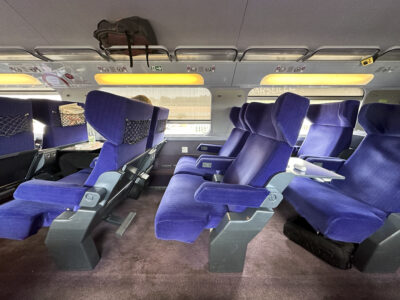
Interior of the TGV 2N2TGV Double-Decker
I just happened to have booked on SNCF’s newest train – the Euroduplex aka TGV 2N2. This is the French railway’s high-speed double-decker model. Of course, I sat on the upper level. Great fun!
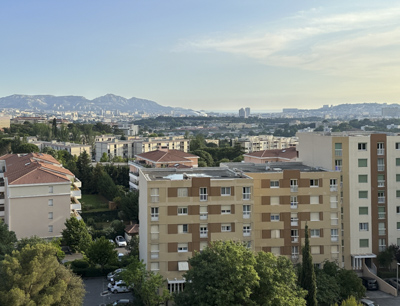
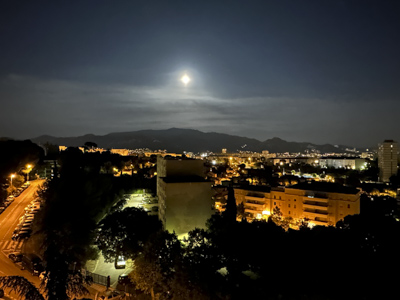
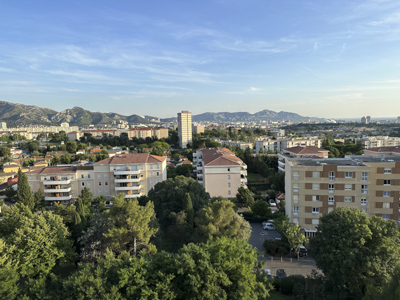
View of Marseille From Nicole’s Balcony
My cousin, Nicole and her husband Tony, met me at Gare de Marseille-Saint-Charles. The plan was to spend two glorious weeks with them in the south of France. They live on the 8th floor of a high-rise apartment building with a fabulous view of Marseille all the way to the Mediterranean Sea. I had an unforgettable time with Nicole and Tony and their extended family. Highlights are below:
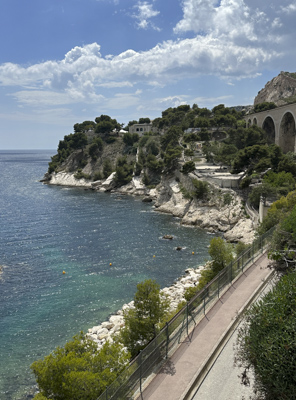
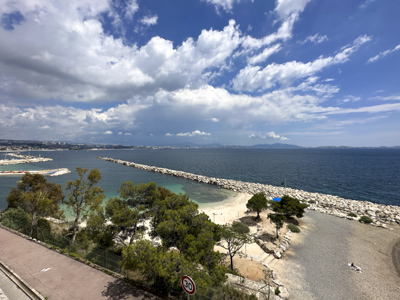
La Corniche
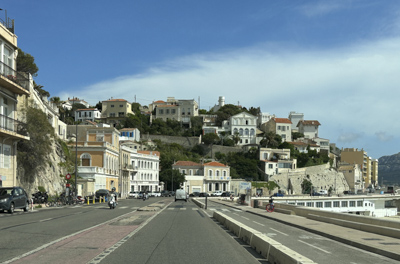
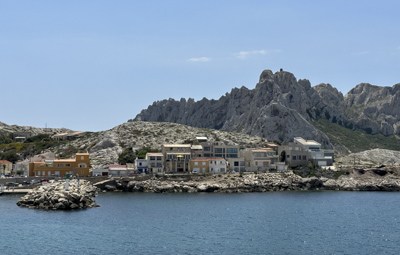
La Corniche is the road that runs along the Mediterranean Sea from the Vieux Port (old harbor) in the center of Marseille out to a string of beaches and finally ends at Les Calanques National Park. The views are spectacular. Good seafood restaurants line the road, as well as beautiful seaside houses.
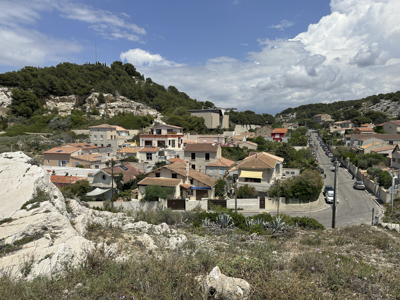
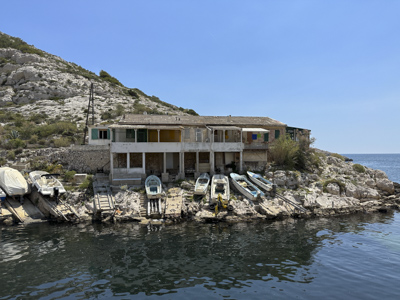
We passed villas on the Mediterranean and tiny towns with seasonal beach-houses and old fisherman’s shacks.
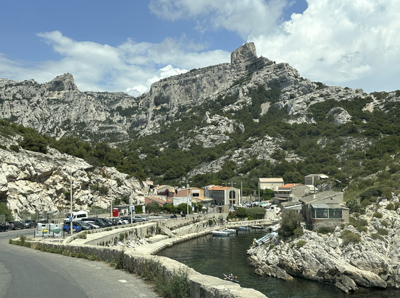
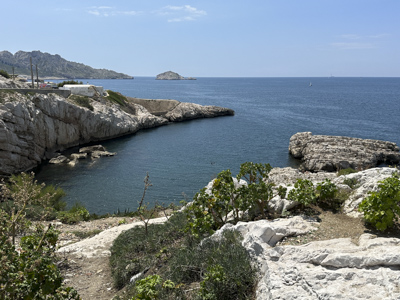
Les Calanques
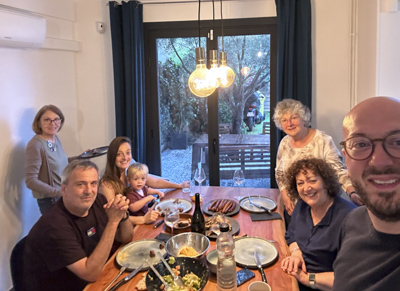
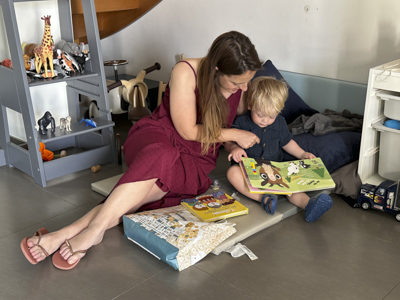
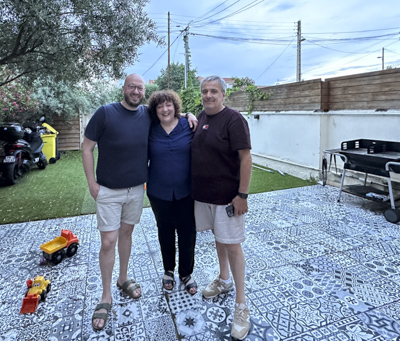
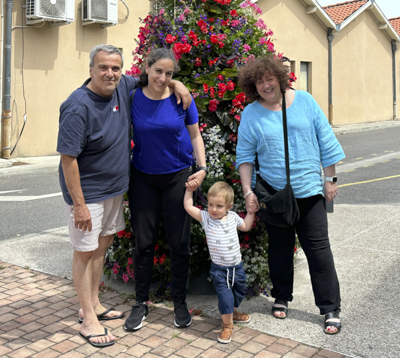
Dinner one night was with Nicole & Tony’s son: Antony and Sara and their adorable almost 2-year old son, Matys.
Cousin’s Party
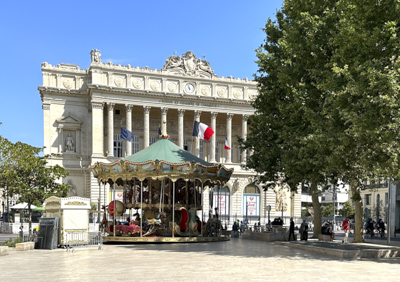
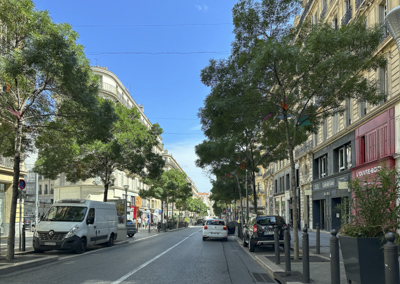
Marseille is the second largest city in France, with a population of about 6.2 million people. Founded by Greek settlers in 600 BC, Marseille has been a melting pot of people since its ancient beginnings.
Bourse et Chambre de Commerce
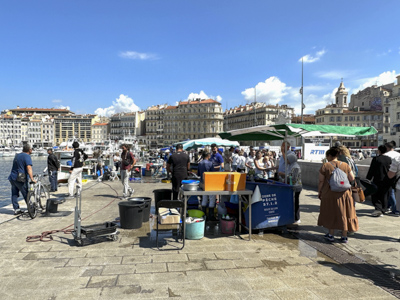
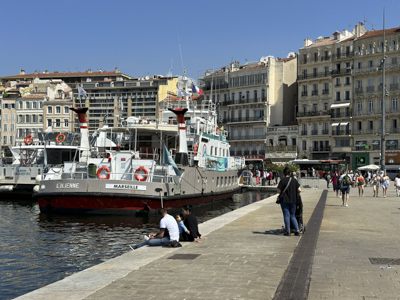
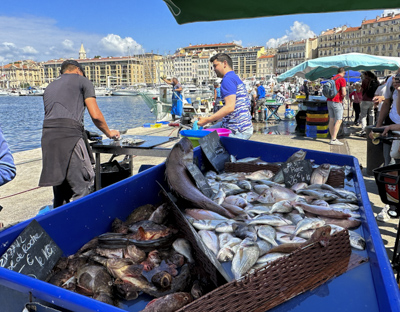
One of the best experiences in Marseille is the outdoor Fish Market, le Marche de la Peche. It’s held every morning on the dock in the Vieux Port. The intense smell of fish, salty sea breezes, and the sounds of fishermen’s wives hawking the day’s catch is lots of fun.
Marche aux Poissons
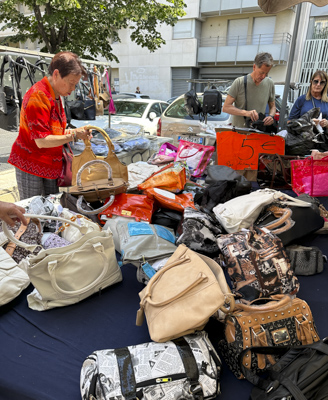
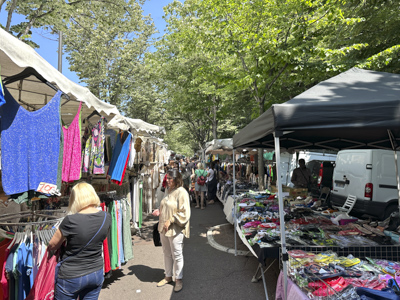
French “Open-Air Markets” are wonderful! They sell absolutely everything from fresh produce & anything edible to clothes & shoes for everyone to home goods. This one was along Avenue du Prado.
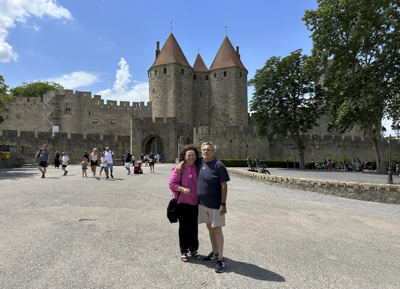
I went with Nicole and Tony, on a 4-hour road trip to visit their daughter, Aurelie and her family, who live in Plaisance-du-Touch, near Toulouse. On the way, we stopped at the medieval hilltop town of Carcassonne.
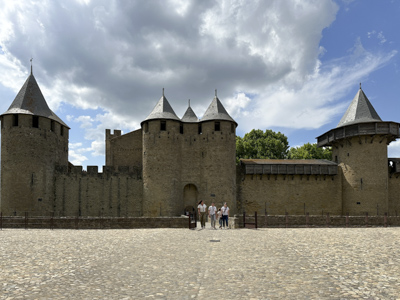
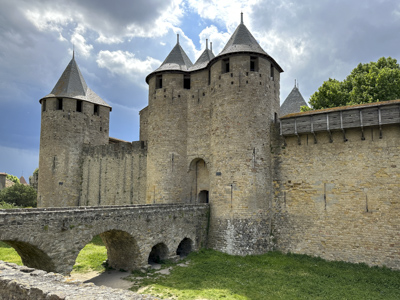
Entrance Into Carcassonne
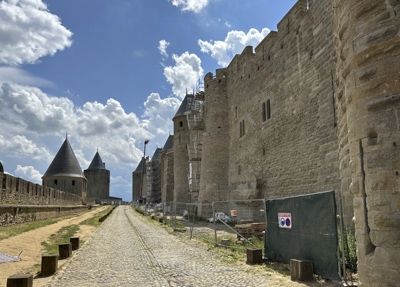
Carcassonne is a double-walled fortified medieval city, first settled about 3500 BC. The inner wall was first begun during the Roman Empire from the 3rd and 4th centuries. The outer wall was constructed during the 13th century. The entire town is a UNESCO World Heritage Site.
View of Towers and Space Between Walls
Inside the walls is a village complete with houses, shops, narrow streets, and the Chateau Comtal castle built about 1130.
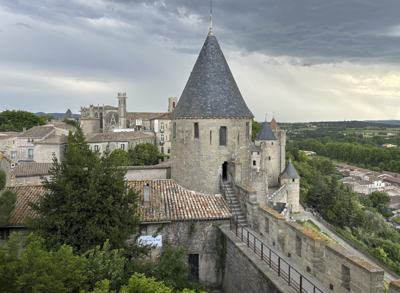
We took a self-guided tour of the castle, which was a lot of fun. We climbed up and down the staircases within several towers, and walked across the top of the ramparts connecting them. It was a glimpse into medieval life.
View From a Tower
The narrow streets were crowded with tourists when we arrived. We walked around and looked in at some of the shops. By the time we left, it was raining and the medieval streets were empty of people.
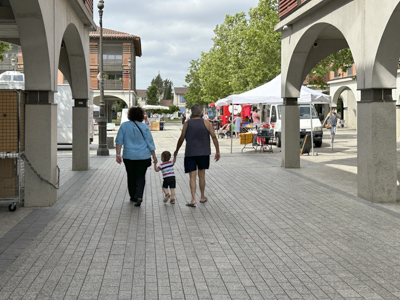
We stayed at Aurelie and Vincent’s house for several days and played with their adorable son, Louis. Plaisance-du-Touch, a lovely town named after the Touch River, is a suburb of Toulouse.
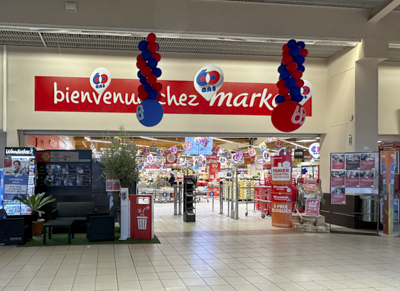
Indoor and outdoor shopping is always fun in France. The modern supermarket was inside an air-conditioned mall and was bright and festively decorated with balloons and streamers.
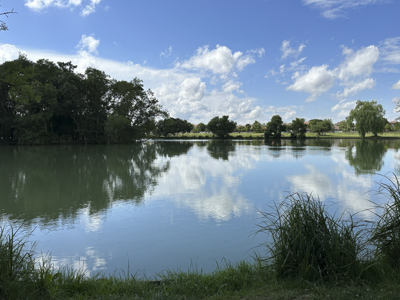
We walked around the town lake which had a jogging path, picnic areas, athletic fields, and a restaurant at one end that has live music on weekends.
Lac Francois Soula
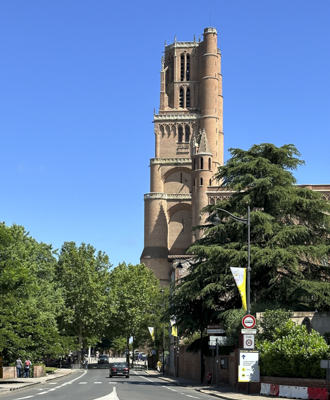
We drove to the beautiful historic city of Albi, about an hour northeast of Toulouse. Albi is famous for its 13th century cathedral and is the birthplace of the painter Henri de Toulouse-Lautrec.
Sainte-Cecile Cathedral
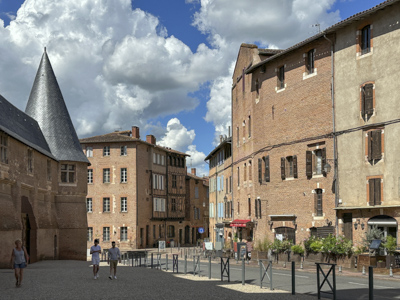
The medieval city and the cathedral are UNESCO World Heritage Sites.
Medieval Street in Albi
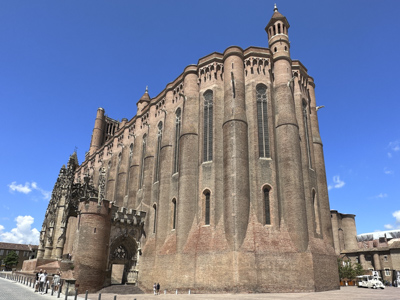
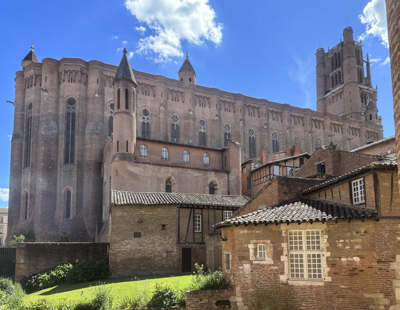
Sainte Cecile Cathedral is a “masterpiece of southern French Gothic style.” The gigantic structure was built from 1282 to 1480 entirely of bricks. It is one of the largest brick buildings in the world.
Another View of St. Cecile’s
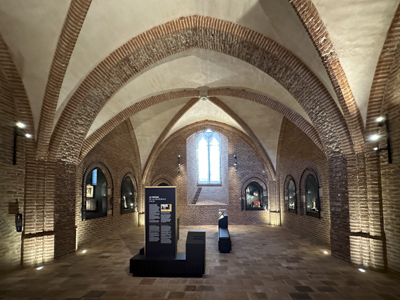
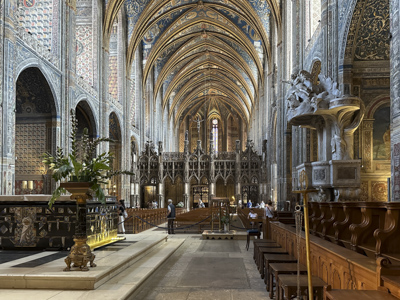
We had a tasty regional lunch at a cafe looking across from the cathedral. We entered the church and took a self-guided tour. We saw the room with religious artifacts and treasures, the chapel, the large choir area behind the Rood Screen, and the highly decorated sanctuary.
The elaborate colorful interior of the cathedral is in stark contrast to its stark red brick exterior.
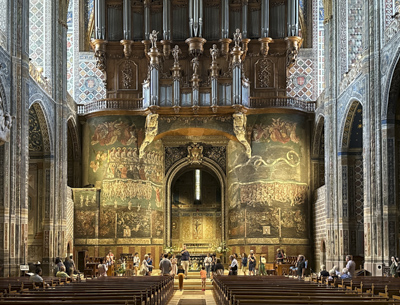
Interior View of the AltarThe Rood Screen
A vast painting of the Last Judgement fills the entire front of the church. A Rood Screen divides the central area of the cathedral and is one of the few remaining Rood Screens in the world. The area behind the screen is reserved for members of the clergy and the choir.
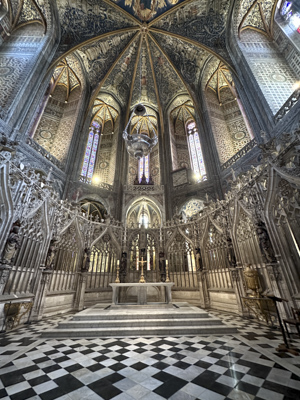
Chapel Behind the Rood Screen
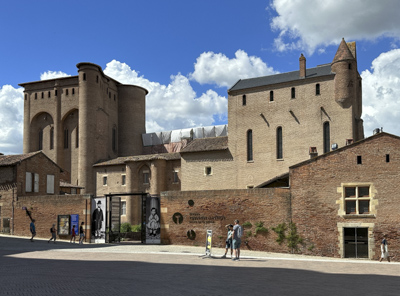
Next to Albi Cathedral is Le Musee Toulouse-Lautrec which was the 13th century Bishop’s Palace.
Musee Toulouse-Lautrec
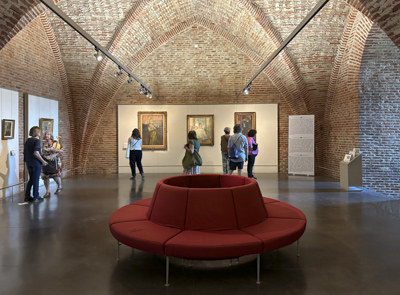
The museum owns over a thousand works by the French painter. They were donated to the city of Albi by his mother in 1922. The collection includes many paintings, lithographs, drawings, and posters.
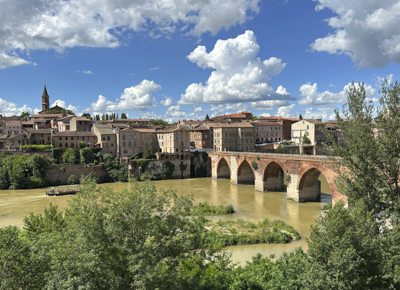
The old bridge across the River Tarn in Albi was originally built in 1035 and is still in use today.
Le Vieux Pont – Old Bridge
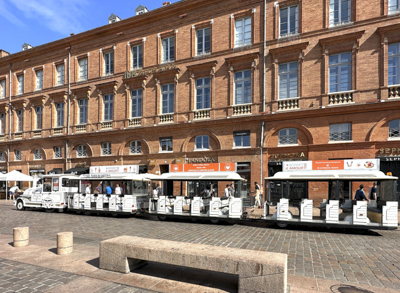
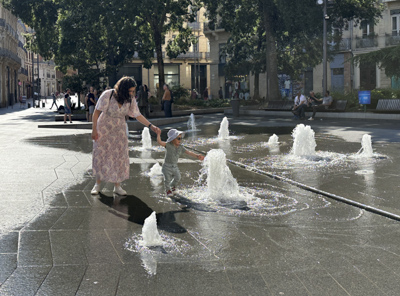
Toulouse is the 4th largest city in France, with a population of over one million people, and is the capital of the southern Occitanie region. We took a fun ride around the Old Town on a little tourist train.
Tourist Tram
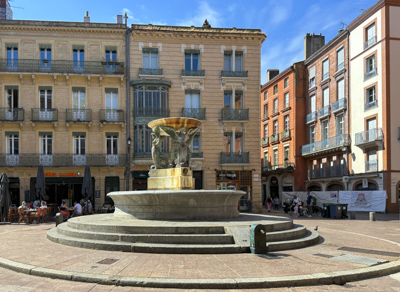
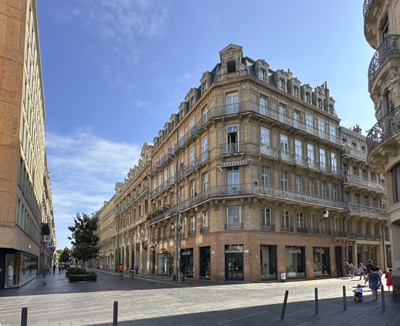
Toulouse is known as “La Ville Rose” – The Pink City because of the color of the terra-cotta bricks used in construction of many of its buildings. The city is the European capital of space industry and exploration and it is home to the world’s largest airline manufacturer, Airbus.
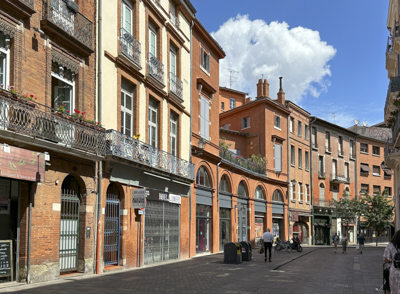
Old Town Street
Toulouse is classified as a “City of Art and History” because of its rich architectural heritage of Romanesque, Gothic, and Renaissance buildings.
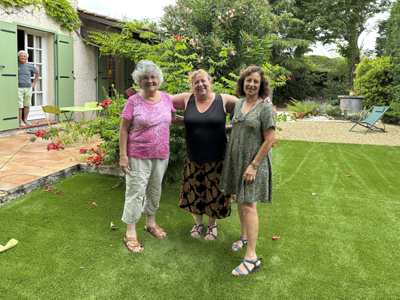
Aurelie and Louis
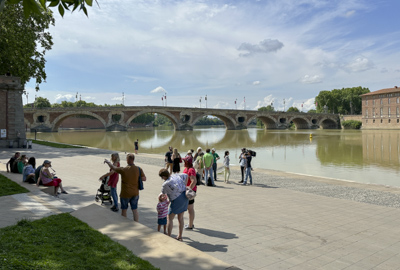
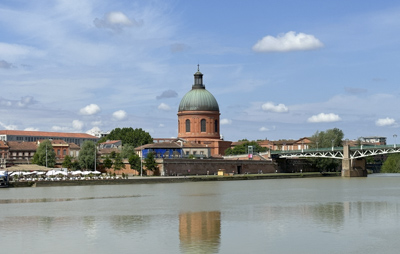
The Garonne River runs through the center of the city. The Hotel-Dieu Saint-Jacques and the Hopital de La Grave helped plague victims during the 12th century and are UNESCO World Heritage Sites.
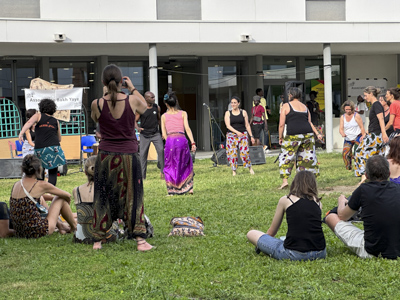
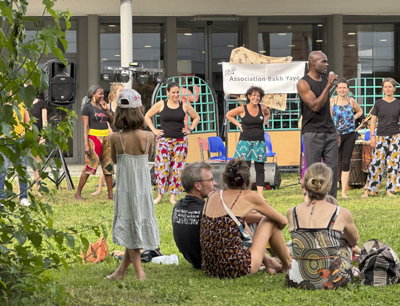
One evening we all went to an outdoor African music and dance festival. There was African food and vendors selling crafts and clothing. Families picnicked on the grass and it was lots of fun. Aurelie takes African dance lessons and we watched her group’s performance.
Here are a couple of photos of the ever-changing amazing view from Nicole’s Marseille balcony!
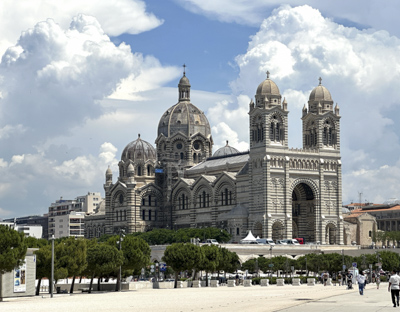
One day, Nichole and I went to the Old Port in Marseille. We saw the impressive Cathedrale La Major, whose foundation stone was installed by Napoleon III in 1852.
Cathedrale La Major
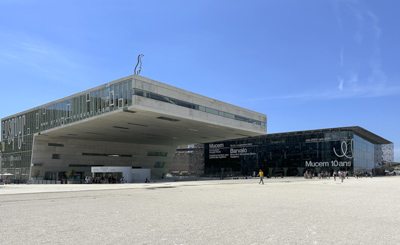
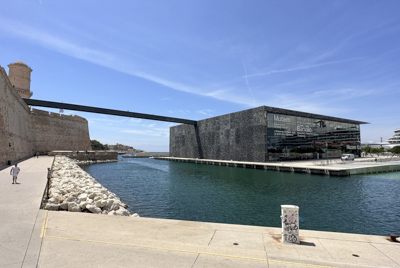
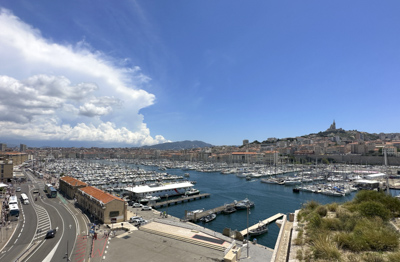
We walked past the modern Cosquer museum to the MuCEM – the Museum of Civilizations of Europe and the Mediterranean. We took the elevator to the roof where the views are spectacular!
Cosquer Mediterranee and MuCEM
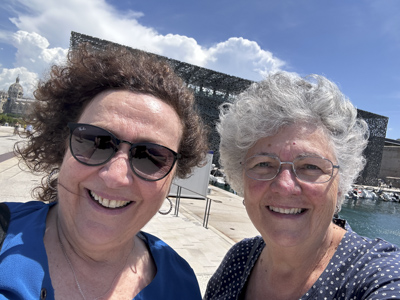
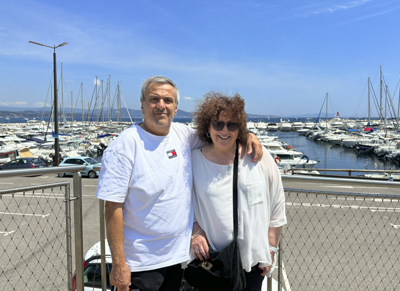
It was a gorgeous day!! We took a “selfie” and admired the beautiful Marseille harbor.
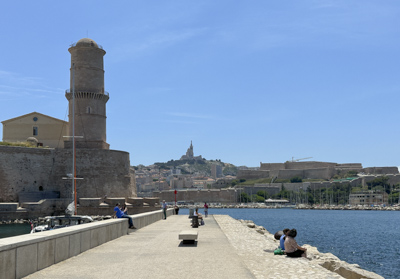
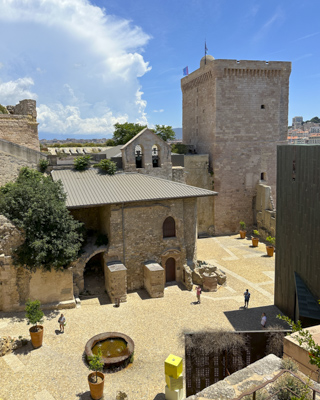
From the roof of the modern MuCEM we walked across the bridge which connected the MuCEM to Fort Saint-Jean. The historic fort is part of the museum.
Fort Saint-Jean was built in 1660 by Louis XIV at the entrance to the Old Port to guard the harbor.
Fort Saint-Jean
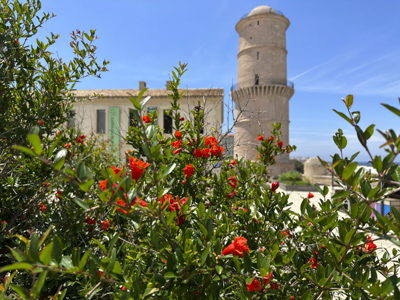
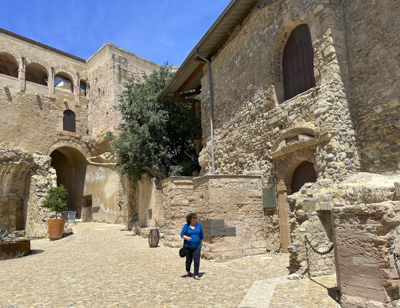
We explored the fort and enjoyed amazing views of the harbor and the Mediterranean Sea. The fort was used during the French Revolution and much later, occupied by the German military during WWII.
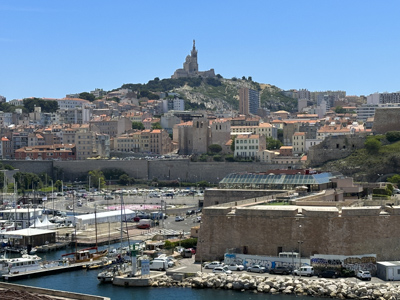
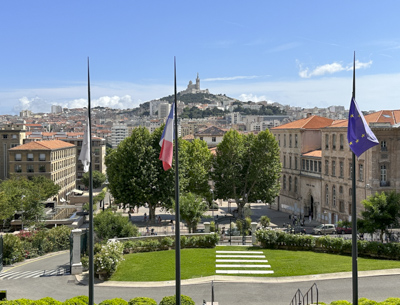
The Vieux Port with Notre-Dame de la Garde on the hill:
Nicole drove up to the Hotel Dieu Intercontinental so we could see recent renovations. The building had been Marseille’s main hospital since 1593 and Nicole’s mother had used the hospital decades earlier. The valet let us park in front and allowed us to tour the public areas of the 5-star hotel.
Another day, Nicole and I drove to L’Estaque, along the northern shore of Marseille. It was an area where Armenian immigrants settled after WWI, after the genocide, when survivors were deported from Turkey. Workers from the factories and shipyards of Marseille lived in L’Estaque.
Coastal Road Along the L’Estaque District
Les Plages de Corbieres
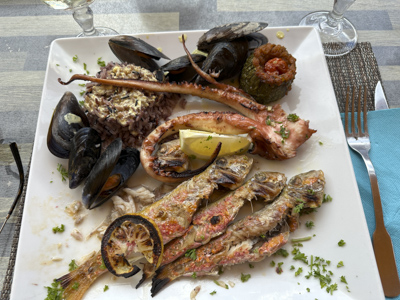
Nicole and I had lunch at a wonderful seafood restaurant called L’Hippocampe (the Seahorse), which was located right on the shore. Lunch was incredibly fresh fish! So much fun!
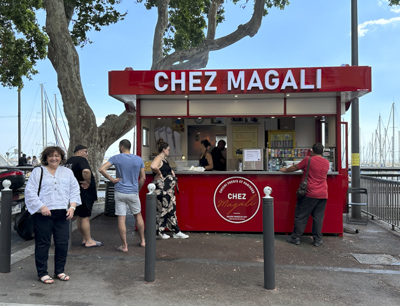
Then we explored the fishing port of L’Estaque. There are only a handful of stands left, like Chez Magali, which sell Marseille’s original street food: “chichi fregis” long fried dough fritters topped with chocolate syrup.
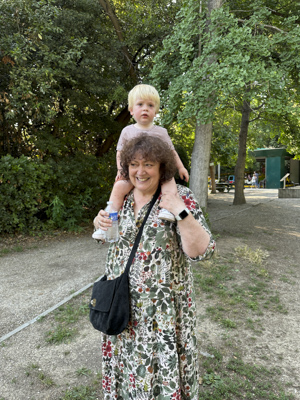
One afternoon, we picked up Matys from his primary school and took him to the park:
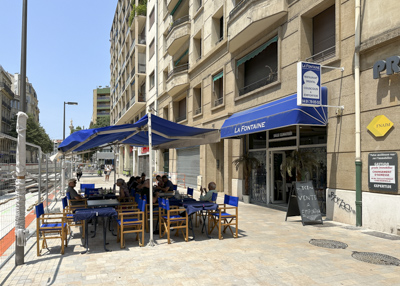
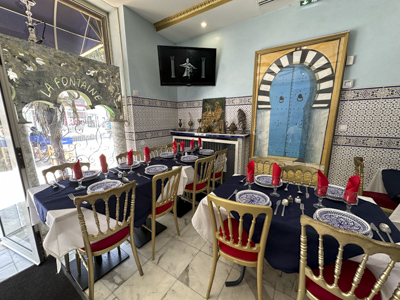
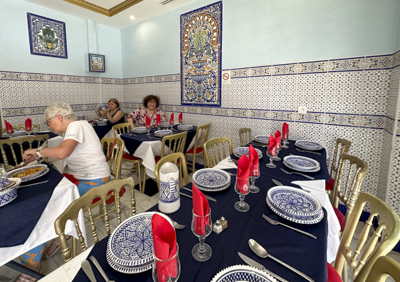
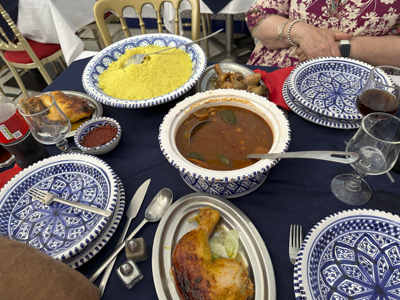
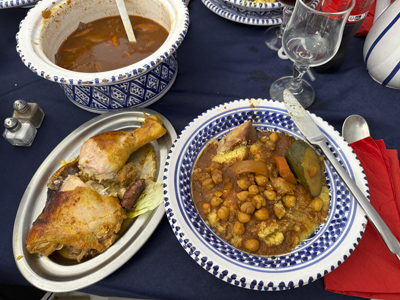
One Sunday, we went shopping in Marseille and had a wonderful lunch at a Tunisian restaurant called La Fontaine. The decor was traditional and the food was hearty and very delicious.
La Fontaine – Tunisian Restaurant
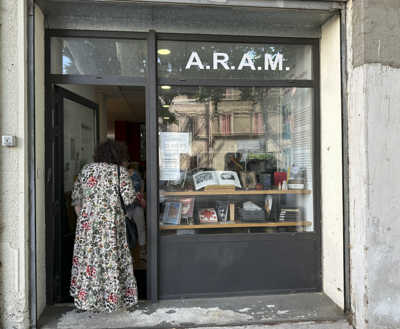
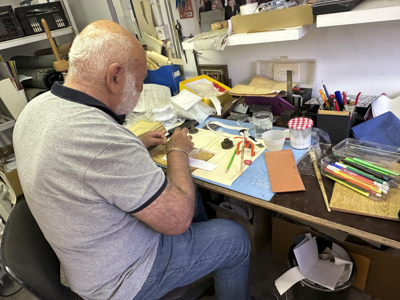
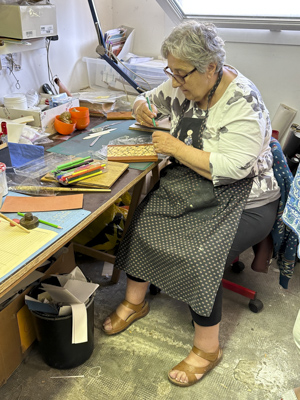
The Association for the Research and the Archiving of Armenian Memory (ARAM) is an organization of volunteers who collect and archive artifacts relating to Armenians who settled in Marseille. Their objective is to safeguard as many documents as possible to preserve the history and culture of the Armenian diaspora in France.
ARAM’s artifacts are available to researchers and historians. Volunteers were rebinding old Armenian books and manuscripts when we visited.
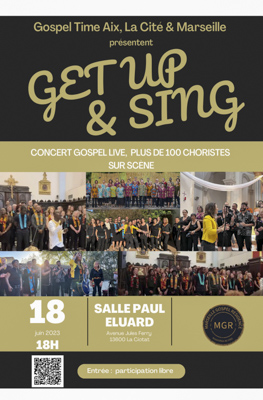
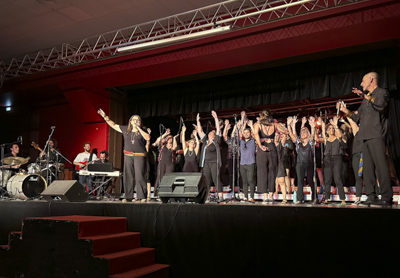
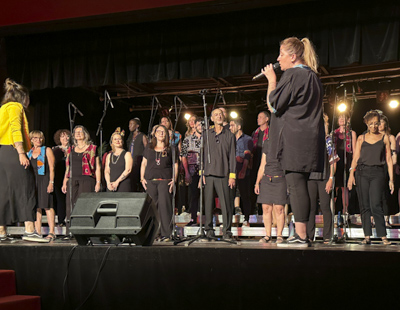
Nicole is an active member of a Gospel singing group in Marseille. They had a performance on Sunday, June 18th in the town of La Ciotat. Nicole’s group joined with another Gospel group from Aix-en-Provence. Below is a photo of the flyer for the event:
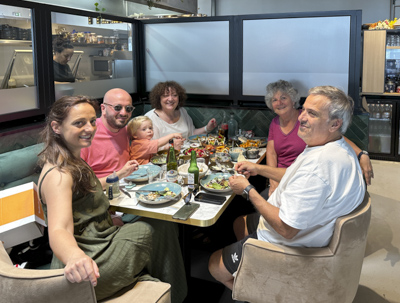
June 18th was also Father’s Day in France so Tony, Sara, and Matys joined us in La Ciotat at a Lebanese restaurant to celebrate.
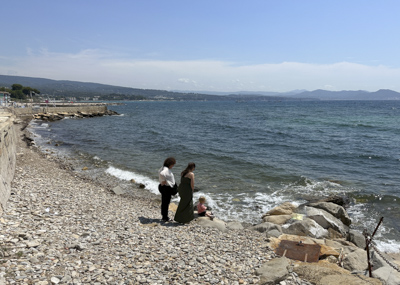
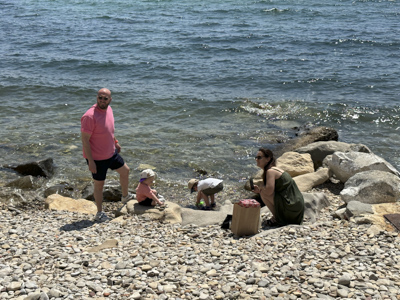
It was a beautiful day with a nice breeze so Matys wanted to throw rocks into the Mediterranean.
The Gospel performances were amazing! Most of the songs were in English. The two groups joined together at the end of the show and over 100 voices sang together for a rousing finale! Fantastic!!!
Monday June 19th was my last day in France. My cousin, Francoise, came over for lunch and we visited another cousin on the other side of Marseille.
It was a beautiful sunny day in Marseille on June 20th – Nicole and Tony drove me to Marignane Aeroport. I am forever grateful to my wonderful cousins. They are kind, loving, generous, wonderful people. Thank you, Nicole and Tony…..
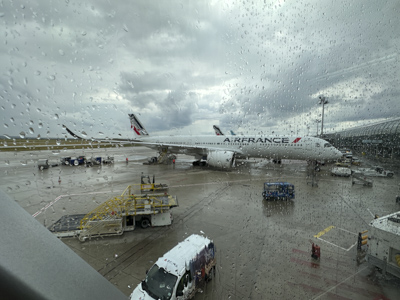
Our running joke is that it rains a lot in Paris! Sure enough, when I changed planes at Charles de Gaulle Airport, it was raining in Paris….