Two December 8ths/Crossing the International Date Line

December 8th, 2018

The First Saturday –  December 8, 2018 – Apia, Western Samoa

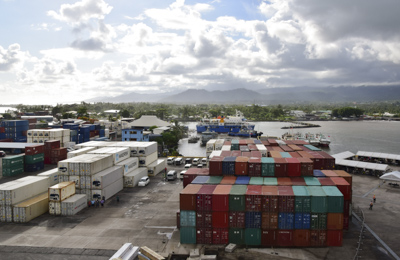
Apia, the capital of Samoa, is on the western side of the International Date Line so when we cross the imaginary line tonight, we’ll have another December 8th.  The Amsterdam was at the dock early in the morning and passengers were getting off by eight o’clock.  Jeff and I commented that we still felt the ship rolling although it was tied to the pier.
DSC 4555

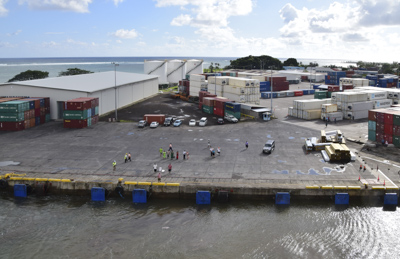
Half an hour later, Captain Eversen’s voice came over the ship’s loudspeaker telling us that a strong wind was pushing the ship off the dock.  For safety reasons, he said the ship had to leave the pier immediately.  There were about fifty passengers still on land and tenders would pick them up and bring them to the ship.  We watched from the balcony as the ship’s thrusters were engaged and the ship slowly moved sideways.
DSC 4558

The Amsterdam crept away from the dock and motored into the bay and then we sat there all morning waiting for marooned passengers.  We learned later that two of the lines on the dock had snapped before we pulled away.
DSC 4559

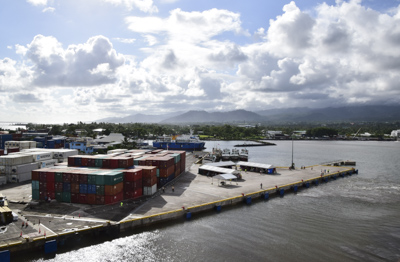
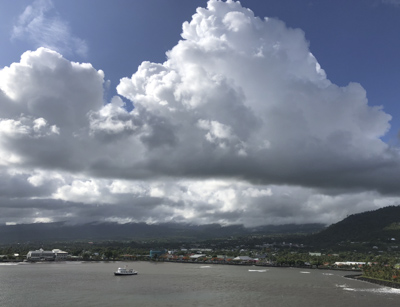
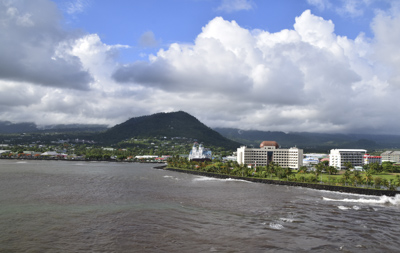
As the ship waited in the harbor, I went on the top deck and took a few pictures of Apia.  I was a little disappointed that I couldn’t explore Apia, but relieved that we weren’t stranded on the island.
IMG E9580

DSC 4562

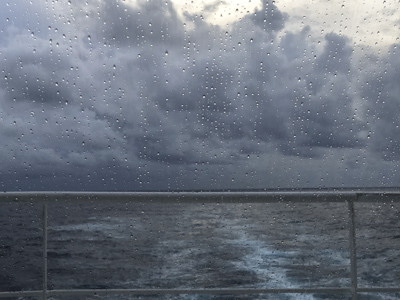
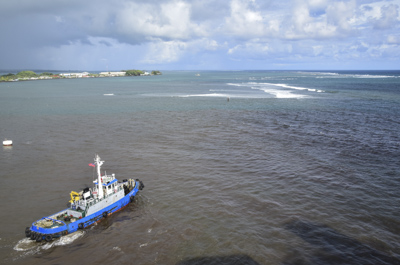
After several hours, a tugboat appeared and guided the ship out through the narrow inlet.  It wasn’t a deep water port like Pago Pago and the reef was very close to the channel.  Captain Eversen said we would take a “scenic route” around the big Samoan island and arrive at Pago Pago, American Samoa early “tomorrow” – our second December 8th.
DSC 4574

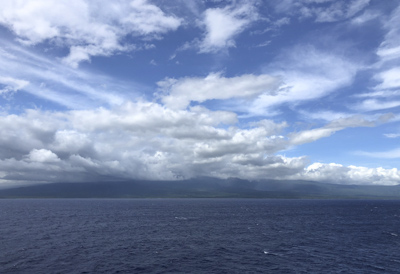
The weather was hot and sticky and very windy; rain clouds gathered on the horizon all day.  Later there was a heavy tropical downpour.
IMG 9594

IMG 9575

The Second Saturday – December 8, 2018  Pago Pago, American Samoa

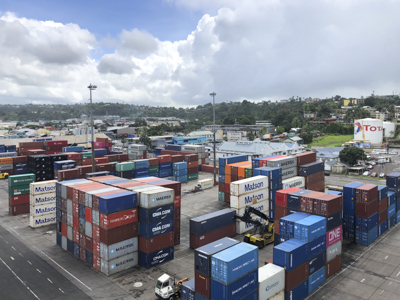
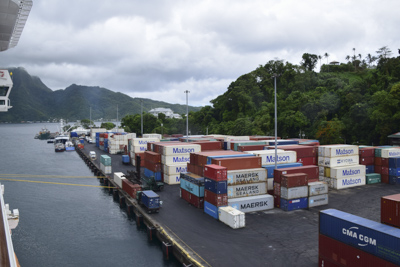
By early morning the Amsterdam arrived in the capital city.  By the way, it’s pronounced “Pango Pango.”  The dock was lined with shipping containers and looked a lot like the last two ports.  Jeff went ashore in Pago Pago to do a little shopping.  He got back to the ship just in time to avoid a torrential downpour.
DSC 4581

IMG 9608

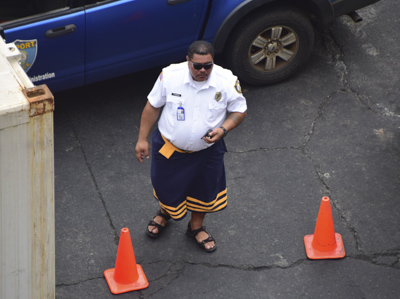
Polynesian men wear wrap “skirts” of different fabrics and colorful patterns.  The ’skirt’ was part of the uniform on the security guard in the photo below.
DSC 4583

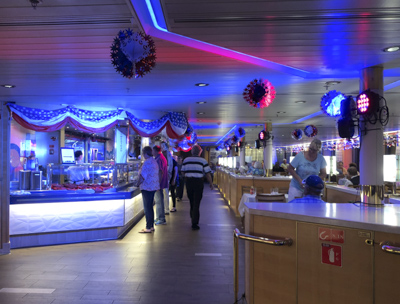
The dining rooms and Lido Buffet were decorated with red, white, and blue lights and streamers because American Samoa was the first American port we entered.  It looked like a Fourth of July celebration.
IMG 9634

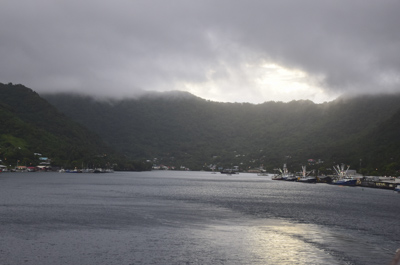
We left Pago Pago harbor in the evening as the sun set and rain clouds swept over the hills.  The port of Pago Pago is a very well protected deep water harbor.
DSC 4589

Having two December eights was weird, but might be fun if it was your birthday and you could have two birthdays!  The ship cruised out into the vast South Pacific Ocean.  We had five sea days ahead of us to reach the Hawaiian Islands.  So we hunkered down and hoped for calm seas and lots of shipboard activities.
Suva, Viti Levu, Fiji

December 6th, 2018

Thursday – December 6, 2018

“Bula! Bula!” Means “Hello” in Fijian.  The full greeting is “Bula, Venaka!” Literally “Hello, Thank you” but serves as a warm welcome.

IMG 9549

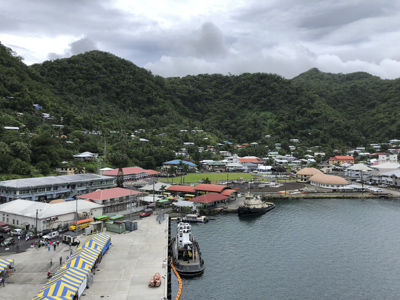
Here’s the view of Suva, Fiji from our balcony. It looked like more like a commercial port, not the tropical paradise that the word “Fiji” conjured in my imagination.  Suva is the capital of the Republic of Fiji and biggest city on the island of Viti Levu.

IMG 9543

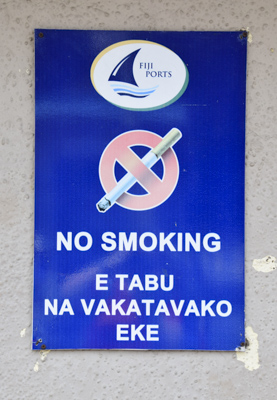
Jeff and I went ashore and I saw a No Smoking sign which included the local “Pidgin” language widely used all across the South Pacific Islands.  “E Tabu” means ‘it’s forbidden’ – taboo.  “Na” means no.  “Vaka” as in vapor/smoke.  “Tavako” is ‘tobacco’.  “Eke” means here.  Loose translation: “It’s taboo – No smoking tobacco – Here”

DSC 4448

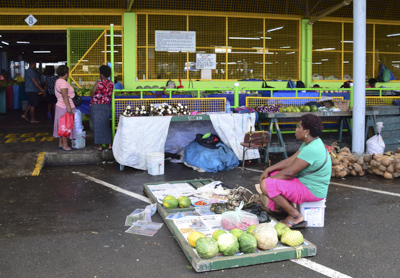
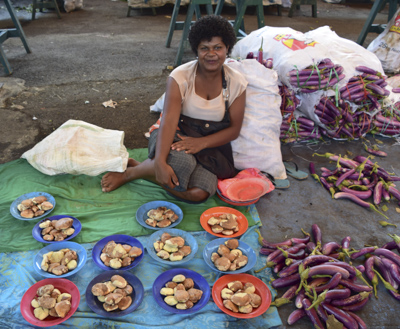
We crossed the street and went toward a sprawling covered market.  Several people had mats spread out on the ground outside the building.  They were selling peanuts, eggplants, and a variety of root vegetables. The woman in the photo below had crabs tied together with a strip of a palm leaf.
DSC 4451

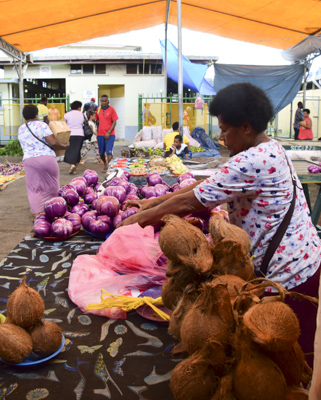
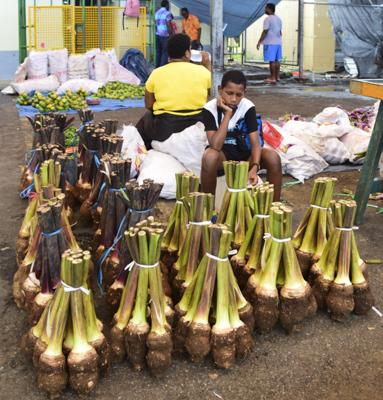
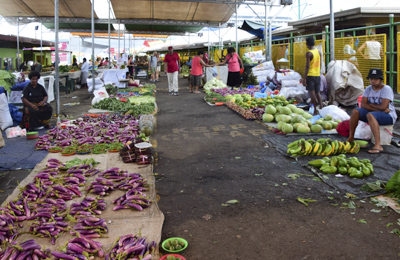
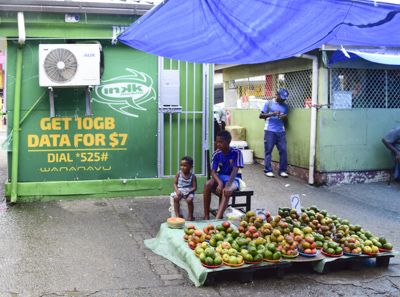
Inside the vast market building there were about a hundred vendors selling taro, pineapples, coconuts, potatoes, eggplants, different kinds of bananas, mangos, papayas, beans, other fruits and vegetables which we didn’t recognize.

DSC 4464

DSC 4465

DSC 4468

DSC 4469

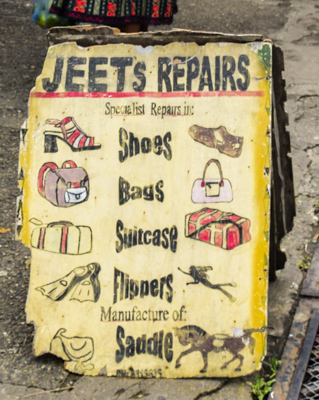
On the street outside the market there were more permanent stalls offering shoe and leather repair, cell phone services, and hot prepared foods.
DSC 4476

DSC 4479

DSC 4488

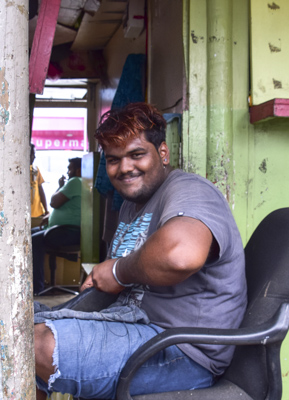
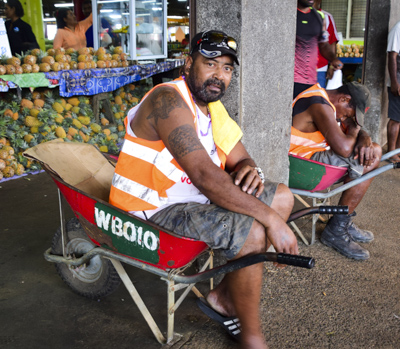
We had been warned about the “barrow men” who used wheelbarrows to deliver fruits and vegetables to the vendors.  They had a reputation for mowing down unsuspecting visitors in their haste to perform their jobs.  I saw two of the barrow men relaxing between deliveries and asked one of the men if I could take his picture.  He nodded gruffly.  When I showed him his photo, he beamed a wide smile and laughed heartily.  You never know what people are really like unless you communicate with them….
DSC 4489

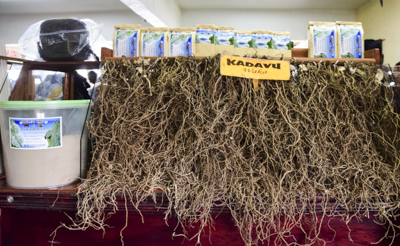
Jeff and I saw a sign which read “Grog Upstairs” and we discovered the second floor of the market where kava roots, tobacco, and Indian spices were sold.  We were told that the islanders drink kava especially during celebrations and special events.  My dictionary states that kava is “a narcotic sedative drink made in Polynesia from the crushed roots of a plant of the pepper family.”

DSC 4493

When I took the picture of the kava roots above, the woman who ran the booth came forward to talk to me.  She explained how the roots were dried and finely ground, then water is added to the powder.  The plastic container to the left of the roots held ground kava.  The woman’s assistant offered me a drink of kava, but I declined graciously, thinking about drinking the local water as well as the unknown effect of the kava.

DSC 4511

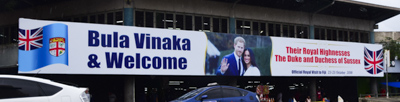
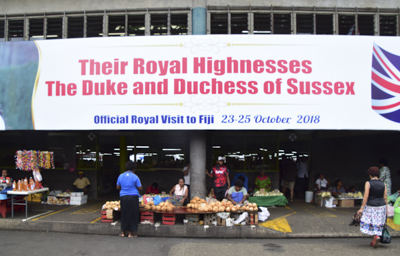
Outside on the street there was a large banner celebrating the recent visit of Prince Harry and Megan Markle.  They visited New Zealand and Australia as well as several other Polynesian islands.

DSC 4509

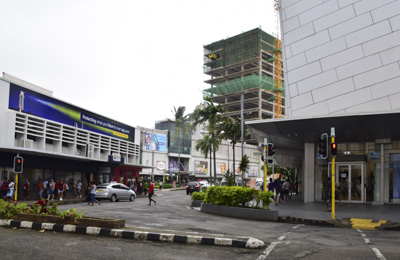
Here is a photo of one of the main intersections in Suva.

DSC 4513

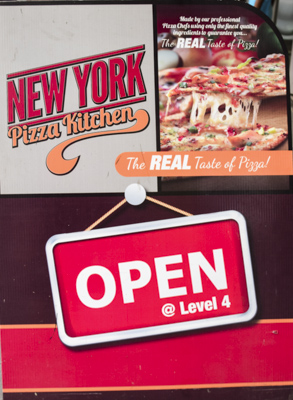
A few minutes later, there was a huge tropical downpour.  Fortunately, most of the sidewalks were covered and we ducked into the modern, air conditioned Tapoo department store to get out of the rain.  This sign directed us up to the 4th floor:

DSC 4519

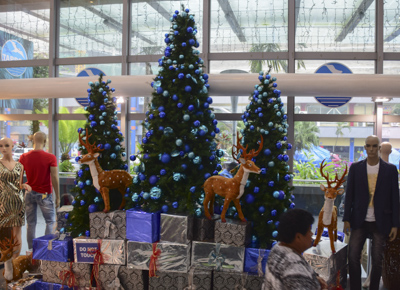
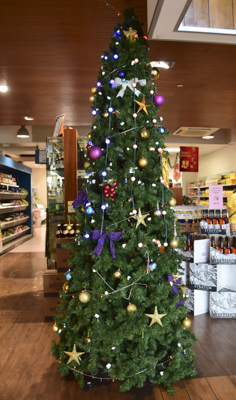
We didn’t want to have Fijian New York pizza but we sat at a table in the food court and had refreshing cold Pepsi Colas.  Did I mention it was 84 degrees with 93% humidity outside before it started to rain?  Christmas decorations in Tapoo:

DSC 4520

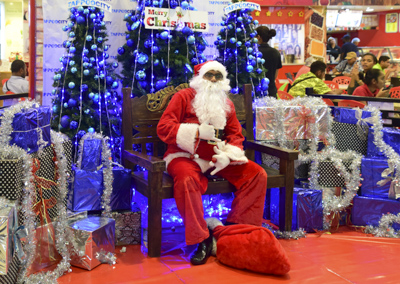
The food court included a young brown-skinned Santa who gave me the Hawaiian/Polynesian double-handed greeting.

DSC 4523

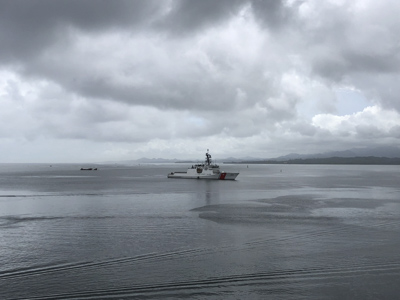
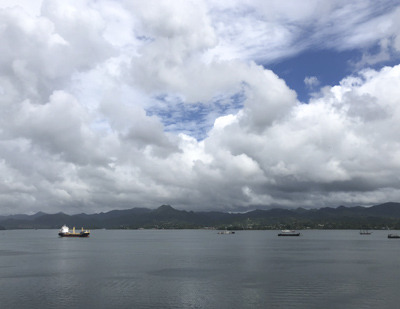
Later, we found the post office and I dropped some postcards into a slot labeled “Over Seas” so I hope my family gets them.  When we got back to the Amsterdam, there was a U.S. Coast Guard ship in the harbor and the light was interesting as gray clouds increased.

IMG 9553

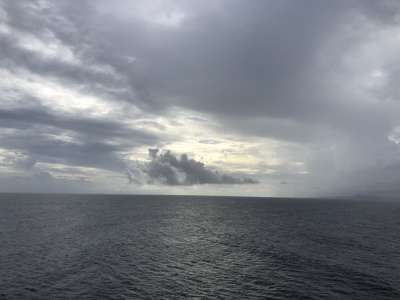
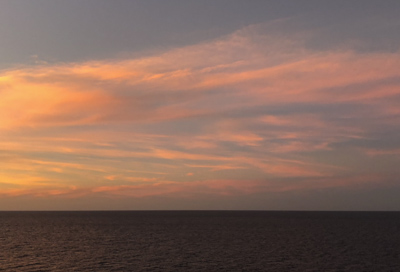
In the evening, the Amsterdam pushed away from the dock and we left the Port of Suva, Fiji.  More amazing cloud formations on the South Pacific Ocean:

IMG 9557

Port Denarau, Nadi, Fiji

December 5th, 2018

Wednesday – December 5, 2018

Bula! Bula!  That’s “Hello” in Fijian.

DSC 4390

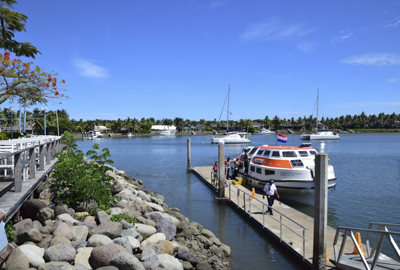
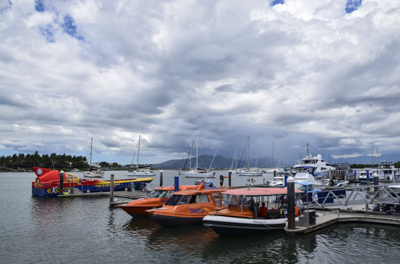
The Amsterdam anchored off the village of Nadi on the island of Viti Levu, in the Republic of the Fiji Islands.  The ship’s tender took us to the dock of the marina at Port Denarau.  The Fijian Dollar was worth only half of our American Dollars, so shopping was a good buy for us.

DSC 4391

Denarau Island was a former mangrove swamp on the west side of Viti Levu, which is the largest island of 330 islands in the Fiji archipelago.  Denarau Island has become Fiji’s five-star tourism enclave with seven international resorts, residential villas, and a championship golf course.  A tourist haven.

DSC 4401

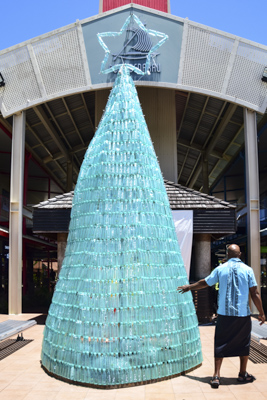
With 82 degree temperatures and 85% humidity, it sure didn’t feel like Christmas!  The “tree” in my photo below was made of plastic Fiji water bottles.  (Yes, some Fijian men wear wrap-around skirts.  Much cooler than pants!)

DSC 4404

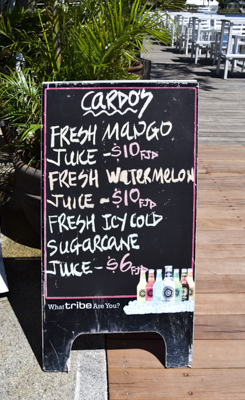
Unfortunately, we didn’t go off the island because transportation was limited.  We did a little shopping at the famous Jack’s of Fiji and had lunch overlooking the bay.  We watched a couple of men fishing with nets from shore.

DSC 4416

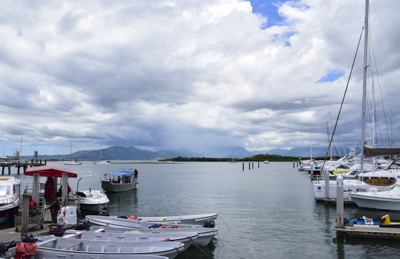
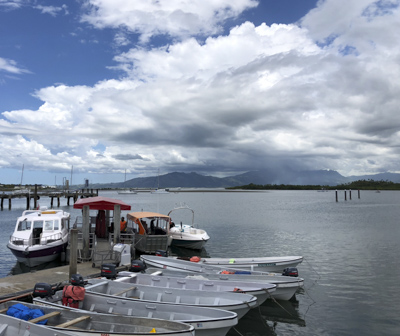
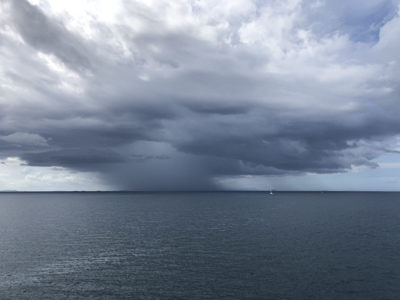
Huge clouds were gathering on the mountain across the harbor. I could smell the rain.

IMG 9525

As the clouds moved across the bay, we decided to return to the ship.

DSC 4423

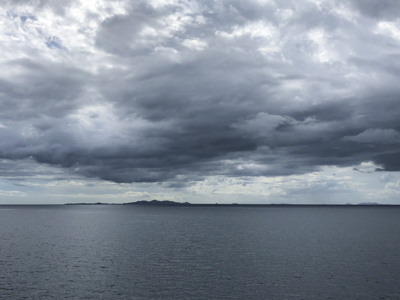
The cloud formations over the water were fascinating and I couldn’t stop myself from taking dramatic photos:

IMG 9531

IMG 9532

We got back to the ship just in time to watch a huge downpour of tropical rain.

Mystery Island, Inyeung, Vanuatu

December 3rd, 2018

Monday – December 3, 2018

Quote of the Day: “Traveling’s not something you’re good at.  It’s something you do.  Like breathing.”

IMG 9382

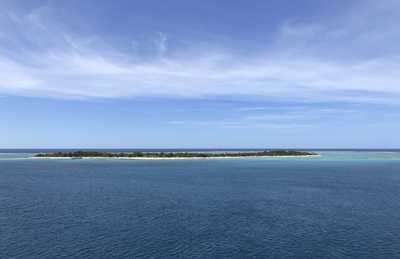
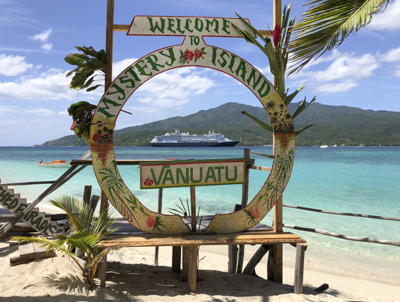
Mystery Island is a tiny uninhabited “islet” of the Republic of Vanuatu – previously known as the New Hebrides.  Vanuatu (the name means “Land Eternal”) is a Y-shaped chain of islands that consists of about 83 islands.  Granted independence by Britain and France in 1980 as the Ripablik Blong Vanuatu.

IMG 9488

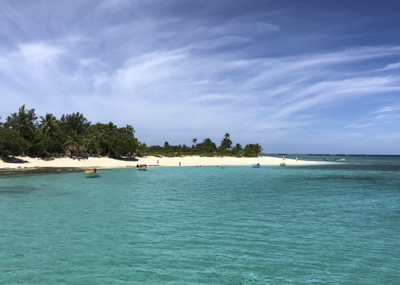
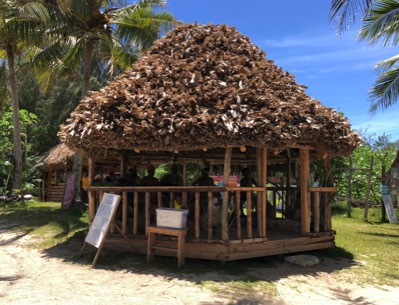
Mystery Island only has a few huts for overnight tourists, primitive amenities for cruise ship passengers, a few trails that bisect the island, and a grassy airstrip built by the U.S. Military.   It’s really a sandbar with the indigenous name of Inyeung, which means “small island” in the local language.  No one lives on the island because it’s considered taboo.

IMG 9386

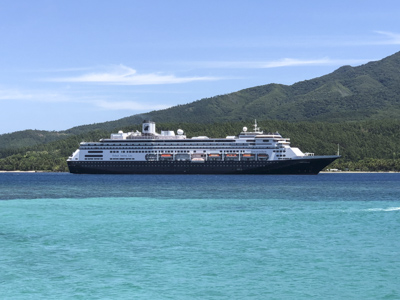
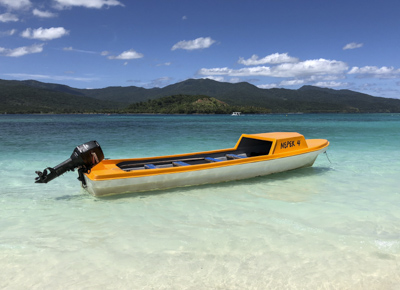
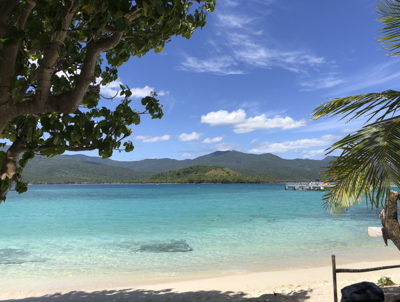
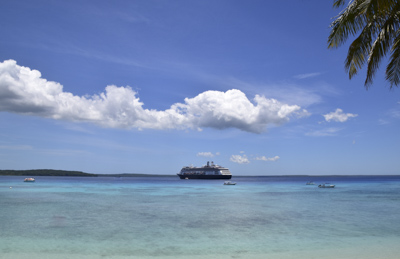
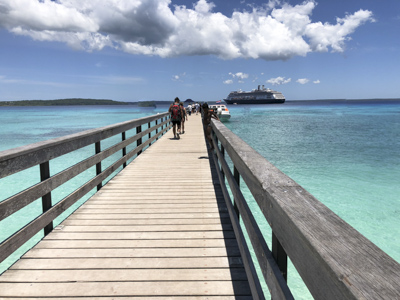
There was a coral reef on the windward side of Inyeung protecting it from the Pacific Ocean.  The Amsterdam anchored between Mystery Island and the main island, Aneityum, and ran tenders to the smaller island/sandbar.

IMG 9388

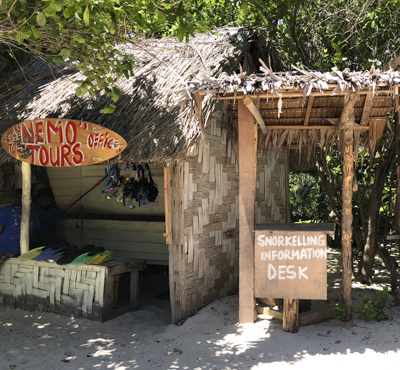
Vendors from the village of Anelghowhat arrived by small boats in the morning to set up their goods in thatch-roof stalls at the market.  Goods for sale included batik fabrics and clothing, flower leis, shell jewelry, t-shirts and sarongs.

IMG 9400

IMG 9411

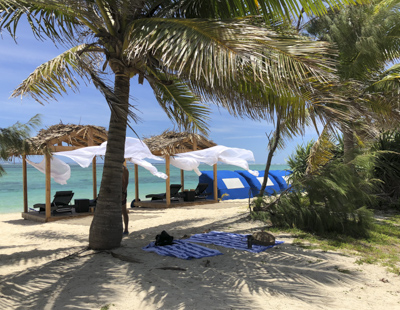
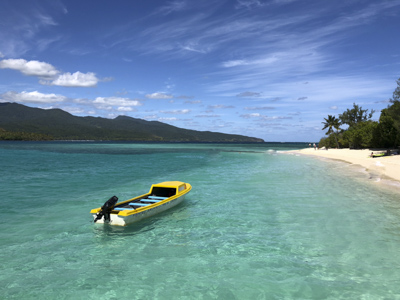
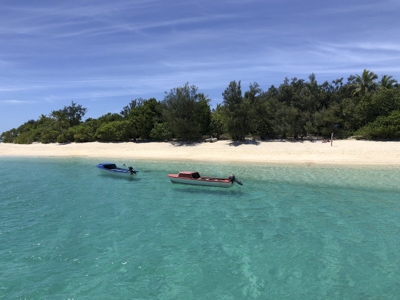
Mystery Island is a true South Pacific paradise: no people, no electricity, no running water, no internet or phone service.  Local women sell goods, offer massages and hair braiding; men play music and dance and grill lobsters for tourists.

IMG 9390

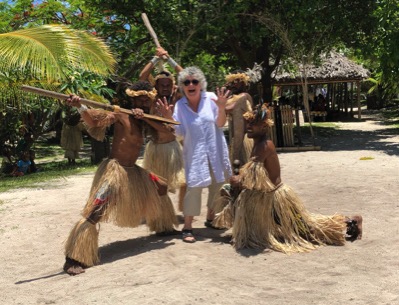
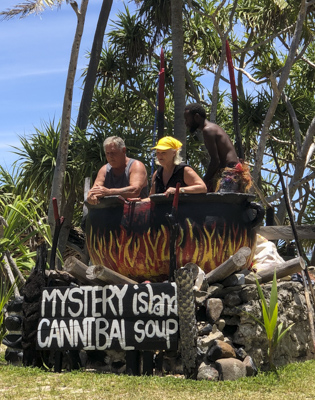
Vanuatu has a history of cannibalism, like most of the South Pacific islands, so several young men offer photo opportunities for tourists.

IMG 9432

IMG 9439

Mystery Island can be described as a jewel of the South Pacific Islands.  We had a wonderful time swimming in the crystal clear water and relaxing on the pristine beach.

IMG 9443

IMG 9459

IMG 9472

IMG 9493

Easo, Lifou Island, New Caledonia

December 2nd, 2018

Sunday – December 2, 2018

Last night our ship left Noumea and cruised 120 miles across the Coral Sea to Lifou Island.  This is the most populous of the Loyalty Islands of New Caledonia.  Lifou is bigger than the island of Tahiti and it is the largest coral atoll in the South Pacific.

IMG 9305

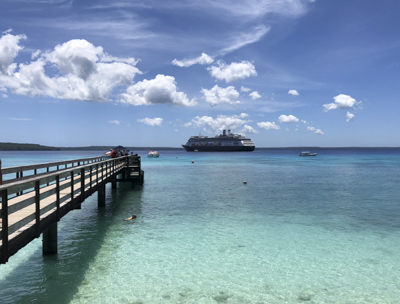
The Amsterdam slowly passed by the coral reef that surrounds Lifou and we anchored in the beautiful Baie de Santal.

DSC 4351

We took one of the tenders into shore:

DSC 4307

Most of the people on Lifou are Kanak because the French government declared the Loyalties an indigenous reserve in 1899.  As a result the residents were spared the worst features of colonialism.  The Kanaks are one of the original Polynesian settlers of the region.

IMG 9320

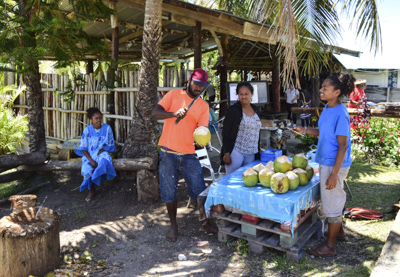
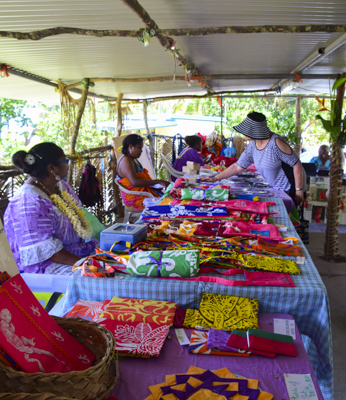
Primitive straw huts were set up to provide shade for a few local people who offered hair braiding, massages, or coconut drinks for sale.  There was a more substantial long hut at the top of a small hill where vendors had set up handicrafts and souvenirs.

DSC 4328

We were told that the lifestyle of the local people is unhurried and many people grow their own yams, taro, and sweet potatoes in their gardens.

DSC 4331

We had been warned that no one spoke English, just French and Kanak. However, like vendors everywhere, the people had enough words to conduct business.

DSC 4347

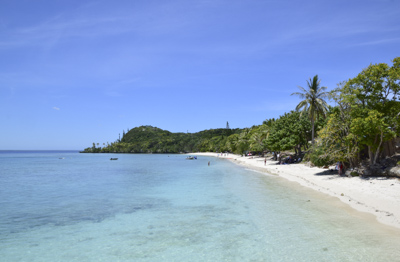
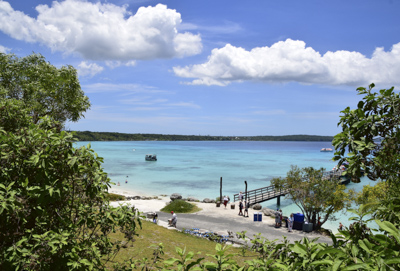
Unfortunately, we couldn’t visit the entire island.  We were limited to this gorgeous bay and its beautiful beach. The water was crystal clear, warm and very inviting.

IMG 9332

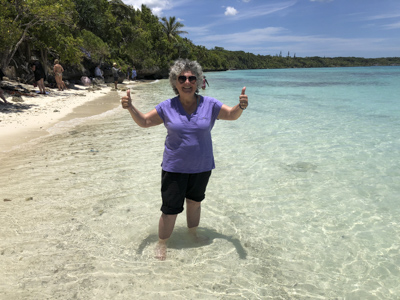
Unfortunately, Jeff and I didn’t bring our bathing suits so we could just dip our toes in the water.  It was a beautiful unspoiled beach with pristine water.  It was my idea of a perfect tropical paradise.

IMG 9343

We stayed at the beach as long as we possibly could and finally reluctantly took the tender back to the ship.  The Amsterdam slowly moved out of the bay, past the reef, and into the Coral Sea.  It had been a wonderful day!  We watched the sun set over the Pacific….

IMG 9360