Nina, Pinta and Crab Cakes

May 9th, 2014

Friday, May 9, 2014

20140509-221706.jpg

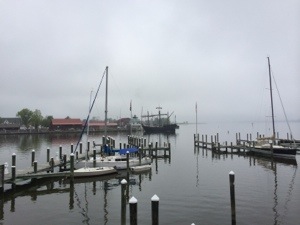
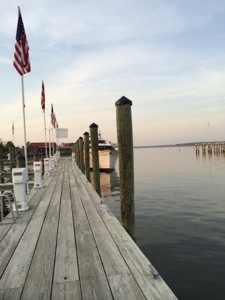
This morning, the bay was shrouded in a dense fog giving everything on the water a ghostly appearance.  We had a continental breakfast and decent coffee overlooking the peaceful harbor and then checked out of the St. Michael’s Harbour Inn.  I wanted to explore St. Michael’s and visit the Maritime Museum.
20140509-221728.jpg

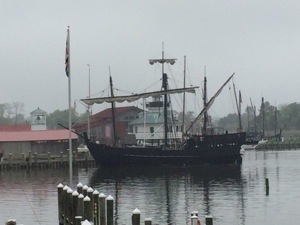
We watched as an eery black ship’s form appeared out of the mist and sailed into the harbor.  A short while later, a second black square-rigged ship silently coasted in and they both tied up at the docks at the Chesapeake Bay Maritime Museum.  I expected Captain Jack Sparrow and the Pirates of the Caribbean to jump off the ships to loot and plunder St. Michael’s.  We later learned that they were exact replicas of the Nina and the Pinta which carried Columbus across the Atlantic five hundred years ago.
20140509-221744.jpg

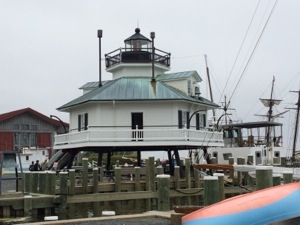
It was a short drive through the village to the museum on the other side of the bay.  We freely explored the grounds and looked in at the wooden boat building shop where several dinghies were being created.  We climbed the circular stairs to the top of the original Hooper Strait Lighthouse, pictured below, for a great view of the museum grounds.  There were many interesting buildings and ships to explore.
20140509-221819.jpg

The Maritime Museum is a wonderful treasure trove to see and ride historic wooden boats.  There are several antique skipjacks and bugeyes which plied the Chesapeake Bay in search of crabs and oysters.
20140509-221844.jpg

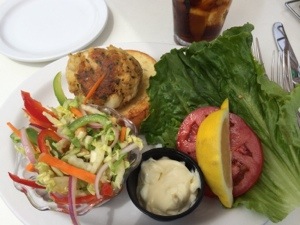
Before we left the Maritime Museum, I asked several locals for a recommendation of the best crab cakes in St. Michael’s and they suggested Town Dock Restaurant.  So that’s where we had lunch.  Yes, it was an excellent lump-meat crab cake. After lunch, we drove out to Tilghman’s Island just to see what was there and then drove south to Washington, D.C.
20140509-222001.jpg

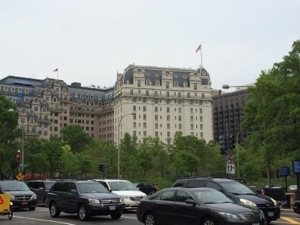
It was generally an uneventful drive between St. Michael’s Maryland and our National Capitol, but it became an interesting ride across the impressive Bay Bridge.  The traffic increased as we approached the District.  After driving around in heavy traffic, we checked into the Willard Intercontinental Hotel, unloaded our bags, and set out to explore the neighborhood.
20140509-222012.jpg

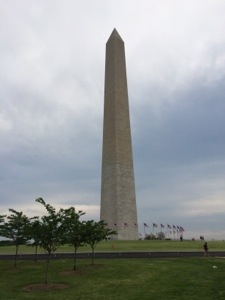
The hotel was near the Washington Monument and The White House.  We learned that the monument reopens tomorrow afternoon after being closed for several years due to damage from an earthquake.

20140509-222031.jpg

Then we walked to THE White House to pay a visit to the Obamas.  Unfortunately, they were away for the weekend so we joined the other tourists who posed for photos outside the world famous house.  I took a photo of the building with a man who was exercising his First Amendment rights among the visitors.
20140509-222048.jpg

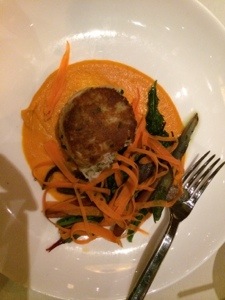
Afterwards, we walked to the Hamilton for dinner.  I had to try another crab cake and was not disappointed.  The restaurants and streets of D.C. were filled with tourists as we walked back to our Intercontinental oasis.  The city was pulsating and alive with traffic and people.  Springtime in D.C. was a great time to visit the city!
St. Michael’s Maryland

May 8th, 2014

Thursday, May 8, 2014

Who knew we could drive five hours south and find summer? When we left Westchester County this afternoon, it was a chilly fifty-five degrees and raining. We arrived in St. Michael’s Maryland by six o’clock and it was sunny and eighty degrees.

20140508-223138.jpg

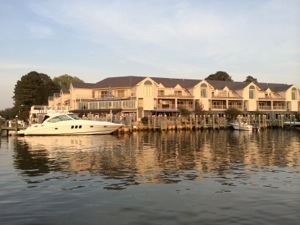
We checked into the Harbour Inn and then went out to explore.

20140508-223924.jpg

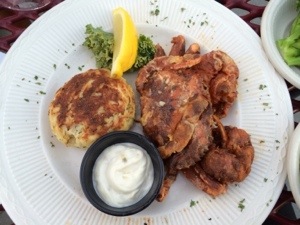
Maryland is the home of the crab cake. This is the broiled succulent, delicious, lump meat of the Chesapeake Bay blue-claw crab. They are the best in the world!

20140508-225009.jpg

20140508-225241.jpg

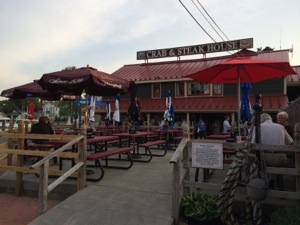
What a treat it was to sit outdoors along the harbor and have a great dinner of crab cakes and soft-shell crabs. Yumm….

20140508-225520.jpg

Waiting For Spring

April 22nd, 2014

Tuesday, April 22, 2014

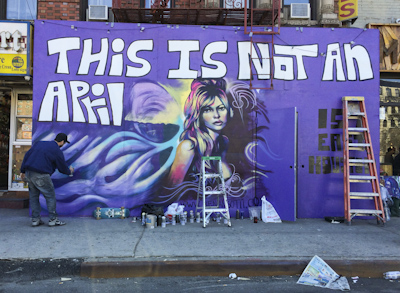
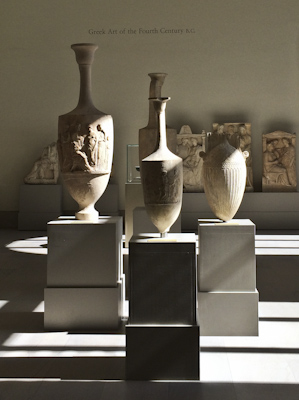
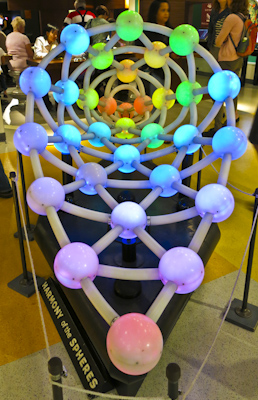
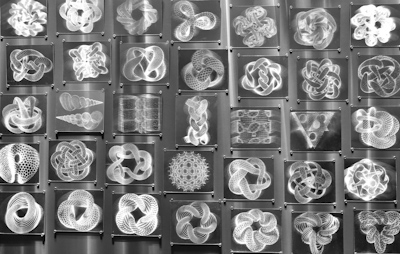
We’ve had a couple of 60 degree days and many chilly nights.  Then the temperature plunged below freezing and two inches of snow blanketed the region again.  Daffodils are blooming and golden forsythias are coloring the still-barren landscape.  I took the photos below at a variety of local places during the past couple of weeks.

IMG_7251Houston Street Mural

IMG_7244Greek Amphoras at the Met Museum

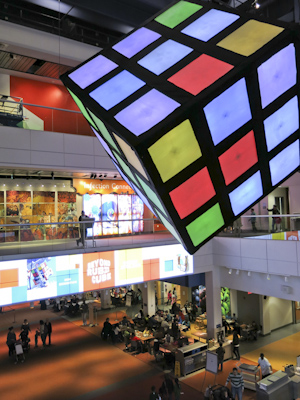
IMG_0217Math Museum, Manhattan

IMG_0193More Math

IMG_0270Liberty Science Center, New Jersey

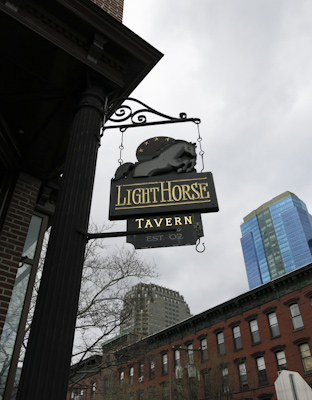
IMG_0278Jersey City, N.J.

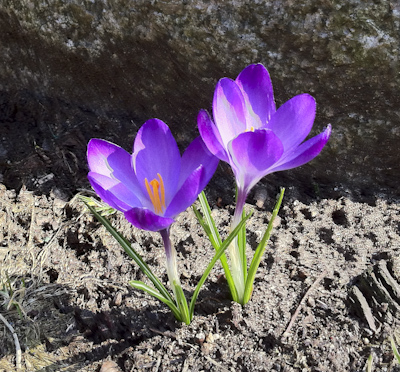
IMG_3956Crocuses

Is It Spring Yet?

March 26th, 2014

Tuesday – March 25, 2014

This is the longest period of time between posting photos and stories in my Gallivanting Grandma blog since I started in 2010.  I feel like I’m crawling out of hibernation after a long dark winter or awakening from the spell of the wicked witch after sleeping for a hundred years.

IMG_7137The Pond

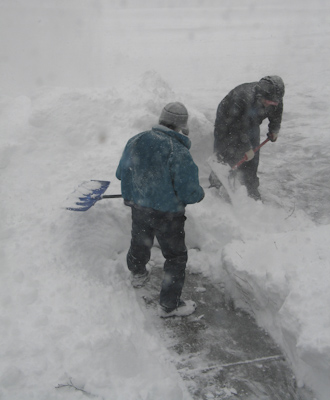
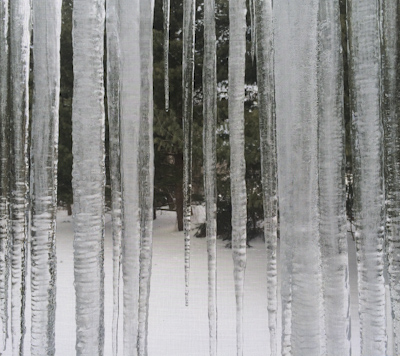
This winter has been a rough one for many people: nationally, locally, and personally.  59.3 inches of snow moved this winter up to seventh place for total snow accumulation here since 1868.  Not only has snow accumulation nudged records, but we have had one of the coldest winters in decades.

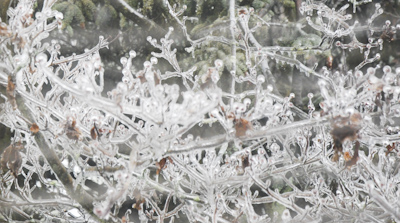
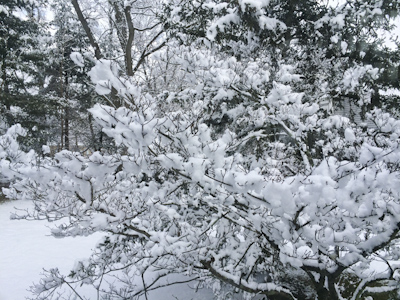
DSC_4021Ice on the Dogwood Tree

This was the second year that the Weather Channel gave names to winter storms.  I read that they enlisted the help of a high school Latin class in Bozeman, Montana and the students produced some interesting names like Maximus, Titan, Electra, Rex, and Atlas.  However, I stopped paying attention to the names by the time we reached Pax.  For one thing, it was the sixteenth storm and, by then, I was quite tired of snow.

IMG_3881Shoveling Snow

When I first heard the name, I thought Pax as in Pax Romana? Peace in Rome? Surely not.  It was not a peaceful storm; it was a full-scale blizzard.  I must have heard the name wrong.  It must have been “Pox” as in ancient curses and insults; A pox upon thee.  That would be more appropriate, like an ancient curse or wish that something bad will happen to someone.  A pox on you and your bright ideas and plans, from Mother Nature.  The sixteenth storm, Pox, was definitely a misfortunate calamity.

IMG_7087Looking Out the Window

For me, this winter was filled with local events and non-events.  Many days were simply too cold to venture out because of frostbite warnings and I really didn’t have to.  I joined a local gym and, weather permitting, attended exercise classes twice a week.  I’m part of a writer’s workshop and am currently working on a mystery novel set in New York City.  I also joined a group of local women who call themselves The Happy Wanderers.  Together, we went to the theater, museums, fairs, luncheons, and other events.  They are a group of very interesting mature women.

IMG_6641

Now the days are getting longer and we have more sunlight.  The robins and Canada geese are returning from their winter homes.  We had a few  above-forty-degree days, but this week is beginning on a cold note and the meteorologists expect snow tonight.  I don’t know if it will be christened Vulcan, or Wiley or Zephyr; nor do I care, but I do hope it will be the last storm of this miserable winter.

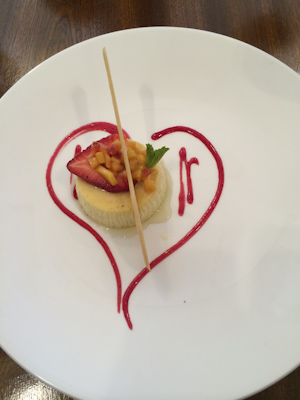
IMG_7192Valentine Caramel Flan

Virginia Plantations in 2013

November 24th, 2013

Many southern plantations exist today along both sides of the James River in Virginia.  Several are open to the public on a regular schedule and others are ‘by appointment only.’  Some of the plantations are currently working farms, while some are private dwellings.  After studying about plantation economy in Colonial Virginia all week, I wanted to see them firsthand.

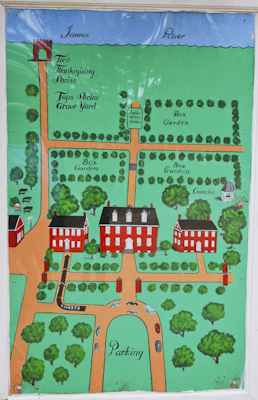
Map of Berkeley Plantation

On our way back to New York, we meandered along scenic Route 5, which parallels the north shore of the James River, and stopped at two Virginia plantations.  The first one we visited was the  beautiful Berkeley Plantation.  A costumed docent gave us a tour of the first floor of the main house.

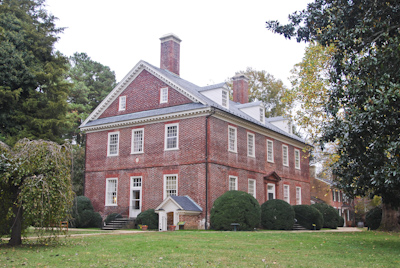
Berkeley Plantation

The Georgian-style mansion was built in 1726 and was the birthplace of two American presidents: William Henry Harrison and Benjamin Harrison.  The plantation had a long colorful history and claims to be the location of the Colonists’ First Thanksgiving in 1619.

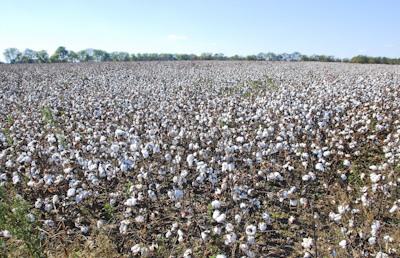
Cotton Field

Closer to Richmond, we turned into the driveway at Shirley Plantation and were surprised to see a huge cotton field.  I didn’t know that cotton grew as far north at Virginia and it seemed late in the year.  The weather was chilly this week with temperatures in the 40s at night.

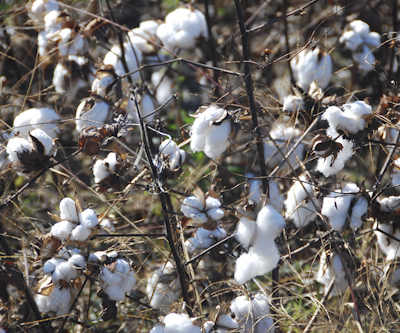
Cotton Plants Up-Close

Cotton plants are almost unreal because the cotton balls seem to poof out from the hard stems.  During the lectures this past week, we learned about the enslaved African people who did the backbreaking work of picking cotton and how important their work had been to the economy of our young country.

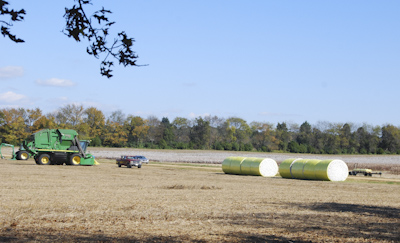
Modern Cotton Picking & Bailing

Further along the road there were several more vast cotton fields and a large harvesting machine at work picking the cotton.  The green machine, with one driver, drove through the field and created the huge cylindrical bales of cotton.

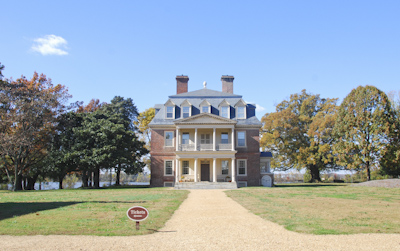
Shirley Plantation

We followed signs to a parking lot and walked toward the James River.  Another sign directed us to an out-building where we bought tickets for a guided tour of the main house.  We learned that the 11th generation of the original Carter family still lives on the top two floors of the mansion.  The descendants of “King” Carter, the land baron of the early 1700s who owned hundreds of thousands of acres in the region, were vacuuming upstairs during our tour of the first floor.

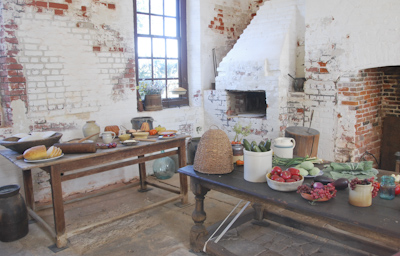
Kitchen Building at Shirley Plantation

The original kitchen was in one of the outer buildings and set up with plastic food.  There were several other buildings which had been used for storage of grain and tobacco.  The other buildings included a large ice house, a dovecote, and barns for goats, sheep and horses.  It had been an interesting and informative week.

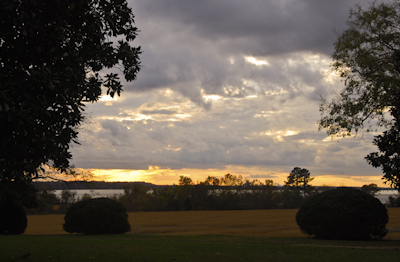
Sunset Over the James River