Cruising Prince Christian Sound Greenland – Westward

September 1st, 2017

Friday – September 1, 2017
DSC 4556

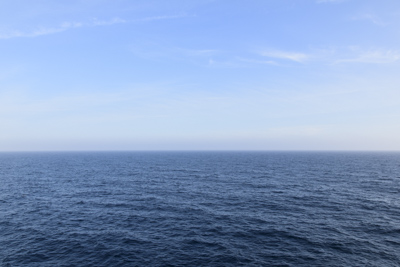
We set the clocks back another hour last night.  Since we’re heading westbound, we’re getting back those hours we lost when we began this journey.  We left Isafjordur, Iceland the day before yesterday and cruised down the body of water between Iceland and Greenland known as the Denmark Strait.  The seas were not as rough as Captain van der Wal predicted they might be.  Fortunately.
DSC 4566

Passengers get up to the minute reports on current conditions on one of the channels of the television.  I was amazed to see depths of eight to over nine thousand feet.  This is the location of the world’s highest underwater waterfall.  It’s three times taller than the earth’s highest waterfall and no-one can see it because it’s underwater.

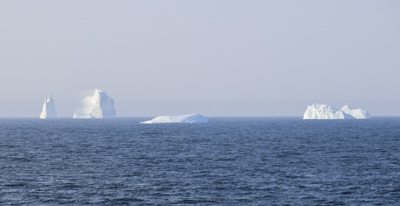
The waters between Greenland and Canada are called “Iceberg Alley” because the huge chunks of ice break off glaciers on the western coast of Greenland and float down the strait.  They seem to collect among the islands on the southern coast of greenland called Cape Farewell.
DSC 4587

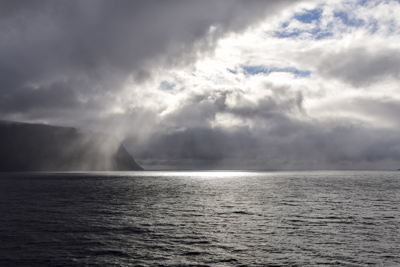
At six o’clock this morning the fog horn announced the current visibility: dense fog.  I could barely see the water outside from our balcony.  The air temperature was 35 degrees Fahrenheit.  The sun was trying to come out and it brightened into a bright sunny day by eight o’clock.  The ship barreled toward shore.  The Rotterdam is the fastest ship in Holland America’s fleet and we guessed the captain was testing its limits.
DSC 4623

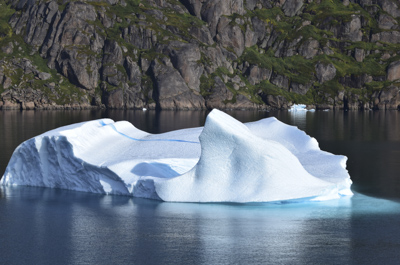
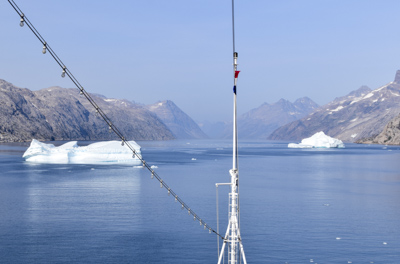
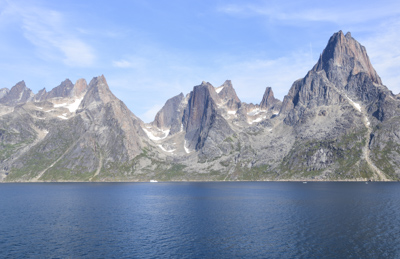
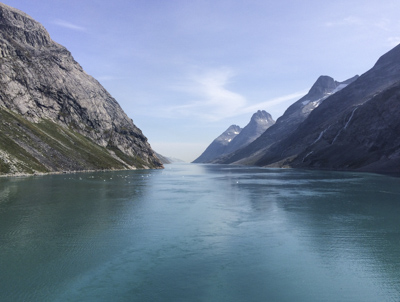
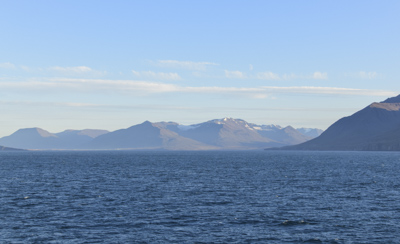
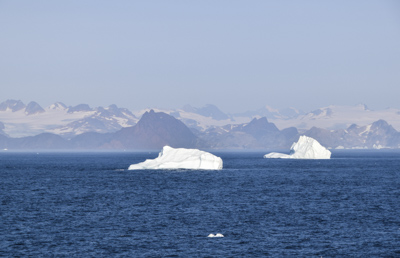
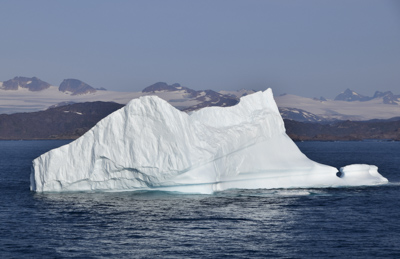
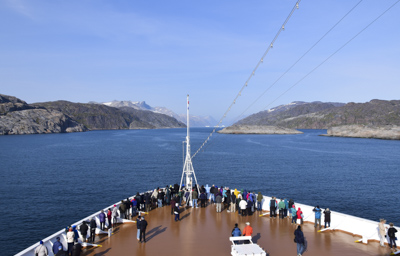
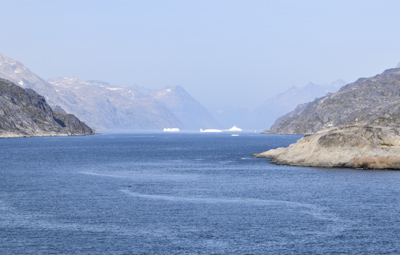
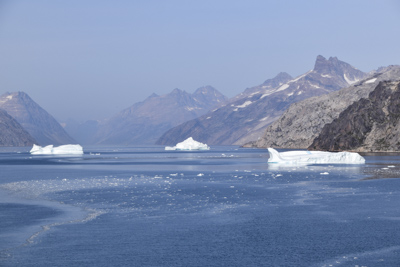
The jagged peaks of Greenland came into view as we approached the narrow opening of Prince Christian Sound on the southeastern corner of this amazing country.  As we got closer, the coastline was littered with icebergs of all sizes and shapes.  We remembered that we could not cruise the entire length of the Sound a couple of weeks ago when we left Qaqartoq and sailed into Prince Christian Sound on our way to Iceland.  We went about three quarters of the way and had to turn around because the eastern end was blocked by ice.
DSC 4625

DSC 4643

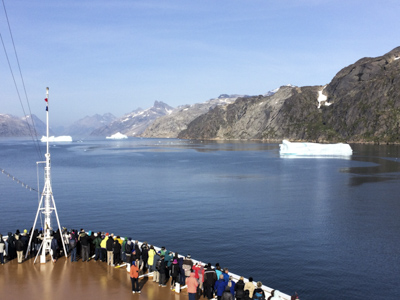
The sun brightened and Captain van der Wal slowed the ship considerably.  Three very large icebergs sat impressively at the mouth of the sound.  We tried to guess the ship’s route.  We remembered they announced that two Danish “Ice Pilots” stationed in Greenland came aboard to get us through the narrow sound.  I guess they were earning their salaries today.
IMG 2182

DSC 4653

DSC 4656

The ship slowly crawled past the first iceberg then cut between the next two icebergs and slowed it’s pace, giving us lots of time to take many photos of the floating ice.  The water looked very cold.  We were reminded that 90% of the iceberg’s mass was underwater.  So the ice pilots gave them a wide berth.
DSC 4687

DSC 4721

DSC 4736

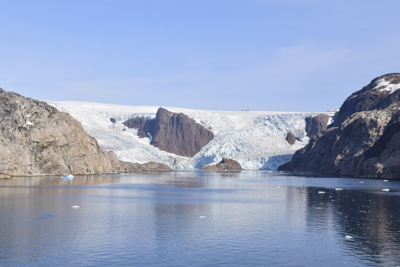
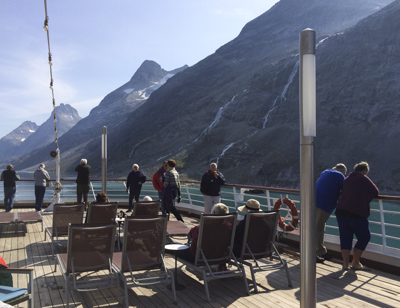
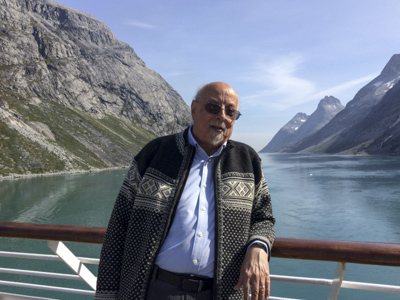
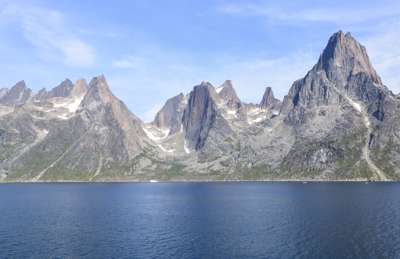
For the next several hours, the ship creeped along the narrowest part of the Prince Christian Sound.  The entire “Sund,” as it’s called in Danish, is incredibly beautiful and awe-inspiring.  There are not adequate words to describe the steep rocks, glaciers, jagged mountains, waterfalls, and icebergs.
IMG 2189

IMG 2191

IMG 2193

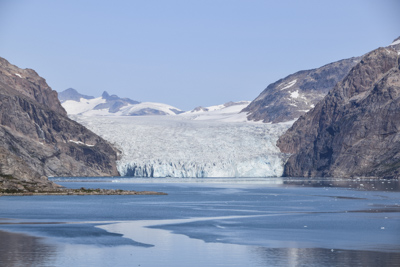
The ship approached a large glacier and stopped.  Then, believe it or not, the Rotterdam did a 360 degree turn right in front of the glacier, between the narrow stone walls of the Sound.  It was incredible!  Captain Eric van der Wal was showing off!
DSC 4736

DSC 4745

DSC 4746

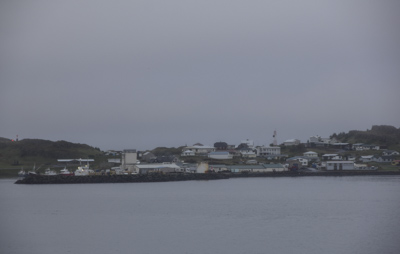
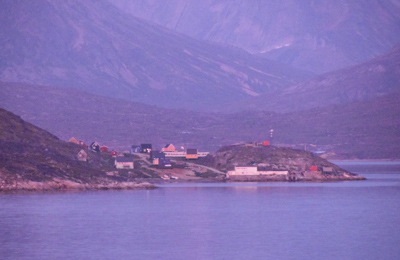
Near the western approach to Prince Christian Sound is a tiny village of about a hundred people:
DSC 4754

This was an unforgettable day!!!
Sea Day – Iceland to Greenland

August 31st, 2017

Thursday – August 31, 2017

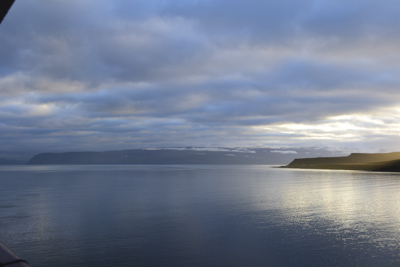
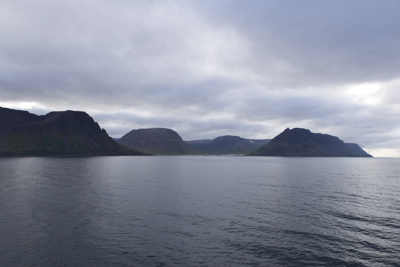
We left Isafjordur, Iceland about five o’clock yesterday and cruised through the magnificent Isafjardardjup fjord and out to the Norwegian Sea.  Captain Eric van der Wal  made an announcement to expect heavy seas of twelve to fourteen feet during the night, but fortunately it was a smooth ride and I slept soundly.

DSC 4547

Today the Rotterdam is moving southwest through the Danish Strait on our way to Greenland.  The fog horn sounded early this morning and the horizon is a misty line between the inky sea and the gray sky.  I hope the radar works!
We went up to the Crow’s Nest which is in the bow above the Bridge.  This is the “room” where the officers navigate and ‘drive’ the ship.  In the old days it might have been called “the wheelhouse” but today’s ships don’t have wheels; they have something that resembles a ‘joy stick’ to steer the gigantic ship. I think it would be fun to see the Bridge and the crew in action, but they never allow spectators.  I believe they use Auto-Pilot and technology most of the time when the ship is just cruising.

Anyway, we like to sit in the Crow’s Nest on the comfortable chairs facing out to sea and the horizon, sort of like getting the captain’s view.   We took our laptops and worked on our respective blogs.  An elderly man sat next to me and he began talking to me.  His name was Charlie and he told me he was 90 years old this year.  I tried to type, but Charlie seemed to want to talk and he told me all about his experiences during World War II.  And about his childhood and his two girlfriends, and his wife, and other details of his life.  He was an interesting character with a long life.  As he talked, the weather cleared.  Charlie eventually left to meet with a group of American veterans.  He sort of lives on the ship.

DSC 4541

After lunch, we went to a presentation by Location Guide Barbara who told us all about Nanortalik, Greenland.  This was one of the towns located in the southern part of Greenland that we would be visiting next.

The bakers and pastry chefs on the ship did a great job!  Too good!  There was a variety of excellent breads and delicious pastries:

IMG 2178

We also went to a lecture given by Dr. Bendel who talked about the Solar System.  Dr. Bendel was a meteorologist who had an interest in astronomy and his lectures were very good.

The day passed quickly…….

Isafjordur, Iceland

August 30th, 2017

Wednesday – August 30, 2017

DSC 4359

The Rotterdam left Akureyri yesterday evening and cruised north along the Eyjafjordur fjord.  The ship crossed the Arctic Circle during the night and cruise director Jan announced that Holland America will give us certificates to mark our crossing.  Amazing!  I never thought I would ever travel this far north.

DSC 4364

DSC 4369

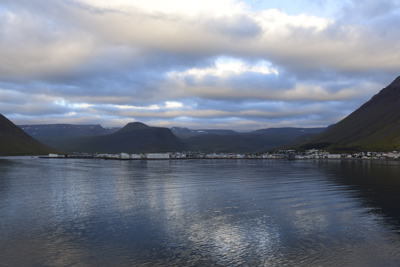
A thin beam of gray light through the curtains woke me up this morning and I looked out to see the side of a mountain.  Very close.  The ship had traveled up the Isafjardardjup fjord on its way to the tiny fishing village of Isafjordur.  Jeff and I watched as the Rotterdam turned around 180 degrees in the narrow fjord then very very slowly moved sideways and tied up alongside the pier.  It was a painstaking but successful maneuver accomplished by the people on the bridge.

DSC 4379

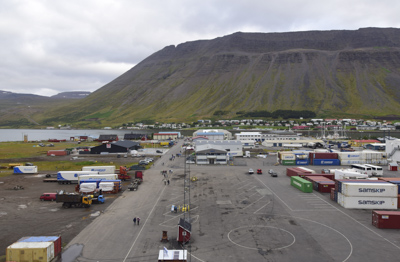
We looked out at the commercial dock where we had tied up.  Container ships are the only way people in Isafjordur get any supplies.

DSC 4388

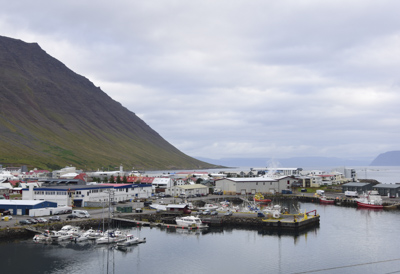
From our balcony, we could see large fishing boats docked across the waterfront and fish processing buildings on the other side of the harbor.  The weather was cool (9 degrees C) – 45 degrees F – and cloudy, but not raining.

DSC 4389

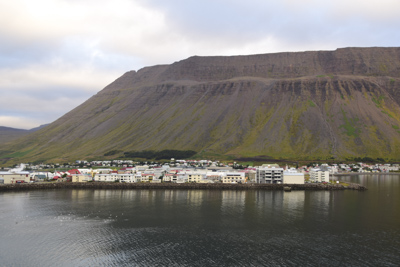
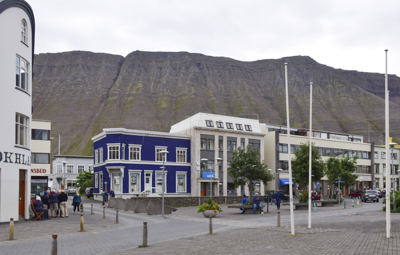
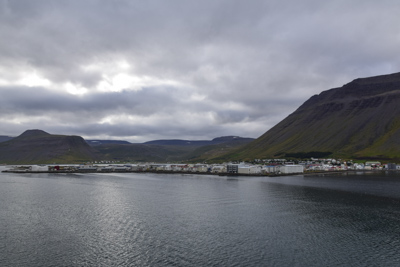
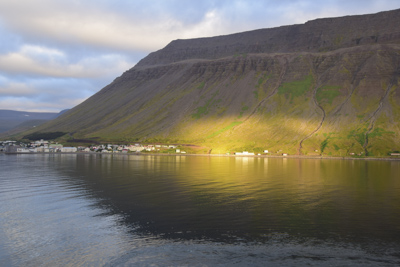
The main part of Isafjordur lies at the base of a very tall mountain and along the deep fjord. The commercial port and the older part of town jut out into the water in an L-shaped peninsula.  It looks like the village expanded along the road.  Isafjordur (population 2,600) means “fjord of ice” in Icelandic.  The region has a subarctic climate of cold high winds and very few clear days.

DSC 4401

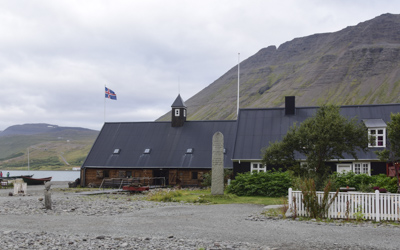
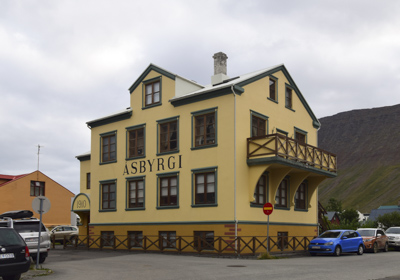
The town grew in the 16th century as a trading post for foreign merchants.  We discovered the Westfjord Heritage Museum which is a maritime museum housed in an 18th century house.  Built in 1734, it is the oldest house in Iceland.

DSC 4439

We walked out to explore the town and see what the fishing village was like during the summer.  There were a few small hotels and guest houses on the main road.  It looked like there was one road that ran along the water and out of town.

DSC 4443

Looking back toward our ship, the Rotterdam was dwarfed by the tall mountains surrounding it on both sides of the fjord.  Isafjordur was a very well protected harbor.  Fishing is the main industry in town and it has one of the largest fisheries in Iceland.

DSC 4446

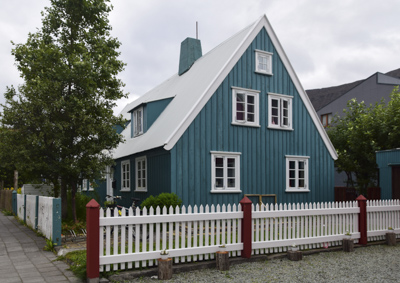
We walked along the narrow streets of Old Town and saw brightly painted 19th century homes.  The sides and roofs of the buildings were covered in corrugated metal.

DSC 4476

We explored the supermarket and I bought a couple of postcards and stamps in the postoffice.  It’s a neat and clean town, of course overrun today with tourists from our ship.  We didn’t see many local people, except shopkeepers.

DSC 4504

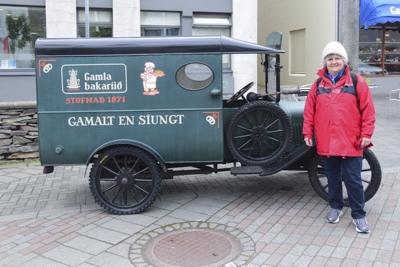
Jeff had coffee and a large slice of blueberry cake in the warm and toasty Gamla Bakariid (bakery) while I wrote postcards.  The sky darkened and the wind picked up.  It was difficult to believe it was August.  We walked back to the ship to warm up and relax.

DSC 4532

We talked about what Isafjordur must be like to live in, especially during the winter.  I wondered if the only road into town was closed during snow storms and whether the fishing boats operate in the cold dark months of December, January, and February.

DSC 4536

It is just amazing to be in Isafjordur, Iceland…..

Akureyri, Iceland

August 29th, 2017

Tuesday – August 29, 2017

We cruised away from Djupivogur last night and into fog and rain.  The ship traveled northward for several hours then turned west along the vast northern coast of Iceland.  The Rotterdam crossed the Arctic Circle in the middle of the night to arrive in Akureyri at 8:00 AM.

IMG 2103

My alarm woke me abruptly at six this morning because we had a long excursion which would take us into the interior of Iceland.  I looked out of our window and saw only dense fog and rain.  It was 46 degrees.  I dressed in layers and made sure I had my umbrella and waterproof shoes.

IMG 2109

The ship moved slowly down the Eyjafjordur, the longest fjord in Iceland, to dock in Akureyri at the end of the fjord.  Akureyri is the capital city of the north and the second largest city in Iceland after Reykjavik.

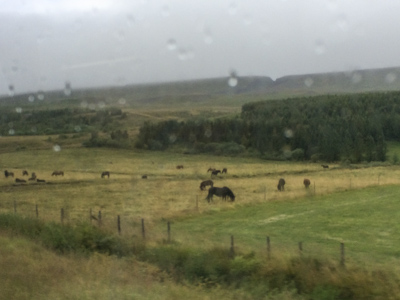
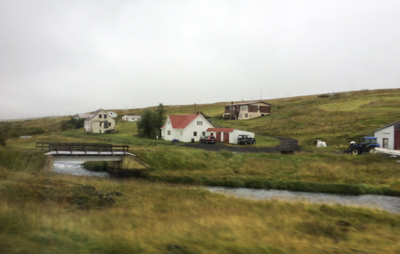
View of the countryside from the bus.  Icelandic horses are a special breed.

IMG 2120

We joined 200 other passengers in the theater to board buses to go on an excursion called Jewels of the North.  We drove through the city of Akureyri and crossed to the other side of the fjord as the guide, Machina, told us about Iceland.

IMG 2129

We drove along the fjord and across a mountain pass and the Fnjoskadalur Valley.  The weather was gray and overcast.  Low clouds hung over the mountains.

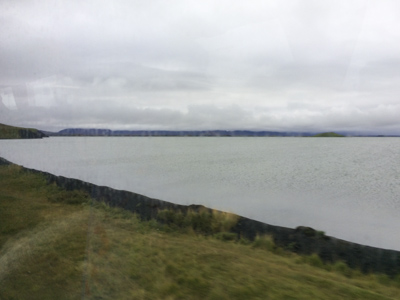
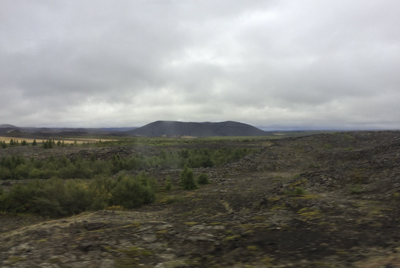
The bus drove around Lake Myvatn, a popular vacation spot for Icelanders.  The terrain is incredible, miles of lava fields and dormant volcanoes.

IMG 2138

IMG 2149

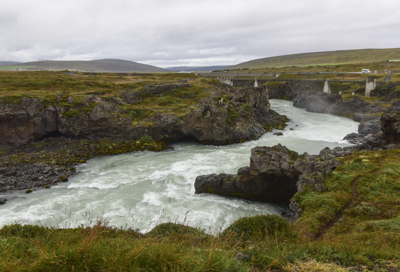
The river cut its way through the lava fields:

DSC 4132

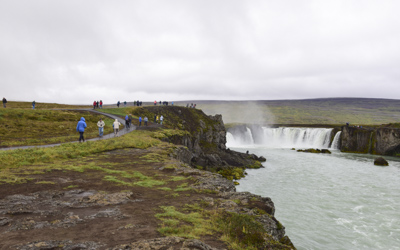
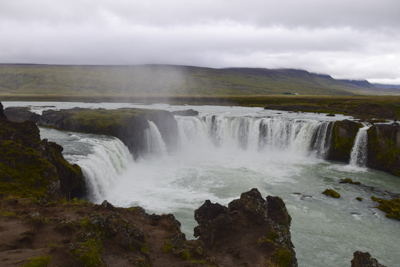
Our first stop was the spectacular Godtafoss waterfalls which means the “waterfall of the Gods.”  Machina explained the name comes from the last pagan king of Iceland who threw statues of pagan Gods into the waterfall to show that he adopted Christianity.  We walked out to the falls to take pictures.  The rain subsided a bit.

DSC 4143

DSC 4155

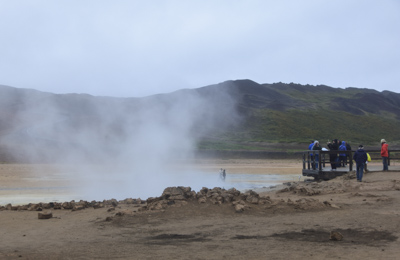
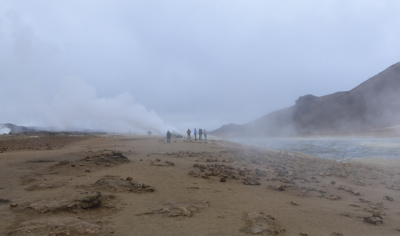
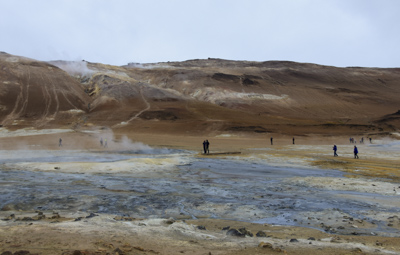
The next stop was the geothermal field of Namaskard to see the bubbling pools of hot water and purple and yellow sulfur.  Steam hissed out of the ground and made an eery sound.  The smell was awful!

DSC 4198

DSC 4177

DSC 4189

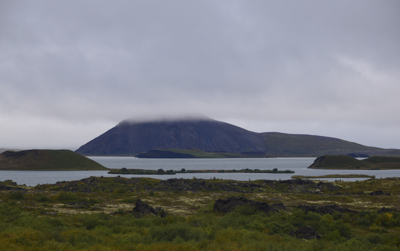
Lake Myvatn is ringed with active and inactive volcanos:

DSC 4217

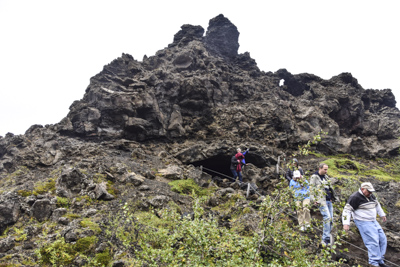
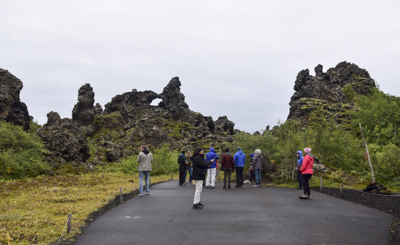
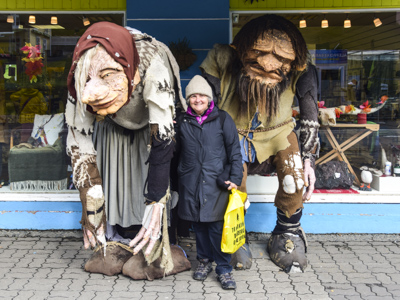
The bus drove around Myvatn Lake to Dimmuborgir lava labyrinth.  Circular paths twisted around towering lava formations and caves.  They were formed after the eruption of a volcano 2000 years ago.  There are folk tales about trolls and other mythical creatures who live among the lava formations.

DSC 4231

DSC 4235

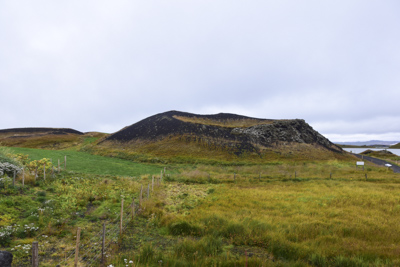
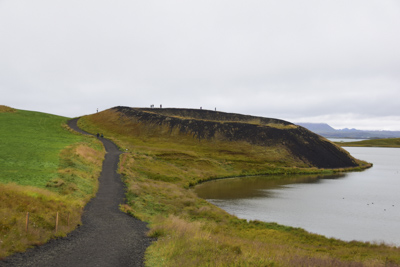
We had tomato soup and salmon for lunch at the Sel-Hotel Myvatn.  We walked across the road and looked at the pseudo-craters of Skutustadagigar.  These were formed by steam explosions when burning lava encounters wetlands.

DSC 4261

DSC 4268

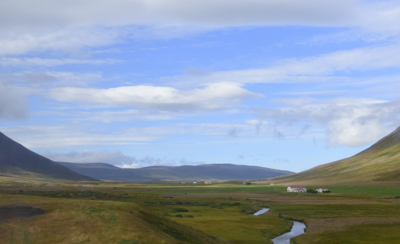
The weather cleared on our ride back to Akureyri. The Icelandic terrain is open and vast and very impressive.

DSC 4288

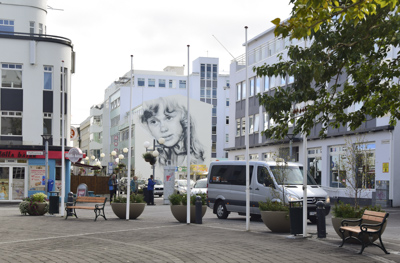
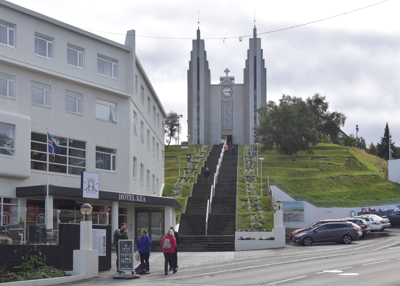
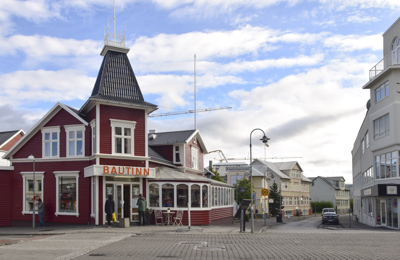
We returned in enough time to explore the city of Akureyri.  We walked up to the center of town and took pictures and did a little shopping.

DSC 4324

DSC 4342

DSC 4345

DSC 4337

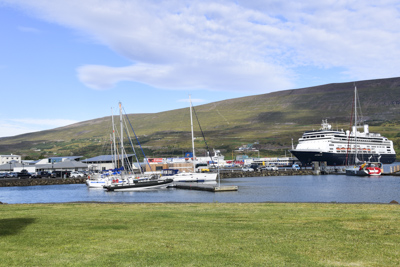
The ship left the dock promptly at five o’clock and slowly progressed along the beautiful Eyjafjordur fjord and out into the Icelandic Ocean.

DSC 4353

We went up to the Crow’s Nest in the bow of the ship to look out at the fjord as the sun faded.  There were many others there with the same idea.  Someone mentioned whales and when we looked out, we saw intermittent spurts of “steam” coming out of the water.  There must have been several pods of whales in the fjord and it was exciting to look out in anticipation of seeing a whale.  We just saw spurts of spray emanating from the inky water and an occasional break on the surface, but exciting nonetheless.  The northern coast of Iceland:

DSC 4355

Djupivogur, Iceland

August 28th, 2017

Monday – August 28, 2017

Somehow I slept through the foghorn sounding loudly during most of the early morning hours.  When I finally heard it, I rested with my eyes closed and listened to the somber sound. The ship had stopped rolling back and forth and I imagined the Rotterdam anchored somewhere, enveloped by fog.

DSC 4037

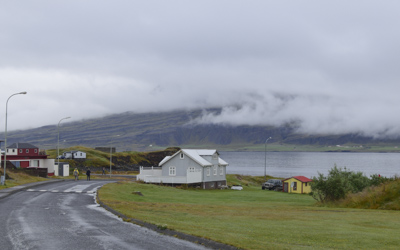
We had traveled from the Hebrides islands in northern Scotland to the southeastern shore of Iceland.  I looked out to see the tiny town of Djupivogur, Iceland covered in mist and fog.  It was 48 degrees and raining.

We had a leisurely breakfast then slowly made our way to the tender gangway.  Thick fog hung over the high hills in the distance but it wasn’t raining and the sky over Djupivogur looked like it was brightening.

DSC 4066

Djupivogur in the rain:

DSC 4039

The tender transports began by 7:30 but I thought there was no need to rush out into the rain.  We rode the tender to the dock in the middle of the town.  I knew there were tall mountains surrounding Djupivogur but we couldn’t see them in the mist.

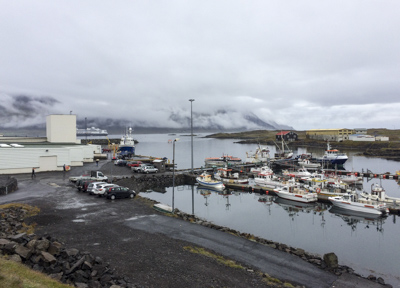
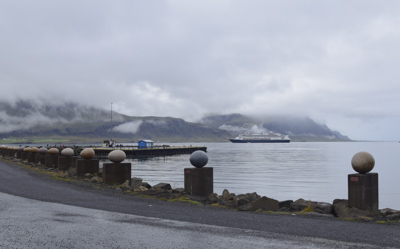
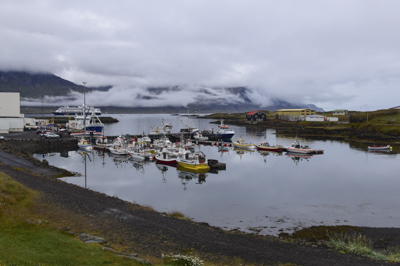
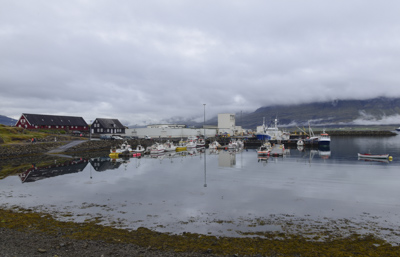
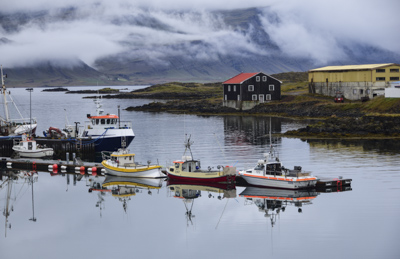
The main port was filled with fishing boats of all sizes.  The white building on the left was the fish processing plant.

IMG 2089

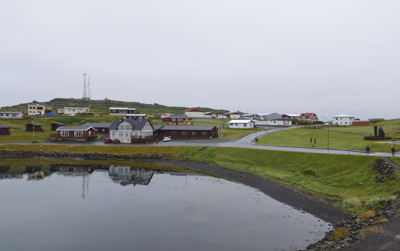
Djupivoggur was a charming village with a long history of fishing and trading since the 16th century.  The main street:

DSC 4053

The information center with cafe and small restaurant:

IMG 2083

When we landed on shore, visibility all around us seemed to be improving.  It was still a hazy gray day, but not too bad.  There were several fishing boats in the harbor and the fish processing plant was working noisily.

IMG 2077

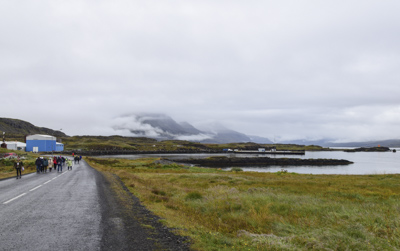
The rain held off so we walked down the street to see what was there.  The population of Djupivogur was about 400 people.

DSC 4062

DSC 4073

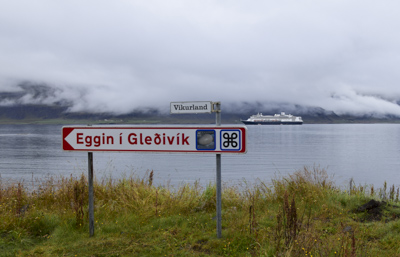
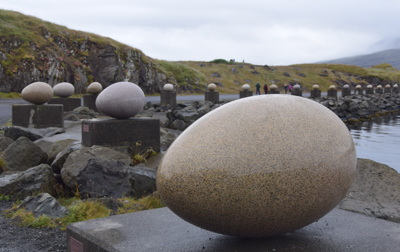
We followed the sign to see the outdoor sculpture called “Eggin i Gleoivik” (The Eggs of Merry Bay) by the world famous Icelandic artist, Siguour Guomundsson.  These are 34 large-scale egg replicas which represent 34 native bird species.

DSC 4068

DSC 4090

DSC 4093

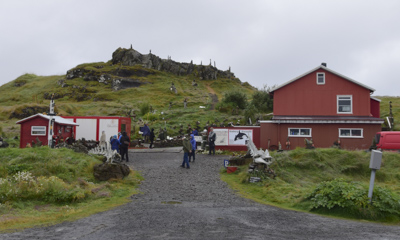
Along the road there was a quirky sculpture garden and museum called Bones, Sticks, & Stones:

DSC 4080

Djupivogur has been granted international “Cittaslow” (Slow Town) status.  The town likes to show visitors Iceland in slow motion.  A ‘slow city’ is an attempt for people to reconnect with their environment, nature, food, and unique crafts against a globalized world.  Commercial signs are banned but local craftsmen are allowed to display signs.

DSC 4109

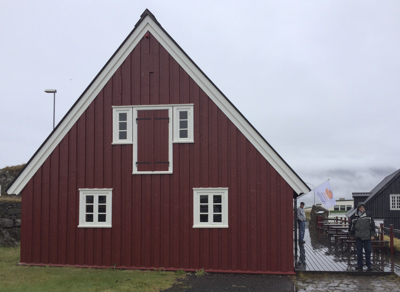
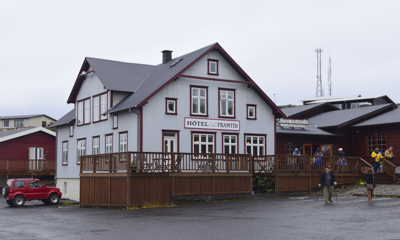
We walked across to the lovely Hotel Framtid on the other side of the harbor.  The knotty-pine interior was warm and cozy.  We took advantage of their free wifi and rested on comfortable chairs.  The children from the local school were eating lunch in one of the hotel’s dining rooms.

DSC 4115

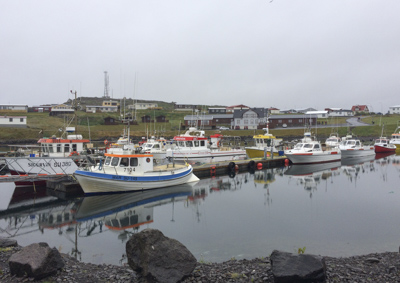
Looking across the harbor:

DSC 4116

There were beautiful panoramic scenes everywhere.  I imagine on a sunny day the surrounding mountains must be fantastic, unfortunately they were hiding behind heavy dense clouds.

DSC 4111

We rode the tender back to the ship, relieved that the rain held off giving us a chance to explore beautiful Djupivogur.  The ship sailed away and went northward along the Icelandic coast.

IMG 2097

We’re going to travel 183 nautical miles to the city of Akureyri on the northern coast of Iceland.  Wow!  What an adventure!!!